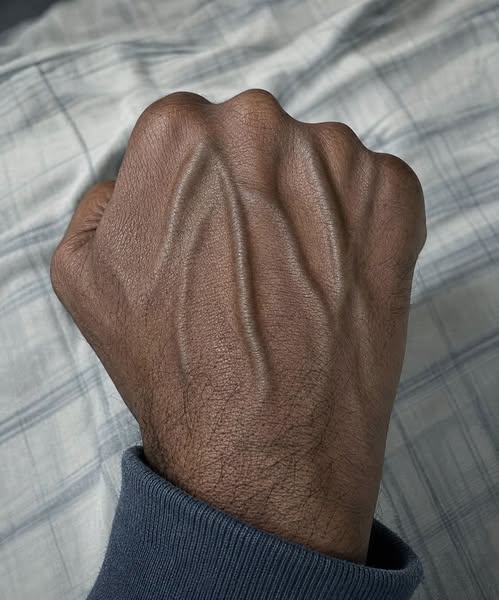
Have you ever looked down at your hands and suddenly noticed that the veins seem much more visible than you remember?
For some people, prominent veins on the backs of the hands are completely normal.
For others, they may become more noticeable after exercise, during warmer weather, with changes in body composition, or simply as the years go by.
Because health information on social media often connects ordinary physical changes with serious conditions, seeing more visible veins can sometimes cause unnecessary worry.
The reality is that visible hand veins have many possible explanations, and their appearance alone usually isn’t enough to determine whether something is wrong.
Understanding the common reasons veins become easier to see can help put the situation into perspective.
Why Are Hand Veins Sometimes So Visible?
Veins are blood vessels that return blood toward the heart.
Some veins naturally sit relatively close to the surface of the skin.
The backs of the hands contain superficial veins, which means they can be visible even in perfectly healthy people.
How noticeable they are depends on several factors.
Skin thickness, body composition, genetics, temperature, physical activity, hydration, and age can all influence how prominent veins appear.
Two people of the same age can therefore have very different-looking hands.
One person’s veins may barely be visible, while another person’s may be naturally prominent.
Neither appearance automatically indicates a health problem.
Exercise Can Temporarily Make Veins Stand Out
One common reason veins become more noticeable is physical activity.
During exercise, blood flow to working muscles increases.
Changes in circulation and the temporary expansion of blood vessels can make superficial veins appear more prominent.
This can be especially noticeable after strength training or other vigorous activities.
Once the body returns to its normal resting state, the veins may become less noticeable again.
So if you notice more prominent veins after a workout, that can be a normal temporary change.
Warm Weather Can Affect Their Appearance
Temperature can also influence how visible veins look.
When the body is exposed to heat, blood vessels near the skin can widen as part of the body’s effort to release heat.
As a result, superficial veins may become easier to see.
This can happen during hot weather, after a warm shower, or while spending time in a heated environment.
Once the body cools down, their appearance may return closer to normal.
Changes in Body Composition
Another factor is the amount of tissue between the skin and the veins.
People with less subcutaneous fat may naturally have more visible veins.
This doesn’t necessarily mean that anything is wrong.
Changes in weight or body composition can make previously subtle veins more noticeable.
Someone who becomes more physically active or loses weight may suddenly notice veins that were less apparent before.
That change can be surprising, but visibility itself isn’t a diagnosis.
Skin Changes Over Time
As people get older, the skin gradually changes.
Skin can become thinner and lose some of its elasticity, while the tissues beneath it may also change.
These normal changes can make veins more visible than they were earlier in life.
That’s one reason prominent hand veins are often more noticeable in older adults.
Again, the appearance of veins by itself does not establish a medical condition.
Genetics Can Play a Role
Some people simply inherit a tendency toward more visible veins.
Family members may have similar hand or arm vein patterns.
If prominent veins have always been noticeable and there are no other concerning symptoms, genetics may be one explanation.
Body structure varies naturally from person to person.
Just as people inherit different skin tones, hand shapes, and facial features, they can also inherit differences in how visible their veins appear.
Hydration and Daily Changes
The body’s fluid balance can influence how the skin and underlying tissues look.
However, it’s important not to assume that every change in vein visibility is caused by dehydration.
There are many factors involved, and appearance can fluctuate throughout the day.
If you have concerns about hydration or fluid balance, pay attention to the broader picture rather than using vein visibility as a measurement.
Thirst, urine color, activity level, environmental temperature, and other factors provide more useful context.
When Visible Veins May Deserve Attention
Although prominent hand veins are often harmless, a new or significant change accompanied by other symptoms deserves more consideration.
For example, medical advice may be appropriate if a vein suddenly becomes painful, swollen, unusually warm, or associated with significant redness.
Similarly, unexplained swelling of the hand or arm should not simply be dismissed because the veins are visible.
The important point is that the combination of symptoms matters.
A visible vein without other symptoms is very different from a sudden change accompanied by pain or swelling.
One Hand Looking Different From the Other
It’s also worth paying attention to whether the change is affecting both hands or primarily one side.
Natural differences between the two sides of the body are common.
However, a sudden and noticeable change affecting one hand or arm, particularly when accompanied by swelling, discomfort, color changes, or other symptoms, is something to discuss with a healthcare professional.
Rather than attempting to diagnose the cause yourself, describe exactly what changed and when you noticed it.
Don’t Diagnose Yourself From a Photograph
One of the biggest problems with online health content is that photographs can make ordinary variations look alarming.
A picture of someone’s hand may look unusual because of lighting, camera angle, skin tone, temperature, or recent physical activity.
The same is true when comparing your own hands with photographs found online.
Medical professionals consider symptoms, history, physical examination, and sometimes additional testing when necessary.
A photograph cannot provide all of that information.
What Information Can Be Useful to a Doctor?
If you decide to discuss prominent veins with a healthcare professional, consider noting when you first noticed the change.
Think about whether anything else changed around the same time.
For example:
- Did you recently start exercising more?
- Have you experienced a significant change in weight?
- Has the weather become warmer?
- Is there pain or tenderness?
- Is there swelling?
- Has the skin changed color?
- Is one hand affected more than the other?
- Did the change happen suddenly or gradually?
These details can help provide context.
Avoid Unnecessary Treatments
If visible veins are simply a normal feature of your hands, there may be no medical reason to treat them.
Some people may dislike prominent veins for cosmetic reasons, but that is different from treating an underlying medical problem.
If someone is considering a cosmetic procedure, they should discuss the benefits, risks, and alternatives with a qualified medical professional.
It’s generally unwise to attempt home remedies or unverified treatments designed to make veins disappear.
Be Careful With Health Claims Online
The internet contains countless statements suggesting that a particular physical feature is a definite sign of a specific disease.
These claims can be misleading.
A single physical characteristic rarely provides enough information to identify a medical condition.
The same feature may occur in healthy people for completely ordinary reasons.
This is particularly important when reading short social media posts that use phrases such as “If you have this, it means…” without providing context.
Health information should be approached with care.
When Should You Seek Prompt Medical Advice?
A new physical change accompanied by significant symptoms should receive appropriate medical attention.
Seek prompt professional advice if visible veins are accompanied by substantial swelling, persistent or severe pain, marked redness or warmth, significant changes in skin color, or other symptoms that concern you.
If you experience symptoms that could indicate a medical emergency—such as severe difficulty breathing, chest pain, fainting, or sudden serious illness—seek emergency medical care immediately rather than relying on online information.
The appropriate response depends on the complete set of symptoms.
Your Hands Can Change Naturally
It’s easy to forget how much the appearance of our bodies can change throughout the day.
Hands may look different after exercise.
They may appear different in cold weather compared with warm weather.
Changes in weight, age, activity, and skin can also affect their appearance.
A feature that wasn’t noticeable last year may become more visible today without representing a serious problem.
That doesn’t mean changes should always be ignored.
It simply means they should be interpreted in context.
A Better Way to Look at Visible Veins
Instead of immediately asking, “What disease does this mean?” a more useful question is:
“What has changed, and are there any other symptoms?”
If the veins have always been visible, that may simply be part of your normal anatomy.
If they become more noticeable after exercise or heat, there may be an ordinary explanation.
If they change suddenly and are accompanied by pain, swelling, redness, warmth, or other unusual symptoms, that’s when professional advice becomes more important.
This approach avoids unnecessary alarm while still taking meaningful changes seriously.
Final Thoughts
Visible veins on the hands can attract attention, particularly if they appear more prominent than they were in the past.
But prominent veins are not automatically a warning sign.
Exercise, warm temperatures, body composition, age, skin characteristics, genetics, and normal changes in circulation can all influence how visible superficial veins appear.
The key is to consider the complete picture.
If the veins are simply noticeable without pain, swelling, skin changes, or other unusual symptoms, they may be a normal variation.
On the other hand, a sudden change accompanied by concerning symptoms should be discussed with a qualified healthcare professional.
Most importantly, don’t let a dramatic social media headline convince you that an ordinary physical characteristic automatically means something is wrong.
Your body has many natural variations, and visible veins can be one of them.
If you’re genuinely concerned about a new or unexplained change, getting personalized advice from a healthcare professional is a much better approach than trying to diagnose yourself from an online photograph.
Sometimes the explanation is completely ordinary.
And sometimes a change deserves further evaluation.
Knowing the difference starts with looking at the whole picture rather than one physical feature in isolation.