I Saw Something With Too Many Legs Sprint Across My Floor at 2 A.M. — What I Learned About House Centipedes Completely Changed the Way I Look at Them
The first thing you notice is the speed.
Not normal bug speed. Not the slow, predictable crawl of an ant or the clumsy flutter of a moth near a lamp. This thing moves like panic itself. One second, the floor is empty. The next, something with far too many legs streaks across the tile and disappears beneath a piece of furniture before your brain has even figured out what it saw.
It is 2 a.m. The house is quiet. You are half asleep, barefoot, and suddenly wondering whether you should ever turn the lights off again.
If you have ever encountered a house centipede, you probably know the feeling. Its long, delicate legs, twitching antennae, and astonishing speed make it look like something that escaped from a science-fiction movie.
My first instinct would be to grab a shoe.
But the more I learned about house centipedes, the more I realized that their frightening appearance hides a surprisingly useful role in the home. They are hunters, they generally avoid people, and they often feed on some of the other creatures homeowners would rather not have around.
That does not mean you have to welcome one into your bedroom. It does mean there is more to this many-legged visitor than meets the eye.
What Exactly Is a House Centipede?
The creature people commonly encounter indoors is the house centipede, scientifically known as Scutigera coleoptrata.
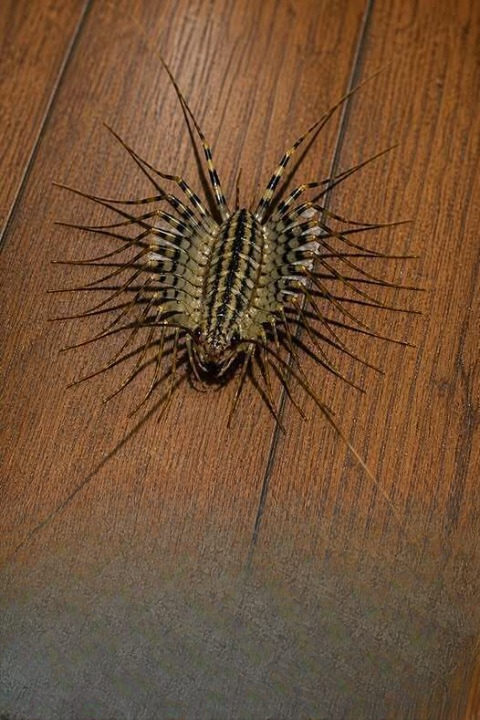
Unlike insects, which have six legs, adult house centipedes have 15 pairs of legs. Their bodies are relatively short compared with their long, slender limbs, and they typically have a grayish-yellow appearance with darker stripes running along the back.
Their antennae help them navigate their surroundings, while their numerous legs allow them to move rapidly across floors, walls, and other surfaces.
This combination gives them an appearance that can seem almost impossible to process at first glance. They look much larger when their legs and antennae are fully extended than their actual body length would suggest.
And then there is the movement.
House centipedes are quick hunters. When disturbed, they may suddenly dart toward a dark hiding place, making them difficult to follow with your eyes. Their speed is one reason a brief encounter can feel much more alarming than the animal’s actual threat to a person.
Why Was It Running Across My Floor at 2 A.M.?
House centipedes are generally most active at night, when they emerge from dark hiding places to search for prey.
During the day, they may shelter in cracks, closets, crawl spaces, basements, bathrooms, or other quiet locations. Damp environments are particularly attractive because these animals need suitable moisture conditions to survive.
A house centipede crossing your floor is usually not looking for a human to frighten. It is searching for food or moving between hiding places.
Its diet can include spiders, silverfish, cockroaches, flies, moths, and other small arthropods. In other words, the creature that startled you may be hunting some of the pests that would otherwise share your home.
That does not make its sudden appearance any less startling. It simply explains why it was there.
House centipedes can also enter buildings through cracks, gaps around pipes, and other openings. If you see one occasionally, it may simply have wandered inside. If you see them repeatedly, it is worth investigating whether your home has excess moisture, accessible entry points, or other insects that provide a reliable food source.
The Strange Truth: House Centipedes Can Help Control Other Pests
Here is the part that changes the way many people think about these animals.
House centipedes are predators. They actively hunt small creatures rather than feeding on household materials, stored food, or your furniture.
Their prey may include several insects and other arthropods that people consider household pests. This makes them part of the small, largely unseen predator-prey relationships that exist inside and around buildings.
Of course, there is an important distinction between being useful and being welcome.
You may appreciate that a house centipede can catch a silverfish, yet still prefer not to encounter one racing across your bathroom floor in the middle of the night. That is perfectly reasonable.
There is also a practical consideration: seeing many centipedes can indicate that other small arthropods are available for them to eat. Rather than focusing exclusively on removing the centipedes, it can be helpful to look for the underlying conditions supporting their prey.
Reducing other pest activity may eventually make the home less attractive to these fast-moving hunters as well.
Are House Centipedes Dangerous to Humans?
For most people, an occasional house centipede is more of a nuisance than a serious health concern.
These animals possess venom-bearing structures that help them subdue prey. However, house centipedes are shy, and bites to humans are uncommon. A bite is more likely if the animal is handled, trapped against the skin, or accidentally pressed against the body.
If a bite does occur, it may cause localized pain, redness, or swelling. Serious effects are uncommon, but individual reactions can vary.
The safest approach is simple: do not handle the centipede with your bare hands. If you are bitten and develop severe pain, significant swelling, spreading redness, difficulty breathing, or other concerning symptoms, seek appropriate medical advice promptly. Difficulty breathing or swelling involving the mouth or throat requires emergency care.
It is also wise not to assume that every fast-moving, many-legged creature is a house centipede. Other centipede species can differ in size and bite potential, and identification from a brief glimpse may be unreliable.
If the animal looks substantially different from the familiar slender house centipede, avoid touching it and use a clear photograph to help identify it.
Why Do They Prefer Damp, Dark Places?
Moisture is one of the most important clues to understanding why house centipedes appear indoors.
Bathrooms, basements, crawl spaces, laundry areas, and poorly ventilated storage rooms may offer the damp, sheltered conditions these animals prefer. Leaking pipes, condensation, and persistent humidity can make such spaces even more attractive.
Darkness provides hiding places, while small cracks and clutter offer opportunities to remain undisturbed during the day.
If centipedes keep appearing, inspect your home for:
- Leaking plumbing or damp spots beneath sinks.
- Condensation around pipes and windows.
- Poor ventilation in bathrooms or basements.
- Gaps around utility lines, doors, and windows.
- Cardboard boxes and clutter in damp storage areas.
- Other insects that may be serving as a food source.
Finding a centipede does not automatically mean your house is dirty. These animals can enter clean, well-maintained homes. Their presence is more useful as a prompt to check the environment than as a judgment on housekeeping.
How to Keep House Centipedes Out Without Overreacting
You do not need to share your living space with centipedes if you would rather not. Fortunately, the most useful first steps usually involve changing the conditions that attract them.
1. Reduce excess moisture.
Repair leaks, improve ventilation, and consider using a dehumidifier in persistently damp areas. Make sure water drains away from the foundation instead of collecting beside it.
2. Seal likely entry points.
Use appropriate caulk or weatherstripping around gaps in walls, doors, windows, and utility penetrations. Repair damaged screens and address openings around pipes.
3. Reduce other household pests.
Store food properly, clean up crumbs, and address any silverfish, cockroach, or other insect activity. Since house centipedes hunt other arthropods, reducing their available prey can help make your home less attractive.
4. Remove clutter from damp areas.
Cardboard, stored bags, and piles of unused items can create dark hiding places. Keep storage areas organized and avoid placing items directly against damp walls.
5. Remove an occasional visitor safely.
If you see one and want it gone, you can use a container and a stiff piece of card to move it outdoors, provided you can do so without touching the animal. A vacuum can also be used for immediate removal if you prefer not to approach it closely.
6. Use pesticides only when necessary.
Repeated sightings may justify further investigation or professional pest-control advice. If a pesticide is needed, choose a product specifically labeled for the intended indoor use and follow its instructions carefully, especially around children and pets. Spraying without addressing moisture, entry points, or other pests may not solve the underlying problem.
Should You Kill Every House Centipede You See?
There is no single answer for every household. Some people prefer to remove any centipede they encounter, while others tolerate occasional visitors because they prey on other small arthropods.
What matters most is understanding the situation.
One centipede spotted near a bathroom drain may simply be a passing visitor. Repeated sightings throughout the home deserve a closer look at humidity, entry points, and possible pest activity.
If you have a serious or persistent problem, identifying the conditions that support it is usually more useful than reacting to every individual animal.
And if the sight of a centipede makes your skin crawl, you do not have to force yourself to like it. Learning what it does is enough to replace some of the fear with a little understanding.
The Next Time Something With Too Many Legs Runs Across Your Floor
Imagine switching on the bathroom light in the middle of the night and seeing that familiar blur disappear beneath the cabinet.
You might still jump. You might still reach for a shoe. That first reaction is difficult to control when something unexpected moves so quickly.
But now you know a little more about what you saw.
A house centipede is not usually trying to attack you. It is a nocturnal hunter looking for small prey, shelter, and suitable moisture. It can help control certain household pests, and its presence may offer clues about conditions inside your home.
You can remove it if you wish, and you can take practical steps to prevent future encounters. The goal is not to turn your bathroom into a wildlife sanctuary. It is to make an informed decision instead of reacting to fear alone.
The most surprising lesson about house centipedes is not that they are beautiful, harmless in every circumstance, or deserving of a place in every home. None of those claims would be entirely accurate.
It is that an animal that looks terrifying at first glance can have a useful role in its environment.
Sometimes, understanding the creature is enough to change the way you see it—even if you still prefer not to meet one at 2 a.m.