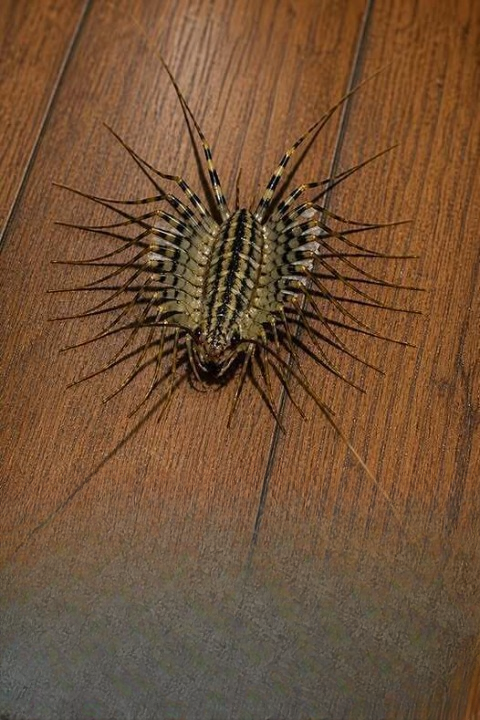
I Saw a House Centipede Racing Across My Floor at 2 A.M.—What I Learned Changed My Perspective
A strange creature suddenly racing across the floor in the middle of the night can be enough to make anyone jump. With dozens of long legs moving almost too quickly to follow, a house centipede can look like something from a horror movie. But behind its unsettling appearance is a fascinating household predator that often helps control other pests. Understanding how house centipedes live, what attracts them indoors, and whether they pose a genuine risk can turn a frightening encounter into an opportunity to learn something unexpected about the natural world.
The Night I Encountered a House Centipede
The first thing I noticed was the speed.
It was around two in the morning, and the house was quiet. I had no reason to expect anything unusual as I walked across the room. The floor appeared empty, the lights were dim, and everything seemed perfectly ordinary.
Then something moved near the wall.
For a split second, I could barely make sense of what I was seeing. A small creature with an extraordinary number of long legs raced across the floor before disappearing toward a darker corner.
My immediate reaction was to stop and stare.
It did not move like an ant, a beetle, or any other familiar insect I had encountered indoors. Its legs seemed to ripple beneath its body, creating an almost wave-like movement as it crossed the room.
The creature was gone before I could get a closer look.
I found myself wondering what it was, where it had come from, and whether there might be more hiding somewhere nearby.
If you have ever encountered a house centipede unexpectedly, you may recognize that reaction. Their unusual appearance and remarkable speed can make them seem far more threatening than they actually are.
However, learning about these creatures reveals a different story—one involving hunting, survival, and an unexpected role in the household ecosystem.
What Exactly Is a House Centipede?
The house centipede, scientifically known as Scutigera coleoptrata, is an arthropod commonly found in homes, basements, bathrooms, garages, and other sheltered environments.
Although it is frequently mistaken for an insect, it belongs to a different group of arthropods. Insects generally have six legs as adults, while centipedes have one pair of legs on each body segment.
The house centipede is especially recognizable because of its long, slender legs, relatively small body, and antennae that extend from its head.
Its body is usually yellowish-gray or brownish, often with darker stripes or markings. Its exceptionally long legs give it a distinctive, almost feathery outline.
Unlike many centipedes that remain close to the ground beneath rocks or logs, the house centipede has adapted well to indoor environments.
It can move across walls, floors, and other surfaces while searching for prey. Its ability to navigate narrow spaces and react quickly makes it an effective hunter.
The animal’s appearance may be unsettling, but it is not a supernatural creature, an unusual mutation, or evidence of a dangerous new species.
It is a well-known arthropod with specialized adaptations that help it survive.
Why Does It Have So Many Long Legs?
The house centipede’s legs are its most noticeable feature.
Adult house centipedes typically have 15 pairs of legs, with the final pair extending noticeably farther than many of the others. The legs become progressively longer toward the rear of the body, creating the distinctive appearance that makes this species so recognizable.
These long appendages are useful for movement and navigating its surroundings.
Rather than relying on a slow, steady crawl, the house centipede can move rapidly in short bursts. Its legs coordinate to carry it across surfaces while allowing it to change direction quickly.
This ability is particularly useful when pursuing prey or escaping a potential threat.
Its antennae also play an important role. These sensory structures help the centipede detect information about its environment, including obstacles and nearby movement.
The combination of long legs, sensory antennae, and rapid movement makes it a highly specialized hunter.
Unfortunately, these same adaptations contribute to its frightening reputation.
When a house centipede suddenly appears under a bright light, the speed of its movement can make it difficult to understand what is happening. Its legs may seem to move independently, giving the impression that the creature is far larger or more dangerous than it really is.
In reality, the house centipede’s appearance reflects its way of life rather than an intention to threaten people.
Are House Centipedes Dangerous to Humans?
One of the first questions people ask after encountering a house centipede is whether it can hurt them.
The reassuring answer is that house centipedes generally avoid people and are not considered a significant danger in ordinary household encounters.
They are predators, but humans are not their prey. Their behavior is primarily directed toward finding small arthropods, avoiding threats, and locating suitable places to shelter.
House centipedes possess venom, which they use to subdue prey. A bite is possible if one is handled, trapped against the skin, or otherwise provoked.
However, bites to humans are uncommon, and the effects are generally limited to localized pain and irritation. Reactions can vary, so a bite should not automatically be dismissed if symptoms are significant.
If you encounter one, avoid picking it up with your bare hands. There is usually no reason to handle the animal at all.
If someone experiences severe pain, rapidly increasing swelling, difficulty breathing, or other concerning symptoms after a suspected bite, seek appropriate medical care promptly.
It is also important to distinguish house centipedes from other centipede species. Centipedes vary considerably in size, habitat, and the effects of their bites. Identification matters when assessing a particular encounter.
For most people, however, seeing a house centipede race across a floor is more alarming than medically dangerous.
The Surprising Reason House Centipedes Enter Homes
House centipedes usually enter buildings because indoor environments can provide shelter, suitable temperatures, and access to prey.
They are particularly associated with damp or relatively humid areas, including basements, bathrooms, laundry rooms, crawl spaces, and storage areas.
These locations may offer hiding places during the day and opportunities to hunt when the surroundings are quiet.
Moisture is an important consideration because house centipedes are vulnerable to drying out. Areas with persistent dampness may be more attractive than dry, exposed rooms.
The availability of prey also matters.
House centipedes feed on other small arthropods, including flies, spiders, cockroaches, silverfish, and other insects or similar animals they can capture.
Consequently, an occasional house centipede may simply be moving through a building while searching for food.
Repeated sightings may suggest that suitable hiding places, moisture, or prey are readily available. However, a single sighting does not prove that a home has a serious pest infestation.
If you frequently encounter house centipedes, the most useful approach is to inspect the environment rather than immediately assume that the centipedes themselves are the underlying problem.
Check for leaking pipes, damp corners, water accumulation, damaged window screens, and gaps around doors or utility openings.
Addressing these conditions can make the indoor environment less attractive to centipedes and other unwanted arthropods.
House Centipedes Are Natural Pest Hunters
Perhaps the most surprising fact about house centipedes is that they can help reduce populations of other small household pests.
Their diet includes several arthropods that people commonly prefer not to have indoors.
By hunting these animals, house centipedes participate in the natural food web that exists even inside buildings.
This does not mean they will eliminate every pest or that their presence guarantees a pest-free home. Their feeding activity depends on what prey is available, and they cannot replace effective pest management when a significant infestation exists.
Nevertheless, their role as predators helps explain why they may be found in places where other small arthropods are present.
An individual centipede moving through a basement might be searching for silverfish or another suitable food source. It may also be exploring the area for shelter.
This ecological role offers a useful reminder that not every creature found indoors is necessarily causing damage.
Some arthropods feed on stored materials or damage household items. Others hunt those species. Understanding the difference helps homeowners respond more effectively.
Rather than treating every unfamiliar animal as an enemy, it is often better to identify it first and determine whether any intervention is actually necessary.
Why Do They Move So Quickly at Night?
House centipedes are frequently encountered during nighttime hours, although they may be active at other times as well.
Many of their prey species are also active at night or seek shelter in dark, protected locations during the day. A house centipede can take advantage of these conditions while searching for food.
Darkness and quiet surroundings may also make their movement more noticeable when someone suddenly switches on a light.
The centipede’s rapid movement serves practical purposes. It can help the animal approach prey, avoid threats, and escape when its surroundings change unexpectedly.
When a light suddenly illuminates a room, the centipede may rush toward a wall, crack, or dark hiding place.
This behavior is generally an attempt to escape exposure rather than an effort to approach or attack a person.
Its speed can make it difficult to catch or observe, which may contribute to stories about house centipedes mysteriously disappearing moments after being seen.
In most cases, the animal has simply reached a nearby hiding place.
If you encounter one at night, there is usually no need to panic or chase it around the room. Keeping your distance and allowing it to move away may be the easiest response.
What Should You Do If You Find One Indoors?
Your response depends on where the centipede appears and whether it presents a practical problem.
If it is in an unused basement or another area where it is unlikely to come into contact with people, leaving it alone may be reasonable.
If it is in a bedroom, bathroom, or frequently used hallway, you may prefer to remove it.
Here are several practical options:
- Avoid touching it directly. Although house centipedes are not generally dangerous, handling them unnecessarily creates an avoidable risk of a bite.
- Use a container and a stiff piece of paper. If you can approach it safely, this may allow you to capture and relocate the animal without handling it.
- Reduce indoor moisture. Repair leaks, improve ventilation, and address persistent dampness where possible.
- Seal likely entry points. Check gaps around doors, windows, pipes, and other openings.
- Reduce clutter. Boxes, stored fabrics, and undisturbed corners can provide shelter for many small arthropods.
- Address other pest problems. If you have a persistent cockroach, silverfish, or similar infestation, deal with that problem directly rather than focusing only on the centipedes.
Avoid spraying pesticides indiscriminately. Chemical treatments may affect other organisms and may be unnecessary when sightings are occasional.
If the problem persists or you suspect a broader pest issue, a qualified pest-management professional can help identify the underlying conditions and recommend suitable measures.
How to Make Your Home Less Attractive to House Centipedes
Preventing unwanted encounters is often easier when you focus on the conditions that allow centipedes to survive indoors.
Start with moisture control.
Check for dripping taps, leaking plumbing, condensation, and damp areas beneath sinks. Improve ventilation in bathrooms and laundry rooms where humidity regularly builds up.
Next, inspect the building for entry points. Weatherstripping, properly fitted screens, and sealing suitable gaps can reduce opportunities for arthropods to enter.
Keep storage spaces reasonably organized, especially in basements, garages, and utility rooms. Removing unnecessary clutter can make it easier to inspect corners and identify other pest activity.
Finally, consider whether the home has a recurring insect problem. Because house centipedes are predators, a steady supply of prey may make an area more attractive to them.
If you discover evidence of another pest, identify the species and choose a control method appropriate for that problem.
These steps do not guarantee that a house centipede will never enter your home. Wildlife can still find its way indoors. However, reducing moisture, shelter, and access to prey can make the environment less favorable.
Should You Be Afraid of House Centipedes?
It is perfectly understandable to feel uncomfortable when an unfamiliar creature with dozens of legs races across the floor in the middle of the night.
The sudden movement, unusual body shape, and difficulty following it with your eyes can trigger an immediate reaction.
But fear is not always an accurate measure of danger.
Learning about house centipedes reveals an animal that is adapted for hunting small arthropods and generally prefers to avoid people. Although it can bite under certain circumstances, ordinary sightings rarely present a serious threat.
That does not mean you must welcome one into your bedroom or allow a persistent pest problem to continue.
It simply means that you can make decisions based on identification and practical considerations rather than panic.
Sometimes, understanding a creature’s behavior is enough to make an unexpected encounter feel less alarming.
Final Thoughts: An Unusual Visitor With a Useful Role
That sudden movement across the floor at two in the morning can be startling. A house centipede’s long legs and remarkable speed make it one of the more memorable arthropods people encounter indoors.
Yet its unusual appearance tells only part of the story.
House centipedes are predators that feed on other small arthropods, and their presence may reflect the availability of moisture, shelter, and prey. They generally avoid humans and are not considered a major household danger, although handling them should be avoided.
If you encounter one, take a moment to identify it, keep a safe distance, and consider whether it needs to be removed. If sightings become frequent, inspect the home for damp areas, entry points, and other pests.
The experience can serve as a reminder that our homes are connected to the natural environment in ways we do not always notice.
Sometimes, the creature that first appears frightening turns out to be far less mysterious once we understand how it lives.
And sometimes, a surprising encounter in the middle of the night is simply an opportunity to learn something new about the small animals sharing our world.