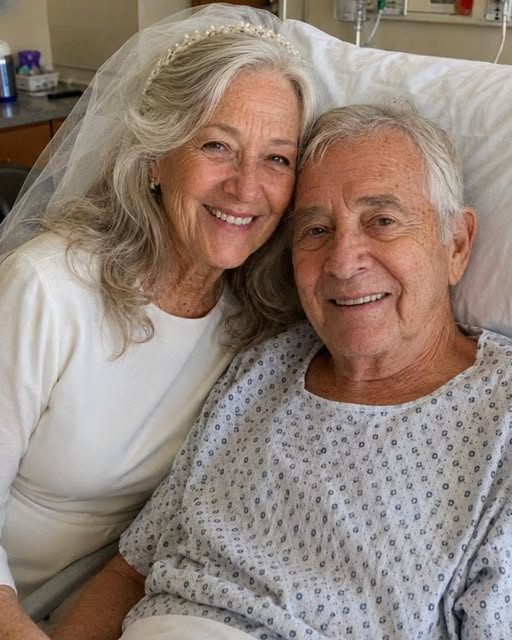
Thomas was my first love.
We were seventeen when we met, back when life still felt endless and every promise seemed permanent.
He lived three streets away from my parents’ house and worked afternoons at his father’s hardware store. I used to stop by after school pretending I needed something small—a notebook, a box of nails, once even a paintbrush I had absolutely no use for—just so I could see him.
Thomas always knew what I was doing.
“You know,” he said one afternoon, smiling as he rang up a packet of screws, “you’ve bought enough hardware this month to build a house.”
“I might.”
“Without lumber?”
“I’m still planning.”
He laughed.
That laugh became one of my favorite sounds.
We spent almost every day together during our final year of high school.
We went to football games.
We shared milkshakes at the diner.
We sat beside the lake talking about what our lives might look like in ten, twenty, even fifty years.
Thomas’s plan was simple.
He wanted to stay in our hometown.
His father expected him to take over the family business one day, and Thomas genuinely loved the place.
I wanted something different.
I had earned a scholarship to a nursing program in another city, almost four hours away.
At first, we convinced ourselves distance wouldn’t matter.
Then graduation approached.
One evening, Thomas asked me to meet him at the lake.
He looked nervous.
“I want you to stay.”
My heart sank.
“You know I can’t.”
“You can.”
“Thomas, I worked for this scholarship.”
“I know.”
“Then why are you asking me to give it up?”
“Because I love you.”
I remember staring at him, torn between two futures.
One was Thomas.
The other was everything I had worked toward.
At seventeen, I didn’t know how to hold both.
“I love you too,” I said. “But I have to go.”
His face changed.
“You’re choosing school over us.”
“I’m choosing my future.”
“I thought I was part of your future.”
Those words stayed with me for decades.
I left that summer.
At first, we wrote.
Then less often.
Eventually, the letters stopped.
Life moved forward.
I became a nurse.
I worked in several hospitals.
I had relationships, though none became permanent.
For a long time, I told myself I was simply too busy.
Then years became decades.
My parents passed away.
Friends retired.
I eventually retired too.
By seventy-two, I realized something surprising.
The city where I had spent most of my adult life no longer felt like home.
So I returned to the little town where I had grown up.
The hardware store was gone.
The diner had become a pharmacy.
The lake looked exactly the same.
My pension covered most of my expenses, but not quite enough, so I took a part-time nursing position at the local hospital.
I liked working again.
I liked having somewhere to go.
Then, one Tuesday morning, I walked into Room 214.
I checked the chart before entering.
Thomas Whitaker.
My hands stopped.
There had to be hundreds of men named Thomas.
Still, something tightened in my chest.
I opened the door.
An elderly man lay in the bed near the window.
He was thin.
His hair was almost completely white.
But when he looked at me, I knew.
The eyes were the same.
For several seconds, neither of us spoke.
Then Thomas smiled.
“Mary?”
My knees almost gave out.
“Thomas?”
He laughed softly.
“I wondered if you’d recognize me.”
I walked closer.
“How could I not?”
That wasn’t entirely true.
Time had changed him.
But something deeper had not.
Thomas had advanced cancer.
The doctors were honest about his condition.
Treatment could make him more comfortable, but there was little chance of recovery.
At first, I tried to maintain professional distance.
That lasted approximately two days.
We started talking.
Then we never stopped.
I learned that Thomas had indeed taken over his father’s business.
He expanded it.
Then sold it years later.
He had traveled surprisingly little.
He had lived in the same house for almost fifty years.
Then I asked the question I had been wondering about since seeing his chart.
“Did you ever marry?”
Thomas looked at me.
“No.”
I blinked.
“Never?”
“No.”
“Why not?”
He smiled faintly.
“You really want the honest answer?”
“Yes.”
“I was stubborn.”
“That sounds familiar.”
He laughed.
Then his expression softened.
“And I suppose part of me never stopped comparing everyone to you.”
I looked away.
“Thomas.”
“It’s true.”
“You had an entire life.”
“So did you.”
“Yes.”
“But neither of us married.”
That was true.
I had come close once.
But something had always held me back.
For the next few weeks, Thomas’s health declined.
Yet emotionally, he seemed lighter.
Sometimes I brought coffee after my shift.
Sometimes I sat beside his bed for an hour after I was technically supposed to go home.
We talked about our old classmates.
Our parents.
The ridiculous arguments we had at seventeen.
One evening, he said, “Do you remember the yellow dress?”
I laughed.
“Unfortunately.”
“You looked beautiful.”
“I looked like a curtain.”
“You looked beautiful.”
There it was again.
That old feeling.
Not exactly the teenage kind.
Something calmer.
Deeper.
As if fifty-five missing years had somehow folded in on themselves.
Then one afternoon, Thomas became unusually serious.
“Mary.”
“Yes?”
“I need to ask you something.”
“You sound dangerous.”
“I’m serious.”
“So am I.”
He reached for my hand.
“I don’t have much time.”
I hated hearing him say it.
“Don’t.”
“It’s true.”
His grip tightened.
“I spent most of my life regretting one thing.”
“What?”
“Letting you walk away believing you had to choose between loving me and becoming who you were supposed to be.”
I stared at him.
“You were seventeen.”
“So were you.”
He smiled.
“I thought love meant keeping you close.”
“And now?”
“Now I think it means wanting you to become yourself, even if that means you leave.”
My eyes filled.
Then he said something that completely stunned me.
“I still love you.”
I laughed through tears.
“You’re seventy-three.”
“So are you.”
“That doesn’t make this less ridiculous.”
“It makes it more urgent.”
I shook my head.
Thomas smiled.
“Marry me.”
I stared at him.
“What?”
“I’m serious.”
“Thomas.”
“I don’t want a grand ceremony.”
“You’re in a hospital.”
“Convenient, isn’t it? Everyone already knows where to find me.”
I laughed despite myself.
Then he became serious.
“I never got to call you my wife.”
My throat tightened.
“I would like to, even if it’s only for a little while.”
I looked at the man I had loved at seventeen.
The man I had somehow found again at seventy-three.
And I said yes.
The staff helped us arrange everything.
A small ceremony was held in a hospital family room.
One nurse brought flowers.
Another found a simple cake.
Thomas wore a dark jacket over his hospital clothes.
I wore a pale blue dress.
When we exchanged vows, his hands shook.
Mine did too.
“You came back,” he whispered after we kissed.
“So did you.”
For one month, I was Thomas’s wife.
It was both the shortest and one of the most meaningful chapters of my life.
We didn’t travel.
We didn’t buy a house together.
We didn’t have decades ahead of us.
We had mornings.
Conversations.
Quiet meals.
We had time.
Then Thomas died.
I was holding his hand.
I thought I had prepared myself.
I hadn’t.
The funeral was small.
Several old friends came.
Former employees attended.
So did people I didn’t know.
Afterward, I returned home completely exhausted.
The next afternoon, someone knocked on my door.
A man in his sixties stood outside holding a rectangular wooden box.
“Mrs. Whitaker?”
The name still sounded unfamiliar.
“Yes?”
“My name is David Coleman. I was Thomas’s attorney.”
I let him inside.
He sat at my kitchen table and placed the box between us.
Then he said something so strange I almost laughed.
“Thomas was right.”
“About what?”
David smiled.
“You walked directly into his trap.”
I stared at him.
“His what?”
“A good one.”
“I’m not sure those words belong together.”
“He said you’d react like that.”
I folded my arms.
“What exactly did my husband do?”
David pushed the box toward me.
“He left this for you.”
“I didn’t marry Thomas for money.”
“I know.”
“He knew.”
“Then why are we talking about an inheritance?”
David shook his head.
“We aren’t. Not exactly.”
I opened the wooden box.
Inside were hundreds of envelopes tied into neat bundles.
Old envelopes.
Yellowed paper.
Some dating back more than fifty years.
My name was written on every one.
Mary.
Mary Evans.
Mary, Chicago.
Mary, wherever life took you.
My breath caught.
“What are these?”
“Letters.”
“I can see that.”
“Thomas wrote one to you every year.”
I looked up.
“What?”
“Sometimes more.”
My hands trembled as I untied the oldest bundle.
The first letter was dated six months after I left for college.
Mary,
I was angry when you left.
I thought you were choosing a life without me.
I understand now that you were choosing the life you needed to live.
I wish I had been proud of you instead of making you feel guilty.
I stopped reading.
My vision blurred.
“There are fifty-five years of these?”
David nodded.
“Most were never mailed.”
“Why?”
“Thomas said writing them helped him talk to you without interfering with your life.”
I picked up another.
It was from my thirtieth birthday.
Another from forty.
Fifty.
Sixty.
One letter simply said:
I saw your name in a nursing newsletter today. Head nurse. I knew you’d do something important.
I started crying.
“He followed my career?”
“As best he could.”
Another bundle contained newspaper clippings.
Professional announcements.
A photograph of me receiving a community nursing award.
I had no idea how he had found any of it.
Then I noticed a smaller envelope resting beneath the letters.
Written across the front:
THE TRAP.
I laughed through my tears.
Of course Thomas had labeled it.
I opened it.
Mary,
If you married me because you thought you were giving a dying old man his final wish, then I’m afraid I tricked you.
I froze.
What?
I read on.
My last wish was not to marry you.
My last wish was to make sure you finally understood that leaving at seventeen was not the mistake you thought it was.
You became exactly the woman you were supposed to become.
I never wanted our marriage to erase those fifty-five years.
I wanted it to honor them.
My throat tightened.
Then came the next surprise.
Inside the box was a deed.
Not for Thomas’s house.
For the old building that had once been his father’s hardware store.
I stared at David.
“What is this?”
“Thomas bought the property back six years ago.”
“But the store closed decades ago.”
“Yes.”
“Why would he buy it?”
David smiled.
“Keep reading.”
Thomas had converted the building into a small community center.
Half was designed for senior activities.
The other half had several rooms intended for free health education, basic screenings, and caregiver support.
He had already funded it for several years.
But it had never opened.
He had been waiting.
“For what?” I asked.
David pointed toward the letter.
I continued.
You spent your life caring for people.
I spent mine building things.
So I built one last thing and hoped you might care for it.
If you don’t want it, walk away.
No guilt.
No obligation.
But if you do want it, the building is yours to run however you choose.
I covered my mouth.
At the bottom, Thomas had written:
You once chose nursing over staying here with me.
I was too young to understand that choice.
Now I do.
So my trap is this:
I got you back to our hometown.
I got you to marry me.
And now I’m giving your life’s work a home three streets from where we first met.
I started laughing and crying at the same time.
“That man.”
David smiled.
“He was pleased with himself.”
“I can imagine.”
There was one final envelope.
Inside was a photograph from high school.
Thomas and me beside the lake.
Seventeen years old.
He had written on the back:
We thought this was the beginning.
Turns out it was.
We just misunderstood the timeline.
For weeks after that, I read the letters slowly.
I couldn’t read too many at once.
Some were funny.
Some were sad.
Some made me angry because I wished he had mailed them.
But most gave me something I never expected.
They gave me back the missing years.
Not literally.
Nothing could do that.
But I finally understood that Thomas hadn’t spent fifty-five years bitterly waiting for me.
He had lived.
He had worked.
He had grown.
And somewhere in the background of his life, he had continued caring about mine.
I decided to keep the community center.
We opened it the following spring.
I named it the Second Chance House.
The local newspaper asked why.
I gave them the simple answer.
“Because some things arrive later than expected.”
I didn’t tell them the whole story.
The building now hosts caregiver support groups, health screenings, book clubs, and weekly lunches for older residents who might otherwise eat alone.
Once a month, I teach a small class on navigating medical appointments.
I’m busier than I expected to be at seventy-four.
And happier.
Thomas’s portrait hangs quietly in my office.
Not a formal photograph.
One of him laughing beside the lake during the final weeks we had together.
Sometimes, after everyone leaves, I sit beneath that picture and read one of his letters.
I still miss him.
I probably always will.
But I no longer think of our story as a tragedy about two people who lost fifty-five years.
We lived those years.
They made us who we were when we found each other again.
Thomas’s lawyer was right.
I walked straight into my husband’s trap.
But it wasn’t a trap designed to take anything from me.
It gave something back.
A first love.
A final month.
A box full of words he had carried for half a century.
And one last reminder that sometimes the life you thought you missed can still find a way to meet you farther down the road.