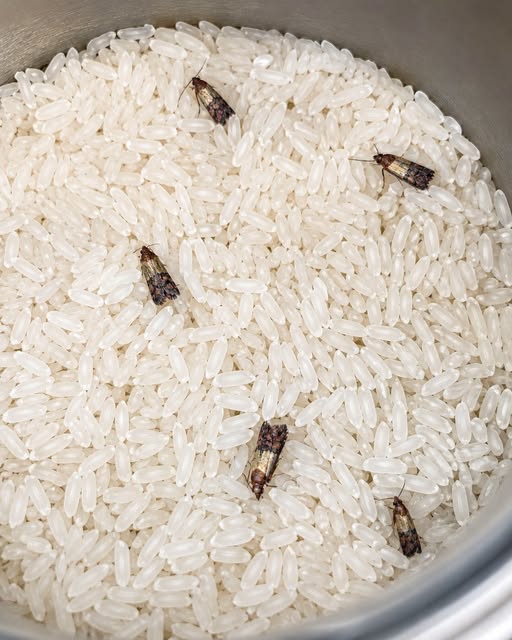
Few things are more frustrating than discovering small moths flying around your kitchen.
At first, you might notice only one or two tiny insects near a cupboard or light fixture. It is easy to assume that they simply came inside through an open window or door.
Unfortunately, pantry moths can be a sign of something happening inside your kitchen cabinets.
These small insects are commonly associated with stored foods such as flour, cereal, rice, pasta, nuts, seeds, dried fruit, pet food, baking ingredients, and other dry goods. In many cases, the adult moths that you see flying around are not the main problem. The bigger issue is the eggs and larvae hidden in an infested food package.
The good news is that pantry moth infestations can usually be managed with a careful cleaning and storage routine.
The key is not simply to kill the adult moths you can see.
You need to identify and remove the source.
What Are Pantry Moths?
The term “pantry moth” is commonly used for several moth species that can infest stored food.
One of the best-known examples is the Indian meal moth.
Adult pantry moths are generally small and may have grayish, brownish, or reddish markings depending on the species.
They can often be seen flying around kitchens, pantries, cupboards, and nearby rooms.
Their behavior can be confusing because adults may appear far away from the actual source of the infestation.
You might see a moth on a kitchen wall while the infested package is sitting inside a cabinet several feet away.
This is one reason simply catching or killing visible moths rarely solves the underlying problem.
Where Do Pantry Moths Come From?
Pantry moths do not necessarily mean that a kitchen is dirty.
This is an important point.
An infestation can begin when eggs or larvae are already present in a packaged food product purchased from a store.
The package may look completely normal when you bring it home.
The insects can then develop over time.
Pantry moths may also spread from one food package to another once they are established in a cupboard.
So discovering pantry moths does not automatically mean that you have poor household hygiene.
It means that one or more stored-food products may need closer inspection.
Common Foods That Can Attract Pantry Moths
Pantry pests are often associated with dry foods.
Potentially affected products include:
-
Flour
-
Rice
-
Pasta
-
Breakfast cereal
-
Oats
-
Cornmeal
-
Baking mixes
-
Crackers
-
Nuts
-
Seeds
-
Dried fruit
-
Chocolate
-
Spices
-
Powdered foods
-
Pet food
-
Birdseed
-
Other grain-based products
Not every pantry moth species will infest every food.
The important lesson is that you should inspect a broad range of dry goods rather than assuming that only flour or cereal could be responsible.
The First Sign May Not Be a Moth
Adult moths are not always the first clue.
Sometimes you may notice fine webbing inside a food package.
You might see clumps in an otherwise loose product.
You could find small larvae or shed skins.
There may also be tiny holes or unusual material around the packaging.
In some cases, the product simply looks different from normal.
If you notice any suspicious signs, inspect the entire package rather than using only the visible adult moths as evidence.
Why Killing the Adult Moths Isn’t Enough
This is one of the most important things to understand.
Adult moths are the visible stage of the insect’s life cycle.
If larvae are still developing inside your pantry, new adults may continue appearing even after you remove several flying moths.
That can make it seem as though the problem is impossible to solve.
It isn’t necessarily a sign that your cleaning efforts failed.
It may simply mean that the source has not yet been found.
The goal should therefore be to locate and eliminate infested food products and clean the storage area thoroughly.
Start With a Pantry Inspection
When you suspect pantry moths, begin by inspecting the area where you have seen them.
Take everything out of the affected cabinet or pantry.
Do not simply move suspicious packages from one shelf to another.
Place products somewhere you can inspect them carefully.
Look at the corners, seams, folds, and undersides of packaging.
Pay particular attention to foods that have been stored for a long time.
Check Every Package Carefully
Pantry pests can be surprisingly difficult to detect.
A package may look perfectly normal from the outside.
Inspect it carefully for:
-
Fine webbing
-
Small larvae
-
Tiny insects
-
Unusual clumps
-
Holes or damaged packaging
-
Shed skins
-
Strange odors
-
Movement inside the product
Don’t assume that an unopened package is automatically free of pests.
Some pantry insects can enter or develop in packaging that does not appear obviously damaged.
Don’t Forget Pet Food
People often focus exclusively on human food.
However, pet food can also be an important part of a pantry pest inspection.
Dry dog food, cat food, birdseed, and other stored animal foods can contain grains and other ingredients that attract certain pantry pests.
If pet food is stored near the kitchen or pantry, inspect it as well.
This is particularly important if moths continue appearing after you have removed suspicious human food products.
What Should You Do With Infested Food?
If you find clear evidence of an infestation inside a food package, the safest approach is generally to discard the affected product.
Do not simply remove the visible insects and continue eating the rest.
Dispose of the package in a sealed bag and remove it from the home.
This helps prevent insects from continuing to develop or spreading to other stored products.
If the infestation is substantial, inspect neighboring packages as well.
What About Nearby Food That Looks Fine?
This is where judgment becomes important.
If a package was stored directly beside an infested product, inspect it carefully.
Some types of packaging provide more protection than others.
Products in tightly sealed containers may be less exposed than foods stored in thin cardboard or bags.
If you’re uncertain whether a product has been contaminated, consider the value of the food compared with the inconvenience of replacing it.
When dealing with a significant infestation, being conservative can simplify the cleanup process.
Clean the Empty Pantry
Once suspicious food has been removed, clean the storage area thoroughly.
Start by removing crumbs and loose food particles.
Vacuum shelves, corners, cracks, and other areas where food debris may collect.
Pay special attention to shelf supports and crevices.
Pantry pests can sometimes leave behind material in places that are easy to overlook.
After vacuuming, clean the surfaces using an appropriate household cleaner.
Follow the cleaner’s label instructions and make sure surfaces are suitable for the product you are using.
Don’t Forget the Vacuum Cleaner
If you vacuum up insects, larvae, food particles, or webbing, don’t simply leave the vacuum sitting inside the kitchen.
Empty the vacuum according to the manufacturer’s instructions.
For a bagged vacuum, replace the bag appropriately.
For a bagless vacuum, empty the container carefully.
The goal is to prevent anything collected during cleaning from remaining inside the vacuum.
Check the Edges and Cracks
Pantry cabinets often contain small spaces where food particles can accumulate.
Look around:
-
Shelf corners
-
Cabinet joints
-
Screw holes
-
Shelf supports
-
Hinges
-
Gaps around cabinets
-
Cracks between shelves
-
Areas beneath liners
A thorough cleaning is more useful than simply wiping the most visible surfaces.
Wash or Replace Shelf Liners
If your pantry has removable shelf liners, inspect them carefully.
If they contain food residue or signs of insects, clean or replace them as appropriate.
Reusable liners should be washed according to their material and manufacturer’s recommendations.
Disposable liners may simply be easier to replace.
The objective is to remove food particles and potential hiding places.
Use Airtight Containers
Once your pantry has been cleaned, consider changing how you store dry goods.
Airtight containers can provide a useful barrier between stored food and pantry pests.
Glass, metal, or sturdy food-safe plastic containers with secure lids are common choices.
Instead of leaving an opened bag of flour in its original packaging, for example, you can transfer it into a sealed container.
This has several advantages.
It can help keep food fresher.
It reduces exposure to moisture and kitchen odors.
And it makes it more difficult for insects to move from one food package to another.
Don’t Rely Only on Cardboard Boxes
Many dry foods are sold in cardboard boxes or thin plastic bags.
These packages are convenient, but they may not provide the same level of protection as a properly sealed storage container.
For foods that you keep for long periods, transferring them to airtight containers can make pantry organization easier and help with pest prevention.
Label the container with the product name and, if useful, the purchase or expiration date.
Consider the Age of Your Pantry Foods
A cluttered pantry can make pest detection much more difficult.
If you have ingredients that have been sitting untouched for years, consider whether you actually need them.
Older food is not automatically infested, but long storage periods can make it easier for a problem to go unnoticed.
A regular pantry rotation can help.
Use older products first and place newer purchases behind them.
This is sometimes called a “first in, first out” approach.
Be Careful When Buying Bulk Foods
Bulk foods can be economical, but they can also be difficult to monitor.
If you purchase large quantities of flour, grains, nuts, or dried fruit, store them appropriately.
Avoid buying more than you can reasonably use before the food loses quality.
Large quantities can also make an infestation more difficult to identify because there is simply more food available.
Inspect Groceries When You Bring Them Home
You don’t need to examine every package with a magnifying glass.
However, it is useful to pay attention to packaging condition.
Look for damaged boxes, open seams, tears, or anything that appears unusual.
If a product looks suspicious when you bring it home, consider returning or replacing it rather than putting it directly into your pantry.
What Are Pantry Moth Traps?
Pantry moth traps are commonly available as monitoring tools.
Many use pheromones designed to attract adult male moths.
They can be useful for determining whether adult moths are still present.
However, traps should not be viewed as the only solution.
A trap can catch adult moths while an infestation continues elsewhere.
The underlying food source still needs to be located and addressed.
Where Should a Trap Be Placed?
Follow the manufacturer’s directions.
Generally, traps are positioned in or near areas where pantry moth activity has been observed.
They can help indicate whether adult moth activity is decreasing after cleanup.
The number of moths caught over time may provide useful information about whether the situation is improving.
However, trap results should be interpreted alongside your inspection and cleaning efforts.
Why Do Moths Sometimes Keep Appearing?
This is a common source of frustration.
You may clean your pantry, throw away several suspicious products, and still see moths afterward.
That does not necessarily mean that the cleaning was ineffective.
There are several possible explanations.
An overlooked food package may still be infested.
Larvae may have already developed before the cleanup.
Some insects may have moved into cracks or other nearby areas.
Or another food source, such as pet food, may have been missed.
The Life Cycle Matters
Pantry moths go through multiple stages.
The adult moth is only one part of the life cycle.
Depending on the species and environmental conditions, eggs can hatch into larvae, which feed and develop before eventually becoming adults.
This explains why adult moths can continue appearing after an initial cleanup.
You may have removed the obvious source but still have insects completing their development.
Patience and repeated inspection can therefore be important.
Don’t Panic if You Find a Few More Moths
Seeing another adult moth after cleaning can be discouraging.
But one additional moth doesn’t necessarily mean the entire infestation has returned.
Continue monitoring the area.
Inspect stored food again.
Check containers and nearby shelves.
If you are using a monitoring trap, observe whether activity appears to be decreasing over time.
The goal is a sustained reduction in activity rather than expecting every insect to disappear immediately.
Keep the Pantry Dry and Organized
Good pantry organization can make future problems easier to identify.
Avoid overcrowding shelves.
Leave enough space to see packages clearly.
Clean up spilled flour, cereal, rice, or other dry ingredients promptly.
A clean, organized pantry makes it easier to spot unusual activity before it becomes a larger problem.
Don’t Forget Spills
Even a small amount of spilled food can become a source of attraction for pests.
Flour can settle into cabinet corners.
Rice can roll underneath shelves.
Cereal crumbs can accumulate behind containers.
Dried foods can collect in cracks.
Regularly vacuuming or wiping the pantry helps remove these food sources.
Store Open Packages Properly
Once a package has been opened, don’t assume that folding the top over is enough.
For long-term storage, transfer dry ingredients into sealed containers where practical.
This is particularly useful for products you use infrequently.
If you bake only occasionally, for example, ingredients such as specialty flours and grains may spend months in your pantry.
Proper containers can help protect them.
Rotate Your Food
A simple rotation system can reduce waste and make pest detection easier.
When you buy a new package of rice, cereal, or flour, place it behind the older package.
Use the older product first.
This prevents forgotten food from remaining untouched at the back of the cabinet for long periods.
What About Natural Remedies?
You may encounter recommendations for herbs, essential oils, bay leaves, vinegar, or other household substances as ways to repel pantry moths.
Some of these methods are popular online, but they should not replace the main steps of identifying infested food, removing it, cleaning the pantry, and storing food properly.
A strong-smelling substance may make a cupboard smell different, but that does not necessarily eliminate an established infestation.
Focus first on the fundamentals.
Should You Spray Insecticide Inside a Food Cabinet?
Be cautious about using pesticides around food.
Never use a pesticide product in a way that conflicts with its label.
If a product is not specifically intended for use in food-storage areas, do not assume it is appropriate simply because it kills insects.
In many pantry moth situations, removing infested food and thoroughly cleaning the storage area can be more appropriate than spraying household insecticide throughout the pantry.
Always read and follow pesticide instructions carefully.
When Should You Call a Pest Professional?
Most small pantry moth problems can be addressed through careful household cleaning and food storage.
However, professional assistance may be useful if:
-
The infestation is extensive.
-
Moths continue appearing despite repeated inspections.
-
You cannot locate the source.
-
Multiple areas of the home are affected.
-
You manage a commercial food-storage environment.
-
You are unsure how to safely address the infestation.
A qualified pest-control professional can help identify the species and source and recommend appropriate treatment.
Can Pantry Moths Damage Your Home?
Pantry moths are primarily a food-storage pest rather than a structural pest.
They are generally associated with stored food products.
The main concern is contamination and food waste rather than damage to the structure of your home.
That said, an established infestation can be extremely frustrating because it may affect multiple stored products.
The sooner the source is identified, the easier it can be to manage.
How to Prevent Another Infestation
Once you have eliminated the immediate source, prevention becomes the next goal.
A few habits can make a significant difference.
Store dry goods in sealed containers.
Clean pantry shelves regularly.
Avoid leaving spills unattended.
Inspect older packages.
Rotate food.
Pay attention to pet food.
Avoid excessive pantry clutter.
And respond quickly if you notice an adult moth.
No prevention strategy can guarantee that pantry moths will never appear again.
They can sometimes arrive inside purchased food.
But good storage practices can make an infestation easier to detect and contain.
A Simple Pantry-Moth Cleanup Plan
If you discover pantry moths, you can work through the process systematically.
Step 1: Identify the activity
Determine where you are seeing moths most frequently.
Check cupboards, pantry shelves, nearby walls, and ceilings.
Step 2: Empty the affected area
Remove the food and other items from the cabinet.
Place products somewhere they can be inspected.
Step 3: Inspect dry foods
Check flour, grains, cereal, pasta, nuts, dried fruit, baking products, pet food, and other susceptible products.
Step 4: Discard confirmed infestations
Place clearly infested products into sealed bags and remove them from the home.
Step 5: Vacuum thoroughly
Clean corners, cracks, shelf supports, and other areas where food particles may have accumulated.
Step 6: Clean the shelves
Wipe the surfaces using an appropriate household cleaner.
Step 7: Improve storage
Transfer susceptible dry foods into suitable airtight containers.
Step 8: Monitor
Consider an appropriate pantry-moth monitoring trap and continue checking the pantry.
Step 9: Repeat inspections
Check the pantry again after cleaning.
If activity continues, search for another source.
Step 10: Seek professional assistance if necessary
If the infestation remains difficult to control, contact a qualified pest professional.
How Long Does It Take to Get Rid of Pantry Moths?
There isn’t a single guaranteed timeline.
The duration depends on factors such as the species, temperature, size of the infestation, number of contaminated products, and whether all sources have been removed.
A small infestation may become manageable relatively quickly once the source is eliminated.
A larger infestation can take longer because insects may still be completing their life cycle.
The important thing is to continue monitoring rather than assuming that the first cleaning session has solved everything.
The Most Important Mistake to Avoid
The biggest mistake is focusing entirely on the adult moths.
Seeing a moth and immediately trying to kill it is understandable.
But the adult is only the visible part of the problem.
If the larvae are still developing inside a bag of food, new adults may continue appearing.
Finding and removing the source is much more important than catching individual moths.
Pantry Moths Don’t Mean Your Kitchen Is Dirty
It is worth repeating because many people feel embarrassed when they discover pantry pests.
An infestation does not automatically mean that your home is unclean.
Food products can occasionally contain pests or eggs before they reach your kitchen.
The insects can then develop unnoticed.
Even a well-maintained home can experience pantry pests.
What matters is how quickly the problem is identified and managed.
Final Thoughts
Discovering pantry moths can be unpleasant, but there is no need to panic.
The most effective approach is usually practical rather than complicated.
Start by inspecting your stored food.
Look for webbing, larvae, unusual clumps, insects, or other signs of infestation.
Discard products that are clearly affected and remove them from the home in sealed bags.
Then thoroughly clean the pantry, paying attention to corners, cracks, shelf supports, and places where food particles may have accumulated.
Afterward, improve your food-storage system.
Airtight containers can help protect dry goods and make future inspections easier. Regular pantry organization can also prevent forgotten products from sitting untouched for long periods.
Monitoring traps can provide additional information about adult moth activity, but they work best as part of a broader cleanup and prevention strategy rather than as the only solution.
Finally, remember that seeing another moth shortly after cleaning does not necessarily mean that your efforts failed. Pantry pests have a life cycle, and some insects may still emerge after the original food source has been removed.
Continue inspecting, cleaning, and monitoring.
If the infestation is unusually large or refuses to disappear despite repeated efforts, professional pest-control advice can help identify the source and determine an appropriate next step.
A clean and organized pantry isn’t just easier to maintain.
It also makes it much easier to notice problems early.
And when it comes to pantry moths, early detection can make the difference between dealing with one questionable package and having to empty the entire kitchen cupboard.