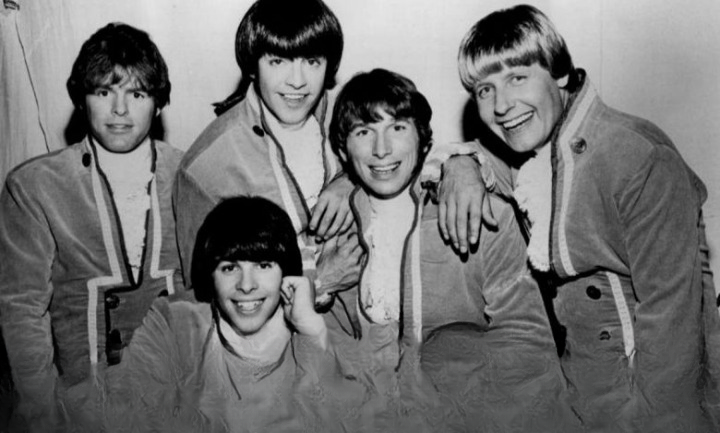
How “Indian Reservation” Became Paul Revere & the Raiders’ Most Recognized Song
When Paul Revere & the Raiders released “Indian Reservation (The Lament of the Cherokee Reservation Indian)” in 1971, the group introduced audiences to a song that differed in tone from much of its earlier work. Known throughout the 1960s for energetic rock performances and catchy pop songs, the band took on a more serious subject with this recording. Its lyrics explored the experiences of Native Americans, drawing attention to themes of displacement, cultural identity, historical injustice, and the lasting consequences of policies that affected Indigenous communities.
The song became one of the band’s best-known recordings and reached a broad audience at a time when American popular music was increasingly addressing social issues. Its commercial success helped bring a difficult historical subject into mainstream entertainment, allowing listeners who might not otherwise have encountered these discussions to hear a musical account of loss, identity, and the desire to preserve cultural traditions.
More than five decades later, “Indian Reservation” remains an important part of the band’s musical legacy. Its history also provides an opportunity to examine how popular songs can introduce historical subjects to a wide audience, how music reflects the concerns of its era, and why the stories of Indigenous peoples deserve to be understood through a wider range of voices and perspectives.
Paul Revere & the Raiders Before 1971
Paul Revere & the Raiders emerged as a prominent American rock group during the 1960s. Led by keyboardist Paul Revere and featuring vocalist Mark Lindsay during the band’s best-known period, the group developed a recognizable sound that combined energetic performances, accessible melodies, and elements of garage rock and pop.
The band gained attention through recordings that appealed to young listeners during a period of significant change in American popular culture. Television appearances, touring, and a distinctive stage presentation helped establish its public identity. The group became associated with lively performances and songs designed to make an immediate impression.
For many listeners, the band’s earlier reputation made the 1971 release particularly notable. “Indian Reservation” presented a more reflective subject than the upbeat material that had helped establish the group’s popularity. Rather than concentrating on romance, youthful excitement, or familiar pop themes, the recording addressed historical experiences connected to Native American communities.
That shift demonstrated how established artists could explore different subjects without abandoning the musical qualities that made their work accessible. A song could remain concise and memorable while also introducing listeners to a complicated historical topic.
The change in subject matter also reflected the broader atmosphere of the late 1960s and early 1970s. American music was expanding beyond traditional entertainment themes, with performers exploring war, civil rights, social inequality, environmental concerns, and questions about national identity. Not every recording approached these subjects in the same way, but the period created opportunities for songs that encouraged audiences to think about issues beyond their personal lives.
The Background Behind “Indian Reservation”
To understand why the song attracted attention, it helps to consider the historical context surrounding Native American communities in the United States.
Indigenous nations have inhabited the lands now known as the United States for thousands of years. They developed distinct languages, governments, spiritual traditions, economies, and systems of community life long before European colonization. These nations were not a single cultural group, and their histories differed according to geography, political relationships, and local circumstances.
European settlement and the later expansion of the United States brought profound changes to Indigenous communities. Treaties, military conflicts, land seizures, forced removals, and government policies reduced Indigenous control over large areas of ancestral territory. Many Native families were separated from their homes, while communities faced restrictions on their political independence and traditional ways of life.
The history of the Cherokee Nation provides one important example. During the nineteenth century, federal and state policies pressured Cherokee people to surrender land in the southeastern United States. The Indian Removal Act of 1830 helped establish the framework for forced relocation, and the subsequent removal of Cherokee people included the journey remembered as the Trail of Tears. Thousands died during forced removals, although the precise numbers vary among historical accounts.
These events were part of a wider pattern affecting numerous Indigenous nations. Different communities experienced different forms of displacement, conflict, and government intervention, and the consequences continued long after the nineteenth century.
The creation and expansion of reservation systems also shaped Native American life. Reservations were established through treaties, executive actions, and federal policies, often under circumstances in which Indigenous nations had limited power to protect their interests. Some communities were confined to land that represented only a portion of their traditional territories. Others faced restrictions on movement, economic opportunity, governance, or cultural practices.
It is important to recognize that Native American history is not solely a story of hardship. Indigenous nations have maintained languages, cultural traditions, political institutions, family relationships, artistic practices, and community identities despite enormous challenges. Native people have also pursued legal rights, economic development, education, self-government, and cultural revitalization across generations.
Against this background, a popular song about reservation life could resonate with listeners who understood the subject through family history, education, community experience, or contemporary public debate.
The Song’s Place in American Popular Music
“Indian Reservation” stood out because it combined a straightforward musical structure with a subject that carried substantial historical weight.
Popular songs often reach audiences through repetition, memorable melodies, and relatively short arrangements. These characteristics can help a recording communicate an idea quickly, even when the subject itself is complicated. In this case, the contrast between an accessible pop-rock presentation and the seriousness of the lyrics helped distinguish the track from many conventional radio releases.
The song did not function as a comprehensive historical account. Like most popular recordings, it condensed a broad subject into a limited musical format. Nevertheless, it gave listeners a recognizable point of entry into conversations about Native American experiences and the historical treatment of Indigenous communities.
This ability to bring a subject into everyday conversation is one reason music can have a lasting cultural role. A song may prompt a listener to ask questions, seek historical information, discuss an issue with family members, or reconsider assumptions they previously accepted without much reflection.
However, popularity alone does not determine whether a song accurately represents the experiences of the people it discusses. A recording can raise awareness while still simplifying history or presenting a perspective that differs from the views of the communities concerned. Understanding its significance therefore requires attention to both its cultural influence and its limitations.
Why the 1971 Release Mattered
The early 1970s were a period in which many Americans were reconsidering national history, government authority, and the relationship between individual rights and public institutions.
The civil rights movement had challenged racial discrimination and encouraged broader discussions about equality. The Vietnam War had intensified debates about government decisions and national responsibility. Environmental concerns were receiving greater public attention, and many younger Americans were questioning established social expectations.
Native American activism was also an important part of this period. Indigenous organizers and community leaders advocated for treaty rights, greater self-determination, improved living conditions, and recognition of tribal sovereignty. These efforts had deep roots in earlier generations of Indigenous resistance and political organizing, but they received increased national attention during the 1960s and 1970s.
The American Indian Movement, founded in 1968, became one of the organizations associated with this era of activism. Other Native organizations, tribal governments, and Indigenous leaders pursued their own strategies, priorities, and campaigns. Their work highlighted issues involving land, federal responsibilities, education, cultural preservation, and the authority of Indigenous nations to govern their communities.
In 1969, the occupation of Alcatraz by Native activists and supporters drew national attention to longstanding disputes over federal Indian policy. In 1972, the Trail of Broken Treaties caravan brought Indigenous concerns to Washington, D.C. The following year, the occupation at Wounded Knee became another highly visible event in the wider struggle over sovereignty, rights, and government policy.
These events demonstrate that Native American activism was not simply a reaction to popular culture. Indigenous people were organizing, speaking publicly, and advocating for political change through their own institutions and movements.
A song released in 1971 entered this broader environment of discussion. Although a commercial recording could not capture the diversity of Indigenous political views, it could contribute to the growing visibility of Native American history in mainstream media.
The Recording and Its Commercial Success
The Raiders’ version of “Indian Reservation” became a major commercial success in 1971. It reached the top position on the Billboard Hot 100, making it the band’s most prominent chart achievement and one of the defining recordings of its career.
The success was notable because the group had already established itself through several years of hit-making. The new recording introduced a subject that was more historically focused than many of the band’s earlier songs, yet it connected with a broad audience.
Commercial success can result from several factors, including a memorable melody, effective production, radio exposure, timing, and the reputation of the performers. In the case of “Indian Reservation,” its subject matter also gave it a distinctive identity. Listeners could recognize it not only as a pop-rock recording but also as a song that attempted to address an important part of American history.
The recording’s chart performance helped ensure that it would remain associated with the band long after its original release. For some listeners, it became their introduction to Paul Revere & the Raiders. For others, it represented a departure from the band’s earlier sound and an example of popular music engaging with social concerns.
A song’s chart position, however, tells only part of its story. It measures commercial reach rather than the depth of its historical understanding or the degree to which the communities represented consider the work meaningful. The recording’s significance can be examined through both its success in the music industry and the conversations it encourages about Indigenous history.
The Song’s Earlier Musical History
The Raiders’ recording was not the first version of the song. Its origins reach back to an earlier composition associated with songwriter John D. Loudermilk, and the song had been recorded before the band’s 1971 release.
This earlier history illustrates how a piece of music can change its cultural standing through interpretation. A song may exist for years before a particular recording brings it to a much wider audience. Different performers can also emphasize different aspects of the same composition through arrangement, vocal delivery, production, and presentation.
The Raiders’ version became the best-known recording for many listeners, but its place in the song’s history should not obscure the earlier work that helped establish it. Understanding popular music often means tracing songs across multiple performers rather than attributing every part of their history to the version that achieved the greatest commercial success.
Cover recordings can introduce existing compositions to new generations. They may also alter the way a song is remembered, particularly when a later performance becomes closely associated with a specific historical moment.
In this case, the 1971 recording gave the song a prominent place in American popular music and helped define its association with Paul Revere & the Raiders.
Mark Lindsay and the Band’s Changing Image
Mark Lindsay’s role as the band’s vocalist was central to the Raiders’ best-known recordings. His delivery helped give the group a recognizable sound, while Paul Revere’s leadership and keyboard playing contributed to its musical identity.
During the 1960s, the band developed a public image that was closely connected to energetic stage performances and a coordinated visual style. This presentation helped distinguish it in a competitive entertainment industry where television, radio, and touring were increasingly important to an artist’s success.
By the time “Indian Reservation” appeared, the band had accumulated considerable experience in recording and performing. The track demonstrated that a group associated with youthful rock entertainment could also deliver a song built around a more serious subject.
Artists often face pressure to repeat the formula that originally made them successful. A recognizable sound can help sustain a career, but audiences may also respond to musicians who explore different material. The Raiders’ recording showed that changing the subject of a song did not necessarily mean abandoning the group’s established musical identity.
The success of “Indian Reservation” also shaped how the band’s career would be remembered. Although the Raiders had other popular recordings, this song became especially prominent in discussions of their legacy.
Music as a Way of Introducing History
One of the most important aspects of “Indian Reservation” is the way it illustrates the relationship between music and historical awareness.
History is ofte