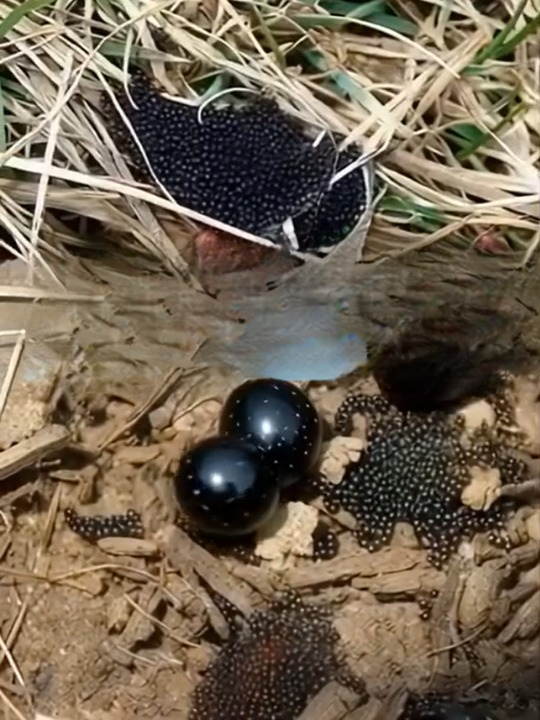
Found Tiny Eggs in Your Yard? How to Identify Them and Keep Your Home and Outdoor Space Healthy
Discovering a collection of tiny eggs in your yard can immediately make you curious. They may be attached to a plant, hidden beneath leaves, gathered along a fence, or resting in a sheltered area of soil. Because many insects and other small creatures lay eggs outdoors, it can be difficult to know exactly what you are looking at without a closer inspection.
One possibility people sometimes consider is tick eggs. Ticks are small arachnids that spend part of their life cycle in outdoor environments, and some species can be found around areas where suitable hosts are present. However, it is important not to assume that every small cluster of eggs found in a yard belongs to ticks. Many harmless insects, spiders, and other organisms produce eggs that can look surprisingly similar.
Understanding what you have found is more useful than immediately assuming the worst.
If you discover unfamiliar eggs outdoors, the best approach is to observe them carefully without touching them unnecessarily, consider where they were found, and look for other signs that may help identify their source. If ticks are present in the area, simple yard-management practices can also help make the outdoor environment less attractive to them.
This guide explains what tiny eggs in a yard may mean, how tick eggs fit into the tick life cycle, how to reduce conditions that can support ticks, and what homeowners should know about outdoor safety.
What Do Tick Eggs Look Like?
Tick eggs are generally very small and can occur in clusters. Their exact appearance depends on the species, but they may be round or oval and can appear translucent, pale, reddish-brown, or darker as they develop.
A group of eggs may be found in a sheltered outdoor location rather than spread individually across an open lawn.
Female ticks typically lay large numbers of eggs during their reproductive stage. After the eggs hatch, the young ticks enter the next stage of their life cycle.
Because tick eggs are so small, identification based solely on appearance can be difficult.
A photograph may help with preliminary identification, but even photographs can be misleading when the object is extremely small. If the discovery is important to you, a local pest-management professional, extension service, or qualified wildlife specialist may be able to provide better identification.
Not Every Small Egg Cluster Is a Tick Egg
This is one of the most important points to remember.
Outdoor environments contain countless insects and other organisms. Some lay eggs in groups, while others place them individually. Certain eggs may be attached to leaves, stems, bark, garden structures, or soil.
For example, you might encounter eggs associated with:
- Moths
- Butterflies
- Beetles
- Spiders
- Aphids
- Other insects
- Snails or slugs
- Various beneficial garden organisms
Some of these creatures are harmless, while others may interact with garden plants.
That means a homeowner should avoid automatically treating an unknown egg cluster as a pest infestation.
Instead, look at the broader environment.
Where were the eggs located? Were there other insects nearby? Are there signs of plant damage? Have you recently noticed ticks on pets, clothing, or outdoor equipment?
Those observations can provide more useful information than the eggs alone.
Understanding the Tick Life Cycle
Ticks have a multi-stage life cycle.
Although details vary between species, ticks generally progress through several stages:
- Egg
- Larva
- Nymph
- Adult
The young larval stage is extremely small and may be difficult to notice. As ticks develop, they require suitable hosts and environmental conditions to continue through their life cycle.
This is one reason why simply finding eggs does not necessarily mean that an immediate increase in adult ticks will occur in a particular area.
Environmental conditions, host availability, temperature, humidity, vegetation, and many other factors influence tick populations.
Understanding this life cycle can help homeowners approach the issue realistically instead of reacting to one unexplained discovery.
Why Ticks Can Be Found Around Homes
Ticks are associated with environments where suitable hosts and favorable conditions are available.
Depending on the species, hosts may include wildlife, pets, livestock, and other animals. Some tick species are associated with wooded environments, while others may be encountered around grass, vegetation, brush, or areas frequented by animals.
A yard does not have to look neglected for ticks to appear.
A well-maintained property can still have ticks if wildlife or other hosts move through the area.
Animals such as deer, rodents, raccoons, and other wildlife may travel through residential properties. Dogs and outdoor cats can also encounter ticks while moving through vegetation.
This is why tick awareness is useful even for homeowners who maintain their yards carefully.
Does Finding Eggs Mean Your Home Has a Tick Problem?
Not necessarily.
Finding a small cluster of unfamiliar eggs does not automatically establish that your property has a tick infestation.
The more useful question is whether there is broader evidence of tick activity.
For example, you might want to pay attention to:
- Ticks found on pets
- Ticks attached to people after outdoor activities
- Repeated tick sightings in vegetation
- Wildlife regularly moving through the property
- Areas of tall grass or dense vegetation
- Brush piles or unmanaged edges
- Leaf accumulation near commonly used outdoor spaces
If none of these signs are present, a mysterious egg cluster may have another explanation.
Identification should come before treatment whenever practical.
Why Location Matters
The location where you find an egg cluster can provide clues.
For example, eggs found directly on a plant may be associated with an insect that uses that plant as part of its life cycle. Eggs located beneath leaves or near protected garden structures may have another origin.
Ticks generally spend significant portions of their life cycle in outdoor environments where environmental conditions and host activity support their development.
If the object you found is attached to a specific plant, take note of that plant.
If it is located in leaf litter, under a piece of wood, near a fence line, or in another sheltered location, record that information as well.
A clear description of the location can make identification easier.
What Should You Do If You Find Unfamiliar Eggs?
The safest first step is simple observation.
Avoid picking up unknown egg clusters with bare hands.
Instead, if possible, take a clear photograph from a safe distance. Include something nearby that gives a sense of scale, such as a coin or ruler, without touching the suspected material.
You can also document:
- The exact location
- Approximate size
- Color
- Whether the eggs are clustered
- Whether they are attached to something
- Whether other insects are nearby
- Whether there is visible plant damage
This information can be useful if you later ask a professional for identification.
Keep Pets in Mind
Pets can be exposed to ticks while spending time outdoors.
Dogs, particularly those that walk through grass, brush, wooded areas, or fields, can encounter ticks during ordinary outdoor activities.
After outdoor time, pet owners can develop a routine of checking their animals for ticks.
Pay particular attention to areas that can be easy to overlook, such as around the ears, neck, legs, and other protected areas.
Regular veterinary guidance is also useful because tick-prevention options vary depending on the animal, location, lifestyle, age, and other factors.
Do not use a product on a pet unless it is specifically intended for that animal and used according to its label or veterinary instructions.
Make Your Yard Less Attractive to Ticks
One of the most practical approaches to outdoor tick management is reducing favorable habitat around frequently used areas.
You do not necessarily need to eliminate every natural part of your property.
Instead, focus on the areas where people and pets spend the most time.
Keep Grass Maintained
Regular lawn maintenance can reduce excessively tall grass around recreational areas.
This does not mean every part of a property needs to look like a golf course. Natural areas can provide valuable habitat for birds, pollinators, and other wildlife.
The goal is to create a reasonable separation between frequently used areas and dense vegetation.
Manage Leaf Litter
Leaves provide habitat for many organisms, including beneficial insects.
However, accumulated leaf litter near patios, play areas, paths, and frequently used outdoor spaces can create conditions that may support various pests.
Consider clearing or managing accumulated leaves around these high-use areas while leaving appropriate natural habitat elsewhere.
Keep Brush Under Control
Dense vegetation around the edge of a property can provide shelter for wildlife.
Where practical, maintain a clear transition between recreational areas and dense brush.
This can also make the yard easier to inspect and maintain.
Create a Clear Border
Some homeowners use landscaping features such as gravel, wood chips, or other defined borders between lawn areas and wooded or brushy sections.
A clear border can make the landscape easier to maintain and may help separate high-use spaces from natural habitat.
The exact design should depend on the property and local environmental conditions.
Wildlife Can Influence Tick Activity
Wildlife plays an important role in outdoor ecosystems.
Many animals can transport ticks from one location to another. That does not mean wildlife should automatically be removed or viewed as a problem.
Instead, homeowners can focus on reducing unnecessary wildlife attractants near living spaces.
For example:
- Secure outdoor trash containers.
- Avoid leaving pet food outdoors.
- Clean up spilled birdseed.
- Keep compost managed properly.
- Seal unnecessary openings around buildings.
- Maintain landscaping around frequently used areas.
These measures can help reduce repeated wildlife visits without attempting to eliminate wildlife from the property.
Check Yourself After Outdoor Activities
One of the simplest habits for people who spend time in tick-prone environments is checking themselves after being outdoors.
After hiking, gardening, camping, or spending time in tall grass or wooded areas, check clothing and exposed skin.
A shower after outdoor activity can also be part of a sensible routine.
Clothing can be inspected before being brought into the house, and outdoor gear can be checked as well.
These small habits can help identify ticks before they remain unnoticed for extended periods.
Clothing Can Make Inspection Easier
When spending time in vegetation, wearing clothing that makes ticks easier to see can be helpful.
Long pants and long sleeves can provide additional coverage, especially in areas where ticks are common.
Some people also tuck pants into socks or boots when walking through dense vegetation.
After returning home, outdoor clothing should be handled thoughtfully and checked for ticks.
Following product instructions is particularly important if using a registered insect repellent on skin or clothing.
What About Insect Repellents?
Certain insect repellents can help reduce exposure to ticks and other biting insects.
Common active ingredients used in tick-repellent products include DEET and picaridin, while certain clothing treatments use permethrin.
However, these products should always be used according to their labels.
Do not assume that a product intended for clothing is automatically appropriate for direct application to skin.
Likewise, some products are not intended for use on children or pets.
If you have questions about which product is appropriate for your family, consult a healthcare professional or pharmacist for personal-use questions and follow the product label carefully.
Why You Should Not Handle Unknown Eggs
Even if the eggs appear harmless, there is little benefit to touching an unknown biological material.
You do not need to pick up an unidentified cluster simply to determine what it is.
Observation and photography are usually better first steps.
If the material is in an area where children or pets frequently play, consider keeping them away from it until you know what it is.
If you believe professional removal is necessary, contact an appropriate local pest-control or wildlife service.
When Professional Help Makes Sense
Professional assistance may be appropriate if:
- You repeatedly find ticks around your home.
- Pets are frequently bringing ticks indoors.
- You discover substantial tick activity around recreational areas.
- The property contains extensive brush or wooded habitat.
- You cannot identify a suspected pest.
- You are concerned about recurring pest activity.
- You are unsure how to manage the property safely.
A professional can assess the environment rather than simply treating one isolated spot.
That distinction matters because pest management is often more effective when the conditions supporting the pest are addressed.
Be Careful With DIY Chemical Treatments
Seeing an unfamiliar pest can create the temptation to immediately spray the entire yard.
That approach is not always necessary.
Pesticides and other chemical products should be used only when appropriate and according to their labels.
Using more product than recommended does not necessarily provide better results and can create unnecessary exposure for people, pets, wildlife, and the environment.
Before treating a large outdoor area, determine whether treatment is actually needed.
In some cases, habitat management and routine inspection may be more appropriate.
Tick Exposure and Health Awareness
Ticks can transmit certain infections, depending on the species, location, and pathogens they carry.
However, discovering an egg cluster does not mean that someone has been exposed to an illness.
Health concerns arise from an actual bite or exposure involving an infected tick, not simply from seeing eggs outdoors.
If you find a tick attached to your skin, prompt and appropriate removal is important.
Afterward, monitor yourself for unusual symptoms and follow local medical guidance if concerns develop.
If you become ill after a known tick exposure, tell your healthcare professional about the exposure and where you were when it occurred.
What If You Find a Tick Attached to You?
If you discover an attached tick, use fine-tipped tweezers to grasp the tick as close to the skin as possible and pull upward steadily.
Avoid squeezing the body of the tick unnecessarily.
After removal, clean the bite area and your hands.
Do not rely on household substances, burning, or other improvised methods to remove a tick.
If you are unable to remove the tick completely or have concerns about the bite, seek medical advice.
Watch for Changes After a Tick Bite
Many tick bites do not result in illness, but certain infections can develop after exposure.
Symptoms can vary depending on the infection.
Possible signs may include:
- Fever
- Chills
- Headache
- Fatigue
- Muscle aches
- Joint discomfort
- Skin changes or a rash
These symptoms can have many causes, so they do not automatically indicate a tick-borne illness.
However, if they occur after a known tick exposure, informing a healthcare professional about the exposure can help with evaluation.
Children and Outdoor Tick Awareness
Children often spend more time close to the ground and may play in grass, gardens, wooded areas, and other outdoor environments.
Parents can make tick checks part of the normal routine after outdoor activities.
Checking clothing, hair, skin, and commonly overlooked areas can help identify ticks early.
It is also useful to teach children not to pick up unfamiliar insects, eggs, or other organisms they find outdoors.
This can become a general outdoor-safety habit rather than something associated only with ticks.
Don’t Forget Outdoor Equipment
Ticks can sometimes be transported by clothing, bags, blankets, camping equipment, and other outdoor items.
After returning from hiking, camping, gardening, or similar activities, inspect equipment before storing it indoors.
This is particularly useful when spending time in areas known for tick activity.
Keeping outdoor gear organized and easy to inspect can make this process much simpler.
A Healthy Yard Does Not Mean an Insect-Free Yard
It is worth remembering that insects and other small organisms are normal parts of a healthy outdoor ecosystem.
Beetles, spiders, caterpillars, ants, butterflies, and countless other organisms contribute to ecological processes.
The goal of responsible yard management is not to eliminate every insect.
Instead, homeowners can focus on preventing unwanted pests from becoming a significant problem around areas where people live, sleep, eat, and play.
This balanced approach is generally more practical and environmentally responsible.
What Tiny Eggs Can Teach You About Your Yard
Finding unfamiliar eggs can actually be a useful reminder to pay attention to the small details of your property.
Instead of immediately assuming that you have a serious pest problem, use the discovery as an opportunity to inspect the surrounding environment.
Ask yourself:
- Is the grass unusually tall?
- Are leaves accumulating near the house?
- Is there dense vegetation close to the patio?
- Are wildlife visiting frequently?
- Are pets spending time in brush?
- Have ticks been found on pets or family members?
- Are there other insects nearby?
These questions can help you understand the broader environment.
A Simple Outdoor Inspection Routine
A few minutes of routine maintenance can go a long way toward keeping outdoor spaces manageable.
Once every week or two, walk around the property and check:
1. Lawn edges
Look for areas where grass is becoming unusually tall.
2. Vegetation
Inspect dense plants and brush near frequently used spaces.
3. Leaf accumulation
Clear excessive buildup around paths, patios, play areas, and entrances.
4. Pet areas
Check where pets regularly spend time.
5. Wildlife attractants
Make sure food, garbage, and other attractants are properly managed.
6. Fences and structures
Look for vegetation growing directly against structures.
7. Personal outdoor equipment
Keep gardening and recreational equipment organized.
A routine like this does not guarantee a tick-free property, but it can make the environment easier to monitor.
What If the Eggs Are Not Tick Eggs?
That is entirely possible.
Many homeowners discover unusual egg clusters that turn out to belong to harmless insects or other organisms.
Before taking action, identification is valuable.
If the eggs are associated with a plant, a local gardening expert or extension service may be able to help identify them.
If the suspected organism is a pest, a licensed pest professional can provide more specific advice.
Avoid using broad chemical treatments simply because an unfamiliar cluster looks unusual.
Take a Photograph Before Removing Anything
If you discover something unusual, take a photograph before disturbing it.
Try to capture:
- A close-up image
- A wider image showing the location
- A photograph showing scale
- The surrounding vegetation
- Any nearby insects
Good photographs can make identification significantly easier.
If possible, take the photographs in natural light and keep the camera steady.
You do not need specialized equipment for a useful preliminary photograph.
The Bigger Lesson: Identification Comes First
The most important lesson from finding tiny eggs in a yard is simple:
Do not assume you know what you have found.
An unfamiliar object can look alarming when viewed without context, but appearance alone is not enough for reliable identification.
Instead:
- Observe the object without touching it.
- Photograph it.
- Record where it was found.
- Look for additional signs.
- Consider whether ticks or another organism are actually present.
- Ask a qualified professional when identification is uncertain.
- Take reasonable preventive measures around frequently used outdoor spaces.
This approach avoids unnecessary panic while still taking sensible precautions.
Keeping Your Home and Yard Comfortable
Outdoor pest management is most effective when it becomes part of ordinary home maintenance rather than an occasional reaction to something unexpected.
Regular lawn care, thoughtful landscaping, pet checks, outdoor inspections, and sensible wildlife management can all contribute to a healthier and more comfortable environment.
You do not need to turn your yard into a sterile space.
Nature will always be present, and that is part of what makes an outdoor environment healthy.
The goal is to create a practical balance between enjoying your yard and reducing unnecessary exposure to unwanted pests.
Final Thoughts
Finding tiny eggs in your yard can certainly raise questions, especially when you are unsure what they are.
While tick eggs are one possibility, they are far from the only explanation. Many insects and other organisms produce small clusters that can look similar to the untrained eye.
Rather than immediately assuming that the discovery represents a major pest problem, start with careful observation and identification.
If ticks are confirmed or repeatedly found around the property, focus on practical measures such as maintaining grass, managing leaf litter, controlling dense vegetation around high-use areas, reducing unnecessary wildlife attractants, and checking people and pets after outdoor activities.
When using repellents or pest-control products, follow the product label carefully and seek professional advice when appropriate.
Most importantly, remember that a single unexplained discovery does not tell the whole story. Looking at the surrounding environment, understanding the life cycle of the suspected organism, and responding proportionately can help you make better decisions for your home, family, pets, and outdoor space.
A tiny cluster of eggs may simply be part of the normal activity happening around your property. With careful observation and sensible maintenance, you can better understand what is living in your yard while keeping the spaces you use most comfortable and well managed.