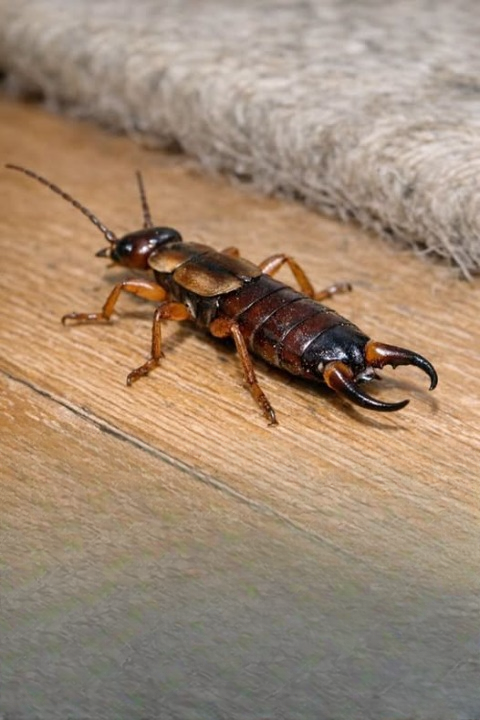
Finding an unfamiliar insect indoors can be surprising, especially when it has distinctive features that make it look more intimidating than it actually is. Earwigs are one of those insects that often cause concern because of their long bodies and the curved pincers located at the end of their abdomen.
Although their appearance may seem alarming at first, earwigs are generally harmless to people and are more interested in finding food and moisture than interacting with humans. Learning a little about these insects can help you respond calmly if you ever discover one inside your home.
What Is an Earwig?
Earwigs are insects belonging to the order Dermaptera. There are many species found around the world, but they share several common characteristics.
Most earwigs have:
- A long, narrow body
- Six legs
- Two antennae
- A pair of curved pincers (called cerci) at the rear
- Colors ranging from reddish-brown to dark brown
The pincers are one of the insect’s most recognizable features, but they are primarily used for defense, mating, and handling food rather than attacking people.
Are Earwigs Dangerous?
For most households, earwigs are considered more of a nuisance than a health concern.
They are not known for spreading diseases in homes, and they do not produce venom.
While an earwig may use its pincers if handled roughly or trapped, these encounters are uncommon and are generally not considered medically significant for most people.
Because they prefer avoiding contact with humans, earwigs typically retreat when disturbed.
Why Do Earwigs Enter Homes?
Earwigs usually live outdoors where they can find moisture, shade, and decaying organic material.
They may occasionally enter houses while searching for favorable conditions, especially during periods of:
- Heavy rainfall
- Hot, dry weather
- Changes in outdoor temperatures
- High humidity
Common entry points include:
- Gaps beneath doors
- Small cracks in foundations
- Open windows
- Utility openings
- Spaces around pipes or vents
Once inside, they often seek cool, damp locations.
Where Are They Commonly Found Indoors?
If earwigs enter a home, they are most often discovered in areas with higher moisture levels.
These may include:
- Bathrooms
- Laundry rooms
- Basements
- Crawl spaces
- Garages
- Kitchens
- Areas beneath sinks
They may also hide under boxes, stored items, or other places that provide shelter during the day.
What Do Earwigs Eat?
Earwigs have a varied diet.
Outdoors they may feed on:
- Decaying plant material
- Leaves
- Flowers
- Fruits
- Small insects
- Organic debris
Inside homes they usually survive only briefly unless they find suitable food and moisture.
Because indoor environments are generally less favorable than outdoor habitats, accidental visitors often do not remain indoors for long.
How to Reduce the Chances of Earwigs Entering
Keeping earwigs out of the home usually involves reducing moisture and limiting entry points.
Helpful prevention measures include:
- Repairing gaps around doors and windows
- Sealing cracks in foundations and exterior walls
- Fixing leaking pipes or faucets
- Improving ventilation in damp areas
- Removing piles of leaves, mulch, or debris close to the home’s exterior
- Keeping gutters and drainage systems functioning properly
These steps can also discourage many other household insects.
What Should You Do If You Find One?
If you discover an earwig indoors, there is generally no need to panic.
You can:
- Capture it gently using a container and release it outdoors if practical.
- Vacuum the insect and dispose of the vacuum contents afterward.
- Check nearby areas for excess moisture or possible entry points.
If earwigs begin appearing frequently, it may be worthwhile to inspect the home for conditions that are attracting them.
When to Seek Professional Help
Occasionally finding one or two earwigs indoors is fairly common, particularly during certain weather conditions.
However, if large numbers continue appearing over an extended period, consulting a licensed pest management professional may help identify the source and recommend appropriate solutions.
Professional inspections can also determine whether moisture issues or structural openings are contributing to recurring insect activity.
Common Myths About Earwigs
Earwigs have been the subject of folklore for centuries, leading to several persistent myths.
One well-known misconception suggests that earwigs crawl into people’s ears while they sleep.
There is no scientific evidence that this is normal behavior for earwigs. Like most insects, they generally seek shelter, moisture, and food—not contact with humans.
Understanding these myths can help reduce unnecessary concern when encountering these insects.
Living Comfortably Alongside Nature
Many insects occasionally find their way indoors, particularly as seasons change or weather conditions shift.
Learning to identify common household visitors makes it easier to respond appropriately without unnecessary worry.
Simple home maintenance, good moisture control, and regular inspections can greatly reduce the likelihood of unwanted insects entering living spaces.
Final Thoughts
Although earwigs may look intimidating because of their distinctive pincers, they are generally harmless household visitors that prefer quiet, damp environments over interaction with people.
By understanding why they enter homes, taking practical preventive measures, and maintaining a dry, well-sealed living space, homeowners can minimize encounters while appreciating the important role these insects play in outdoor ecosystems.
A little knowledge goes a long way toward turning an unexpected insect sighting into a manageable—and often temporary—household occurrence.