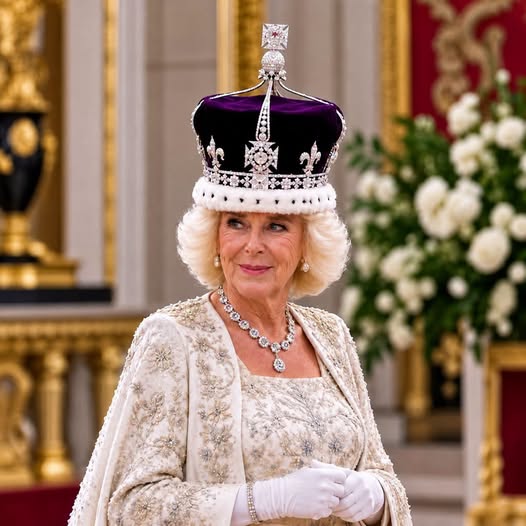
Camilla, Queen Consort: Her Changing Role in the British Royal Family
For decades, Camilla Parker Bowles was one of the most discussed figures connected to the British royal family. Her relationship with King Charles III became part of a much larger public story involving Charles’s first marriage to Diana, Princess of Wales, and the intense media attention surrounding the royal family during the 1980s and 1990s.
Over time, however, Camilla’s public role changed considerably.
Once primarily known to the public through coverage of Charles and Diana’s marriage, she gradually established a different position within the royal family. Her marriage to Charles in 2005 marked an important turning point, and her eventual position as Queen Consort brought a new level of constitutional and public responsibility.
Today, her story is closely connected with the changing nature of the British monarchy and the way public perceptions of royal figures can evolve over several decades.
From Camilla Parker Bowles to Queen Consort
Camilla Rosemary Shand was born in London in 1947. She later married Andrew Parker Bowles, with whom she had two children.
Her connection with Charles, then Prince of Wales, became one of the most closely followed aspects of her life.
Charles and Camilla had known each other for years, and their relationship eventually became a major subject of public attention.
The circumstances surrounding their relationship were particularly sensitive because Charles was married to Diana, Princess of Wales.
The breakdown of Charles and Diana’s marriage became one of the most widely covered royal stories of the twentieth century. Media coverage often focused heavily on Camilla, contributing to a public image that remained difficult for her for many years.
The Charles and Diana Years
Charles married Lady Diana Spencer in 1981 in a ceremony watched by a huge international audience.
Their marriage became one of the most famous royal relationships of the era.
The couple had two sons, Prince William and Prince Harry, and Diana became one of the most recognizable members of the royal family.
Behind the public image, however, their marriage experienced serious difficulties.
Charles and Diana eventually separated in 1992, and their divorce was finalized in 1996.
During this period, reports about Charles’s relationship with Camilla received extensive attention.
Because Diana was enormously popular with the public, coverage of the marriage breakdown often placed Camilla at the center of public discussion.
This association would influence how many people viewed her for years afterward.
Diana’s Influence on the Public Story
Any discussion of Camilla’s changing public image has to acknowledge Diana’s extraordinary popularity.
Diana became known internationally for her charitable work, public appearances, and distinctive approach to royal duties.
Her death in 1997 had a profound impact on Britain and on people around the world.
In the years that followed, memories of Diana remained an important part of the public conversation about Charles, Camilla, William, and Harry.
Camilla therefore entered an especially complicated public environment.
She was not simply being evaluated as an individual royal figure. Her image was often discussed in relation to one of the most famous women in modern British history.
A Gradual Change in Public Perception
Public perceptions rarely remain completely unchanged over several decades.
Camilla’s experience provides an example of how a controversial or heavily scrutinized public figure can gradually become more familiar through years of public service.
Rather than making dramatic attempts to redefine herself, Camilla increasingly focused on official duties, charitable causes, and appearances alongside Charles.
Over time, the public became more accustomed to seeing her as part of the royal family.
Her role became less about the events of the 1990s and more about her responsibilities in the present.
Marriage to Charles
Charles and Camilla married in April 2005.
The ceremony was considerably more private than the grand royal wedding between Charles and Diana decades earlier.
Following the marriage, Camilla became the Duchess of Cornwall.
Her official position meant taking on a greater role in public life and supporting Charles at numerous events.
She also developed her own areas of interest, particularly through charitable work.
The marriage represented a major new chapter in her public life.
Her Charitable Work
Over the years, Camilla became associated with a number of charitable causes.
Among the subjects she has supported are literacy, reading, osteoporosis awareness, domestic violence issues, animal welfare, and other social causes.
Her interest in reading became especially visible through initiatives designed to encourage children and adults to read more widely.
She has also supported organizations working with survivors of domestic abuse and organizations focused on health and social welfare.
These activities became an increasingly important part of her public identity.
Becoming Queen Consort
When Queen Elizabeth II died in September 2022, Charles became King Charles III.
Camilla became Queen Consort.
The change represented a significant moment in the long evolution of her public role.
For decades, much of the public conversation surrounding her had focused on her relationship with Charles.
Now she had an official position within the institution of the monarchy itself.
The title also reflected the constitutional distinction between a monarch and their spouse. Charles became the sovereign, while Camilla became Queen Consort.
The Coronation
Charles and Camilla were crowned at Westminster Abbey on May 6, 2023.
The coronation was a major national and international event.
Camilla’s inclusion in the ceremony reflected her new position within the royal household and her role alongside the king.
The ceremony also represented the culmination of a remarkable transformation in her public life.
Decades earlier, she had been primarily known through intense coverage of Charles and Diana.
By the time of the coronation, she had spent many years carrying out official responsibilities as a senior member of the royal family.
Why the Title Matters
The title of Queen Consort can sometimes cause confusion.
A queen regnant, such as Queen Elizabeth II, is herself the reigning monarch.
A Queen Consort is the wife of a reigning king.
Camilla therefore did not become the sovereign when Charles became king.
Her constitutional position is different from that of a monarch who inherits or holds the throne.
Nevertheless, the position carries significant public responsibilities.
As Queen Consort, Camilla participates in state occasions, accompanies the king at certain official engagements, and supports charitable organizations and public causes.
A New Generation of the Royal Family
Camilla’s role also exists within a royal family undergoing generational change.
King Charles III is part of a generation that inherited a very different media environment from that experienced by his mother, Queen Elizabeth II.
Prince William and Catherine, Princess of Wales, represent a younger generation of senior royals, while Prince Harry and Meghan, Duchess of Sussex, have pursued a different relationship with royal duties and public life.
Camilla’s position therefore exists within a monarchy balancing tradition with changing expectations.
The Importance of Public Service
Members of the British royal family do not hold elected political office, but senior royals undertake a wide range of ceremonial, charitable, and representational responsibilities.
For Camilla, these responsibilities became increasingly important after her marriage to Charles.
Public appearances, visits to charities, meetings with organizations, and participation in national events all contributed to her role.
Her schedule reflects the broader expectations placed on senior members of the royal household.
Media Coverage and the Royal Family
Few institutions receive as much media attention as the British monarchy.
Royal relationships, clothing, public appearances, family disagreements, health announcements, and official events can all attract international coverage.
Camilla’s life has been particularly shaped by this attention.
Her early public image was heavily influenced by coverage of her relationship with Charles.
Later, her official duties provided a different source of public visibility.
The contrast demonstrates how media narratives can change as circumstances change.
Why Her Story Continues to Attract Interest
Camilla’s story contains several decades of British royal history.
It includes her early life, marriage to Andrew Parker Bowles, relationship with Charles, the breakdown of Charles and Diana’s marriage, the intense media coverage of the 1990s, Charles and Camilla’s eventual marriage, and her transition into the role of Queen Consort.
Each stage has been documented extensively.
As a result, renewed attention toward Camilla often reflects broader interest in the history and continuing development of the British monarchy.
The Difference Between Public Image and Private Life
One of the challenges of following royal history is distinguishing documented public information from speculation about private relationships.
Royal figures are frequently discussed in newspapers, documentaries, biographies, television programs, and online commentary.
Not every claim receives the same level of verification.
For this reason, it is useful to separate confirmed events—such as marriages, official appointments, public engagements, and constitutional changes—from interpretations about personal motives or private conversations.
Camilla’s history illustrates why that distinction matters.
Much of the public narrative surrounding her was shaped by years of commentary, but the documented record provides a more stable foundation for understanding her role.
From Controversial Figure to Senior Royal
Camilla’s transformation within the public eye did not happen overnight.
It developed over many years.
Following her marriage to Charles, she gradually became more visible through official engagements and charitable work.
As the years passed, her role became increasingly familiar to the public.
Her appointment as Queen Consort represented the most significant formal change in that process.
It also placed her alongside the king during a period when the monarchy itself was adjusting to a new reign.
The Role of the Queen Consort Today
The Queen Consort does not exercise the constitutional powers of the sovereign simply by virtue of being married to the king.
Instead, her role is primarily public, ceremonial, and supportive.
She can represent the monarchy at events, undertake charitable engagements, host or attend official occasions, and accompany the king during important national and international activities.
Camilla has also maintained causes that are particularly associated with her interests.
This has allowed her to develop a public identity that extends beyond her relationship with Charles.
Looking Back at the Journey
The story of Camilla Parker Bowles is unusual in the history of the British monarchy because her public identity changed so dramatically over time.
For years, she was primarily discussed in connection with Charles and Diana.
Later, she became the Duchess of Cornwall.
Then, following Charles’s accession to the throne, she became Queen Consort.
Each stage carried different expectations and responsibilities.
The transformation illustrates how a person’s public role can evolve through major historical and personal changes.
A Royal Story Spanning Generations
Camilla’s life has intersected with several generations of the British royal family.
She was part of the story surrounding Charles and Diana.
She later became stepmother to William and Harry.
She now serves alongside Charles during his reign.
Her public life has therefore followed the monarchy through a period of significant change.
The institution itself has faced questions about tradition, public expectations, media coverage, and its role in modern Britain.
Camilla’s evolving position is one part of that larger story.
The Legacy of Camilla’s Public Role
Whatever opinions people may hold about the events of the past, Camilla’s documented public career now extends well beyond the controversies that once dominated coverage of her.
She has spent years participating in royal duties, supporting charitable organizations, attending official events, and representing the monarchy.
Her transition to Queen Consort marked a new chapter in that public career.
For historians and royal observers, her story provides an interesting example of how a person’s position within a major institution can change over several decades.
A Changing Chapter in the Monarchy
The British monarchy has experienced enormous changes since Camilla first became known to the public.
The media landscape has transformed.
Royal communication has become more direct.
Public expectations have evolved.
And a new generation has gradually assumed more visible responsibilities.
Camilla’s journey reflects many of these changes.
Her story is not simply about one relationship or one period of royal history. It is also about the evolution of public roles, changing perceptions, and the way individuals can become part of an institution’s history over time.
Today, Queen Camilla occupies a very different position from the one she held when her name first became widely known.
Her decades-long journey—from private individual to Duchess of Cornwall and ultimately Queen Consort—remains one of the more notable transformations in recent British royal history.