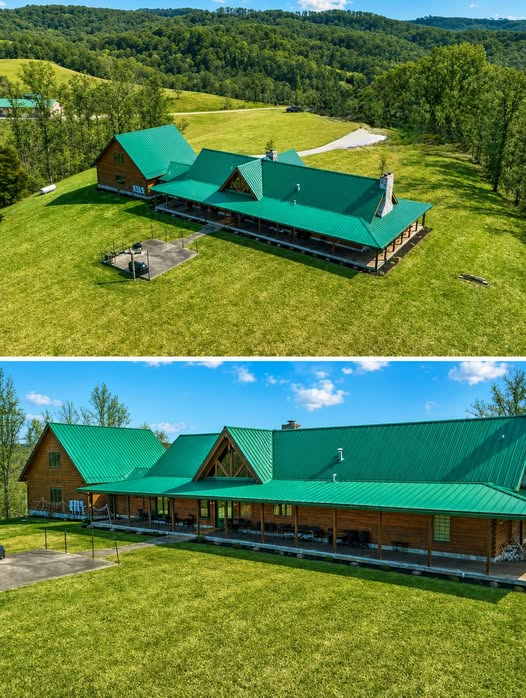
Behind the Listing: What Public Records Reveal About 572 Clydesdale Drive in Grayson, Kentucky
Some real-estate listings attract attention because of a dramatic price, unusual architecture, or an enormous number of rooms. The property at 572 Clydesdale Drive in Grayson, Kentucky, stood out for a different reason: it combined a substantial residence with the infrastructure of a working agricultural property.
The home was publicly marketed as a five-bedroom, four-bathroom residence containing approximately 5,118 square feet. It was built in 2007 and accompanied by a four-car garage.
The larger attraction, however, was the land.
Marketing materials described an estate of approximately 321.5 acres with multiple ponds, barns, fenced pastures, wooded sections, livestock equipment, and a large log-style home.
This was not simply a conventional house surrounded by an oversized yard. It was presented as a residential and agricultural estate capable of supporting cattle or other permitted rural operations.
The property is no longer actively listed for sale. Several major real-estate websites report that it sold in January 2026.
The Main Residence
According to public listing information, the house contains:
- Five bedrooms
- Four bathrooms
- Approximately 5,118 square feet
- A four-car garage
- Multiple fireplaces
- A construction date of 2007
Listing descriptions characterize it as a substantial log residence combining rustic materials with higher-end interior features.
Public marketing materials also referenced Wolf appliances and a Sub-Zero refrigerator. These brands are typically associated with premium kitchens, but buyers should always confirm which appliances and fixtures are included in a sale rather than assuming every photographed item transfers with the property.
The residence appears designed for buyers who want a country setting without giving up the space and conveniences associated with a larger home.
Five bedrooms could accommodate a family, guests, home offices, or other flexible uses. Four bathrooms would also make the house more practical for a larger household or frequent visitors.
The four-car garage may offer room for personal vehicles, farm-related equipment, storage, or a workshop, depending on its actual configuration and any applicable restrictions.
More Than 300 Acres Were Advertised
Several real-estate platforms describe the property as occupying approximately 321.5 acres. Zillow reports the same figure alongside the five-bedroom, four-bathroom, 5,118-square-foot residence. Zillow property record
Homes.com likewise describes the offering as a 321.5-acre estate. Its listing summary says the property included nine ponds, six barns, a gated entrance, automatic waterers, fenced pastures, and wooded land. Homes.com listing record
Those features suggest the property was marketed for more than recreational use. Barns, fencing, water sources, and automatic watering systems can be important infrastructure for livestock operations.
However, acreage information is not identical across every online source.
Some public-record aggregators display smaller figures, such as approximately 53 or 55 acres, for the same address. This may occur when a marketed estate includes multiple parcels while an individual public record reflects only the parcel directly associated with the primary address.
It may also result from incomplete, outdated, or mismatched database information.
The discrepancy is important.
Acreage should be verified through recorded deeds, parcel maps, surveys, title work, and the relevant county records. A buyer should never rely solely on a number displayed by one online platform.
Nine Ponds and Six Barns
The marketing description’s reference to nine ponds and six barns helps explain why the property attracted attention.
Water access can be valuable on a farm, but the existence of a pond does not automatically establish its condition, depth, reliability, water quality, or legal use.
Some ponds may be seasonal. Others may require maintenance, dam inspections, vegetation control, or erosion work.
Similarly, six barns can add substantial utility, but their value depends on factors such as:
- Structural condition
- Roof age
- Electrical service
- Water availability
- Floor and foundation condition
- Ventilation
- Dimensions and door clearance
- Current permitted use
- Accessibility for equipment
- Evidence of moisture, pests, or deterioration
A listing photograph can make a barn appear attractive without revealing its roof condition, framing, drainage, or electrical safety.
Every major outbuilding should be inspected according to its intended use.
A Working Cattle-Farm Description
The property was promoted as a functional cattle farm.
That description may appeal to agricultural buyers because establishing a livestock operation from undeveloped land can require significant time and investment.
Fencing, pasture layout, barns, access lanes, gates, water systems, and handling areas can materially affect whether land is ready for livestock.
Still, “operational cattle farm” is a marketing description rather than a guarantee that every component satisfies a particular buyer’s plans.
A prospective owner would need to investigate:
- The condition and type of fencing
- Pasture quality and carrying capacity
- Soil conditions
- Water availability
- Livestock and equipment included or excluded
- Agricultural zoning and permitted uses
- Access for trailers and machinery
- Drainage and erosion
- Weed and invasive-species management
- Existing leases or grazing arrangements
- Environmental or conservation restrictions
- Availability of veterinary and agricultural services
The appropriate number and type of animals depend on pasture productivity, supplemental feeding, weather, land management, and other conditions. Acreage alone does not determine capacity.
The Sale Price
Several current property websites report that 572 Clydesdale Drive sold on January 2, 2026, for approximately $1.415 million.
Trulia lists a recorded sale price of $1,415,000 and states that the property had previously been offered at $1,999,999. Trulia property history
Realtor.com reports a 2026 sale at approximately $1.42 million and a calculated price of about $276 per square foot. Realtor.com property record
A local real-estate social-media post gives a different sold figure of $1,650,100. That discrepancy may reflect multiple parcels, additional property, transaction components, a later correction, or inaccurate promotional information.
The recorded deed and county transfer records would be the most appropriate sources for confirming the final legal consideration and exactly what land was included.
Why Price Per Square Foot Is Incomplete Here
A price of approximately $276 per square foot can be useful when comparing conventional homes of similar size in the same market.
It is less informative for a large farm estate.
The transaction may include hundreds of acres, ponds, barns, fencing, roads, gates, livestock infrastructure, timber, and other improvements.
Dividing the sale price only by the residence’s square footage assigns no separate value to the land and agricultural features.
Likewise, dividing the price by the advertised acreage would ignore the value of the house and buildings.
A farm appraisal may use several approaches, including:
- Comparable rural sales
- Agricultural productivity
- Land quality
- Timber value
- Replacement cost of improvements
- Condition of the residence and barns
- Income generated through leases or operations
- Location and accessibility
A simple online calculation cannot capture all of these factors.
The Appeal of a Private Rural Estate
For the right buyer, a property of this scale may offer exceptional privacy.
A gated entrance, wooded areas, and hundreds of advertised acres can create significant separation from neighboring homes and public roads.
The land may also support recreation, hiking, hunting where legally permitted, wildlife observation, farming, gardening, or forestry.
Yet privacy carries responsibility.
Maintaining long driveways, fences, ponds, barns, pastures, and wooded land can require specialized equipment, contractors, and ongoing expense.
Storm damage or a failed section of fencing may need immediate attention. Roads can require grading, drainage, snow removal, or gravel. Barn roofs and water systems may create significant repair costs.
A buyer should prepare an annual maintenance budget based on professional inspections and realistic estimates.
Utilities and Rural Infrastructure
Large rural properties may rely on systems different from those found in a suburban neighborhood.
Potential buyers should verify:
- The source and capacity of the water supply
- Septic-system location, condition, and permits
- Electrical service to the residence and barns
- Heating and cooling systems
- Propane or other fuel storage
- Internet and mobile-phone coverage
- Generator or backup-power arrangements
- Road ownership and maintenance responsibility
- Emergency-service access
- Waste and recycling arrangements
A house may have excellent finishes while still depending on an aging well, septic system, or private road that requires substantial investment.
The presence of automatic livestock waterers also raises questions about the water source, winterization, pressure, maintenance, and energy use.
Land and Environmental Due Diligence
Before purchasing a large agricultural property, a buyer should review far more than the house.
A survey can establish parcel boundaries and identify encroachments, easements, rights of way, and access issues.
Title work may reveal mineral rights, timber rights, utility easements, conservation restrictions, or other interests affecting ownership.
Additional considerations include:
- Flood zones
- Wetlands
- Pond and stream regulations
- Soil characteristics
- Erosion risk
- Previous chemical or fuel storage
- Abandoned wells or septic systems
- Waste-disposal areas
- Underground tanks
- Agricultural conservation programs
- Property-tax classifications
- Hunting or farming leases
- Boundary fencing responsibilities
Kentucky property law, local zoning, and agricultural rules should be reviewed with qualified local professionals.
The Value of the Log-Home Design
Log homes can offer warmth and distinctive character, but they also require specialized inspection and maintenance.
Buyers should examine:
- Moisture intrusion
- Insect activity
- Condition of stains and sealants
- Checking or cracking in logs
- Gaps around windows and doors
- Roof overhangs and drainage
- Exterior exposure to sun and rain
- Settlement around openings
- Previous repairs
Not every crack in a log is structurally significant. However, someone experienced with log construction should evaluate the building rather than applying standards intended only for conventional framing.
Maintenance history is especially important. Deferred exterior care can lead to expensive repairs.
Why the Property May Have Taken Time to Sell
Homes.com reports that the property spent approximately 282 days on the market.
A longer marketing period does not automatically mean something was wrong.
Large rural estates have a narrower buyer pool than ordinary houses. A purchaser must want the residence, location, acreage, farm infrastructure, and financial responsibilities at the same time.
Financing can also be more complex when a transaction combines residential and agricultural features. Conventional mortgage products may not fit every large-acreage property.
Inspections, surveys, appraisals, title work, and negotiations can take longer.
The difference between the earlier asking price and the reported sale price may reflect market conditions, negotiations, property scope, inspections, or other factors that are not publicly explained.
It should not be used to invent a story about financial distress or a desperate seller.
What Online Listings Cannot Tell You
Public real-estate websites are useful, but they are not complete.
They cannot reliably explain:
- Why the owners sold
- Whether another buyer competed for the property
- What concessions were negotiated
- Which equipment or livestock transferred
- Whether inspection issues affected the price
- How multiple parcels were handled
- Whether the public sale amount includes every component
- The current condition of the home and farm
Claims about “unexpected circumstances” or secret competition should not be presented as fact without documented evidence.
A recorded transaction tells us that ownership changed. It does not reveal the private motives of the people involved.
The Property Today
Current online sources indicate that 572 Clydesdale Drive is not actively available for sale.
The property’s 2026 transaction remains notable because it combined a large residence with extensive agricultural land and infrastructure.
The most consistently reported residential details are:
- Built in 2007
- Five bedrooms
- Four bathrooms
- Approximately 5,118 square feet
- Four-car garage
The most widely repeated marketing details describe:
- Approximately 321.5 acres
- Nine ponds
- Six barns
- Fenced pastures
- Automatic waterers
- Gated access
- Wooded sections
- A working cattle-farm setup
Because acreage and sale-price figures differ across some platforms, official records should be consulted for definitive information.
The Real Story Behind the Listing
The verified story of 572 Clydesdale Drive is not a hidden scandal or a dramatic competition between mysterious buyers.
It is the story of an unusual property that required the market to value several things at once: a large home, substantial acreage, agricultural improvements, water features, privacy, and the responsibilities of operating a rural estate.
The property’s reported sale below its earlier asking price does not necessarily mean it was a bargain, a failure, or a source of conflict.
It means a buyer and seller eventually agreed on terms that may have reflected the property’s condition, market demand, transaction structure, and intended use.
For people who appreciate rural real estate, the listing remains fascinating.
It demonstrates why farms and large estates cannot be evaluated like ordinary suburban homes. The house is only one part of the offering.
Behind it are land, water, fencing, barns, roads, maintenance obligations, legal rights, and long-term possibilities.
That is the real story behind 572 Clydesdale Drive: not a simple house sale, but a complex rural property whose true value depended on far more than the number printed beside the listing.