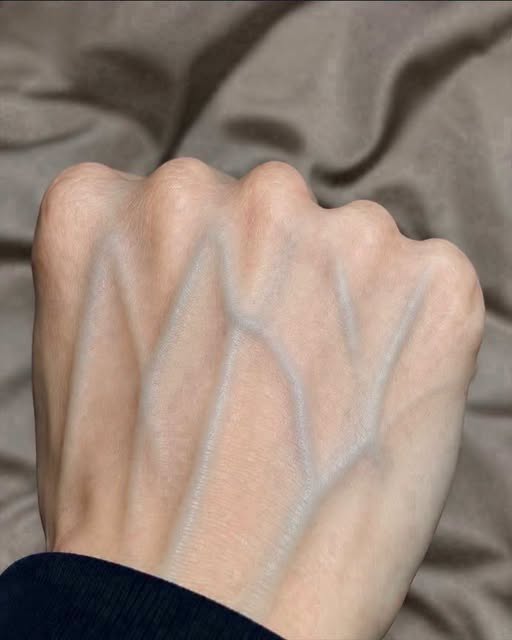
Have you ever looked down at your hands and suddenly noticed that the veins seem much more noticeable than they used to be?
For some people, the veins on the backs of their hands are naturally easy to see. For others, they may become more prominent after exercise, during hot weather, or as the body changes with age.
Seeing visible veins can sometimes make people wonder whether something is wrong.
The good news is that prominent hand veins are often completely normal and can have several ordinary explanations. However, changes that appear suddenly or occur alongside other unusual symptoms may deserve attention.
So what can cause the veins in your hands to stand out?
1. Naturally Visible Veins
One of the simplest explanations is genetics.
Some people naturally have veins that are closer to the surface of the skin. If you have relatively thin skin or less tissue covering the veins, they may be visible even when you’re completely healthy.
You may also notice that your hands look different from someone else’s.
That’s normal.
Just as people have different skin tones, hand shapes, and fingerprints, the visibility of veins can vary significantly from person to person.
If your hand veins have always been noticeable and haven’t changed significantly, there may be no reason to be concerned.
2. Exercise Can Make Veins More Prominent
Have you ever noticed your veins becoming more visible after lifting weights, doing push-ups, running, or completing another demanding workout?
That’s common.
During physical activity, blood flow increases and the muscles become more active. Temporary changes in circulation and pressure can make superficial veins appear more prominent.
This effect is particularly noticeable in the hands and arms.
After you finish exercising and your body returns to its normal resting state, the veins may become less noticeable again.
For this reason, comparing your hands immediately after exercise with how they look while resting may give you two very different impressions.
3. Hot Weather Can Change Their Appearance
Temperature can also influence how visible veins appear.
When you’re warm, blood vessels near the surface of the skin can become more noticeable as the body works to regulate temperature.
That’s one reason your hands may look different on a hot summer afternoon than they do on a cold morning.
A warm shower, spending time outside in hot weather, or exercising in a warm environment can all temporarily make superficial veins easier to see.
Once you cool down, their appearance may return to normal.
4. Changes in Body Composition
Changes in body composition can also affect how prominent veins look.
If someone loses body fat, for example, veins that were previously less noticeable may become easier to see.
This doesn’t automatically mean that anything is wrong.
Similarly, people who are naturally lean may have more visible veins because there is less tissue between the skin and the blood vessels.
That’s why visible veins are common among athletes and people who regularly exercise.
However, significant or unexplained changes in body weight are worth discussing with a healthcare professional, particularly if they happen without intentionally changing your diet or activity level.
5. Aging Can Make Veins More Noticeable
As people get older, the skin gradually changes.
It can become thinner and lose some of its elasticity, while the amount of supportive tissue beneath the skin may also change.
As a result, veins that weren’t particularly noticeable earlier in life can become easier to see.
This is generally a normal part of aging.
You may notice similar changes on other parts of the body as well.
The appearance of the hands can change for many reasons over time, and visible veins alone aren’t enough to determine whether someone has a health problem.
6. Hydration Can Affect How Your Hands Look
Your hydration status can influence the appearance of your skin and blood vessels.
When you’re dehydrated, your skin may appear somewhat different, and veins may sometimes look more pronounced.
That doesn’t mean that every person with visible veins is dehydrated.
In fact, vein visibility has many possible explanations.
Rather than trying to diagnose yourself based on appearance alone, pay attention to the bigger picture.
If you’re thirsty, your urine is unusually dark, or you’re experiencing other symptoms associated with dehydration, drinking appropriate amounts of fluids and addressing the underlying cause may help.
7. Your Hands May Simply Look Different Throughout the Day
It’s easy to forget that our bodies are constantly changing.
Your hands can look different depending on whether you’ve just exercised, spent time outside, taken a shower, eaten a meal, or simply changed your position.
Lighting also makes a surprisingly big difference.
A vein that looks barely noticeable under soft indoor lighting may appear much more prominent under bright overhead lights.
So if you notice your veins one day and become concerned, compare their appearance under normal conditions rather than immediately assuming something is wrong.
When Should You Pay More Attention?
Visible veins by themselves are usually not enough to identify a medical condition.
However, a new or significant change accompanied by other symptoms deserves more attention.
For example, it would be reasonable to speak with a healthcare professional if a vein becomes unusually prominent along with symptoms such as persistent swelling, significant pain, warmth, redness, or noticeable changes in one hand or arm.
The same applies if the change appears suddenly and you don’t know why it happened.
The important point is that the surrounding symptoms matter.
A visible vein that has looked the same for years is very different from a sudden change accompanied by discomfort or swelling.
Don’t Diagnose Yourself From One Physical Feature
One of the biggest mistakes people can make after reading health information online is assuming that a single physical feature automatically points to a specific condition.
Bodies don’t work that way.
The same visible feature can have many different explanations.
Prominent hand veins can be completely ordinary in one person and worth discussing with a healthcare professional in another, depending on the person’s age, medical history, symptoms, and recent changes.
That’s why online information should be used as a starting point for questions, not as a substitute for an individualized medical evaluation.
What Can You Do If You’re Concerned?
Start by paying attention to when the veins become more visible.
Do they stand out after exercise?
Do they become less noticeable when you’re resting?
Does hot weather make them more prominent?
Have they always looked this way?
Or is this a new change?
Keeping track of these details can help you describe the situation more clearly if you decide to speak with a healthcare professional.
It’s also useful to consider any other changes happening at the same time.
Are you experiencing swelling?
Pain?
Skin color changes?
Unusual warmth?
Changes affecting only one hand or arm?
Those details can be much more informative than vein visibility by itself.
The Bottom Line
If the veins on your hands are visible, it doesn’t automatically mean that something is wrong.
For many people, prominent veins are simply a normal feature influenced by genetics, skin thickness, body composition, exercise, temperature, and age.
The appearance of veins can also change temporarily throughout the day.
However, if you notice a sudden or unusual change, particularly when it occurs with pain, swelling, redness, warmth, or other concerning symptoms, it’s sensible to seek professional medical advice rather than trying to determine the cause from an online article.
Your hands can tell you that something has changed, but they cannot provide a diagnosis on their own.
So the next time you notice prominent veins on your hands, don’t panic. Take a moment to consider the circumstances, look for other symptoms, and remember that a visible vein is often just a visible vein.