A quiet walk through the woods can feel completely ordinary.
The trail is peaceful.
Leaves move gently in the breeze.
Birds call from somewhere among the trees.
You are focused on the scenery ahead when, suddenly, you notice something on the ground that you almost stepped beside.
A snake.
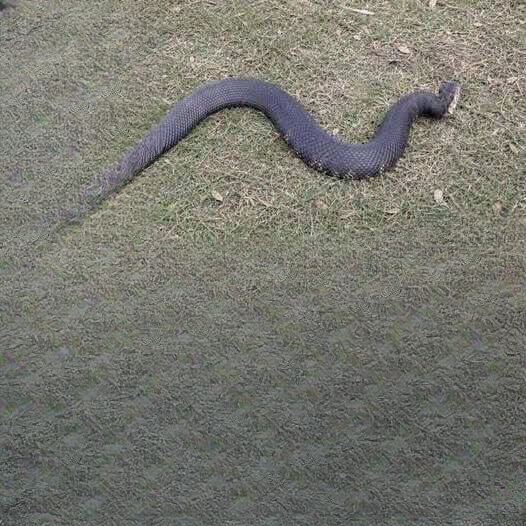
For many people, an unexpected encounter with a copperhead can turn a relaxing afternoon outdoors into a moment of intense caution.
The good news is that understanding how these snakes behave can help people respond appropriately.
Copperheads are venomous snakes, so they should always be treated with respect. At the same time, they generally do not seek out people and often rely on camouflage rather than confrontation when they feel threatened.
The safest approach is simple: notice the snake, give it plenty of space, and allow it to move away on its own.
Why Copperheads Can Be So Difficult to Notice
One of the most important characteristics of copperheads is their camouflage.
Their coloration and patterned bodies can blend remarkably well with natural surroundings.
Leaves, branches, rocks, soil, and forest debris can create a background in which a stationary snake becomes surprisingly difficult to distinguish.
This can be particularly challenging during autumn, when the forest floor may be covered with dry leaves that resemble the colors and patterns on the snake’s body.
A person can therefore walk through an area without realizing a snake is nearby.
That does not necessarily mean the snake is aggressively approaching.
In many cases, it may simply be remaining still.
The animal’s camouflage is an important part of its survival strategy.
A Snake That Would Rather Avoid Trouble
Despite their reputation, copperheads generally do not want to interact with people.
Like many wild animals, they have more reason to avoid a large human than to confront one.
A person is not normal prey.
When a snake encounters something much larger than itself, its first response may be to remain still, hide, or move away if given the opportunity.
This is one reason it is so important not to approach a snake after spotting it.
Giving the animal space reduces the likelihood of a defensive encounter.
The safest wildlife encounter is usually the one in which neither the person nor the animal feels cornered.
Why Accidental Encounters Happen
Most unexpected snake encounters happen because people and snakes are using the same natural environment.
A snake may be resting beside a trail.
It may be beneath vegetation.
It may be near rocks or fallen branches.
It may simply be crossing an area at the same time someone happens to be walking through.
The person may not see it until they are already relatively close.
This is where awareness becomes important.
When walking through areas where snakes may be present, paying attention to the ground can help.
You should be particularly careful around places where you cannot clearly see what is underneath or beyond an object.
Watch Where You Step
Simple habits can reduce the chances of an unpleasant surprise.
When walking through woodland, tall grass, rocky areas, or thick vegetation, pay attention to the trail and the surrounding ground.
Avoid stepping blindly over logs or rocks.
If you need to step across an obstacle, look carefully at the other side before placing your foot down.
This does not mean you need to spend your entire hike worrying about snakes.
It simply means maintaining reasonable awareness of your surroundings.
Good outdoor habits are useful for many reasons beyond snakes.
They can also help prevent trips, falls, insect bites, and other accidents.
Be Careful Where You Place Your Hands
Feet are not the only concern.
People sometimes reach under rocks, into holes, beneath logs, or into thick vegetation without being able to see what is there.
That can create an unnecessary risk.
If you cannot see the area clearly, avoid putting your hands into it.
Use caution when moving natural objects.
A sheltered space may be home to a snake, insect, rodent, or another animal that does not appreciate being disturbed.
Observing wildlife from a distance is safer for everyone.
What Should You Do If You See a Copperhead?
The most important thing is to avoid approaching it.
Do not attempt to touch the snake.
Do not try to pick it up.
Do not attempt to move it with a stick.
And do not deliberately corner it for a photograph.
Instead, create as much distance as practical and allow the snake a way to move away.
If you are on a trail, calmly move back.
If other people are nearby, alert them so they do not accidentally walk toward the snake.
There is usually no reason to interact with the animal at all.
Once you are at a safe distance, the snake can continue on its way.
Don’t Try to Provoke the Snake
Wildlife encounters sometimes become dangerous because a person tries to get a reaction from an animal.
That is especially unwise with a venomous snake.
A snake that is left alone has little reason to interact with a person.
A snake that is approached, cornered, stepped near, or handled may respond defensively.
Trying to make the snake move, striking at it, or getting close enough for a photograph can turn a harmless observation into an avoidable emergency.
The best photograph is one taken from a safe distance.
And if that isn’t possible, it is better to leave the camera alone.
What If a Snake Bites Someone?
A suspected bite from a venomous snake should be treated as a medical emergency.
Move away from the snake so that another bite does not occur.
Then seek emergency medical care as quickly as possible.
If possible, remember or safely note what the snake looked like from a distance, but do not attempt to capture or handle it.
Medical professionals can assess the situation and determine the appropriate treatment.
Do not delay medical care while trying to identify the snake perfectly.
Stay Calm and Limit Unnecessary Movement
After a suspected venomous snakebite, remaining as calm as possible is important.
Panic can make it harder to think clearly and may lead someone to attempt dangerous home treatments.
Move to a safe location and seek professional medical assistance.
If emergency services are available in your area, contact them and follow their instructions.
Do not rely on advice from unverified sources when dealing with a potentially serious bite.
A venomous snakebite requires professional evaluation.
Avoid Old-Fashioned Home Remedies
Snakebite myths have existed for generations.
Some traditional recommendations involve cutting the skin, attempting to suck out venom, applying ice, using a tourniquet, or trying other improvised treatments.
These approaches can cause additional injury and should not be used.
Cutting the skin can create further tissue damage and infection.
Attempting to remove venom by suction is not a reliable treatment.
Ice can cause tissue injury.
Improvised tourniquets can create serious complications.
The safest approach is to move away from the snake and obtain professional medical care.
Don’t Waste Time Trying to Catch the Snake
After a bite, someone may be tempted to capture the snake so doctors can identify it.
That is unnecessary and can create another bite risk.
If it can be done safely, a description or photograph taken from a safe distance may be useful.
But no photograph is worth approaching a venomous snake.
The priority is the person’s safety and timely medical evaluation.
Why Medical Evaluation Matters
Snakebite symptoms can vary.
Some bites may produce pain, swelling, bruising, or other local effects, while more serious cases can cause additional complications.
Symptoms may not provide enough information for someone without medical training to determine how serious the bite is.
That is why a suspected bite from a venomous snake should not be dismissed simply because the person initially feels fine.
Professional assessment is the appropriate response.
Prevention Is Better Than an Emergency
The easiest snakebite to deal with is the one that never happens.
That does not mean avoiding the outdoors.
It means developing sensible habits.
Wear appropriate footwear when walking through areas where snakes may be present.
Pay attention to the trail.
Use a flashlight when walking outside after dark.
Be cautious around fallen logs, rocks, piles of vegetation, and other places where wildlife may seek shelter.
Avoid placing your hands into spaces you cannot see.
These simple habits can reduce the likelihood of an accidental encounter.
Snakes Have an Important Place in Nature
It can be easy to think of a venomous snake only in terms of the danger it represents.
But snakes are also important members of ecosystems.
They interact with populations of rodents, insects, and other animals and form part of the food web.
Like other predators, they contribute to the balance of the environments where they live.
That does not mean people should approach them.
Respecting wildlife means understanding that an animal can have an important ecological role while still needing to be observed from a safe distance.
Don’t Let Fear Ruin Time Outdoors
Seeing a snake can be startling.
That reaction is completely understandable.
But learning how to respond can make the experience much less frightening.
Instead of panicking, stop.
Look carefully.
Create distance.
Allow the snake an opportunity to leave.
Then continue once the area is safe.
Most wildlife encounters do not need to become emergencies.
They simply require awareness and respect.
The Importance of Knowing Your Environment
Before spending time outdoors, it can be useful to learn which snakes and other wildlife are common in the area you are visiting.
Different regions have different species.
Knowing what animals you might encounter can make identification easier and help you understand appropriate safety practices.
However, never assume that you can identify a snake accurately from a quick glance.
Many species can look similar, especially when viewed from a distance or in poor lighting.
If you are uncertain, treat an unfamiliar snake as a wild animal that should not be approached.
A Moment That Changes the Way You Look at the Trail
Imagine walking along a quiet forest path.
You have been enjoying the scenery for an hour.
Then you notice a patterned shape among the leaves.
At first, you may not even realize what you are looking at.
You stop.
You look again.
And suddenly, you recognize the outline of a snake.
The moment can be startling, but it can also teach an important lesson.
Nature is full of animals that are remarkably good at remaining unnoticed.
The safest response is not fear or confrontation.
It is awareness.
Give the animal room.
Take a few steps back.
Let it decide where it wants to go.
Then continue your day.
Respect Wildlife and Enjoy the Outdoors
A copperhead encounter can be memorable, but it does not have to end a day outdoors in panic.
Understanding the animal’s behavior, recognizing the value of camouflage, and practicing basic outdoor awareness can help people respond more confidently.
The most important rules are straightforward:
Keep your distance from snakes.
Never attempt to handle or provoke them.
Watch where you step and where you place your hands.
Use extra caution around logs, rocks, vegetation, and other potential hiding places.
If a venomous snakebite is suspected, seek emergency medical attention promptly and avoid unproven home treatments.
Wild animals deserve space, and people deserve to enjoy nature safely.
A peaceful walk through the woods can change in an instant when a well-camouflaged snake appears at your feet. But with calm behavior, sensible precautions, and respect for wildlife, that unexpected encounter can remain just that—a surprising moment in nature rather than an avoidable emergency.
The goal is not to be afraid of every leaf or rock on the trail.
It is simply to stay aware, respect the animals that share the environment, and know what to do if an unexpected encounter occurs.