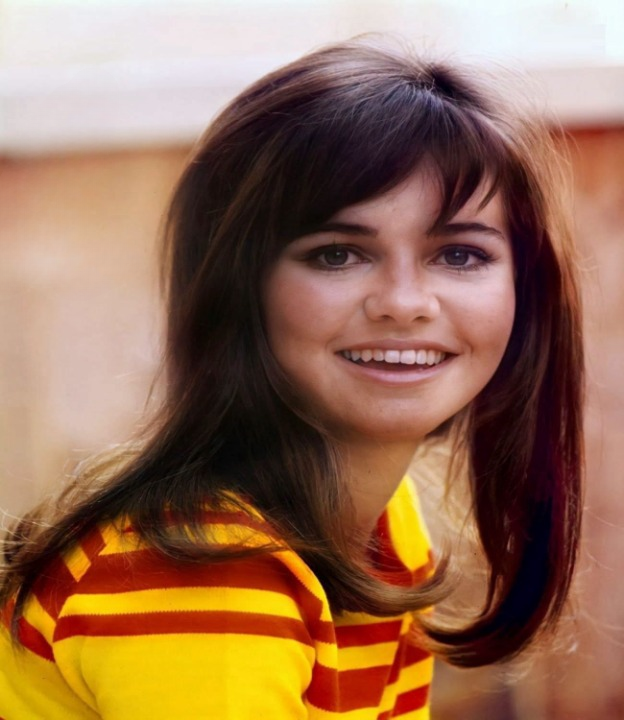
In an industry where youth is relentlessly packaged, marketed, and treated as the ultimate currency, growing older in the public eye is not for the faint of heart. Hollywood has long maintained an unwritten, unforgiving rule for its leading ladies: remain eternally youthful, hide every line, smooth out every wrinkle, and defy the natural passage of time by any surgical means necessary. Millions of dollars flow through clinics specializing in facelifts, fillers, and cosmetic procedures designed to freeze time on screen.
Yet, amidst the sea of artificial perfection, a few rare icons choose a different path. Among them stands the legendary Sally Field. At seventy-six years old, Sally remains one of the most celebrated and respected actresses of her generation, boasting an extraordinary career that spans over six decades. Through all the shifting trends, critical scrutiny, and undeniable pressure of Tinseltown, she has made a profound, unwavering personal choice: she has never had plastic surgery.
Her refusal to alter her face has not always been easy, especially in an environment riddled with institutional ageism. But by embracing her natural appearance, Sally Field has proven that authenticity is far more powerful than perfection, inspiring millions of women to redefine what graceful aging truly looks like.
A Career Built on Raw Authenticity
To understand Sally Field’s refusal to chase artificial youth, one must look back at the foundation of her career. She did not rise to fame as a glamorous ingenue manufactured by studio publicists; she earned her stripes through raw emotional vulnerability and gritty relatability.
In the late 1960s, she captured America’s heart as the endearing teenage nun in The Flying Nun and the spirited young protagonist in Gidget. But Sally quickly realized she wanted more than lightweight sitcom roles. She sought substance, depth, and characters that reflected the messy, complex reality of human existence.
That ambition led to iconic, career-defining performances that demanded emotional transparency over physical perfection. When she starred as the union organizer in Norma Rae—a role that earned her the first of her two Academy Awards—she wasn’t wearing heavy makeup or designer gowns. She stood on a factory table holding up a cardboard sign reading “UNION,” her face streaked with sweat and determination. Later, in films like Places in the Heart and Steel Magnolias, her performances were rooted in deep emotional truth.
Audiences connected with Sally because she looked like a real person. Her face was expressive, capable of registering grief, joy, stubbornness, and fierce maternal love without the hindrance of frozen facial muscles or pulled skin. For an actress whose entire brand was built on emotional authenticity, the idea of altering her face with scalpels and chemicals felt antithetical to her life’s work.
The Unforgiving Culture of Hollywood Ageism
As the decades ticked by, Hollywood’s systemic bias against aging women reared its ugly head. The industry has historically suffered from a profound double standard: while aging male actors are often celebrated as “distinguished” and cast alongside women decades younger, mature actresses frequently find themselves facing a drastic contraction of available roles.
Sally has been fiercely vocal about the harsh realities of ageism in the entertainment business. In various interviews throughout her later career, she has spoken candidly about how scripts for mature women often reduce them to tired tropes—the nagging mother, the fragile grandmother, or the background prop. Producers and casting directors sometimes act as though women past a certain age simply vanish from cultural relevance.
Compounding this professional marginalization is the immense societal pressure to mask the physical markers of time. Actresses are frequently whispered about in the tabloids if they allow gray hair to show or fine lines to appear around their eyes. The unspoken message is clear: stay young, or become invisible.
Many performers, terrified of losing their livelihood or slipping out of the public consciousness, turn to cosmetic surgery as a survival mechanism. They hope that tightening a jawline or smoothing a forehead will buy them a few more years in the spotlight. Sally Field witnessed this trend consume generations of her peers. Yet, despite the professional risks, she refused to bow to the pressure. She understood that chasing an impossible, manufactured youthfulness would only erase the unique character and wisdom earned through a long, rich life.
The Power of Age: Embracing the Lines
Rather than fighting the natural aging process, Sally chose to lean into it with grace, humor, and profound self-acceptance. In interviews, she has often reflected on how liberating it is to let go of the exhausting pursuit of physical perfection.
Aging, as Sally views it, is a privilege denied to many. The lines on her face are not flaws to be eradicated; they are a visual map of her journey. They represent every laugh shared with her children, every tear shed over lost loved ones, every triumph on a movie set, and every hard-fought battle won in an industry dominated by men. To erase those lines would be to erase her own history.
Moreover, her confidence has only deepened with time. In her seventies, Sally radiates a grounded, magnetic self-assurance that no plastic surgeon could ever replicate. She knows who she is. She has nothing left to prove to studio executives, critics, or cynical internet trolls. Her worth is anchored in her immense talent, her character, and her rich personal life as a mother and grandmother, rather than the tautness of her skin.
A Lasting Legacy Beyond Appearance
Sally Field’s decision to age naturally resonates far beyond Hollywood gossip columns. In an era dominated by hyper-filtered social media feeds, impossible beauty standards, and an epidemic of cosmetic procedures among younger and younger demographics, her stance serves as a breath of fresh air.
She stands as a powerful reminder that women do not expire when they leave their twenties or thirties. Wisdom, depth, and lived experience bring a distinct, irreplaceable beauty that cannot be bought in a clinic or achieved with a scalpel.
By continuing to take on dynamic, complex roles in later life—such as her memorable television work in Brothers & Sisters and Winning Time—she has actively challenged industry ageism simply by refusing to step aside or hide her face.