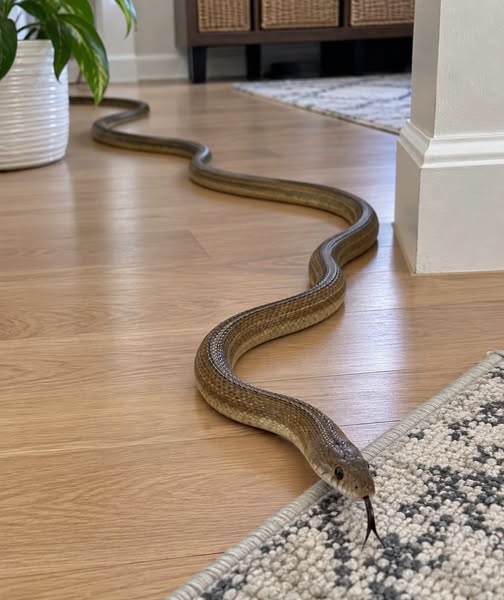
A Snake Inside Your Home? What to Do Safely and Calmly
Finding a snake inside your home can be an unsettling experience. Even if you are generally comfortable around wildlife, seeing a snake unexpectedly in a hallway, garage, basement, bathroom, or another part of the house can cause an immediate feeling of surprise.
The most important thing to remember is that reacting calmly can make the situation much easier to manage.
A snake that enters a home is often looking for shelter, food, water, or a cooler or warmer environment. Its presence does not necessarily mean that it is aggressive or that there is a larger problem. However, because it can be difficult to identify a snake accurately, it is wise to keep your distance and avoid handling it.
If you discover a snake indoors, there are several practical steps you can take to protect yourself, other household members, and pets while giving the animal an opportunity to leave safely.
Stay Calm and Keep Your Distance
The first step is simple: do not rush toward the snake.
A sudden movement, attempt to grab it, or effort to chase it into another room can make the situation more difficult. Instead, move slowly away from the animal and give it plenty of space.
If children or pets are nearby, calmly move them to another area of the home. Dogs and cats may try to investigate the snake, which could create an unnecessary risk for both the pet and the animal.
Keeping everyone away from the immediate area is often the best first response.
Do Not Try to Pick Up the Snake
Unless you are a trained wildlife professional, it is generally safer not to handle an unfamiliar snake.
Some snakes are harmless, while others can pose a medical risk if they feel threatened. Even a nonvenomous snake may bite when it is frightened or cornered.
It can also be difficult for an untrained person to identify a species correctly based only on appearance. Color, pattern, and size can vary considerably, and several species may look similar.
For that reason, distance is usually more useful than identification.
Give the Snake a Clear Path
If the snake is close to an exterior door and you can safely create an exit without approaching it, you may be able to give it a route back outside.
For example, if the animal is in a room with a door leading directly outdoors, you may be able to open that exterior door while staying well away from the snake. Then leave the area and allow the animal time to move on its own.
Do not attempt to push it toward the exit with a broom, stick, or other object.
A snake that feels trapped may respond defensively. Giving it space is usually a better approach than trying to force it in a particular direction.
Close Off Other Areas When Possible
If the snake is in one room and cannot immediately leave, you can reduce the chances of it moving throughout the house by closing nearby interior doors, provided you can do so safely.
This can help keep the animal contained in a limited area until it can leave or a professional can assist.
Do not put yourself between the snake and the only available escape route just to close a door. Your safety should come first.
Keep Children and Pets Away
Children may be curious when they see a snake, especially if they have never encountered one before. Explain that they should not approach, touch, or try to photograph it from close range.
Pets should also be kept away.
A curious dog may bark at or chase the snake, while a cat may attempt to corner it. These reactions can increase stress for everyone involved.
If possible, move pets to a secure room and keep the area around the snake quiet.
Consider Calling a Wildlife Professional
If the snake is in a difficult-to-reach location, appears unusually large, or cannot safely be left alone, contacting a qualified wildlife removal professional can be a sensible option.
A professional may be able to identify the animal and remove it without unnecessary harm.
This can be especially useful when the snake is hiding behind appliances, inside a wall opening, beneath furniture, or in another location where attempting to reach it could put you in a dangerous position.
If there is any uncertainty about whether a snake could be venomous, avoid approaching it and seek professional assistance.
What If You Cannot See the Snake Anymore?
One of the most stressful situations is when you see a snake enter an area and then lose sight of it.
Try not to start searching immediately by moving furniture, reaching into dark spaces, or putting your hands into places you cannot see.
Instead, keep people and pets away from the area and consider closing the room if it can be done safely.
Snakes can hide in surprisingly small and sheltered spaces. Searching with your hands can create an unnecessary risk.
A wildlife professional can help determine how best to locate and remove the animal.
Why Do Snakes Enter Homes?
There are several reasons a snake might enter a building.
Sometimes the structure provides protection from extreme temperatures. Other times, the animal may be following prey such as rodents or insects.
Accessible food can make a property more attractive to wildlife. Water sources, cluttered storage areas, gaps beneath doors, and openings around pipes or foundations can also provide opportunities for animals to enter.
A snake inside a house does not necessarily mean that the property is dirty or poorly maintained. Wildlife can sometimes enter even well-maintained homes when there is a convenient opening.
Check for Possible Entry Points
After the snake has been safely removed, it can be useful to inspect the exterior of the property.
Look around areas such as:
- Gaps beneath exterior doors
- Openings around pipes and utility lines
- Cracks near the foundation
- Damaged screens
- Gaps around garage doors
- Open vents
- Spaces around crawl spaces
- Broken sections of exterior walls
- Uncovered drainage or utility openings
The goal is not to make the home completely inaccessible to every type of wildlife, which may not be realistic, but to reduce obvious openings that could allow animals to enter.
Keep Food and Waste Secure
Food sources can attract rodents and insects, which may in turn attract predators.
Keeping garbage containers closed, cleaning up food spills, and storing pet food appropriately can help reduce unwanted wildlife activity around a property.
Outdoor areas should also be kept reasonably tidy. Piles of wood, unused materials, dense vegetation, and other sheltered spaces can provide hiding places for wildlife.
This does not mean every snake encounter can be prevented. However, reducing attractive conditions around a home can make the property less inviting to some animals.
Be Careful Around Garages and Storage Areas
Garages, sheds, basements, and storage rooms can provide particularly attractive shelter for snakes and other wildlife.
These areas often contain boxes, tools, wood, gardening equipment, and other materials that create dark, protected spaces.
If you are cleaning or reorganizing such an area, wear appropriate protective footwear and gloves when reasonable, and avoid placing your hands into hidden spaces.
Before moving large objects that have been sitting undisturbed for a long time, look carefully around and beneath them.
What If Someone Is Bitten?
If a snake bites someone, treat the situation seriously.
Move away from the animal and seek medical attention promptly. Do not attempt to capture the snake yourself for identification. If it can be done safely from a distance, a photograph taken without approaching the animal may help professionals identify it.
Avoid relying on home remedies or attempting to cut, suck, or otherwise treat the bite yourself.
If the person develops concerning symptoms or appears seriously unwell, emergency medical assistance should be contacted immediately.
A Calm Response Can Make a Big Difference
The first reaction to seeing a snake indoors may be fear, but panic can make the situation harder to manage.
The safer approach is usually straightforward: create distance, move children and pets away, avoid handling the animal, and seek professional help when necessary.
Most importantly, remember that the snake is likely trying to find shelter or move through the environment rather than deliberately approaching people.
Once the animal has been safely removed, the experience can also serve as a useful reminder to check the home for possible entry points and conditions that may attract wildlife.
A few preventative steps around doors, foundations, garages, storage areas, and outdoor spaces may help reduce the chances of another unexpected visitor.
A snake appearing inside your home can certainly be surprising, but staying calm and giving the animal plenty of space is often the safest place to start.