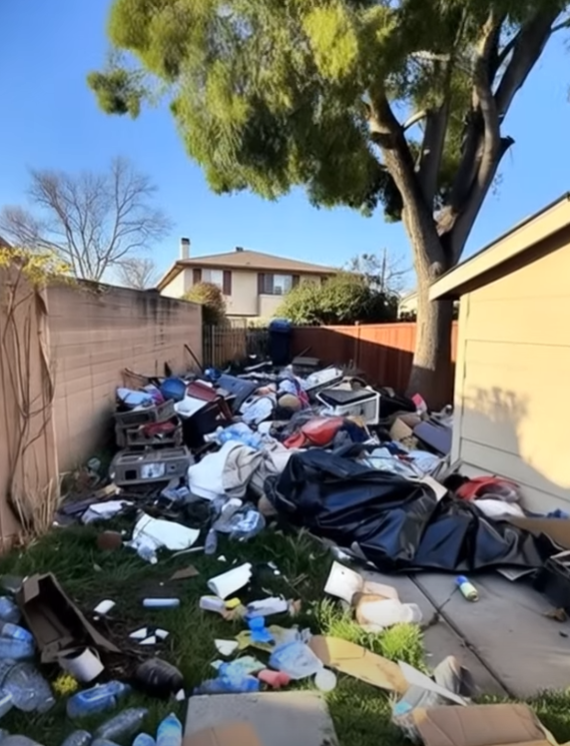
A Neighbor Dumped Trash in My Backyard Over a Fence Dispute, So I Decided to Handle It Properly
Living next to someone can be a wonderful experience when both households respect one another’s space. Neighbors can become friends, help each other with everyday tasks, and create a welcoming atmosphere on the street. But when disagreements arise, even a small issue can gradually turn into a source of ongoing tension.
In my case, the trouble began with a fence.
I had decided to put up a fence along the boundary between my property and my neighbor’s. To me, it was a reasonable way to establish clear property lines, create some privacy, and make my backyard more comfortable. I understood that my neighbor might have a different opinion, but I believed the matter could be discussed calmly.
Unfortunately, we did not see eye to eye.
At first, our disagreements consisted of verbal arguments. Whenever the fence came up, one of us would raise a concern, and the conversation would quickly become unpleasant. We exchanged frustrated remarks on several occasions, but neither of us had done anything beyond arguing.
Although the situation was uncomfortable, I hoped it would eventually settle down. I had no desire to spend every week arguing with the person living next door. I wanted to enjoy my home without feeling that every ordinary decision might lead to another confrontation.
Then, one morning, I discovered something that changed the situation.
When I looked out into my backyard, I noticed that it was covered with piles of trash. Bags, discarded items, and other rubbish had been left across the area I normally kept clean and organized. What had been a pleasant outdoor space now looked neglected and unusable.
My first reaction was disbelief. I could not understand why anyone would deliberately leave such a mess in another person’s yard.
Then I looked toward my neighbor’s house.
He was standing on his porch, watching me. From his expression, I suspected that the incident was connected to our ongoing disagreement about the fence. I remembered our most recent argument and wondered whether he had decided to respond by creating a problem for me.
I could not know everything that had happened simply by looking at him, but the timing made the situation difficult to ignore.
I felt angry, frustrated, and disappointed. I had worked to keep my property in good condition, and now I was faced with cleaning up a mess that I had not created.
My immediate temptation was to walk over and confront him. After all, we had already exchanged enough unpleasant words to fill several conversations. I could easily imagine another argument developing, with both of us becoming more upset and neither willing to back down.
But I also knew that another shouting match would probably accomplish very little.
We had already spent too much time arguing about the fence. If I responded with more insults or tried to embarrass him in return, the conflict could become even more difficult to resolve. I did not want a disagreement over property boundaries to turn into a long-running dispute that affected my home and peace of mind.
So I took a moment to consider my options.
The first thing I needed to do was document what I had found. Before moving anything, I took photographs of the trash scattered across the yard. I made sure to capture the condition of the area and the extent of the cleanup that would be required.
I also considered whether any nearby security cameras might have recorded what happened. If the situation later required assistance from the appropriate authorities or a property manager, having a clear record could be useful.
Next, I thought about the fence itself.
Property-boundary disagreements can become complicated when neighbors have different understandings of where one property ends and another begins. Depending on local rules, there may be requirements involving permits, boundary surveys, fence height, or responsibility for maintenance.
Even when someone believes they have done everything correctly, it can be helpful to review the relevant documents and regulations rather than relying entirely on assumptions.
I decided that I would make sure my own records were in order.
The next question was how to address the trash.
Leaving rubbish on someone else’s property is not a constructive way to settle a disagreement. It creates extra work, may attract pests, and can cause additional problems if the materials include sharp objects or other potentially hazardous waste.
I wanted the mess removed, but I also wanted to avoid creating another confrontation.
Instead of immediately walking onto my neighbor’s porch, I considered contacting the appropriate local service or authority to ask what steps were available. Depending on the circumstances, that might involve a waste-removal service, a property association, a landlord, or a local office responsible for handling dumping complaints.
If there were clear evidence that the trash had been placed on my property intentionally, I could provide the documentation and ask for guidance.
I also considered sending a brief, calm message explaining what I had discovered and requesting that the responsible person arrange for the waste to be removed. Keeping the message factual would make it easier to focus on the problem rather than allowing the discussion to become personal.
I did not need to threaten anyone or make exaggerated claims. I simply needed to establish that the situation was unacceptable and that I intended to address it through appropriate channels.
That was when I realized that the most useful response would not necessarily be the most dramatic one.
When someone feels insulted or mistreated, the desire to get even can be powerful. It may seem satisfying to devise a response that causes the other person inconvenience, especially when the original incident appears deliberate.
However, retaliation often creates a cycle in which each person tries to outdo the other. A dispute that began with a fence can eventually involve property damage, complaints, legal expenses, and strained relationships with other people in the neighborhood.
I did not want that outcome.
My goal was to restore my backyard, protect my property, and make it clear that disagreements should be handled responsibly.
I also wanted to avoid making assumptions that could complicate the situation. Even though I suspected my neighbor was responsible, I knew it was better to rely on evidence and follow the proper process than to act entirely on anger.
The cleanup itself would take time, and I was disappointed that I had to deal with the situation at all. Still, I reminded myself that my response was something I could control, even if I could not control my neighbor’s behavior.
Once the immediate mess was addressed, I planned to reconsider how we handled the fence dispute.
If the boundary remained a point of disagreement, I could arrange for the relevant property records or a professional survey to be reviewed. If the fence complied with local requirements, having reliable documentation might help clarify the matter. If an adjustment were necessary, I could consider the available options without turning the discussion into another personal argument.
I also decided that future conversations should remain brief, polite, and focused on specific issues. I did not have to become friends with my neighbor, but I could maintain reasonable boundaries and avoid unnecessary exchanges.
Living beside someone does not mean that every disagreement must become a battle. Sometimes, the healthiest solution is to communicate clearly, keep records, and seek assistance from someone who can help resolve the issue fairly.
The incident was frustrating, but it reminded me of something important: a person’s response to conflict can have a lasting effect on the outcome.
It is easy to react when emotions are running high. It takes more patience to pause, assess the situation, and choose a response that protects your interests without creating additional problems.
My backyard deserved to be clean, and my property deserved to be respected. I could stand up for those things without allowing the disagreement to determine how I behaved.
In the end, I decided that the best way to handle the situation was to document what had happened, arrange for the trash to be removed, and use the appropriate channels to address the dispute. I would not turn the incident into an excuse for further conflict.
The lesson was simple: when a neighbor crosses a boundary, responding thoughtfully can be more effective than responding in anger. Clear communication, reliable evidence, and a willingness to follow proper procedures can help protect a home while leaving room for a peaceful resolution.
A fence may separate two properties, but it should not have to define the relationship between the people who live on either side of it.