Travel offers an opportunity to relax, explore new places, and enjoy a break from everyday routines. Whether staying in a hotel, a vacation rental, or a guesthouse, most travelers expect their temporary accommodations to provide a comfortable and secure environment.
While the vast majority of stays are uneventful, taking a few moments to familiarize yourself with your surroundings can contribute to both comfort and peace of mind. A simple observation during one trip reminded us of the importance of asking questions rather than making assumptions.
Arriving at Our Rental
My wife and I had planned a short weekend getaway and reserved a vacation rental that appeared to be an excellent fit for our trip.
The listing featured bright photographs, positive guest reviews, and clear descriptions of the amenities. Communication with the host had been prompt and courteous, and everything suggested we were in for a relaxing stay.
When we arrived, the property looked much like the online listing. The rooms were clean, the furnishings were comfortable, and check-in went smoothly.
After unpacking, we began settling in for the evening.
An Unexpected Observation
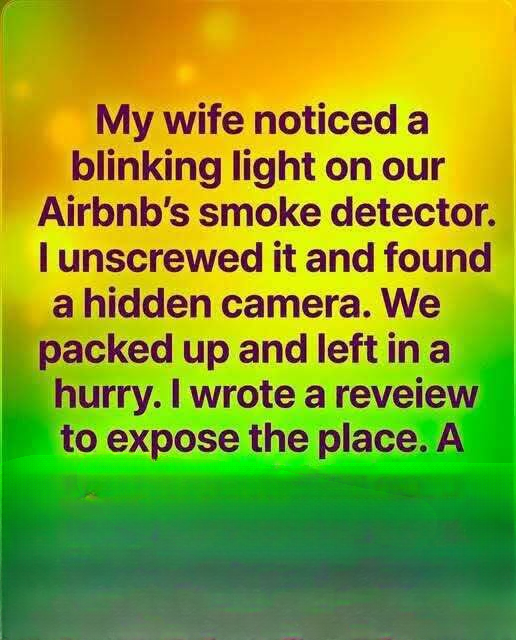
While getting ready for bed, I noticed a small indicator light on the smoke detector attached to the ceiling.
Like many household safety devices, it displayed a blinking light.
Although I had seen similar indicators before, I realized I wasn’t entirely sure what this particular pattern meant.
Rather than ignoring it, I decided to take a closer look.
Smoke alarms and carbon monoxide detectors often include indicator lights that communicate their operating status. Depending on the manufacturer, a blinking light may simply indicate that the device is functioning normally, while other patterns can signal a low battery or a maintenance requirement.
Because designs differ, it is not always possible to interpret the signals without additional information.
Choosing to Verify Instead of Guess
Instead of assuming there was a problem, we checked the device for a model number and reviewed the available information.
We also contacted the property host to ask whether the detector’s behavior was expected.
The response was reassuring.
The host explained the model installed in the property and confirmed that the blinking light was part of its normal operation. They also provided additional information about the home’s safety equipment and emergency procedures.
Although the situation turned out to be routine, it reminded us that asking a simple question is often better than relying on assumptions.
Understanding Smoke Detector Indicator Lights
Modern smoke alarms vary widely in their design.
Many models use indicator lights to communicate different operating conditions.
Depending on the manufacturer, these lights may indicate:
- Normal operation
- Self-testing functions
- Low battery status
- Maintenance reminders
- Device faults
Because each model is different, it’s always best to consult the manufacturer’s instructions or ask the property owner if something seems unusual.
Simple Safety Checks for Any Stay
Whether you’re staying in a hotel, cabin, or vacation rental, a few quick observations can help you become familiar with your surroundings.
Consider taking a few minutes to:
- Locate emergency exits.
- Identify smoke and carbon monoxide alarms.
- Verify that doors and windows lock properly.
- Review emergency contact information provided by the host.
- Familiarize yourself with any posted safety instructions.
These basic steps require very little time and can help you feel more prepared throughout your stay.
Communicating With Your Host
Most property owners appreciate questions related to guest safety.
If you notice something that seems unfamiliar or concerning, contacting the host is often the quickest way to receive clarification.
Clear communication can resolve many issues without unnecessary stress or confusion.
If a genuine maintenance concern exists, notifying the host promptly also allows it to be addressed for future guests.
Avoiding Assumptions
Unexpected observations can sometimes cause concern, especially in an unfamiliar environment.
However, many situations have straightforward explanations once additional information is available.
Approaching unfamiliar circumstances with curiosity rather than immediate alarm allows travelers to make informed decisions while avoiding unnecessary anxiety.
Building Good Travel Habits
Experienced travelers often develop simple routines whenever they arrive at a new accommodation.
These habits may include checking the location of exits, confirming important contact information, and ensuring basic safety equipment appears to be present.
While these precautions are rarely needed, they contribute to greater confidence and preparedness during any trip.
Final Thoughts
Travel should be an enjoyable experience, and a few thoughtful safety checks can become part of a healthy routine without taking away from the excitement of a trip.
Our experience wasn’t memorable because something dramatic happened—it was memorable because it reminded us that staying informed is often the best approach when encountering something unfamiliar.
By asking questions, communicating with hosts, and becoming familiar with the safety features in your accommodation, you can enjoy your travels with greater confidence and peace of mind.
Small moments of awareness often make for smarter, more comfortable journeys, allowing you to focus on what matters most: creating enjoyable memories wherever your travels take you.