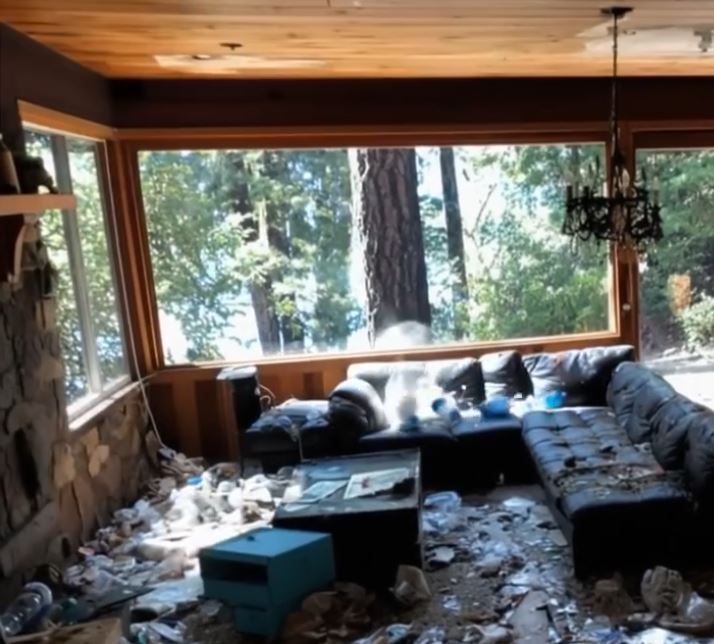
My Mother’s Lake House Was Her Last Gift to Me — Then My Stepmother Held a Party There
When my mother passed away, she left me something far more valuable than a piece of property.
She left me a place filled with memories.
It was a small lake house surrounded by trees, quiet trails, and the gentle sound of water moving along the shoreline. To most people, it might have looked like an ordinary vacation home.
To me, it was where some of the most meaningful moments of my childhood had taken place.
My mother loved that house.
She had spent years decorating it herself, choosing everything from the curtains to the handmade quilts that covered the beds. She painted small pieces of artwork for the walls and collected little objects from places she had visited.
Nothing inside the house was particularly expensive.
Almost everything was valuable because of the memories attached to it.
After Mom died, I found myself returning to the lake house whenever I needed a quiet place to think.
I kept the property clean.
I repaired small things when they needed attention.
I opened the windows when I arrived and carefully closed everything before leaving.
I tried to preserve the house as closely as possible to the way Mom had left it.
It became my connection to her.
My father eventually remarried.
His new wife, Carla, had a very different attitude toward Mom and the things she had left behind.
At first, I tried to ignore it.
I understood that grief could make family relationships complicated.
I also knew Dad deserved the opportunity to move forward with his life.
But Carla sometimes made comments about my mother that were difficult to hear.
She referred to Mom’s decorating style as old-fashioned.
She laughed at some of the handmade artwork.
On one occasion, I discovered that several of Mom’s personal quilts had been moved out of the house.
When I asked about them, Carla casually said they were taking up too much space.
I was deeply upset.
Those quilts weren’t simply blankets.
Mom had spent countless hours working on them.
Some had been made during important periods of her life. Others contained fabrics that reminded me of places we had visited together.
I explained how much they meant to me.
Carla didn’t seem to understand.
To her, they were simply old household items.
That difference in perspective created a distance between us that never really disappeared.
The Lake House Became My Responsibility
Because of the way my mother’s estate had been arranged, the lake house eventually became mine.
There were legal steps involved, and I had to wait until I reached the appropriate age before everything could be formally completed.
When I turned twenty-one, the ownership was officially transferred to me.
I remember standing inside the house that day and feeling an unexpected mixture of happiness and sadness.
It was officially my property.
But emotionally, it still felt like Mom’s house.
I promised myself that I would take good care of it.
I also made one thing clear to my father and Carla.
The lake house was private.
I wasn’t planning to use it as a party venue or a family gathering place without discussing it first.
I wanted to preserve it as a quiet space.
Dad seemed to understand.
Carla smiled when I explained my wishes.
“Of course,” she said.
Then she made a joking comment about my mother and her “little fairy hut.”
I tried not to react.
I had learned that arguing with Carla rarely accomplished anything.
Instead, I simply repeated that the property was mine and that I wanted people to respect that boundary.
She agreed.
At least, that’s what I thought.
The Anniversary
Five years passed after Mom’s death.
Every June, I took the anniversary off from work.
It wasn’t a tradition anyone else in the family particularly understood, but I needed that day.
I didn’t want a gathering.
I didn’t want a large memorial.
I didn’t want people telling me how I should feel.
I simply wanted to spend some quiet time at the lake house.
Mom had loved the lake, and being there made me feel close to her.
That year, I planned to arrive early.
I packed some food, a few books, and a photograph album that Mom had put together years earlier.
I imagined sitting on the porch in the afternoon, looking through the photographs and remembering the life we had shared.
The drive to the lake was peaceful.
The road became narrower as I got closer.
Trees surrounded both sides.
Eventually, the lake came into view.
For a moment, everything felt normal.
Then I saw the cars.
There were four of them parked outside the house.
I slowed down.
At first, I thought perhaps one of the neighbors was visiting.
Then I noticed another vehicle.
And another.
My stomach tightened.
I parked farther away and sat in the driver’s seat for several seconds.
Something wasn’t right.
I could hear music coming from the house.
There was laughter.
People were talking on the porch.
I recognized one of the voices almost immediately.
It was Carla.
Someone Else Was Using My Home
I stepped out of my vehicle and walked toward the house.
The closer I got, the clearer everything became.
There were several people inside.
Some were standing on the porch.
Others were carrying drinks.
Someone had moved chairs from the living room outside.
I stood at the edge of the property for a moment, trying to understand what I was seeing.
This wasn’t a small family visit.
It was a gathering.
A party.
And nobody had asked me.
I walked toward the porch.
Then I noticed something that made the situation even more painful.
One of my mother’s embroidered pillows had been taken from the living room and placed on an outdoor chair.
Someone had apparently been using it casually.
The pillow had been handmade by Mom.
I knew exactly how much time she had spent working on it.
I looked around the porch.
There were decorations, food containers, glasses, and personal belongings everywhere.
The quiet place I had carefully maintained looked completely different.
Then I heard Carla speaking.
She was telling someone about the house.
Her tone was casual.
She made a comment about Mom’s taste in decorating and laughed.
The people around her laughed too.
I stood there silently.
I didn’t interrupt.
I didn’t raise my voice.
I didn’t even announce that I had arrived.
I simply listened.
Then I realized something.
This wasn’t only about a party.
It was about respect.
The Day Had Meaning to Me
The date was difficult enough without seeing strangers treating Mom’s home as if it belonged to them.
For five years, I had used that day to remember her.
Carla knew that.
She knew the anniversary mattered to me.
And yet she had chosen that same day to bring people to the property.
I felt overwhelmed.
My first instinct was to walk inside and demand that everyone leave.
I imagined confronting Carla in front of everyone.
I imagined explaining exactly what she had done wrong.
But I stopped myself.
I knew that if I walked inside angry, the situation could quickly become something I would regret.
I also realized that yelling wouldn’t change what had happened.
So I stepped back.
I returned to my car.
I closed the door.
And I sat there quietly.
For several minutes, I didn’t know what to do.
I felt hurt.
I felt disrespected.
Most of all, I felt as though someone had taken a private part of my relationship with Mom and treated it as if it had no importance.
But eventually, another thought came to me.
I didn’t need to create a scene.
I didn’t need revenge.
I didn’t need to embarrass anyone.
I simply needed to establish a boundary.
And there was a legal and practical way to do that.
A Different Kind of Decision
I took out my phone.
Instead of calling Carla, I contacted the person who handled the property paperwork for me.
I explained what had happened.
I asked a simple question:
“What can I do to make sure nobody uses the property without my permission?”
The answer was straightforward.
As the legal owner, I had the right to decide who could use the property, subject to the applicable rules and agreements.
That was all I needed to know.
I wasn’t interested in punishing anyone.
I wanted clarity.
I wanted the property protected.
And I wanted my mother’s belongings treated with respect.
I returned home that evening without saying anything to Carla.
The next morning, I began making changes.
I reviewed the property’s access arrangements.
I checked who had keys.
I changed the locks.
I updated the security system.
I made sure important documents were organized.
I photographed the interior of the house and created an inventory of Mom’s remaining belongings.
It wasn’t dramatic.
It wasn’t revenge.
It was simply taking responsibility for something that legally and emotionally belonged to me.
Then I Sent One Message
Later that afternoon, I sent Carla a message.
I kept it short.
I didn’t insult her.
I didn’t mention the comments she had made.
I didn’t threaten her.
I simply explained that the lake house was private property and that future visits needed to be approved by me in advance.
I also explained that Mom’s belongings were not to be moved, used, donated, or discarded without my permission.
Then I added one final sentence.
“I hope you can respect this boundary going forward.”
I put down my phone.
I expected an angry response.
Instead, several hours passed.
Then my phone rang.
It was Dad.
My Father Called
Dad sounded disappointed.
He asked why I had changed the locks.
I explained what had happened.
There was a long silence.
Then he asked whether I really intended to keep the house private.
I told him yes.
I also told him that I wasn’t trying to prevent him from having a relationship with me.
I wasn’t trying to create a family war.
I simply wanted control over my own property and respect for my mother’s belongings.
Dad eventually admitted that he had not realized Carla had organized such a large gathering.
That surprised me.
I had assumed he knew.
Apparently, he didn’t.
Then he said something I hadn’t expected.
He apologized.
He told me that he should have understood how important the house was to me.
He also admitted that some of Carla’s comments about Mom had bothered him as well, but he had avoided confronting the issue because he didn’t want another disagreement at home.
That conversation changed something between us.
For the first time in a long time, Dad seemed to understand that I wasn’t trying to live in the past.
I was simply trying to preserve something meaningful.
Carla’s Response
Carla eventually called me.
Her first reaction was defensive.
She said she had believed the lake house was effectively a family property.
I reminded her that it had been legally transferred to me.
She said she had only wanted to have a gathering.
I told her I understood.
But understanding her intention didn’t mean I had to accept what happened.
Then she said something that stayed with me.
She asked why I cared so much about objects that belonged to Mom.
I thought carefully before answering.
“Because they belonged to her.”
There was silence.
I continued.
“You may see an old quilt. I see hours she spent making something with her own hands. You may see an old painting. I see something she created. You may see a pillow. I remember sitting beside her while she worked on it.”
I told Carla that she didn’t have to feel the same way I did.
But I expected her to respect that those things had meaning to me.
She didn’t apologize immediately.
Instead, she became quiet.
Then she said she hadn’t realized how deeply I felt about it.
I told her that was exactly why I had established the boundary.
Protecting Memories Without Living in the Past
Over the following months, I continued visiting the lake house.
But something had changed.
I no longer felt like I had to constantly worry about what might happen while I was away.
The house was quiet again.
I cleaned the rooms.
I carefully restored the decorations Mom had chosen.
I repaired a small wooden table she had bought years earlier.
I placed her quilts in a protected storage space.
I hung her artwork back on the walls.
And I made one important change.
I created a small room dedicated to her memory.
It wasn’t a museum.
It wasn’t elaborate.
It simply contained photographs, a few pieces of her artwork, some handwritten notes, and several things that reminded me of her.
It became my favorite room in the house.
A Conversation With Dad
Several months later, Dad asked if he could visit.
This time, he called first.
I said yes.
He came alone.
We sat on the porch overlooking the lake.
For a while, neither of us said much.
Then Dad told me that he had been thinking about Mom.
He admitted that after her death, he had focused so much on rebuilding his own life that he hadn’t realized how differently I was experiencing the loss.
He said he had thought the best thing he could do was encourage everyone to move forward.
I told him I understood.
But moving forward didn’t mean forgetting.
We talked about Mom for nearly two hours.
Dad told me stories I had never heard before.
Some were funny.
Some were ordinary.
And some were memories from before I was born.
I realized that the lake house wasn’t only my connection to Mom.
It was also part of Dad’s history.
The difference was that I needed the freedom to decide how I wanted to preserve it.
That conversation brought us closer.
The Meaning of Boundaries
The experience taught me something I hadn’t understood before.
Boundaries aren’t always about keeping people away.
Sometimes they’re about protecting relationships.
When people know what is expected, there is less room for misunderstanding.
I didn’t want to spend the rest of my life arguing with Carla.
I didn’t want to monitor every family gathering.
I didn’t want to feel angry every time someone mentioned the lake house.
I simply wanted everyone to understand that it was my responsibility.
Once that was clear, the conflict became much easier to manage.
What Happened to Carla and Me
My relationship with Carla didn’t suddenly become perfect.
We remained very different people.
She still had opinions about how I maintained the lake house.
I still preferred keeping the property quiet and simple.
But something had changed.
She stopped making jokes about Mom’s belongings.
She also asked before visiting.
Eventually, she even asked me about one of Mom’s quilts.
She said she had never understood why it was important.
I showed her the stitching.
I explained how Mom had made it.
I told her where the fabric had come from.
For the first time, Carla looked at it differently.
She didn’t suddenly become sentimental about everything.
But she understood.
Sometimes understanding doesn’t require feeling the same emotion.
It simply requires respecting someone else’s.
The Anniversary One Year Later
The following June, I returned to the lake house for Mom’s anniversary.
There were no cars outside.
No music.
No guests.
No unexpected gathering.
The house was quiet.
I made coffee and sat on the porch.
The lake reflected the morning light.
I opened the photograph album I had brought the previous year.
This time, I wasn’t overwhelmed by anger.
I was able to remember Mom.
I remembered the way she laughed.
I remembered the projects she started and never quite finished.
I remembered the meals she made.
I remembered sitting beside her on that same porch.
And I realized that protecting the house had never really been about the building.
It had been about preserving a place where I could remember her in peace.
A Lesson I Didn’t Expect
The situation taught me that grief can make ordinary objects incredibly meaningful.
A quilt isn’t always just a quilt.
A photograph isn’t always just a photograph.
A house isn’t always just a house.
Sometimes objects become containers for memories.
That doesn’t mean everyone else has to attach the same meaning to them.
But when someone knows an object carries deep emotional significance for another person, treating it carelessly can be painful.
At the same time, I also learned that anger doesn’t always need to determine what happens next.
My first reaction had been emotional.
I wanted to confront everyone immediately.
But stepping away gave me time to think.
Instead of turning the situation into a public argument, I chose a calmer solution.
I established boundaries.
I protected the property.
And I eventually had honest conversations with my family.
The outcome was much better than the confrontation I had originally imagined.
The Lake House Today
Today, the lake house remains a quiet place.
I still visit regularly.
Sometimes I go alone.
Sometimes Dad comes.
Occasionally, I invite a close friend.
But every visit is planned.
The house still looks much like it did when Mom was alive.
Her artwork remains on the walls.
Her quilts are carefully preserved.
The old furniture is still there.
And the porch remains my favorite place.
I sometimes sit there with a cup of coffee and watch the water.
I no longer think of the house as something that has to remain frozen in time.
I’ve made a few changes.
I’ve repaired things.
I’ve replaced a few items that were worn out.
I’ve added some things of my own.
And I’ve learned that preserving a person’s memory doesn’t require preserving every detail exactly as it was.
The important thing is what the place means.
Moving Forward
I used to think that moving forward meant letting go.
Now I see it differently.
Moving forward can mean carrying meaningful memories with you while still building a new life.
Mom’s death changed my family.
Dad remarried.
My relationship with Carla became complicated.
And the lake house became a symbol of everything I was trying to preserve.
But eventually, I realized I didn’t have to choose between remembering Mom and having a future.
I could do both.
I could honor her memory while making my own decisions.
I could maintain the lake house without turning it into a shrine.
And I could establish boundaries without turning every disagreement into a family conflict.
That was the real lesson.
Final Thoughts
When someone inherits a family property filled with memories, the emotional value can be much greater than the financial value.
For me, the lake house represented years of time spent with my mother.
It represented her creativity, her personality, and the small moments that I never wanted to forget.
When my stepmother used the property without asking and treated some of Mom’s belongings casually, I felt deeply hurt.
But I eventually realized that responding with anger would not protect what mattered most to me.
Instead, I chose a quieter approach.
I clarified ownership.
I established boundaries.
I protected my mother’s belongings.
And I communicated my expectations directly.
That decision didn’t erase the difficult emotions, but it gave me control over how I responded to them.
It also opened the door to an unexpected conversation with my father and eventually helped my family understand why the lake house mattered so much.
Today, when I sit on that porch and look across the lake, I don’t think about the party anymore.
I think about Mom.
I think about the years we had together.
I think about the things she taught me.
And I feel grateful that I still have a place where those memories can live.
The house is no longer simply a reminder of what I lost.
It has become a reminder of what I was given.
And perhaps that is the best way to honor someone we love: not by remaining trapped in the past, but by carrying the good parts of their memory forward while continuing to live our own lives.