-
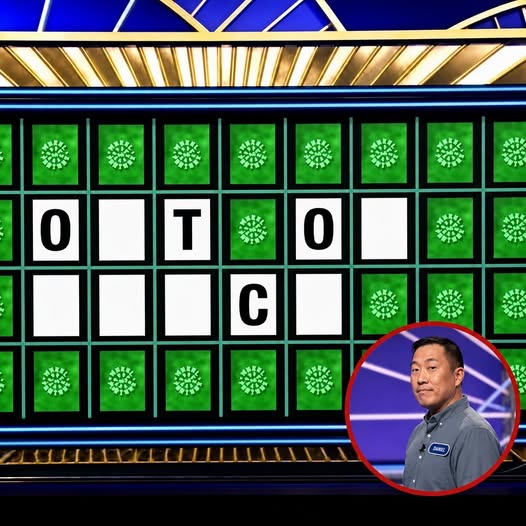
Few moments on a television game show combine excitement, pressure, and uncertainty quite like the final bonus round of Wheel of Fortune.
After an entire episode of solving puzzles, earning prizes, making strategic decisions, and dealing with the pressure of the clock, a contestant who reaches the bonus round faces one final challenge.
The rules may look simple.
The contestant selects a category, is given a collection of letters, and has a limited amount of time to solve the puzzle. A successful answer can lead to a substantial additional prize, while an unsuccessful attempt can leave the contestant wondering how close they came to finding the solution.
That combination is what makes the bonus round so compelling.
A contestant can appear to be only one or two letters away from recognizing the answer, yet still be unable to say the correct phrase before time expires.
For viewers at home, the situation can be especially frustrating.
The audience has enough time to study the puzzle, consider possibilities, and sometimes recognize a pattern that the contestant cannot see under the pressure of the moment.
The difference between knowing an answer and being able to retrieve it quickly can become enormous.
Why the Bonus Round Feels Different
The main game already requires contestants to think quickly.
However, the bonus round creates a different psychological environment.
By the time a contestant reaches it, there is usually much more at stake.
The contestant has already achieved something significant by advancing to the final stage, but the possibility of an additional prize creates another layer of pressure.
The clock is visible.
The puzzle is displayed.
The audience is watching.
The contestant knows that the opportunity may last only a short time.
Under those circumstances, even a familiar phrase can suddenly become difficult to identify.
This is one reason bonus-round moments can become memorable.
The difficulty isn’t necessarily that the contestant has never heard the phrase.
Instead, the challenge may involve recognizing the exact answer quickly enough to say it before the clock reaches zero.
The Importance of Pattern Recognition
Word puzzles rely heavily on pattern recognition.
When only a small number of letters are visible, contestants have to construct possible words and phrases mentally.
They may consider the category first.
Then they look at the letters.
Then they try to connect the available information with familiar expressions, titles, names, objects, places, or phrases.
Sometimes the pattern becomes obvious almost immediately.
Other times, several possible answers compete for attention.
That uncertainty can consume valuable seconds.
A contestant may have the correct idea somewhere in their memory without being able to retrieve it quickly enough.
Why the Audience Sometimes Solves It Faster
One of the most interesting parts of watching a game-show puzzle from home is that viewers have a very different experience from the contestant.
The contestant is standing under studio lights with cameras pointed toward them.
They are surrounded by the energy of the audience and the host.
They know the clock is running.
They also know that the result is being recorded for television.
The viewer, by comparison, is sitting comfortably at home.
There is no prize riding on the answer.
There is no expectation to speak immediately.
There is no countdown forcing a decision.
That difference matters.
A person can often solve a puzzle more easily when they have time to think without pressure.
The Psychology of a Countdown
Countdowns are powerful because they change how people process information.
When time appears unlimited, people can consider multiple possibilities.
Under a countdown, they tend to focus more narrowly.
That can be useful when the answer is obvious.
But it can also become a problem when a contestant is close to the solution.
They may repeatedly focus on the same incorrect possibility instead of stepping back and looking at the entire puzzle.
A few seconds can therefore feel much longer to the audience than they actually are.
Near-Misses Are Often More Memorable Than Easy Wins
A straightforward victory is satisfying, but a close call can create a stronger emotional reaction.
If a contestant solves a difficult puzzle immediately, viewers may celebrate the achievement and move on.
But if the contestant appears to be just moments away from the solution, the audience naturally becomes more invested.
People start thinking:
“It’s right there.”
“Try another word.”
“Look at the category.”
“There’s only one possibility left.”
That creates tension.
The audience begins solving the puzzle alongside the contestant.
The Million-Dollar Possibility
The possibility of a very large prize adds another dimension to the bonus round.
Large prizes are naturally attention-grabbing because they can represent a life-changing amount of money.
However, it’s important to distinguish between the possibility of a particular prize and the prize that a contestant actually receives.
Game-show bonus rounds can involve different prize amounts and conditions depending on the show’s rules and the particular episode.
A headline that describes a contestant as having “lost a million dollars” can therefore be misleading if the contestant never actually had that specific prize guaranteed.
A more accurate description is that the contestant had an opportunity to win a major bonus prize.
That distinction matters when reporting on televised competitions.
What Happens When the Answer Doesn’t Come
When the clock reaches zero without a correct solution, the moment can feel dramatic.
The contestant may immediately realize what the answer was.
This happens frequently in word puzzles.
Once the pressure disappears, the brain can suddenly make the connection.
A phrase that seemed impossible seconds earlier can become obvious.
For the contestant, that can be frustrating.
For viewers, it can be one of the most memorable parts of the episode.
The audience has just witnessed the difference between recognition under pressure and recognition without pressure.
Why the Brain Can Suddenly “See” the Answer
There is a common experience in everyday life where a person struggles to remember something and then suddenly recalls it later.
The same basic phenomenon can occur during a game-show puzzle.
Memory retrieval isn’t always instantaneous.
A person may know a word or phrase but temporarily have difficulty accessing it.
Stress can make the situation even harder.
The contestant may also become distracted by incorrect guesses.
Once the countdown ends, the pressure disappears.
The brain is no longer trying to produce an answer immediately, and the correct phrase can suddenly become obvious.
This is one reason viewers should be cautious about interpreting a difficult bonus round as evidence that a contestant didn’t know something.
The situation is more complicated than simply knowing or not knowing.
Categories Provide Important Clues
Categories are an essential part of solving these puzzles.
A category can dramatically reduce the number of possibilities.
For example, if a puzzle is identified as a type of food, viewers immediately begin thinking about foods.
If it involves a title, place, person, or common phrase, the possible answers become narrower.
Experienced contestants learn to use those clues strategically.
They aren’t simply looking at individual letters.
They’re combining the category with the visible pattern and their knowledge of familiar expressions.
The Role of the Letters Provided
The bonus round format gives contestants a starting collection of letters.
Those letters can sometimes reveal a significant portion of the answer.
But they can also create misleading patterns.
A contestant may see a partial word and immediately assume it refers to one particular phrase.
If that assumption is wrong, precious seconds can disappear.
Successful puzzle solving therefore involves both recognition and flexibility.
The contestant needs to notice patterns without becoming trapped by the first interpretation that comes to mind.
Why Experience Matters
Contestants who are comfortable with word puzzles may have an advantage when dealing with the pressure of the bonus round.
Experience can help people recognize common structures.
They may have encountered similar phrases before.
They may also understand how categories tend to work and how frequently used expressions are constructed.
But experience doesn’t eliminate uncertainty.
Every puzzle is different, and even experienced contestants can encounter a phrase that doesn’t immediately come to mind.
The Human Element Behind the Puzzle
One reason game shows remain popular is that they combine competition with human stories.
Contestants aren’t simply solving puzzles.
They’re dealing with nerves, excitement, disappointment, celebration, and anticipation.
A contestant who reaches the bonus round has already accomplished something.
The final puzzle is another opportunity rather than a complete definition of their performance.
This perspective is important because televised competition can make a few seconds feel enormous.
Viewers see the final moment, but the contestant has often spent the entire episode working toward it.
What Viewers Don’t See
Television naturally focuses attention on the most dramatic moments.
A short bonus-round clip can make it appear as though the entire experience revolved around one difficult puzzle.
In reality, contestants have spent time preparing, participating in earlier rounds, interacting with the host, and making decisions throughout the game.
The final puzzle is simply the part that creates the most immediate tension.
This is also why short clips can sometimes exaggerate the significance of a moment.
A dramatic reaction may be real, but it doesn’t necessarily tell the entire story of the contestant’s experience.
Why These Moments Spread Online
Game-show clips are particularly well suited to social media.
They are short.
They contain an obvious question.
They create suspense.
And viewers can participate by trying to solve the puzzle themselves.
A clip showing a contestant struggling with a final answer can quickly attract comments from people who believe they would have solved it immediately.
That creates an interesting phenomenon.
People watching from home are effectively competing against the contestant.
They may pause the video.
They may shout the answer at the screen.
They may replay the final seconds.
The experience becomes interactive even though the original broadcast is not.
The Difference Between “Almost” and “Correct”
One of the most important lessons from these puzzles is that being close doesn’t necessarily produce the same result as being correct.
In an ordinary conversation, saying a phrase that is almost right might be enough for another person to understand what you mean.
In a game show, however, the rules determine what counts as a correct response.
The contestant has to provide the required answer within the permitted time.
That precision is part of the challenge.
It also explains why some moments can feel especially painful.
The audience may recognize the intended answer immediately after the contestant misses it, but the rules still determine the outcome.
A Lesson About Pressure
The bonus round provides a simple example of something people experience in many areas of life.
Performance can change when the stakes become higher.
Someone who is excellent at something in a relaxed environment may struggle when the pressure increases.
That doesn’t necessarily mean their knowledge or ability has disappeared.
It may simply mean that stress changes the way they retrieve information and make decisions.
This is why performers, athletes, students, speakers, and professionals often practice under conditions that resemble the real situation.
Familiarity can reduce the effect of pressure.
Why Preparation Helps
For contestants, preparation isn’t limited to memorizing words.
It can also involve becoming comfortable with the structure of the game.
Knowing the rules reduces the amount of mental energy required to understand what’s happening.
Understanding common puzzle patterns can help.
Practicing under a timer can also make the countdown feel less unfamiliar.
None of these techniques guarantees success.
But they can help contestants focus on the puzzle rather than the mechanics of the situation.
The Entertainment Value of Uncertainty
Ultimately, the appeal of a bonus round comes from uncertainty.
If every puzzle were solved instantly, there would be little suspense.
If every contestant failed, the format would become predictable.
The most engaging moments occur somewhere in between.
A contestant has enough information to make the answer seem possible, but not enough certainty to make the outcome obvious.
That creates suspense for everyone watching.
The audience doesn’t know whether the contestant will suddenly recognize the phrase or watch the clock run out.
A Moment Can Be Memorable Without Being Extraordinary
It’s easy for online headlines to describe every dramatic game-show moment as something that “shocked the world” or “left everyone speechless.”
Those phrases can make ordinary competition sound more extreme than it really was.
A more useful way to understand these moments is to focus on what actually happened.
A contestant reached the bonus round.
A puzzle was presented.
The contestant had a limited amount of time.
The available letters provided clues.
The contestant either solved the puzzle or did not.
The result produced a memorable television moment because viewers could see how quickly the situation unfolded.
That is interesting enough without exaggeration.
What Makes a Game-Show Moment Worth Remembering?
The most memorable moments aren’t always the ones involving the largest prize.
Sometimes what people remember is the contestant’s reaction.
Sometimes it’s the audience’s response.
Sometimes it’s the puzzle itself.
And sometimes it’s the frustrating realization that the answer was obvious only after the clock stopped.
These moments remind viewers that television competitions are ultimately about people.
The rules may be precise, but human reactions are unpredictable.
The Bigger Appeal of Wheel of Fortune
For decades, Wheel of Fortune has combined a relatively simple concept with a format that is easy for viewers to understand.
Spin the wheel.
Choose letters.
Solve puzzles.
Win prizes.
The simplicity is part of its appeal.
Viewers can play along from home without needing specialized knowledge of a sport or complicated rules.
The bonus round takes that familiar concept and compresses it into a short period of high pressure.
Everything comes down to one final puzzle.
Why the Final Seconds Matter So Much
A countdown changes the emotional rhythm of the game.
At the beginning, there is time to think.
As the clock moves toward zero, the possibilities become more urgent.
The contestant has to decide whether to guess, continue searching for the answer, or trust an emerging pattern.
Viewers experience that countdown differently because they are not responsible for the decision.
They can simply watch.
That separation between the audience and contestant is what creates much of the tension.
The Takeaway
A memorable Wheel of Fortune bonus round doesn’t necessarily require a shocking twist.
Sometimes the most compelling moment is simply watching someone stand in front of a puzzle that suddenly becomes much harder because the clock is running.
The contestant may know the category.
They may recognize several words.
They may even have most of the answer in front of them.
But under pressure, the final connection can remain just out of reach.
For viewers, that can be both entertaining and surprisingly relatable.
Most people have experienced some version of the same thing: forgetting a familiar name, struggling to find an obvious word, or remembering the perfect answer only after a conversation has ended.
A game-show bonus round simply places that familiar human experience under bright lights, in front of cameras, with a visible countdown and a potentially significant prize waiting at the end.
That is what makes these moments so compelling.
The puzzle may be simple.
The pressure is not.
And sometimes, the most memorable part isn’t whether the contestant knew the answer.
It’s how those final seconds revealed just how differently the human mind can work when the clock is ticking.