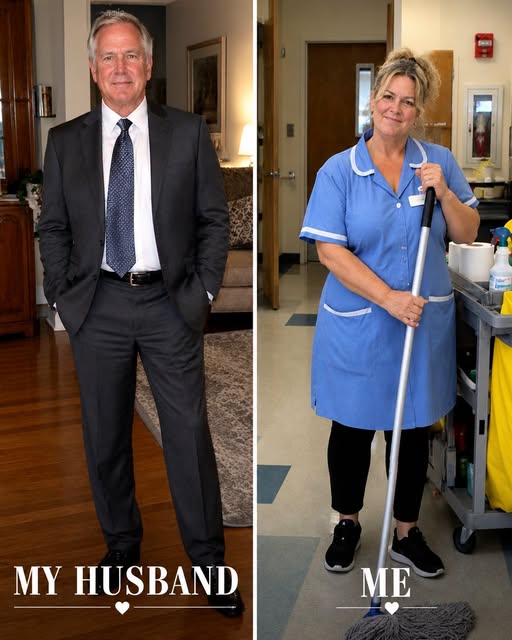
For years, I had been the person everyone in my family depended on.
I raised our children.
I managed the household.
I remembered birthdays, school appointments, dentist visits, grocery lists, family celebrations, and all the little things that somehow kept our home functioning.
When our youngest child finally left for college, I suddenly had something I hadn’t expected.
Time.
At first, the quiet felt strange.
I would walk through the house in the morning and realize there were no backpacks by the door, no school papers scattered across the kitchen counter, and no one asking what was for dinner.
My husband, Mark, seemed to enjoy the empty nest more than I did.
He had a demanding position at a large construction company and spent most of his days at work.
His career had always been important to him.
I never resented that.
In fact, I had supported him throughout the years.
When he worked late, I handled things at home.
When he traveled, I kept everything running.
When our children needed something, I was usually the one who rearranged my schedule.
But after our youngest moved away, I realized that I wanted something of my own.
So I started working part-time cleaning houses.
It wasn’t glamorous.
I wasn’t wearing a suit or sitting in an office.
I didn’t have a corner office, a company car, or a large salary.
But I liked the work.
I liked knowing exactly what I had accomplished at the end of a morning.
A messy kitchen could become spotless.
A cluttered living room could become organized.
A neglected guest room could look welcoming again.
And, most importantly, the money I earned was mine.
It wasn’t enough to change our lifestyle, but it gave me a sense of independence that I hadn’t realized I was missing.
Mark didn’t see it that way.
From the beginning, he treated my job as something temporary and slightly embarrassing.
Whenever someone asked what I was doing these days, he usually answered before I could.
“She’s helping out with some cleaning.”
Sometimes he would laugh afterward.
I tried not to take it personally.
After all, I knew how much he earned.
I knew how seriously he took his position.
And I knew that, in his mind, his career represented success.
Mine represented something else.
Something smaller.
Something he didn’t consider worthy of discussion.
I eventually stopped explaining myself.
That became important later.
The Dinner
The incident began on a Saturday evening.
Mark had invited three coworkers over for dinner.
They were people I had met a few times before, but I didn’t know them particularly well.
They worked with Mark on large construction projects and spent much of their time discussing contracts, deadlines, budgets, and business trips.
I prepared dinner for everyone.
I spent most of the afternoon in the kitchen.
By seven o’clock, the dining table was set, the food was ready, and the house looked presentable.
Mark seemed pleased.
He enjoyed entertaining people from work.
He liked having colleagues see our home.
He liked talking about projects and telling stories about the company.
For a while, everything was perfectly pleasant.
Then one of his coworkers asked me a simple question.
“So, Linda, what have you been doing since the kids left for college?”
I smiled.
“I’ve been keeping busy. I actually started working part-time.”
One of the men nodded.
“Really? What kind of work?”
Before I could answer, Mark laughed.
“She’s a cleaning lady now.”
The table went quiet for a moment.
Then one of his coworkers gave a small laugh.
Mark seemed encouraged.
“Three mornings a week,” he added. “Meanwhile, some of us have actual careers.”
More laughter.
Not loud.
Not cruel.
But enough.
I felt my face becoming warm.
I looked at Mark.
He was smiling.
He didn’t seem to realize how humiliating his comment was.
Or perhaps he realized it and simply didn’t care.
“I work too,” I said quietly.
Mark waved his hand dismissively.
“Linda, come on. Three mornings a week isn’t exactly the same thing.”
One of his coworkers shifted uncomfortably in his chair.
I could tell the conversation had suddenly become awkward.
But Mark continued.
“I keep telling her she should find something more serious.”
I looked around the table.
Nobody said anything.
So I smiled politely.
“Excuse me. I need to check on dessert.”
Then I walked into the kitchen.
I didn’t cry.
I didn’t argue.
I didn’t make a scene.
I simply stood beside the counter and took a slow breath.
Something inside me had changed.
Not dramatically.
Not all at once.
It was simply the realization that I was tired of allowing someone else’s opinion to determine the value of my work.
The Doorbell
About twenty minutes later, while everyone was still talking in the dining room, someone knocked on the front door.
I glanced at the clock.
It was almost nine.
I wasn’t expecting anyone.
Neither was Mark.
“I’ll get it,” I said.
I walked toward the entrance and opened the door.
The man standing outside was wearing a dark coat.
For a moment, I simply stared at him.
I knew his face.
I had seen his photograph on Mark’s company’s website and in several articles about the construction firm.
It was David Harrison.
Mark’s boss.
The president of the company.
He wasn’t someone who casually visited employees at home on a Saturday night.
“Mr. Harrison?”
He nodded.
“Linda?”
“Yes.”
He looked genuinely uncomfortable.
“I’m sorry to arrive without calling.”
I stepped aside.
“Is everything okay?”
He glanced past me toward the dining room.
Then he lowered his voice.
“I need to speak with you.”
Mark had already heard the voice.
He appeared in the hallway.
The moment he saw his boss, his expression changed.
“Mr. Harrison?”
He looked genuinely shocked.
“Sir, what are you doing here?”
Mr. Harrison didn’t answer immediately.
Instead, he looked at me.
“Linda, I hope I’m not putting you in an awkward position.”
Mark stared at both of us.
“What is going on?”
Mr. Harrison finally looked at him.
“That’s what I’d like to discuss.”
The room behind us had gone completely silent.
Mark’s coworkers were watching from the dining room.
I could see the confusion on their faces.
One of them slowly stood.
“Should we give you some privacy?”
Mr. Harrison shook his head.
“No. I think everyone should hear this.”
Mark frowned.
“What exactly is this about?”
Mr. Harrison reached into his briefcase.
He removed a thick folder.
Then he handed it to me.
Mark looked at the folder.
Then at me.
“What is that?”
I didn’t answer.
Because I knew exactly what was inside.
The Work Mark Never Knew About
Several months earlier, I had started cleaning a large house on the outskirts of town.
The owner was a busy professional who traveled frequently.
That owner was Mr. Harrison.
When I first met him, I didn’t know he was Mark’s boss.
He had introduced himself simply as David.
He explained what needed to be cleaned and asked whether I could come twice a month.
I agreed.
Over time, we became familiar with one another.
Our conversations were ordinary.
We talked about the weather.
We talked about home repairs.
Sometimes he mentioned work.
I never asked for confidential information.
I wasn’t interested in his business.
But while cleaning his home, I occasionally noticed things that seemed unusual.
Documents left on a desk.
Packages delivered to the wrong address.
Receipts.
Copies of correspondence.
Nothing immediately dramatic.
But after several months, Mr. Harrison began asking me questions.
Not about Mark personally.
About something he had noticed inside his home.
Certain items had been moved.
A locked drawer had apparently been opened.
Some papers had disappeared and later reappeared.
At first, he assumed it was an innocent mistake.
Then he noticed a pattern.
I wasn’t involved.
I hadn’t taken anything.
But because I was regularly present in the house, I had noticed details that other people hadn’t.
I told him exactly what I knew.
Nothing more.
He asked me to keep a record of anything unusual.
So I did.
Dates.
Times.
Deliveries.
Visitors.
Anything I personally observed.
I didn’t investigate anyone.
I didn’t secretly follow anyone.
I simply documented what happened while I was doing my job.
Eventually, Mr. Harrison told me that his company had discovered irregularities connected to an internal matter.
He didn’t give me details.
I didn’t ask for them.
What mattered to me was that I had accidentally become a witness to events that were far more serious than I had initially realized.
And I had never told Mark.
Not because I was trying to deceive him.
Because I didn’t know what was happening.
And because I didn’t want my husband’s position at the company to influence what I did or didn’t report.
The Folder
Now that folder was sitting on our dining table.
Mark stared at it.
“Linda, what is this?”
I placed my hand on top of it.
“You wanted everyone to hear how insignificant my job is.”
His face tightened.
“That’s not what I meant.”
“Then you can listen too.”
Mr. Harrison pulled out a chair and sat down.
Mark remained standing.
His coworkers looked increasingly uncomfortable.
One of them quietly closed the dining-room door.
Mr. Harrison opened his briefcase again.
“This isn’t about Linda’s employment,” he said.
Mark swallowed.
“Then what is it about?”
“It’s about information Linda provided to us over the past several months.”
Mark looked at me.
“What information?”
I finally opened the folder.
Inside were copies of notes, dates, photographs, and correspondence.
Nothing sensational.
Nothing dramatic.
Just documentation.
Mr. Harrison pointed toward the first page.
“These records helped us establish a timeline.”
Mark’s expression changed.
“A timeline for what?”
Mr. Harrison didn’t answer immediately.
Instead, he looked at Mark’s coworkers.
Then he said:
“For an internal investigation.”
The room became completely silent.
The Question
Mark slowly sat down.
“What kind of investigation?”
Mr. Harrison folded his hands on the table.
“The kind where accuracy matters more than assumptions.”
Mark looked at me.
“Did you know about this?”
“I knew Mr. Harrison was investigating something. I didn’t know the full details.”
“Why didn’t you tell me?”
I looked at him.
“Because you never asked.”
He opened his mouth.
Then closed it again.
That answer seemed to affect him more than an accusation would have.
For years, he had assumed that because I wasn’t earning what he earned, I didn’t have anything important happening in my life.
He had never asked.
He had never been curious.
He had never considered that my work might put me in rooms, homes, and situations where I could learn things he couldn’t.
Mr. Harrison opened another document.
“This is the reason I came tonight.”
Mark leaned forward.
Mr. Harrison looked directly at him.
“Linda has done nothing wrong.”
Mark released a breath.
Then Mr. Harrison continued.
“But she may have helped us prevent a much larger problem.”
Mark’s face became pale.
“What problem?”
Mr. Harrison closed the folder.
“That’s what we’re still determining.”
A Different Kind of Respect
Nobody spoke for several seconds.
Finally, one of Mark’s coworkers looked at me.
“Linda, I owe you an apology.”
I shook my head.
“You don’t.”
He looked embarrassed.
“I laughed earlier.”
“So did everyone else.”
“I shouldn’t have.”
I smiled slightly.
“Probably not.”
Another coworker stood.
“I honestly thought you were joking when you said she was a cleaner.”
Mark looked down at the table.
I didn’t feel triumphant.
That surprised me.
Earlier that evening, I had been humiliated.
I had imagined how satisfying it would be to prove Mark wrong.
But now that the opportunity had arrived, I didn’t want revenge.
I wanted something much simpler.
Respect.
Not admiration.
Not applause.
Just respect.
What Mark Finally Understood
Mr. Harrison eventually left.
His visit had lasted less than an hour.
Before walking out the door, he thanked me.
“Linda, you’ve handled this carefully and professionally.”
“Thank you.”
He turned toward Mark.
“Your wife has been very responsible throughout this process.”
Mark nodded.
“I understand.”
Mr. Harrison paused.
“Do you?”
Mark didn’t answer.
Then the door closed.
The house became quiet again.
His coworkers left shortly afterward.
Neither of them said much.
Once they were gone, Mark remained standing in the living room.
I began clearing the dishes.
He walked into the kitchen.
“Linda.”
I kept working.
“I’m sorry.”
I looked at him.
“For what?”
“For tonight.”
I waited.
“And for a lot of other things.”
I placed a plate in the sink.
“Being embarrassed about my work isn’t something you can fix with one apology.”
“I know.”
“Do you?”
He nodded.
“I thought because I made more money, my job mattered more.”
I didn’t say anything.
He continued.
“That’s not fair.”
“No.”
He looked around the kitchen.
Then he said something I hadn’t expected.
“I don’t actually know much about your work.”
That was true.
He knew I cleaned houses.
He didn’t know my clients appreciated me.
He didn’t know how many people depended on my reliability.
He didn’t know that I had built my own small network of clients entirely through recommendations.
He didn’t know that some of the people I worked for trusted me enough to give me keys to their homes.
He didn’t know that I had become proud of something I had once been nervous to tell him about.
Because he had never asked.
The Job Was Never the Problem
That night taught me something I wish I had understood earlier.
A person’s job title does not tell you the value of their work.
Some people work in offices.
Some work outdoors.
Some build houses.
Some teach children.
Some care for elderly relatives.
Some repair machines.
Some clean homes.
Some work part-time.
Some work multiple jobs.
Some people earn enormous salaries.
Others earn modest incomes.
None of those facts, by themselves, tell you whether a person deserves respect.
I had spent years measuring my own value through someone else’s opinion.
I don’t do that anymore.
My cleaning business is still small.
I still work only part-time.
I still spend some mornings carrying supplies from one house to another.
And I still enjoy it.
But now, when someone asks what I do, I don’t lower my voice.
I don’t apologize.
I simply tell them.
“I run a small home-cleaning service.”
Because that’s what I do.
And I’m proud of it.
The Conversation That Came Later
A few days after the incident, Mark asked if we could talk.
We sat at the kitchen table.
No coworkers.
No dinner guests.
No audience.
Just the two of us.
He told me he had thought about what happened.
“I treated your work like it was beneath me,” he said.
I nodded.
“Yes.”
“I was wrong.”
I appreciated that he said it plainly.
Then he surprised me.
“I think I was also embarrassed because I thought other people would judge me for what you do.”
I looked at him.
“That’s your insecurity, Mark. Not my problem.”
He nodded.
“I know.”
That was the beginning of a longer conversation about our marriage.
It wasn’t magically fixed.
One apology didn’t erase years of dismissive comments.
But for the first time, Mark seemed to understand that respect couldn’t depend on income.
And I understood something too.
I didn’t need his permission to take my work seriously.
What Happened With the Investigation?
I never learned every detail of Mr. Harrison’s investigation.
Some matters remained confidential.
That was appropriate.
I knew only what I personally needed to know.
The company handled the matter internally, and I was never asked to participate beyond providing information about things I had directly observed.
I was grateful for that.
I didn’t want to become part of workplace drama.
I simply wanted to do my job honestly.
Months later, Mr. Harrison remained one of my clients.
Whenever he introduced me to someone, he never called me “the cleaning lady.”
He simply said:
“Linda runs her own cleaning service.”
That small difference meant more to me than he probably realized.
A Different Definition of Success
For years, I thought success meant reaching the kind of position Mark had.
A senior title.
A large salary.
A company office.
People knowing your name.
But I don’t think that anymore.
Success can mean different things to different people.
For me, success now means having work I enjoy.
It means earning my own money.
It means having clients who trust me.
It means being able to look back at the life I built and know that I contributed to it.
And perhaps most importantly, it means no longer feeling embarrassed when someone asks what I do.
The night Mark mocked my job in front of his coworkers was humiliating.
But the unexpected visit from his boss changed the conversation.
Not because my work suddenly became important when an executive acknowledged it.
It was important before he arrived.
I simply hadn’t realized that I didn’t need anyone else to prove it.
And that’s the part of the story I remember most.