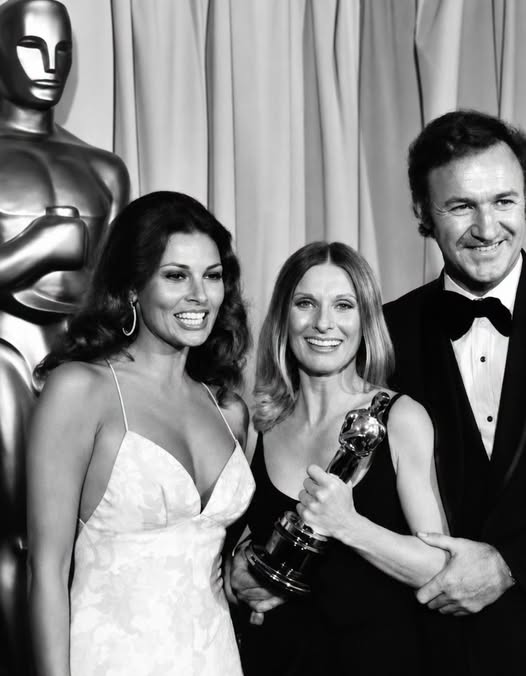
The Academy Awards have always been more than a ceremony.
For millions of viewers, the Oscars represent a carefully produced celebration of filmmaking: famous actors arriving in formal clothing, directors and producers gathering under bright lights, acceptance speeches, memorable performances, and the anticipation surrounding the night’s biggest awards.
But the ceremony has also changed with Hollywood itself.
The early 1970s were a particularly interesting period in American entertainment. The movie industry was moving through a significant transition, and filmmakers were experimenting with different stories, styles, performers, and approaches to filmmaking.
The 44th Academy Awards, held on April 10, 1972, reflected some of those changes.
The ceremony honored films released during 1971, a period when American cinema was becoming increasingly willing to explore complicated characters, social issues, crime, family conflict, and stories that did not always offer audiences simple answers.
Rather than viewing the 1972 Oscars as a single night that completely transformed Hollywood, it is more accurate to see the ceremony as one visible moment in a much larger transition.
And when viewed in that context, the event becomes especially fascinating.
Hollywood Was Already Changing
By the beginning of the 1970s, the American film industry looked very different from the Hollywood of earlier decades.
The studio system had weakened considerably.
The generation of filmmakers who had dominated the classic studio era was gradually giving way to younger directors and screenwriters.
Audiences were changing as well.
Younger moviegoers were increasingly interested in stories that felt contemporary rather than traditionally polished.
Films could be darker.
Characters could be morally complicated.
Stories could address subjects that earlier mainstream productions had treated more cautiously.
This transformation didn’t happen overnight.
It developed over many years.
The 1972 Academy Awards simply provided one highly visible stage on which some of those changes could be seen.
The Ceremony Took Place at the Dorothy Chandler Pavilion
The 44th Academy Awards were held at the Dorothy Chandler Pavilion in Los Angeles.
The venue had become an important cultural location in the city and provided a formal setting for one of the entertainment industry’s most prominent annual events.
The ceremony was hosted by Jack Lemmon, an actor whose career already represented several different periods of American cinema.
His presence was fitting for an industry experiencing a generational transition.
The evening brought together established Hollywood figures and performers who represented newer directions in filmmaking.
The Movies Were Changing
One of the most interesting aspects of the 1972 awards was the range of films represented.
The Best Picture nominees included:
-
The French Connection
-
A Clockwork Orange
-
Fiddler on the Roof
-
The Last Picture Show
-
Nicholas and Alexandra
The variety is revealing.
These films were very different from one another in subject matter, style, tone, and audience appeal.
Some were large-scale productions.
Others were more intimate.
Some focused on crime and law enforcement.
Others explored family, community, tradition, or social change.
Together, they illustrated how broad the definition of a major Hollywood film had become.
“The French Connection” Dominated the Night
The Best Picture winner was The French Connection, directed by William Friedkin.
The film had been a major success and received considerable recognition during awards season.
It ultimately won five Academy Awards, including Best Picture and Best Director.
Gene Hackman won Best Actor for his performance as New York Police Department detective Jimmy “Popeye” Doyle.
Roy Scheider was also nominated for his supporting performance.
The film’s success was significant because it represented a style of filmmaking that felt considerably more grounded and intense than the polished crime dramas associated with earlier decades.
Its urban setting, realistic atmosphere, and rough-edged characters reflected a different cinematic sensibility.
William Friedkin’s Recognition
Friedkin’s Best Director victory was another important moment.
He was part of a generation of filmmakers who were beginning to gain greater creative influence within Hollywood.
Rather than simply functioning within established studio formulas, directors increasingly had opportunities to develop distinctive visual styles and tell stories in unconventional ways.
Friedkin’s work on The French Connection demonstrated how powerful that approach could be.
The film was commercially successful, critically recognized, and widely discussed.
Its Academy Awards reinforced the industry’s willingness to celebrate a movie that was intense, gritty, and distinctly contemporary.
Gene Hackman’s Breakthrough
Gene Hackman’s Best Actor award was another defining moment.
Hackman had already worked in film for years, but The French Connection elevated him to a much higher level of recognition.
His portrayal of Doyle was not the traditional image of a flawless cinematic hero.
The character was aggressive, complicated, obsessive, and sometimes difficult to admire.
Yet that complexity was part of what made the performance memorable.
The recognition reflected a broader change in acting and storytelling.
Audiences increasingly accepted characters who were imperfect.
A protagonist didn’t necessarily have to be elegant, morally uncomplicated, or conventionally heroic.
The Rise of More Complicated Characters
This shift is one of the most important developments surrounding early-1970s American cinema.
During previous decades, mainstream films frequently relied on recognizable character types.
Heroes were heroes.
Villains were villains.
Romantic leads were usually presented in relatively conventional ways.
By the early 1970s, filmmakers were increasingly interested in gray areas.
Characters could make questionable choices.
Protagonists could have serious flaws.
Stories could end without providing a perfectly satisfying resolution.
That approach would become an important part of the decade’s filmmaking culture.
The 1972 Oscars didn’t create this movement, but the films being honored demonstrated that it had become increasingly visible within mainstream American cinema.
“The Last Picture Show” Represented Another Direction
Peter Bogdanovich’s The Last Picture Show was another major film recognized at the ceremony.
The movie focused on life in a small Texas town and explored friendship, relationships, loneliness, adolescence, and the passage of time.
Its black-and-white cinematography contributed to a distinctive visual identity.
The film was nominated for Best Picture and received several acting nominations.
Ben Johnson won Best Supporting Actor.
Cloris Leachman won Best Supporting Actress.
The film’s success illustrated that relatively intimate stories could receive major recognition alongside large commercial productions.
Cloris Leachman’s Memorable Win
Leachman’s performance in The Last Picture Show earned her the Academy Award for Best Supporting Actress.
Her role was emotionally complex and deeply human.
The performance demonstrated another characteristic of the period’s cinema: supporting characters could receive enormous attention when they were written and performed with depth.
Rather than functioning simply as background figures, supporting characters increasingly had their own emotional worlds.
That approach would become increasingly common in American filmmaking.
Ben Johnson’s Recognition
Ben Johnson won Best Supporting Actor for his performance in The Last Picture Show.
Johnson had an extensive background in Westerns and had worked in Hollywood for many years.
His win illustrated how experienced performers could find renewed recognition through the changing film industry.
The performance was understated rather than flashy.
That restraint suited the movie’s broader style.
“A Clockwork Orange” Was One of the Night’s Most Discussed Films
Stanley Kubrick’s A Clockwork Orange was another major Best Picture nominee.
The film was controversial because of its disturbing subject matter, violent imagery, and provocative themes.
Its nomination demonstrated how far mainstream award recognition had moved from the conventions of earlier Hollywood.
The movie was not designed to be comfortable viewing.
It challenged audiences.
It raised questions about violence, free will, social control, and morality.
Its presence among the Best Picture nominees reflected the changing boundaries of what major American cinema could address.
Controversial Films Were Becoming Part of the Mainstream Conversation
The recognition of films such as A Clockwork Orange is useful when considering the broader cultural environment of the early 1970s.
Hollywood was no longer relying exclusively on conventional entertainment.
Filmmakers were willing to tackle subjects that could provoke strong reactions.
Audiences were also becoming more accustomed to movies that demanded interpretation.
The distinction between popular entertainment and challenging cinema was becoming less rigid.
A film could be controversial and commercially significant at the same time.
“Fiddler on the Roof” Offered a Different Kind of Spectacle
Not every major film of the period followed the gritty style associated with The French Connection.
Fiddler on the Roof, directed by Norman Jewison, was a large-scale musical adaptation that received eight Academy Award nominations.
It ultimately won three awards.
The film represented the continuing importance of traditional Hollywood craftsmanship.
Its success showed that the changing industry had not abandoned musicals, elaborate productions, or emotionally accessible storytelling.
Instead, different approaches were existing side by side.
The Contrast Was Part of the Story
That contrast is perhaps more interesting than any single award.
On one side was a gritty urban crime film.
On another was a large musical production.
There was a controversial science-fiction drama.
There was an intimate black-and-white story about a small Texas community.
There was also an expansive historical drama.
The Academy’s recognition of such different films reflected the diversity of American cinema at the beginning of the 1970s.
A Different Kind of Hollywood Star
The early 1970s also brought changes in the image of the movie star.
Earlier generations of Hollywood performers had often been marketed through carefully controlled studio publicity.
Actors were presented according to carefully developed public images.
By the 1970s, that system was becoming less dominant.
Performers could appear rougher, more ordinary, or more unconventional.
They could play characters who weren’t designed to make audiences admire them.
This helped create a different relationship between actors and audiences.
The New Hollywood Era
Film historians often use the term “New Hollywood” to describe the period of American filmmaking that emerged around the late 1960s and continued through the 1970s.
The term can encompass several different developments.
Young filmmakers gained greater influence.
Studios experimented with new approaches.
Creative control shifted in some circumstances toward directors and producers.
Films increasingly addressed contemporary social concerns.
The MPAA rating system, introduced in 1968, also gave filmmakers a framework for releasing movies with content that would previously have faced greater restrictions under the old Production Code system.
The result was a more varied cinematic landscape.
The 1972 Oscars took place directly within that environment.
The Importance of the Rating System
The introduction of the modern film-rating system several years earlier was an important part of Hollywood’s broader transition.
The old Production Code had placed extensive restrictions on the kinds of content that could appear in mainstream American films.
The new rating system did not eliminate controversy.
Instead, it created a system through which audiences could receive information about a film’s content.
This gave filmmakers greater room to explore adult themes.
By the time of the 1972 Academy Awards, that change was already visible in the films being discussed and recognized.
The Oscars as a Reflection of Cultural Change
Awards ceremonies are sometimes treated as if they independently determine what matters in popular culture.
In reality, they are also reflections of larger trends.
The Academy doesn’t create every cultural movement it recognizes.
Sometimes it responds to changes that are already happening.
That distinction is important when looking at the 1972 ceremony.
The Oscars did not suddenly transform Hollywood overnight.
Instead, the ceremony provided a highly visible snapshot of an industry already experiencing significant change.
Why the 1972 Ceremony Still Matters
Looking back more than half a century later, the 1972 Academy Awards remain interesting because they captured a particular moment.
The classic studio era was fading.
A younger generation of filmmakers was gaining influence.
Movie audiences were changing.
Stories were becoming more complicated.
Film ratings allowed greater freedom in subject matter.
And performers were increasingly being celebrated for portraying flawed, realistic, and unconventional characters.
The ceremony reflected all of these developments.
It Wasn’t the End of Old Hollywood
It’s also important not to describe the period as a complete replacement of one Hollywood by another.
Older traditions remained.
Large productions continued to be made.
Musicals remained popular.
Established actors continued to receive major recognition.
Traditional awards-show conventions remained firmly in place.
Hollywood was evolving rather than simply destroying everything that came before.
The industry’s history is better understood as a series of overlapping changes.
The Changing Role of Directors
One of the most important developments during this period was the growing influence of directors.
Filmmakers such as William Friedkin, Francis Ford Coppola, Martin Scorsese, Peter Bogdanovich, Steven Spielberg, George Lucas, and others would become associated with the broader era of New Hollywood.
Their careers demonstrated that directors could become major creative and cultural figures in their own right.
The director was increasingly viewed not simply as the person responsible for organizing production but as a central creative force behind a movie’s identity.
A More Realistic Visual Style
Another major change was the increasing use of realistic locations and visual styles.
Earlier Hollywood films often relied heavily on controlled studio environments.
The newer generation frequently embraced real streets, natural settings, handheld cameras, and more observational approaches.
The French Connection is a strong example of this trend.
Its New York setting contributes significantly to the film’s atmosphere.
The city doesn’t merely provide a background.
It becomes part of the experience.
The Influence of Television
Television also played an important role in changing the entertainment landscape.
By the early 1970s, television had become a central part of American life.
Movies therefore had to compete with a medium that could deliver entertainment directly into people’s homes.
One response was spectacle.
Another was sophistication.
Films could offer experiences that television was less able to reproduce.
At the same time, television helped normalize more contemporary storytelling and contributed to the broader evolution of American entertainment.
Audiences Were Becoming More Selective
The moviegoing public was not static.
Younger audiences were becoming increasingly influential.
These viewers had grown up with television and were familiar with changing cultural attitudes.
They were often receptive to films that challenged conventional storytelling.
This created opportunities for filmmakers who wanted to experiment.
The industry was still commercial.
Studios still wanted successful movies.
But the definition of what could potentially succeed was expanding.
What the 1972 Oscars Tell Us Today
The most useful way to look at the 1972 Academy Awards isn’t as a single dramatic turning point.
Instead, the ceremony can be viewed as a snapshot of Hollywood during an important period of transition.
The films nominated and recognized that night showed an industry becoming more diverse in its storytelling.
Crime dramas could stand beside musicals.
Intimate character studies could compete subject of discussion because of its provocative themes and with large productions.
Controversial films could receive major nominations.
Actors could be recognized for portraying deeply flawed characters.
Directors could gain greater creative authority.
All of these developments helped shape the decade that followed.
The Legacy of the Films
The movies recognized during the 1972 ceremony continued to influence filmmakers and audiences long after the awards were handed out.
The French Connection became an important example of gritty American crime filmmaking.
The Last Picture Show demonstrated the power of intimate character-driven storytelling.
A Clockwork Orange remained a subject of discussion because of its provocative themes and distinctive visual style.
Fiddler on the Roof demonstrated the continued appeal of ambitious musical filmmaking.
These movies are remembered for different reasons, but together they provide a useful picture of the cinematic landscape of the period.
Hollywood Was Losing Some of Its Old Certainties
Perhaps the most significant change was not a particular award.
It was the growing willingness to experiment.
Filmmakers could take greater risks.
Characters could be morally complicated.
Stories could address difficult subjects.
Visual, evolving social attitudes, economic pressures, new filmmaking remembering not because they marked the exact moment Hollywood changed forever, but because they provide a fascinating window into a period when American that was becoming more varied, more experimental, and increasingly comfortable with stories that did not fit neatly into older formulas April 1972, the entertainment industry was already moving toward a different styles could become more naturalistic.
Established genres could be reinvented.
And audiences could be asked to think rather than simply watch.
That doesn’t mean every movie from the period succeeded.
It means the boundaries of mainstream filmmaking were being tested.
A Night That Captured a Transition
The 1972 Oscars did not single-handedly rewrite the entertainment industry.
Hollywood’s transformation was already underway, shaped by technological changes, shifting audiences, evolving social attitudes, economic pressures, new filmmaking talent, and changes in the industry’s production and distribution systems.
But the ceremony captured that transformation in a particularly visible way.
It brought together films representing very different approaches to storytelling and demonstrated that the Academy’s definition of major cinema was broadening.
Final Thoughts
The 44th Academy Awards are worth remembering not because they marked the exact moment Hollywood changed forever, but because they provide a fascinating window into a period when American cinema was evolving rapidly.
The ceremony celebrated The French Connection, a gritty crime drama that won Best Picture and gave William Friedkin and Gene Hackman major recognition.
It also recognized films such as The Last Picture Show, A Clockwork Orange, and Fiddler on the Roof, each representing a very different approach to filmmaking.
Together, those films illustrate a Hollywood that was becoming more varied, more experimental, and increasingly comfortable with stories that did not fit neatly into older formulas.
The early 1970s would go on to produce many of the films and filmmakers now regarded as central to modern American cinema.
The transformation wasn’t caused by one awards ceremony.
It was the result of many changes taking place at the same time.
But when the lights came up at the Dorothy Chandler Pavilion in April 1972, the entertainment industry was already moving toward a different era.
And the films celebrated that night offered audiences a glimpse of where American cinema was heading.