-
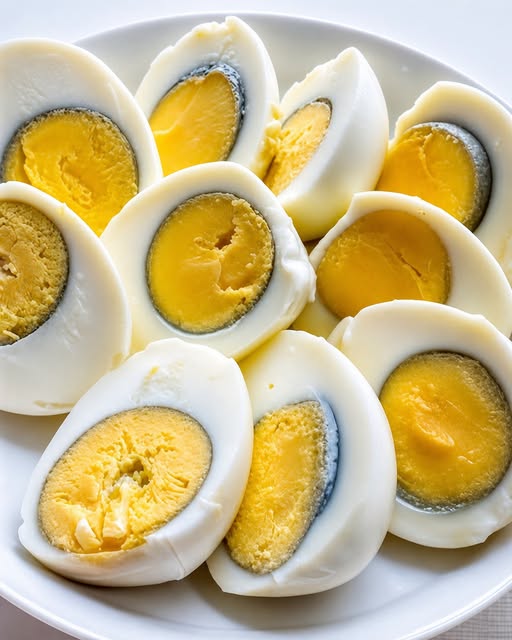
Have you ever peeled a hard-boiled egg expecting to see a bright yellow yolk, only to discover a thin grayish-green ring around the outside?
It can look unusual, especially if you have never seen it before.
Some people immediately wonder whether the egg has gone bad. Others assume they cooked it incorrectly or that the green color means the egg is unsafe to eat.
In most cases, however, there is a much simpler explanation.
That greenish or grayish ring is usually the result of a chemical reaction that takes place between naturally occurring compounds in the egg when it is exposed to heat for too long or cooled too slowly. The reaction can produce iron sulfide, which creates the familiar discoloration around the yolk.
The good news is that the ring is generally a quality and appearance issue rather than a sign that the egg has spoiled.
Understanding why it happens can help you prepare hard-boiled eggs with smoother, brighter yolks and avoid the discoloration in future batches.
So what exactly causes the green ring?
Let’s take a closer look at the science, cooking process, food-safety considerations, and simple techniques that can help you prevent it.
What Is the Green Ring Around a Hard-Boiled Egg?
The green ring is a thin layer of discoloration that can develop between the yellow yolk and the surrounding egg white.
Depending on the cooking conditions, the color may range from pale gray to greenish-gray.
It usually appears most clearly around the outer edge of the yolk.
The discoloration isn’t actually a separate substance that has been added to the egg. Instead, it forms as a result of a chemical reaction involving compounds naturally present in the egg.
Egg whites contain sulfur-containing compounds.
Egg yolks naturally contain iron.
When an egg is heated, chemical changes occur within both the white and the yolk. If the egg becomes sufficiently hot for a sufficient amount of time, sulfur from the white can react with iron near the surface of the yolk.
This can produce iron sulfide, a compound associated with the greenish-gray color.
The reaction is more likely to become visible when eggs are cooked for longer than necessary or exposed to excessive heat.
That is why the green ring is often associated with overcooked hard-boiled eggs.
Does the Green Ring Mean the Egg Is Bad?
This is one of the most common questions.
A green ring around the yolk does not, by itself, mean that a hard-boiled egg has spoiled.
The discoloration is generally caused by the cooking process rather than bacterial spoilage.
In other words, seeing a gray or green ring doesn’t automatically mean you should throw the egg away.
However, color is not the only factor that matters when determining whether an egg is safe to eat.
A hard-boiled egg should still be handled and stored properly.
If the egg has an unpleasant or unusual odor, has been stored improperly, has an abnormal texture, or shows other signs of spoilage, it should not be eaten simply because the yolk looks normal.
Food safety involves more than looking at one characteristic.
The green ring itself is usually a cooking-related change.
The Chemistry Behind the Color
To understand the green ring, it helps to look at the basic chemistry of an egg.
An egg is made up primarily of the shell, egg white, and yolk.
The white contains proteins and other compounds, including sulfur-containing amino acids.
The yolk contains fats, proteins, vitamins, minerals, and other nutrients, including iron.
When heat is applied, proteins change structure.
This process is known as denaturation.
The proteins that are naturally folded into specific structures begin to unfold and interact differently as the temperature increases.
This is one reason an egg changes from a liquid, translucent substance into a firm white and yolk during cooking.
As heating continues, additional chemical reactions can occur.
Sulfur-containing compounds in the egg white can release hydrogen sulfide under certain conditions.
Hydrogen sulfide is the compound responsible for the characteristic sulfur-like smell sometimes associated with overcooked eggs.
When hydrogen sulfide encounters iron near the surface of the yolk, iron sulfide can form.
That compound can create the grayish-green appearance that people see around the yolk.
The reaction is more noticeable at the boundary between the white and yolk because that is where the relevant compounds can come into contact.
Why Does the Ring Form Around the Outside of the Yolk?
A natural question is why the discoloration usually appears as a ring rather than covering the entire yolk.
The answer is related to where the chemical reaction occurs.
The egg white surrounds the yolk.
During cooking, sulfur-containing compounds are present in the white, while iron is concentrated in the yolk.
The area where the white and yolk meet provides an opportunity for these compounds to interact.
As a result, the chemical reaction tends to become visible around the outer portion of the yolk.
This creates the familiar ring.
The center of the yolk may remain bright yellow because it is farther away from the boundary where the reaction is occurring.
The thickness and intensity of the ring can vary depending on cooking conditions.
Some eggs may have only a faint gray line.
Others may develop a more obvious greenish layer.
Why Overcooking Makes the Ring More Noticeable
Time and temperature play important roles.
When an egg is exposed to heat, the proteins gradually change.
If cooking continues beyond the point needed to fully cook the egg, the additional heat can encourage chemical reactions that affect texture, aroma, and appearance.
This is why an overcooked hard-boiled egg may have several noticeable characteristics.
The white can become firmer or somewhat rubbery.
The yolk can become drier.
A stronger sulfur-like smell may develop.
And the green ring may become more pronounced.
The egg can still look perfectly recognizable, but its quality may not be as good as that of a properly cooked egg.
The solution isn’t necessarily to avoid hard-boiled eggs.
Instead, controlling cooking time and temperature can help produce a better result.
Does the Type of Egg Matter?
The cooking process is one of the biggest factors behind the green ring, but the composition of individual eggs can also vary.
Eggs are biological products, so they are not all chemically identical.
The concentration of certain compounds can differ depending on factors such as the hen’s diet, age, storage conditions, and other variables.
These differences can influence how an egg responds to cooking.
However, even with these variations, excessive heating remains one of the most common reasons for visible yolk discoloration.
That means changing the cooking technique is often more useful than worrying about the particular eggs being used.
Does Freshness Affect the Green Ring?
Egg freshness can influence how eggs behave during cooking, but freshness and the green ring are not the same issue.
Older eggs may be easier to peel after boiling because changes in the egg’s internal chemistry can affect the relationship between the egg white and the shell membrane.
That is one reason some cooks prefer eggs that have been stored for a while rather than extremely fresh eggs when preparing hard-boiled eggs.
However, an older egg does not automatically develop a green ring.
The ring is primarily associated with the chemical effects of heating.
Freshness is more relevant to overall egg quality and storage safety than to the specific green discoloration.
Why Do Some Eggs Have a Stronger Green Ring Than Others?
If you’ve boiled several eggs at once, you may have noticed that some develop a more obvious ring while others barely show one.
There are several possible reasons.
Cooking Time
Eggs that remain in hot water longer have more opportunity for the reactions associated with discoloration to occur.
Cooking Temperature
Higher temperatures can accelerate chemical reactions.
Cooling
Rapid cooling can help stop the cooking process and reduce the amount of time the egg remains at elevated temperatures.
Egg Size
Larger eggs can require slightly different cooking conditions than smaller eggs.
Starting Temperature
Eggs taken directly from a refrigerator may behave somewhat differently from eggs that have been allowed to warm before cooking.
Heat Distribution
The way heat is transferred through the pot and water can influence cooking consistency.
These factors can work together.
A small difference in cooking time may not make much visual difference, while a substantially longer cooking period can produce a clearly visible ring.
How to Prevent the Green Ring
If you prefer hard-boiled eggs with bright yellow yolks, the most useful strategy is to avoid unnecessarily prolonged cooking.
There are several approaches that can help.
1. Use a Consistent Cooking Method
Choose a method that gives you reliable control over cooking time and temperature.
Consistency makes it easier to reproduce good results.
2. Avoid Leaving Eggs in Boiling Water Too Long
Once the eggs are fully cooked, continuing to boil them can increase the likelihood of discoloration and can make the whites and yolks less pleasant in texture.
3. Cool the Eggs Promptly
After cooking, transferring the eggs to cold water can quickly lower their temperature.
This helps stop residual cooking.
A bowl of cold water can be used for this purpose, and some cooks add ice to make the water particularly cold.
4. Use a Timer
One of the easiest ways to improve consistency is to use a kitchen timer.
It is surprisingly easy to leave a pot on the stove for several extra minutes while doing something else.
A timer makes it easier to stop the cooking process at the intended point.
5. Don’t Judge Doneness by Color Alone
The yolk’s final appearance can vary.
Instead of relying only on visual color, use a consistent cooking method and timing appropriate for the desired level of doneness.
Why Cooling Matters
Cooling is an important but sometimes overlooked part of making hard-boiled eggs.
Even after you remove the eggs from boiling water, they remain hot.
The residual heat inside the egg continues to affect the proteins and other components.
If the eggs are simply left to sit in the hot cooking water, they can continue cooking.
That means the total thermal exposure is longer than the time you originally intended.
Placing cooked eggs into cold water helps remove heat quickly.
This can stop the cooking process sooner and may help preserve a more appealing yolk color and texture.
Rapid cooling also makes the eggs easier to handle once they have reached a safe temperature for peeling.
Does Adding Vinegar Prevent the Green Ring?
You may find many kitchen tips claiming that vinegar or other ingredients can prevent yolk discoloration.
Some of these suggestions may have other practical uses, but the most straightforward way to reduce the green ring is to control cooking time and temperature.
There is no need to rely on complicated ingredients or unusual techniques.
A well-controlled cooking process is generally the most important factor.
What About Baking Soda?
Baking soda is another ingredient sometimes recommended for hard-boiled eggs, particularly because it may affect the ease of peeling.
However, it isn’t necessary for preventing the green ring.
If your primary goal is a bright yellow yolk, controlling heat exposure is more directly relevant.
Different kitchen techniques can be useful for different purposes, so it helps to understand what each method is actually intended to accomplish.
Why Overcooked Eggs Can Smell Sulfurous
The same chemistry responsible for the greenish ring is related to the familiar sulfur-like odor associated with overcooked eggs.
Egg whites contain sulfur-containing amino acids.
When heated, these compounds can contribute to the production of sulfur-containing gases.
One of the compounds associated with the characteristic smell is hydrogen sulfide.
The odor can become more noticeable when eggs are heated for longer periods.
This is why an overcooked egg may smell stronger when it is peeled.
The smell doesn’t necessarily mean that the egg has spoiled.
Cooking itself can produce sulfur-related odors.
However, a strong unpleasant smell combined with questionable storage or other signs of spoilage should not be ignored.
Green Ring Versus Spoilage
It is useful to distinguish between cooking-related discoloration and actual spoilage.
A green ring:
-
Usually appears around the yolk’s outer edge.
-
Is associated with the cooking process.
-
Can occur in otherwise properly stored eggs.
-
Is commonly linked to prolonged heating.
-
Does not automatically mean the egg is spoiled.
Signs that deserve more caution can include:
-
An unusually foul odor.
-
Slimy or abnormal texture.
-
Mold or other visible contamination.
-
Damaged or questionable storage conditions.
-
Being kept refrigerated for longer than recommended.
-
Any other clear indication that the food has deteriorated.
When in doubt about food safety, it is better to discard questionable food rather than rely on appearance alone.
How Long Can Hard-Boiled Eggs Be Stored?
Proper storage is important after cooking.
Hard-boiled eggs should be refrigerated promptly rather than being left at room temperature for extended periods.
A commonly used food-safety guideline is to consume refrigerated hard-boiled eggs within about one week of cooking, provided they have been properly refrigerated.
Storage conditions matter.
Eggs should be kept in a clean refrigerator at a sufficiently cold temperature.
If hard-boiled eggs have been sitting out for a prolonged period, particularly in warm conditions, they may no longer be safe to eat.
The green ring is not a reliable indicator of whether an egg has been stored safely.
Storage time and temperature are much more important considerations.
Should You Throw Away an Egg With a Green Yolk?
If the only unusual feature is a thin greenish ring around the yolk and the egg has been properly cooked and stored, the discoloration itself generally isn’t a reason to assume the egg has spoiled.
The ring is typically a result of the cooking process.
However, you should still evaluate the egg’s overall condition.
If it has been improperly stored, has an unusual odor unrelated to normal cooked-egg aromas, or has another sign of spoilage, don’t eat it.
Food safety should always take priority over avoiding food waste.
Why the Yolk Can Become Dry
The green ring isn’t the only possible result of overcooking.
A yolk that has been heated for too long can become dry and crumbly.
This happens because continued heating changes the proteins and moisture distribution within the yolk.
Instead of the soft, creamy texture many people prefer, the yolk may become firm and powdery.
The white can also become tougher.
This is another reason why precise cooking matters.
A hard-boiled egg does not need to be cooked indefinitely to become fully cooked.
Once the desired level of doneness is reached, further heating generally doesn’t improve the egg.
A Simple Method for Better Hard-Boiled Eggs
There are many legitimate methods for preparing hard-boiled eggs.
One straightforward approach is to place the eggs in a saucepan, cover them with water, and heat the water until it reaches a boil.
After reaching the desired cooking stage, remove the pan from the heat or continue according to the specific method you are using.
The important point is to use a consistent timing method.
Once the eggs are cooked, cool them promptly in cold water.
After they have cooled, they can be peeled or stored in the refrigerator.
Because stovetops, cookware, egg sizes, and starting temperatures vary, the exact timing may need to be adjusted.
The goal is not to find one magic number that works under every possible condition.
The goal is to develop a repeatable method that produces the texture you prefer.
Why Hard-Boiled Eggs Are So Popular
Hard-boiled eggs remain popular because they are convenient and versatile.
They can be eaten on their own, added to salads, sliced into sandwiches, or used in dishes such as deviled eggs.
They are also easy to prepare in batches.
Once cooked and properly refrigerated, they can provide a convenient food option for several days.
Their combination of protein, fats, vitamins, minerals, and other nutrients makes them a common part of many diets.
However, nutritional needs differ from person to person.
An egg can be part of a balanced diet, but no single food should be considered a complete solution to nutrition.
Hard-Boiled Eggs and Meal Preparation
Eggs are particularly useful for meal preparation because they can be cooked ahead of time.
A batch of hard-boiled eggs can be refrigerated and used throughout the week.
This can save time during busy mornings or when preparing lunches.
They can be paired with vegetables, whole grains, fruit, or other foods depending on individual dietary preferences.
Proper storage is important when preparing eggs in advance.
Keep cooked eggs refrigerated and avoid leaving them at room temperature for long periods.
If eggs are being transported for lunch or outdoor activities, use appropriate food-cooling methods to keep them at a safe temperature.
Does the Green Ring Affect Nutrition?
The greenish ring is primarily an appearance-related consequence of the cooking process.
It does not mean that the entire egg has suddenly become nutritionally worthless.
However, cooking can affect some nutrients to varying degrees, just as cooking affects many other foods.
The important distinction is that the green ring itself is not generally considered a sign that the egg has become poisonous.
Its presence is mainly an indication that chemical changes occurred during cooking.
Why This Kitchen Mystery Is So Common
The green ring is a perfect example of how ordinary chemistry can create surprising changes in food.
Eggs contain a complex mixture of proteins, minerals, fats, water, and other compounds.
Heating them changes the way those compounds interact.
Most of those changes are exactly what we want.
Liquid egg becomes firm.
The translucent white becomes opaque.
The yolk changes from soft to solid.
But if heating continues beyond the ideal point, additional reactions become more noticeable.
The green ring is one of those visible signs.
Understanding this makes the phenomenon much less mysterious.
Common Myths About Green Egg Yolks
Myth 1: A Green Ring Means the Egg Is Poisonous
A green ring around a properly cooked egg yolk is generally associated with a cooking reaction, not poisoning.
However, questionable eggs should still be discarded.
Myth 2: Every Green Yolk Is Spoiled
Not necessarily.
Cooking conditions can cause the discoloration.
Other signs should be considered when evaluating food quality.
Myth 3: You Must Throw Away Any Egg With a Green Ring
The discoloration itself is generally not enough to establish that an egg has spoiled.
Proper storage and overall condition matter.
Myth 4: The Egg Was Cooked With a Chemical
The color can form naturally from compounds already present in the egg.
No artificial coloring is required.
Myth 5: The Green Color Comes From the Yolk Alone
The reaction involves compounds from both the white and the yolk.
Sulfur from the egg white can interact with iron associated with the yolk.
Why the Boundary Between White and Yolk Matters
The location of the green ring provides a clue about the chemistry involved.
The egg white contains sulfur-containing compounds.
The yolk contains iron.
Where these two components meet, the conditions are favorable for the relevant reaction to occur during prolonged heating.
That is why the discoloration often forms a narrow band.
The chemistry is happening at an interface.
This is similar to many other processes in cooking where different components interact at a boundary.
Does Cooking at High Altitude Change Anything?
High-altitude cooking can require adjustments because water boils at a lower temperature as elevation increases.
That can affect how quickly foods cook.
People living at higher elevations may need to modify cooking methods and timing to achieve the desired result.
This is another reason why there is no universal cooking time that works identically in every kitchen.
If you live at a high elevation, you may need to experiment with timing or use a method specifically recommended for your environment.
What About Pressure Cookers?
Pressure cookers can also be used to prepare eggs.
They change the cooking environment by increasing pressure and allowing water to reach temperatures above its normal boiling point at sea level.
Some cooks prefer pressure-cooking methods because they can produce consistently cooked eggs and may make peeling easier.
However, the exact technique matters.
Overcooking can still affect texture and appearance.
If using a pressure cooker, follow the manufacturer’s instructions and a tested recipe designed specifically for eggs.
Can an Ice Bath Improve the Appearance?
Yes, rapidly cooling eggs can help prevent residual cooking.
An ice-water bath is one common method.
After the eggs have reached the desired cooking stage, transferring them to very cold water quickly lowers their temperature.
This can help preserve a brighter yolk and prevent the eggs from continuing to cook internally.
It also makes the eggs easier to handle once they have cooled.
The ice bath is therefore useful for both quality and convenience.
Why Timing Is More Important Than You Might Think
A few additional minutes may seem insignificant when boiling an egg.
But chemical reactions do not stop simply because the egg has already reached the point where it is technically cooked.
Additional heating continues to affect the egg.
That can change:
-
Texture
-
Moisture
-
Color
-
Aroma
-
Protein structure
If you want consistently attractive hard-boiled eggs, paying attention to timing can make a noticeable difference.
A simple kitchen timer can be one of the most useful tools for this purpose.
What If You Actually Like the Green Ring?
There is no culinary rule saying that a hard-boiled egg with a green ring cannot be eaten simply because of its appearance.
Some people may not mind the discoloration at all.
The ring is mainly considered undesirable because it can make the yolk look less appealing and may indicate that the egg has been cooked longer than necessary.
If texture and appearance are not important to you, a green ring may not matter.
But if you’re preparing eggs for a salad, buffet, lunchbox, or special meal, avoiding the discoloration can make the finished dish look more attractive.
The Simple Explanation
So, why does a hard-boiled egg sometimes develop a green ring around the yolk?
The short answer is:
Heat causes sulfur-containing compounds from the egg white to react with iron near the yolk, forming iron sulfide and producing a grayish-green discoloration.
The reaction becomes more noticeable when the egg is exposed to heat for too long.
Cooling the eggs promptly after cooking can help stop the process and improve the final texture and appearance.
Final Thoughts
The green ring around a hard-boiled egg may look strange, but there is a straightforward scientific explanation.
Eggs contain sulfur-containing compounds in the white and iron in the yolk. When eggs are heated, especially for longer than necessary, these substances can participate in a chemical reaction that produces iron sulfide near the boundary between the white and yolk.
That reaction creates the familiar grayish-green ring.
In most cases, the ring itself is not an indication that the egg has spoiled.
Instead, it is primarily a sign of the cooking process.
If you want to avoid it, focus on controlling cooking time, avoiding unnecessary overheating, and cooling the eggs promptly after they have finished cooking.
At the same time, remember that appearance alone should never be used as the only test of food safety.
Proper refrigeration, reasonable storage time, and the overall condition of the food are much more important when deciding whether a cooked egg is safe to eat.
The next time you cut open a hard-boiled egg and discover a greenish ring, there is no need to assume that something mysterious has happened.
It is simply chemistry at work in your kitchen.
And perhaps that is one of the most interesting things about cooking: ordinary ingredients can undergo surprisingly complex changes simply because of heat, time, and the way their natural components interact.
-