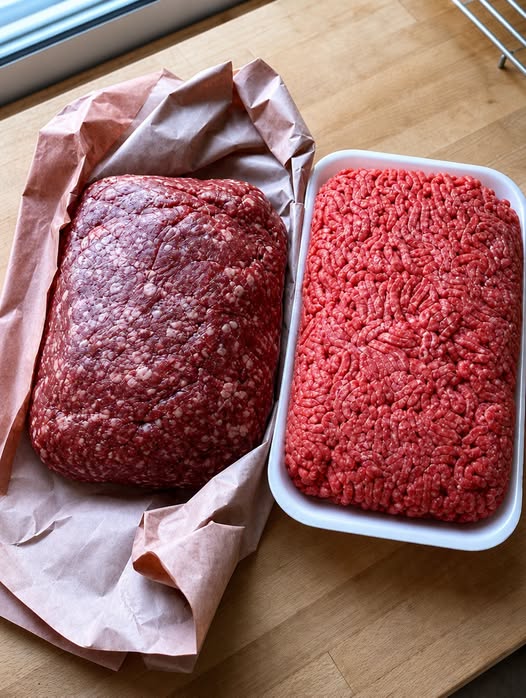
Buying meat at a supermarket is something most people do without giving it much thought. You walk into the store, choose a package that looks fresh, check the price, and put it in your shopping cart. For many families, meat is a regular part of weekly meals, so the process can feel completely routine.
But have you ever stopped to think about where that meat actually comes from?
The journey from farm to supermarket shelf can involve several stages, including farming, animal processing, packaging, transportation, refrigeration, inspection, and retail. Depending on the product and the country where you live, meat may pass through multiple businesses before it reaches the store where you purchase it.
That doesn’t necessarily mean there is something wrong with the meat. In fact, modern food-supply systems are designed to move large quantities of food safely and efficiently. However, understanding how the system works can help consumers make more informed decisions.
There is also a lot of confusing information online about supermarket meat. Headlines sometimes suggest that consumers are being deliberately deceived or that ordinary packages contain something completely different from what the label says. Such claims can attract attention, but they are not always supported by reliable evidence.
Instead of relying on alarming headlines, it is more useful to understand what meat labels actually mean, how meat is processed, what quality terms mean, how food-safety rules work, and what consumers can look for when choosing products.
Where Does Supermarket Meat Come From?
The answer depends on the type of meat, the country, and the individual product.
Beef, pork, poultry, lamb, and other meats can follow different supply chains. An animal may be raised on a farm, transported to a licensed processing facility, inspected, processed into specific cuts, packaged, refrigerated or frozen, and then transported to a distribution center or directly to a retailer.
Some meat is produced domestically, while other products may be imported. Countries have different requirements concerning food safety, labeling, animal identification, inspection, traceability, and imported foods.
This means that two packages sitting next to each other in a supermarket may have very different supply histories.
The most useful source of information for an individual product is generally the packaging itself. Labels may provide information such as the product name, weight, ingredients, country-of-origin information where required, use-by or best-before dates, storage instructions, and the name or address of the business responsible for the product.
Learning how to read those details is much more valuable than assuming every supermarket follows the same sourcing practices.
Why Meat Can Look Different From What You Expect
One reason supermarket meat sometimes creates confusion is appearance.
Consumers often develop expectations about how fresh meat should look. However, color can change for several reasons, including exposure to oxygen, packaging methods, temperature, storage conditions, and the natural characteristics of the meat.
For example, beef can appear different shades of red depending on how it has been packaged and exposed to air. Vacuum-packed meat can also have a different appearance from meat displayed in traditional trays.
Appearance alone therefore cannot tell you the complete story about a product.
The same principle applies to poultry and other meats. Texture, moisture, packaging, and natural variation can affect how a product looks.
Rather than relying only on visual impressions, consumers should pay attention to the label, storage instructions, dates, packaging condition, and proper food-handling practices.
What Does “Fresh” Actually Mean?
The word “fresh” can be confusing because its meaning may depend on the labeling rules applicable in a particular market.
Consumers should distinguish between descriptive marketing language and legally defined labeling information.
A package may use terms intended to communicate quality or preparation, while other information is required by food-labeling regulations.
When shopping, look carefully at the date information. Depending on the country and product, you may encounter terms such as “use by,” “best before,” or similar wording.
These terms do not necessarily mean the same thing.
A date relating to food safety should be treated differently from a date primarily associated with quality. Because labeling requirements differ between jurisdictions, consumers should follow the instructions printed on the package and local food-safety guidance.
Does Frozen Meat Mean Lower Quality?
Not necessarily.
Freezing is a widely used method of preserving food. When meat is frozen properly and stored at an appropriate temperature, freezing can help extend its storage life.
Some consumers assume that frozen meat must automatically be inferior to refrigerated meat. That conclusion is too simple.
Quality can depend on many factors, including the original product, how quickly it was frozen, packaging, storage conditions, temperature control, and how it is eventually prepared.
Freezing can sometimes affect texture because water inside the food forms ice crystals. The effect can vary depending on the product and freezing process.
That does not mean frozen meat is inherently unsafe or unsuitable.
For consumers, the important consideration is whether the product has been handled and stored according to the applicable food-safety requirements.
Understanding Processed Meat
Another important distinction is the difference between whole cuts of meat and processed meat products.
A whole cut might be a steak, chicken breast, pork chop, or leg of lamb. Processed products can include items such as sausages, cured meats, deli products, marinated products, or meat products combined with other ingredients.
Processed meat products can have additional ingredients such as salt, spices, preservatives, seasonings, or other permitted ingredients.
This is one reason why reading the ingredient list matters.
If you are trying to understand exactly what you are buying, don’t stop at the large product name on the front of the package. Turn the package around and examine the ingredient list and nutrition information when available.
The front of a package is often designed to communicate quickly. The detailed information is usually found elsewhere on the label.
What About “Mechanically Separated” Meat?
Terms such as “mechanically separated meat” can sound alarming if consumers are unfamiliar with them.
Mechanically separated meat is produced using mechanical processes that separate edible meat tissue from bones or other structures after conventional cutting.
Its use is regulated differently depending on the country and the specific product.
The important point is that a technical food-production term should not automatically be interpreted as evidence that a product is unsafe.
If a consumer sees an unfamiliar term on a label, the better approach is to research the term using a reliable food-safety or regulatory source rather than relying on social-media posts or dramatic headlines.
Understanding terminology helps consumers distinguish between a legitimate production method and an unsupported claim.
Why Traceability Matters
One of the most important concepts in the modern food system is traceability.
Traceability refers to the ability to track food through different stages of production, processing, and distribution.
The exact system varies between countries and businesses, but the general goal is to make it possible to identify where a product came from and where it was distributed.
This becomes particularly important if a food-safety problem is discovered.
For example, if a particular batch of food is found to have a problem, traceability systems can help businesses and regulators identify affected products and remove them from the supply chain.
This is one reason why consumers should pay attention to batch codes, lot numbers, product identification, and other information printed on packaging.
Those details may seem unimportant during an ordinary shopping trip, but they can become valuable if a product recall occurs.
What Should You Look for on a Meat Label?
There is no single label detail that tells you everything about a product.
Instead, consider several pieces of information together.
1. Product Name
Start with the actual name of the product.
Is it a whole cut of meat, a minced product, a prepared product, or a processed product?
Understanding this distinction gives you context for the other information on the package.
2. Ingredients
For products containing multiple ingredients, read the ingredient list.
This can tell you whether the product contains added salt, spices, marinades, sauces, preservatives, or other ingredients.
Whole cuts may have a relatively simple ingredient list, while prepared meat products can contain considerably more.
3. Date Information
Check the relevant date printed on the package.
Don’t assume every date has the same meaning. Follow the storage and use instructions provided by the manufacturer or retailer.
4. Storage Instructions
Look for information about refrigeration or freezing.
Maintaining the appropriate temperature is an important part of food safety.
5. Packaging Condition
Avoid products with packaging that is damaged, leaking, excessively swollen, or otherwise appears compromised.
If you are uncertain about a package, choosing another one is a simple precaution.
6. Country-of-Origin Information
Where required, labels may provide information about the origin of a product.
The exact requirements vary by jurisdiction and product category, so consumers should understand that labeling rules in one country may not be identical to those in another.
Why Supermarket Meat Can Have Different Prices
Price differences can be surprisingly large.
Two packages of meat may appear similar but have different prices per kilogram or pound.
There are many possible explanations.
The cut of meat matters. Certain cuts are naturally more expensive because of demand, yield, or production costs.
Branding can also influence price.
Packaging, processing, preparation, transportation, storage, labor, and retailer pricing policies can all contribute to the final price.
Promotional pricing can create additional differences.
This is why comparing the price of individual packages is sometimes misleading. A better approach is to compare the unit price when the supermarket provides it.
For example, two packages may have different weights, making the larger package appear more expensive even though it offers a lower price per kilogram.
Is More Expensive Meat Always Better?
Not necessarily.
Price can reflect many factors, and it does not automatically represent a complete measure of quality.
A premium product may have characteristics that some consumers value, such as a particular cut, production method, certification, breed, packaging style, or sourcing claim.
But consumers should look at what they are actually paying for.
If a product makes a specific claim such as organic, free-range, grass-fed, or certified production, look for the relevant certification or labeling information where applicable.
This is more useful than assuming a higher price automatically means a superior product.
The Difference Between Marketing and Evidence
Food marketing often uses words that create positive impressions.
Terms such as “premium,” “traditional,” “natural,” “farm-style,” or “selected” can sound appealing.
However, consumers should distinguish between marketing language and independently verifiable information.
A useful question to ask is:
What does this claim actually mean, and is there a recognized standard behind it?
For regulated claims, certification programs or official definitions may provide additional information.
For general marketing language, the meaning may be less specific.
This doesn’t mean marketing claims are automatically false. It simply means that consumers should understand what a claim does—and does not—tell them.
Why Online Meat Stories Can Be Misleading
Social media has made it easier than ever for information about food to spread rapidly.
A dramatic photograph or alarming headline can reach millions of people even when the underlying claim has little evidence behind it.
One common pattern is the use of incomplete information.
A post might show a package of meat and claim that it proves a widespread problem. But without knowing the product, country, date, supplier, labeling requirements, and context, a photograph alone may not establish the claim.
Another common technique is presenting an unusual example as if it represents an entire industry.
Consumers should be cautious about this.
One defective product does not necessarily demonstrate that every product from the same retailer has the same problem.
Likewise, a recall involving a specific batch does not mean that all meat sold by that company is unsafe.
The details matter.
What Happens When There Is a Recall?
Food recalls are an important part of food-safety systems.
A recall can occur when a company or regulator identifies a potential problem with a particular product.
The reason might involve contamination, incorrect labeling, undeclared allergens, or another issue requiring the product to be removed from the market.
When a recall is announced, consumers should check the exact product name, lot number, date, size, and other identifying details.
This is important because a recall usually applies to specific products or batches rather than every item made by a company.
If you have a product covered by a recall, follow the instructions provided by the relevant food-safety authority or retailer.
Do not rely on social-media summaries when official recall information is available.
How to Handle Meat Safely at Home
Even when food has been produced and inspected appropriately, safe handling at home remains important.
Keep perishable meat refrigerated or frozen as recommended.
Avoid allowing raw meat to remain at room temperature for extended periods.
Use separate utensils and cutting boards for raw meat and foods that are ready to eat, or wash and sanitize surfaces appropriately between uses.
Wash your hands after handling raw meat.
Prevent raw juices from coming into contact with salads, bread, fruit, or other foods that will not be cooked.
Cooking meat to an appropriate internal temperature is also important. A food thermometer can be more reliable than judging doneness by appearance alone.
After cooking, store leftovers according to appropriate food-safety guidance.
These basic habits can significantly reduce the risk of foodborne illness.
Why Food Thermometers Are Useful
Many people determine whether meat is cooked by cutting it open and looking at the color.
That method is not always reliable.
A food thermometer provides a more objective way to determine internal temperature.
Different types of meat and different preparations have different recommended cooking temperatures. Consumers should follow guidance from a trusted food-safety authority in their country.
Using a thermometer is especially useful when cooking thick cuts, poultry, ground meat, or large roasts.
It can also help prevent overcooking, since you don’t have to keep cutting into the meat to check whether it is done.
What About Ground Meat?
Ground meat deserves particular attention because grinding changes the structure of the product.
With a whole cut, microorganisms on the surface may be affected by cooking the exterior. With ground meat, material from the surface can become distributed throughout the product during grinding.
For that reason, appropriate cooking is particularly important.
Ground beef, ground pork, ground poultry, and other ground-meat products should be handled carefully and cooked according to reliable food-safety guidance.
Consumers should also pay attention to refrigeration and use-by instructions.
Should You Avoid Supermarket Meat?
There is no universal answer because consumers have different dietary preferences, budgets, cultural practices, and nutritional needs.
Some people buy meat regularly.
Others eat it occasionally.
Some choose fresh meat, while others prefer frozen products.
Some consumers purchase directly from farms, butchers, specialty shops, or local producers.
The important point is that a supermarket is simply one part of the food distribution system.
Rather than making decisions based on fear, consumers can evaluate individual products using practical information.
Look at the label.
Check the date.
Examine the packaging.
Compare unit prices.
Consider the ingredients.
Follow storage instructions.
Use reliable food-safety information.
These steps provide a much clearer picture than an alarming headline.
Questions to Ask Before Buying
The next time you stand in front of the meat section, consider asking yourself a few simple questions.
What exactly am I buying?
Is it a whole cut, ground meat, or a processed product?
Where does the label say it comes from?
If origin information is provided, take a moment to read it.
What ingredients have been added?
This is particularly important for prepared or processed products.
What date information is provided?
Make sure you understand how the product should be used or stored.
Is the packaging intact?
If the packaging appears damaged or compromised, consider choosing another product.
How much am I actually paying per kilogram or pound?
Unit pricing can make comparisons easier.
How will I store and prepare it?
A good purchase can still become unsafe if it is handled incorrectly after you leave the store.
Don’t Let a Headline Make Your Decision
A headline is not a substitute for evidence.
That is especially true when the headline is designed to create fear or curiosity.
Phrases suggesting that supermarkets are hiding something, that consumers are being tricked, or that an entire industry is secretly selling something completely different can generate clicks.
But a responsible consumer should ask for details.
Which products?
Which stores?
Which country?
Which date?
Which supplier?
What evidence?
What do regulators say?
Are there official recalls?
Is the claim supported by laboratory testing, documentation, or reputable reporting?
Those questions help separate a genuine food-safety issue from exaggerated internet content.
A More Practical Approach to Shopping
You don’t need to become a food-industry expert to make informed choices.
A few simple habits can make a difference.
First, read labels instead of relying entirely on the front of the package.
Second, compare unit prices rather than package prices alone.
Third, pay attention to storage requirements.
Fourth, keep raw meat separate from ready-to-eat foods.
Fifth, cook meat using appropriate temperatures.
Sixth, follow official recall notices when they are issued.
Seventh, be cautious about viral claims that lack specific evidence.
These habits are practical, inexpensive, and useful regardless of where you buy your food.
The Bigger Picture
The modern food system is complicated.
A package of meat on a supermarket shelf represents a chain of activities involving farmers, processors, inspectors, transport companies, warehouses, retailers, and consumers.
There are risks at different points in that chain, which is why food-safety rules and monitoring systems exist.
At the same time, consumers should avoid assuming that complexity automatically means something is wrong.
A complicated supply chain can also provide benefits, including large-scale distribution, refrigeration, product availability, standardized processing, and traceability.
The key is transparency and informed decision-making.
Consumers deserve accurate information about the products they purchase, and businesses have a responsibility to comply with applicable food-safety and labeling requirements.
Final Thoughts
The next time you see a dramatic headline warning you about supermarket meat, don’t immediately assume that the most frightening interpretation is true.
Instead, slow down and look for the details.
Where did the claim originate?
Does it identify a specific product?
Is there evidence?
Is there an official recall?
What does the package actually say?
What do relevant food-safety authorities report?
These questions can help you make decisions based on information rather than fear.
Supermarket meat comes through a complex system, and different products can have very different origins, ingredients, processing methods, and storage requirements. Understanding that system is far more useful than believing that every product is either completely safe or secretly dangerous.
Consumers can take practical steps to protect themselves: read labels carefully, check dates and storage instructions, keep raw meat properly refrigerated, prevent cross-contamination, cook meat thoroughly according to trusted guidance, and pay attention to official food recalls.
Most importantly, remember that an attention-grabbing headline is only the beginning of a story.
The real information is usually found in the details.
By becoming a more careful reader and a more informed shopper, you can make better decisions about the food you bring home without relying on sensational claims or unsupported rumors.
The goal isn’t to make people afraid of supermarkets or meat.
The goal is to help people understand what they are buying.