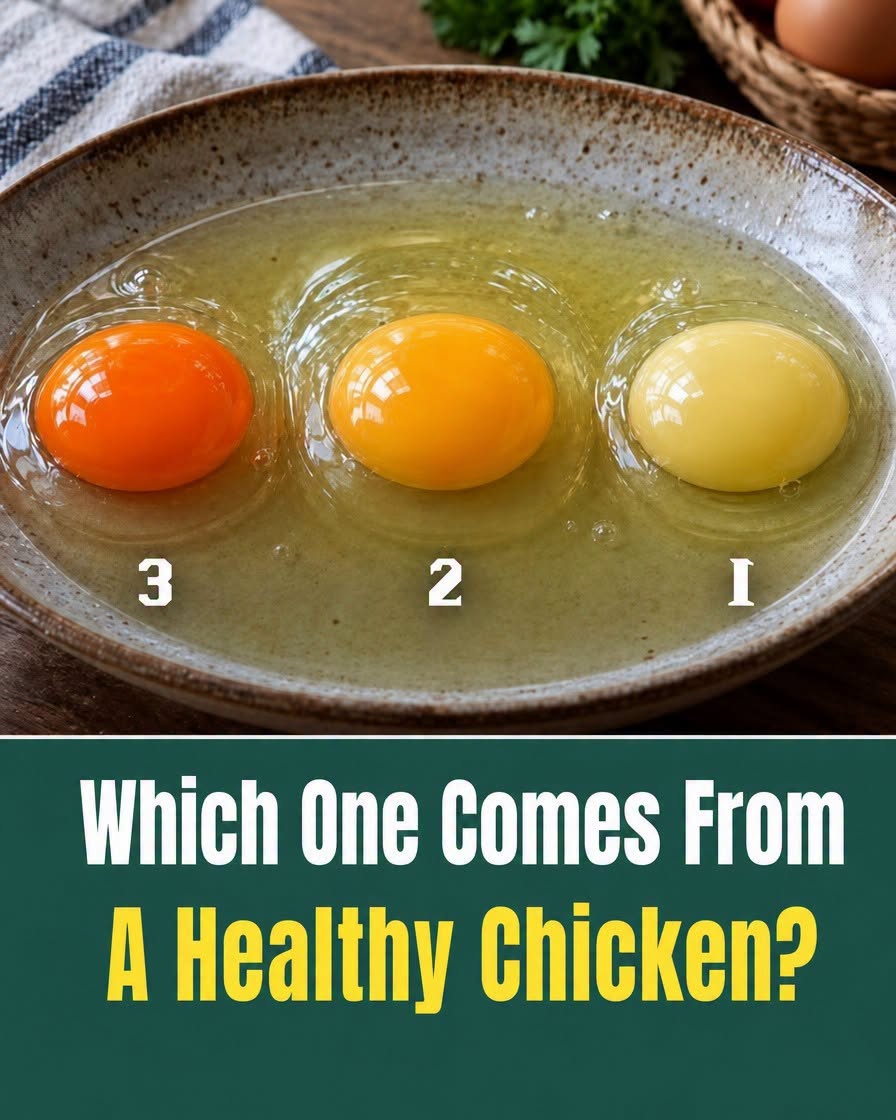
Which Egg Comes From a Healthy Chicken? What Yolk Color Really Tells You
Most of us have experienced that moment in the grocery store when we stop in front of the egg section and start comparing cartons like food experts.
We look through the small opening in the cardboard, comparing the different yolks and noticing how some appear light and yellow while others have a much richer, almost golden-orange color.
Over time, many of us have started treating yolk color as an easy way to judge an egg’s quality.
The darker the yolk looks, the better the egg must be—or at least, that’s what we’re often led to believe.
A deep, vibrant yolk can certainly look more appealing, especially when you compare it with a pale yellow one sitting beside it.
But does that darker color actually mean the chicken was healthier?
Does it tell us anything about how nutritious the egg is?
And can you really determine which egg came from a healthier chicken simply by looking at the yolk?
The answer is more complicated than most people realize.
Yolk color is influenced by several factors, and one of the biggest is what the chicken eats.
That means two eggs can look completely different inside even when both chickens are perfectly healthy.
A chicken’s diet can contain different natural pigments, including compounds found in certain plants and grains, which can influence the final color of the yolk.
So when you see a bright orange yolk, it isn’t automatically proof that the chicken was healthier, better cared for, or producing a more nutritious egg.
Likewise, a pale yellow yolk doesn’t necessarily mean something was wrong with the chicken.
The color can simply reflect what the bird consumed.
This is one reason why judging an egg entirely by its yolk color can be misleading.
We often associate darker, richer colors with better quality because that is how our brains naturally interpret many foods.
But with eggs, appearance doesn’t tell the entire story.
A darker yolk may indicate that the chicken consumed more foods containing certain pigments.
A lighter yolk may come from a completely healthy chicken whose diet simply contained fewer of those pigments.
So the next time you open an egg and see a pale yellow yolk, don’t automatically assume it is inferior.
And if you crack open another egg and find a deep orange yolk, remember that the color alone doesn’t tell you everything about the chicken, the egg, or its nutritional value.
There are other things worth paying attention to when choosing eggs.
How the eggs were handled, stored, and produced can matter more than the exact shade of the yolk.
In other words, that dramatic difference in color you see in the carton may be telling you something about the chicken’s diet—but it isn’t necessarily giving you a simple health score.
And that is where the common belief about egg yolks gets interesting.
Because the question isn’t really just about which yolk looks healthier.
It’s about what that color actually represents.