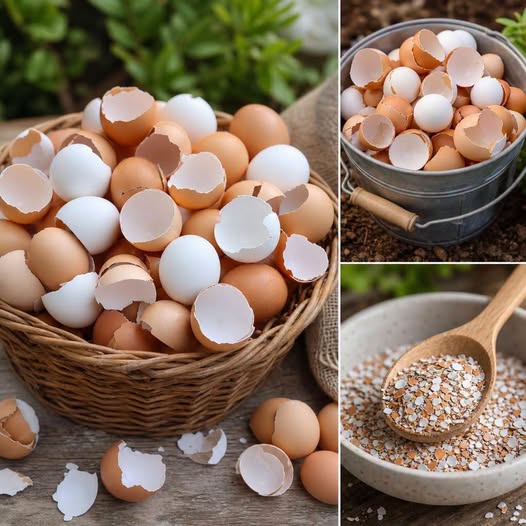
Don’t Throw Away Eggshells: 17 Practical Ways to Reuse Them Around Your Home
Eggshells are one of those everyday kitchen leftovers that are easy to overlook.
After cracking an egg for breakfast, baking, or preparing dinner, most people instinctively toss the shell into the trash. It seems like there is little reason to keep something that has already served its purpose.
But eggshells are made primarily of calcium carbonate, and their sturdy texture means they can sometimes be repurposed in simple household, gardening, and craft projects.
That doesn’t mean every eggshell needs to be saved. In many cases, throwing them away or composting them is still the easiest option. However, if you enjoy reducing kitchen waste and experimenting with practical reuse ideas, clean eggshells can have several interesting second uses.
From garden projects and composting to simple crafts and household experiments, here are 17 ways you can make use of eggshells instead of automatically putting them in the garbage.
1. Add Clean Shells to Your Compost
One of the simplest ways to reuse eggshells is to add them to a home compost pile.
Eggshells don’t behave exactly like vegetable scraps because they are largely mineral material rather than soft organic matter. They break down slowly, especially when left in large pieces.
For that reason, crushing them before adding them to compost can make them easier to incorporate.
Rinse the shells, allow them to dry, and then crush them into smaller pieces.
Adding eggshells to compost is a convenient option because you don’t need to create a separate project every time you cook eggs.
Instead, the shells can become part of the broader process of recycling kitchen scraps into compost.
2. Use Crushed Shells in the Garden
Gardeners sometimes save crushed eggshells for use around plants.
Because eggshells contain calcium carbonate, they can contribute calcium to soil as they gradually break down. However, the effect is slow, and a handful of eggshells should not be treated as an instant fertilizer.
If you want to try this method, clean and dry the shells first.
Crush them into small pieces and work them lightly into the soil.
This can be especially useful for people who already enjoy reusing household materials in their garden.
Just remember that soil needs vary considerably, so eggshells should not replace proper soil testing or a balanced fertilizer when a plant actually requires specific nutrients.
3. Make an Eggshell Powder
If you want eggshells to break down more easily, turning them into a fine powder is another option.
Start by washing the shells thoroughly and allowing them to dry completely.
You can then crush them using a mortar and pestle or another suitable kitchen tool dedicated to this purpose.
A finer texture gives the material more surface area, which can help it interact with soil more readily than large pieces.
If you make eggshell powder, keep it clearly separated from food ingredients and store it in a clean, dry container intended for gardening or household use.
4. Create a Simple Garden Soil Amendment
Eggshell powder can also be incorporated into garden soil as one small component of a broader soil-care routine.
The calcium content is the main reason gardeners are interested in eggshells.
However, it’s important not to assume that every garden needs additional calcium.
Plants require a range of nutrients, and soil composition varies from one location to another. If your soil is already well balanced, adding large quantities of eggshells may not provide any meaningful advantage.
Used in moderation, however, crushed shells can be an interesting way to make use of kitchen leftovers.
5. Start Small Seedlings in Eggshell Halves
Eggshell halves can make charming miniature containers for starting certain seedlings.
This works particularly well as a small gardening activity with children.
After cracking an egg, try to keep the shell in reasonably good condition. Clean it thoroughly and make a small drainage opening near the bottom.
Add a small amount of suitable potting mix and place a seed inside.
Once the seedling becomes established, it can be transferred to a larger container or garden location.
The shell itself can be crushed before or during planting.
This method isn’t practical for every plant, but it can turn an ordinary breakfast leftover into a fun gardening project.
6. Use Eggshells for a Children’s Gardening Project
Eggshell gardening can also be an educational activity.
Children can learn about seeds, roots, soil, water, and plant growth while using something that would normally be thrown away.
You can place several eggshell halves in a small tray, add soil, and plant different types of seeds.
Labeling each shell can make the project more engaging.
Over the following days, children can observe which seeds germinate first and how the plants change.
The project teaches an important lesson about reusing household materials while introducing basic gardening concepts.
7. Make Decorative Mini Planters
Eggshells don’t have to be used only for growing food plants.
They can also become miniature decorative planters.
Succulents, small decorative plants, or tiny seedlings can be displayed in cleaned eggshell halves.
Because the shells are fragile, they work best in areas where they won’t be knocked over frequently.
You can place several together in a small tray or arrange them alongside other natural materials.
The result can be a simple centerpiece for a kitchen windowsill, balcony, or garden table.
8. Create Natural Easter or Seasonal Decorations
Eggshells have obvious potential for seasonal crafts.
Clean, empty shells can be decorated with paint, markers, ribbons, or other craft materials.
They can become miniature ornaments, table decorations, or seasonal displays.
The possibilities depend largely on your creativity.
Children can decorate them with simple patterns, while adults can create more detailed designs.
If you’re working with fragile shells, handle them carefully and use a stable surface to prevent them from breaking.
9. Make Eggshell Mosaic Art
Broken eggshells can also become part of a mosaic project.
Instead of throwing away pieces of shell, collect clean fragments and use them to create patterns on cardboard, wood, or another suitable craft surface.
The pieces can be arranged into flowers, geometric patterns, landscapes, or abstract designs.
With paint, glue, and patience, even very simple shell fragments can become part of an attractive piece of artwork.
This is another project that can work well as a family activity.
10. Use Them in School or Classroom Crafts
Eggshells can be useful for teachers, parents, or anyone organizing an inexpensive craft project.
Because they are lightweight and easy to collect, they can provide a free material for experimenting with texture and shape.
Students can use pieces of shell in collages or mosaics.
They can also study how the shell changes when it is cleaned, dried, crushed, or decorated.
As with any craft involving small fragments, adult supervision is appropriate when young children are involved.
11. Add Them to a Homemade Composting Routine
If you already collect vegetable scraps, coffee grounds, leaves, and other compostable materials, eggshells can become part of the routine.
Rather than setting aside every shell for a special project, you can simply rinse and crush them before adding them to the compost.
This approach is especially convenient for households that cook eggs frequently.
Over time, small amounts of kitchen waste can add up.
Reusing what you already have can become an easy habit without requiring additional purchases.
12. Use Shells as Part of a Soil Experiment
Eggshells can also be useful if you enjoy simple gardening experiments.
Try preparing two small containers with the same type of soil and the same plant.
Add a small amount of finely crushed eggshell to one container while leaving the other unchanged.
Then observe the plants over time.
This kind of experiment can help demonstrate that gardening results are influenced by many variables.
Keep the conditions as similar as possible and avoid assuming that any difference is automatically caused by the eggshells.
The project is more about observation and learning than proving a particular gardening claim.
13. Make a Simple Natural Texture Craft
Eggshell fragments can provide an interesting texture for art projects.
Once thoroughly cleaned and dried, the shells can be crushed into different sizes.
Larger fragments create a more noticeable texture, while smaller pieces can produce a smoother appearance.
They can be attached to craft surfaces using appropriate glue and then painted or left in their natural color.
The finished piece can have a distinctive textured appearance without requiring expensive specialty materials.
14. Use Them in a Garden-Themed Display
If you enjoy decorating your home with natural materials, eggshells can become part of a small seasonal display.
For example, clean shells can be arranged in a decorative bowl alongside pinecones, dried flowers, small stones, or other natural objects.
You can also place decorated shells around potted plants.
The key is to keep them dry and protected from excessive handling.
Because eggshells are fragile, they are better suited to decorative areas than locations where they could easily be knocked onto the floor.
15. Try an Eggshell Science Experiment
Eggshells can be useful for simple science demonstrations.
One well-known experiment involves placing a clean eggshell in an acidic liquid and observing how the shell changes over time.
The experiment demonstrates that the calcium carbonate in eggshells reacts with acids.
For a household activity, a clean shell can be placed in vinegar and observed over several hours or days.
The shell gradually becomes weaker as the acidic liquid reacts with the calcium carbonate.
This can be an easy way to demonstrate a basic chemical reaction using ordinary household materials.
Children should perform the experiment with adult supervision and should not consume any of the materials used.
16. Use Them as a Reminder to Reduce Kitchen Waste
Sometimes the most useful purpose of a kitchen leftover is simply reminding us to think differently about waste.
Eggshells are only one example.
Vegetable scraps, coffee grounds, cardboard, jars, and other everyday materials may have additional uses depending on the household.
You don’t need to reuse everything.
Instead, choose the ideas that genuinely fit your lifestyle.
If you have a garden, composting may make sense.
If you enjoy crafts, eggshell mosaics might be more interesting.
If you have children, a seed-starting experiment could turn an ordinary shell into an educational project.
The best reuse method is usually the one you can realistically maintain.
17. Keep a Small Container for Kitchen Reuse
If you frequently cook with eggs, consider keeping a small dedicated container for clean eggshells.
Rather than throwing them away immediately, rinse them, allow them to dry, and decide later how you want to use them.
Some can go into the compost.
Others can be crushed for gardening.
A few can be saved for craft projects.
Having a designated container can make the habit easier because you don’t have to decide what to do with every shell immediately.
Just make sure the shells are completely dry before storing them for any extended period.
How to Prepare Eggshells Before Reusing Them
Regardless of how you plan to reuse eggshells, cleanliness matters.
Fresh eggshells can contain traces of egg residue, so they should be handled appropriately.
For gardening or crafts, rinse the shells thoroughly and allow them to dry completely.
If you’re crushing them, wash your hands and clean any tools afterward.
It’s also a good idea to keep eggshells intended for crafts or gardening separate from materials used for food preparation.
A simple distinction between “food tools” and “craft or garden tools” can make the process easier and more hygienic.
What About Putting Eggshells Down the Sink?
One common idea