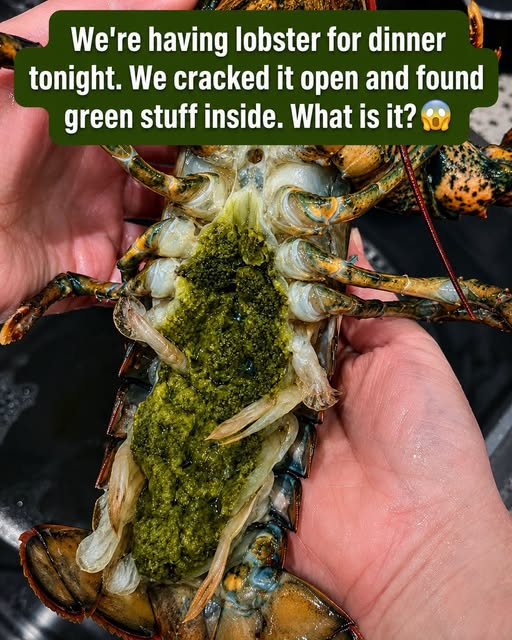
What Is the Green Stuff Inside a Lobster? Understanding Tomalley
Lobster is one of those foods that can make an ordinary dinner feel like a special occasion.
When a whole lobster arrives at the table, its bright shell, claws, and tail immediately attract attention. But once the shell is opened, diners sometimes discover something they weren’t expecting: a soft green substance inside the lobster.
For people seeing it for the first time, the reaction is often the same.
What is that green stuff?
Is it part of the lobster’s digestive system? Is it something edible? Is it fat, an organ, or something the lobster has eaten?
The answer is more interesting than it may initially seem.
The green material is commonly known as tomalley. It is associated with the lobster’s digestive and hepatopancreatic system and serves important biological functions for the animal.
For centuries, some people have considered tomalley a delicacy because of its rich texture and strong seafood flavor.
However, there are also food-safety considerations surrounding its consumption, particularly because the lobster’s hepatopancreas can accumulate certain contaminants from its environment.
Here’s what you should know about the mysterious green substance inside a lobster.
What Exactly Is Tomalley?
Tomalley is the common culinary name for the lobster’s hepatopancreas.
This organ plays an important role in the lobster’s digestive system.
In biological terms, the hepatopancreas performs functions associated with digestion and nutrient processing. It produces substances that help break down food and absorbs nutrients from what the lobster eats.
It also performs functions comparable in some ways to those of the liver and pancreas in other animals.
That comparison helps explain why the organ can contain a concentrated mixture of biological materials.
When you open a cooked lobster, the tomalley may appear as a soft green, yellow-green, brownish-green, or olive-colored substance depending on the animal and the circumstances.
Its appearance can vary considerably.
Why Is It Green?
The green color is one of the most noticeable characteristics of tomalley.
Its color is related to the pigments and other materials present in the organ as it performs its digestive functions.
The exact shade isn’t necessarily identical from one lobster to another.
It can range from relatively pale green to a darker olive color.
This variation doesn’t mean that every color indicates a particular problem.
Like many biological tissues, the appearance of the hepatopancreas can vary according to the animal’s condition, diet, physiology, and other factors.
Is Tomalley the Lobster’s Liver?
The comparison is understandable, although the anatomy isn’t exactly the same as in humans.
The lobster’s hepatopancreas performs several functions related to digestion, nutrient absorption, storage, and metabolism.
Because it carries out some functions associated with both the liver and pancreas in vertebrates, it is often described informally as a combination of the two.
That’s why you’ll sometimes hear people refer to tomalley as the lobster’s “liver.”
Scientifically, however, hepatopancreas is the more precise term.
Does the Lobster Eat the Green Stuff?
No.
The green material isn’t food sitting inside the lobster’s body waiting to be eaten.
It is part of the lobster itself.
The hepatopancreas is an organ involved in processing the food the lobster consumes.
That distinction is important because the substance can sometimes look like partially digested food.
Its soft consistency and green color can make it appear mysterious when someone encounters it for the first time.
But it is biological tissue, not simply material that happened to be left behind in the digestive tract.
Where Is the Tomalley Located?
Tomalley is located inside the lobster’s body cavity, close to the digestive organs.
When a whole lobster is opened, the soft green material may be visible around the interior of the shell.
It isn’t located in the same place as the edible tail meat or claw meat.
This is one reason diners who are familiar with lobster may deliberately seek it out while people seeing it for the first time may wonder whether something has gone wrong with their meal.
Is Tomalley Edible?
Historically, many people have eaten tomalley.
It has a rich, concentrated seafood flavor and a soft texture, and some lobster enthusiasts consider it one of the most flavorful parts of the animal.
It can be spread onto bread or crackers, incorporated into sauces, or simply eaten alongside the lobster meat.
However, whether someone should eat it is a separate question from whether it is traditionally considered edible.
Because the hepatopancreas is an organ involved in processing materials from the lobster’s environment, it can also concentrate certain contaminants.
For that reason, food-safety authorities have issued warnings or recommendations regarding consumption in situations where marine toxins or other contaminants may be present.
Why Can Tomalley Raise Food-Safety Questions?
The lobster’s hepatopancreas is involved in filtering and processing materials from the animal’s environment.
As a result, certain substances can accumulate there at higher concentrations than they would in the muscle tissue.
This is particularly important when lobsters are harvested from areas affected by harmful algal blooms or other marine contamination.
Certain naturally occurring marine toxins can be dangerous to humans.
Cooking does not necessarily make every marine toxin harmless.
That means a lobster can appear perfectly normal while its hepatopancreas may still contain substances that make consumption inadvisable.
This is why local food-safety advisories matter.
What Are Harmful Algal Blooms?
Harmful algal blooms occur when certain types of algae or microscopic marine organisms multiply rapidly under suitable environmental conditions.
Some species can produce toxins.
Marine animals can encounter these organisms or their toxins through the food chain.
Depending on the toxin involved, shellfish and other marine animals can become part of a broader food-safety concern.
Lobsters are not necessarily affected in the same way as every shellfish species, and risks vary by region and event.
That’s why general advice about lobster tomalley should not replace local guidance.
If authorities issue a warning about lobster harvested from a particular area, that information should take priority over general assumptions.
Does Cooking Make Tomalley Safe?
Cooking can destroy some microorganisms, but it does not automatically eliminate every possible contaminant or naturally occurring toxin.
This distinction is important.
People sometimes assume that thorough cooking makes any food safe.
That isn’t always the case.
Some toxins are heat-stable, meaning ordinary cooking temperatures may not reliably destroy them.
Therefore, if a food-safety authority advises against consuming lobster tomalley from a particular area, simply cooking the lobster longer isn’t a reliable solution.
The issue may be the presence of a toxin rather than bacteria or another organism that heat can destroy.
Why Do Some People Say Tomalley Tastes So Good?
Flavor is highly subjective, but tomalley has a reputation for being particularly rich.
Its texture is soft and creamy, while its flavor can be intensely savory and ocean-like.
Because it is part of an organ involved in digestion and nutrient processing, its composition is different from that of the lobster’s muscle meat.
That gives it a distinctive character.
Some people mix it with the lobster meat to create a stronger seafood flavor.
Others use it in sauces or spreads.
For people who enjoy lobster, it can be an interesting culinary component.
Why Does Tomalley Sometimes Look Different?
Not every lobster will have tomalley that looks exactly the same.
The color and consistency can vary.
Some may have a bright green appearance, while others can look darker, more brownish, or more yellow.
The amount can also differ.
These variations are not necessarily signs that something is wrong.
However, if the lobster itself smells unpleasant, has obvious signs of spoilage, or appears abnormal in other ways, it is best to follow food-safety guidance rather than relying on appearance alone.
Is Tomalley the Same as Lobster Eggs?
No.
This is another common point of confusion.
Female lobsters can carry eggs, but eggs are biologically different from the hepatopancreas.
Lobster eggs may appear as small spheres or a mass of reddish, orange, or other colored material depending on their developmental stage.
Tomalley is soft and organ-like.
The two can sometimes be present in the same lobster, which can make the interior appear more complicated to someone unfamiliar with lobster anatomy.
What About Lobster Roe?
Lobster roe refers to eggs.
In some culinary traditions, roe is considered a prized ingredient.
The color can change as the eggs develop and depending on how they are prepared.
Again, this is different from tomalley.
If you’re examining a whole lobster and notice several unusual materials inside, it helps to remember that the animal contains multiple organs and tissues that don’t resemble the familiar tail and claw meat.
Why Do Lobsters Have Such Complicated Anatomy?
A lobster may look relatively simple from the outside, but its internal anatomy is highly specialized.
Like other animals, it has organs responsible for digestion, circulation, reproduction, waste removal, and other biological processes.
The hard outer shell provides protection while also serving as part of the lobster’s structural support.
Inside, the animal has a variety of tissues and organs that aren’t visible when you’re eating only prepared tail or claw meat.
That’s why whole lobster can reveal several unexpected features.
Is the Green Color a Sign That the Lobster Is Bad?
Not by itself.
Green tomalley is a normal feature of lobster anatomy.
Its presence does not automatically mean that the lobster is spoiled.
Food safety depends on several factors, including how the lobster was harvested, handled, stored, and cooked.
If you’re uncertain about the condition of a lobster, look at the entire food rather than judging it based on tomalley color a