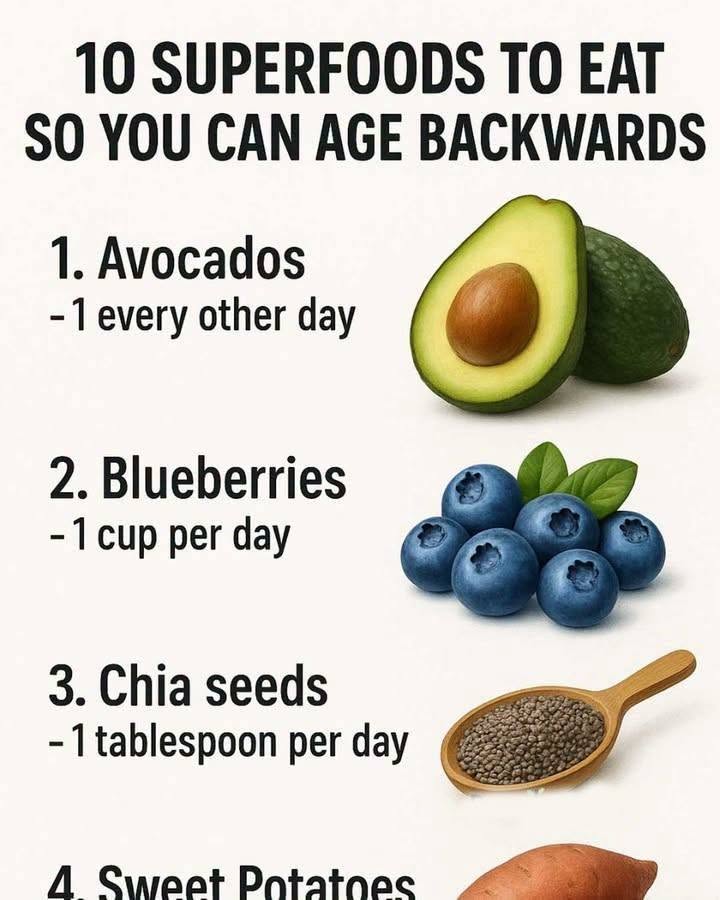
Getting older is a natural part of life, and no food can literally turn back the clock.
However, the foods you regularly eat can play an important role in supporting your health as the years go by. A balanced diet can provide nutrients that help maintain muscles, bones, the cardiovascular system, the brain, and normal immune function.
That’s why you may hear certain foods described as “superfoods.”
The term sounds impressive, but it doesn’t mean that a particular food has magical powers. There is no single ingredient capable of reversing aging or preventing every health problem.
Instead, some foods stand out because they provide a useful combination of vitamins, minerals, fiber, healthy fats, protein, and naturally occurring plant compounds.
The good news is that these foods don’t need to be exotic or expensive.
Many are ordinary ingredients that can be incorporated into everyday meals.
Here are 10 nutritious choices worth considering if your goal is to support healthy aging through a varied and balanced diet.
1. Berries
Blueberries, strawberries, raspberries, blackberries, and other berries are rich in fiber and naturally occurring plant compounds.
Their bright colors come from compounds found in plants, and berries can add both flavor and nutritional variety to your meals.
You can add them to oatmeal, plain yogurt, whole-grain cereal, or a smoothie.
Frozen berries can also be a convenient option when fresh fruit isn’t available.
Rather than focusing on one particular type, try eating a variety of fruits throughout the week.
A colorful diet provides a broader range of nutrients and plant compounds.
2. Fatty Fish
Salmon, sardines, trout, and similar fish provide protein and omega-3 fatty acids.
Protein is particularly important as people get older because maintaining muscle mass becomes increasingly important for strength and everyday physical function.
Fish can also be part of a heart-conscious eating pattern.
If you enjoy seafood, including fish in your meals can be a practical way to obtain protein and beneficial fats.
You don’t need to eat the same fish every time.
Varying your choices can make meals more interesting while providing a broader nutritional profile.
For people who don’t eat fish, other sources of protein and healthy fats can still contribute to a balanced diet.
3. Leafy Green Vegetables
Spinach, kale, collard greens, and other leafy vegetables provide a range of nutrients, including folate, vitamin K, and other vitamins and minerals.
They also contribute fiber and can add volume and variety to meals without requiring complicated preparation.
Try adding leafy greens to soups, omelets, salads, sandwiches, or cooked vegetable dishes.
You don’t have to follow a complicated diet plan.
Simply finding ways to include vegetables in several meals can make it easier to build a nutrient-rich eating pattern.
4. Nuts and Seeds
Almonds, walnuts, pistachios, chia seeds, flaxseeds, and other nuts and seeds provide combinations of protein, fiber, minerals, and unsaturated fats.
They are convenient snacks and can also be added to meals.
A small serving of nuts can be sprinkled over oatmeal or yogurt, while seeds can be incorporated into salads or whole-grain dishes.
Because nuts and seeds are relatively calorie-dense, portion sizes can matter depending on your individual nutritional needs.
The goal isn’t to eat enormous quantities.
It’s to include them as part of an overall balanced pattern.
5. Beans and Lentils
Beans, chickpeas, peas, and lentils are affordable sources of plant protein and fiber.
They can be especially useful for people looking to reduce their reliance on processed foods or incorporate more plant-based meals.
Try using lentils in soups, chickpeas in salads, black beans in tacos, or beans in stews.
Their versatility makes them easy to incorporate into many cuisines.
Fiber is also important for normal digestive health, and legumes can make meals more filling.
6. Whole Grains
Oats, barley, brown rice, quinoa, whole-grain bread, and other whole-grain foods provide fiber and other nutrients.
Choosing whole grains more often can be a simple way to improve the nutritional quality of meals.
For example, you could replace refined grains with oatmeal at breakfast, brown rice at dinner, or whole-grain bread for sandwiches.
You don’t necessarily have to eliminate refined grains completely.
A healthy eating pattern can include a variety of foods while emphasizing nutrient-dense choices.
7. Avocados
Avocados provide fiber and mostly unsaturated fats.
They can be added to salads, sandwiches, grain bowls, or breakfast dishes.
Their creamy texture also makes them a useful ingredient when you want to add richness without relying exclusively on heavily processed sauces.
Like nuts and seeds, avocados are relatively energy-dense, so the appropriate portion depends on your overall dietary needs.
The important point is that dietary fat isn’t automatically something to avoid.
The type and overall balance of fats in the diet matter.
8. Tomatoes
Tomatoes are an easy way to add vegetables to everyday meals.
They can be eaten raw, roasted, cooked into sauces, added to soups, or combined with other vegetables in salads.
Tomatoes contain vitamin C, potassium, and various naturally occurring plant compounds.
Cooking tomatoes can also change the availability of certain compounds.
This is another reason why eating vegetables in different forms can be useful.
Fresh, cooked, frozen, and canned vegetables can all have a place in a healthy diet.
9. Plain Yogurt
Yogurt can provide protein, calcium, and other nutrients.
Depending on the type, it may also contain live cultures.
Plain yogurt can be combined with berries, nuts, seeds, or fruit for a simple snack or breakfast.
When choosing yogurt, checking the nutrition label can help you compare added sugar and protein content.
There is no requirement to choose one specific brand or style.
If you don’t consume dairy, fortified alternatives may provide similar nutrients, depending on the product.
10. Extra-Virgin Olive Oil
Olive oil is commonly used in Mediterranean-style eating patterns.
It contains mostly unsaturated fat and can be used for cooking, salad dressings, or finishing meals.
Replacing some sources of saturated fat with unsaturated fats can be part of a heart-conscious dietary pattern.
Again, olive oil isn’t a miracle ingredient.
Its potential value comes from how it fits into an overall eating pattern that includes vegetables, legumes, whole grains, fish, nuts, and other nutritious foods.
Healthy Aging Is About More Than Food
It’s easy to focus on “superfoods” because they make attractive headlines.
But healthy aging isn’t created by eating one particular ingredient.
Your overall lifestyle matters much more.
Regular physical activity can help maintain strength, balance, mobility, and cardiovascular fitness.
Adequate sleep supports many aspects of physical and mental health.
Avoiding tobacco is one of the most important choices for long-term health.
Managing conditions such as high blood pressure, diabetes, and high cholesterol can also be important.
Social connection and mental well-being matter too.
Food is one piece of a much larger picture.
Variety Is More Important Than Finding a Miracle Food
One of the easiest mistakes is becoming obsessed with a single “superfood.”
Instead of asking which one food will transform your health, ask whether your overall diet contains enough variety.
Try to include different vegetables, fruits, whole grains, protein sources, nuts, seeds, and healthy fats.
Different foods provide different nutrients.
A varied diet is therefore more useful than repeatedly eating one supposedly perfect ingredient.
You don’t have to buy expensive powders, unusual berries, or costly supplements to eat well.
Many of the most nutritious foods are inexpensive staples available at ordinary grocery stores.
What About Supplements?
A healthy diet is usually preferable to relying on supplements as a substitute for food.
Some people may need supplements because of a confirmed deficiency, dietary restriction, life stage, or medical condition.
But taking large amounts of vitamins or minerals without a specific reason isn’t necessarily beneficial.
Some supplements can interact with medications or cause problems when taken in excessive amounts.
If you’re considering supplements for healthy aging, discuss them with a qualified healthcare professional, especially if you take prescription medication or have an ongoing medical condition.
Don’t Try to “Reverse” Aging
The phrase “age backwards” may sound exciting, but it isn’t a realistic description of what food can do.
No meal can restore your body to a younger biological age overnight.
What nutrition can do is help provide the building blocks your body needs to function properly.
Over many years, consistently choosing nutritious foods can contribute to better overall health.
That is a much more realistic and useful goal.
Instead of trying to look younger at any cost, focus on maintaining strength, mobility, energy, independence, and quality of life.
Those are meaningful measures of healthy aging.
A Simple Way to Put These Foods Together
You don’t need a complicated meal plan.
For breakfast, you might have oatmeal topped with berries, nuts, and plain yogurt.
For lunch, try a large salad containing leafy greens, tomatoes, chickpeas, and olive oil, along with a whole-grain food.
For dinner, you could have salmon with roasted vegetables and whole grains.
A snack might be fruit with a small serving of nuts.
These meals aren’t magic.
They’re simply examples of how different nutrient-rich foods can work together.
Final Thoughts
There is no food that can literally make you “age backwards.”
But there are plenty of foods that can contribute to a nutritious eating pattern and support your health as you get older.
Berries, fatty fish, leafy greens, nuts and seeds, beans, whole grains, avocados, tomatoes, yogurt, and olive oil are all useful options.
The most important lesson is not to search for one miraculous ingredient.
Instead, build meals around a variety of minimally processed, nutrient-rich foods and combine that approach with regular physical activity, adequate sleep, preventive healthcare, and other healthy lifestyle habits.
Healthy aging isn’t about stopping time.
It’s about giving your body the nutrition, movement, rest, and care it needs to function well throughout the years.