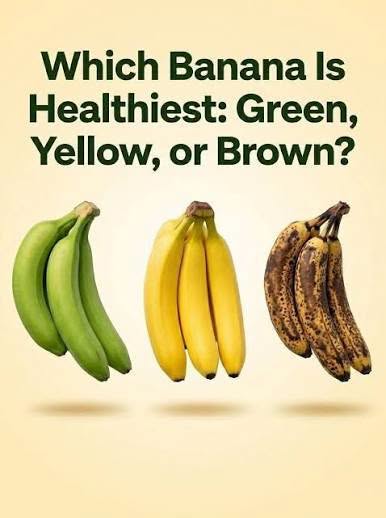
Have you ever looked at a bunch of bananas and wondered whether the green, yellow, or brown ones are actually better for you?
It is easy to assume that a banana is simply a banana, regardless of its color. But as bananas ripen, their texture, sweetness, and carbohydrate composition change.
A green banana can be firm and relatively starchy. A bright yellow banana is usually softer and sweeter. A banana covered with brown spots is generally even sweeter and softer as the fruit continues to ripen.
None of these stages automatically makes a banana “bad” or “good.”
Instead, each stage offers a slightly different eating experience, and the best choice can depend on what you prefer and how you plan to use the fruit.
Understanding what happens during ripening can help you make a more informed choice the next time you reach for a banana.
What Happens to a Banana as It Ripens?
Bananas undergo several noticeable changes as they mature.
When a banana is green, it tends to be firm and less sweet. As it ripens, natural enzymes break down some of the starches in the fruit and convert them into simpler sugars.
This is one reason ripe bananas taste noticeably sweeter than green ones.
The texture changes as well.
A green banana is generally firm and somewhat starchy, while a ripe banana becomes softer and easier to mash.
The peel also changes from green to yellow and may eventually develop brown spots.
These changes are a normal part of the ripening process.
Green Bananas: Firm, Starchy, and Less Sweet
Green bananas are not necessarily unripe in the sense of being unusable.
They are simply at an earlier stage of ripeness.
Because they contain more resistant starch than very ripe bananas, green bananas can have a different effect on digestion and may be fermented by bacteria in the large intestine.
Resistant starch is a type of carbohydrate that is not digested in the small intestine in the same way as many other starches.
This can make green bananas particularly interesting from a nutrition perspective.
However, people respond differently to foods containing higher amounts of resistant starch.
Some individuals may tolerate green bananas well, while others may experience gas or bloating when eating large amounts.
If you’re not accustomed to foods containing substantial amounts of resistant starch or fiber, starting with a moderate portion may be more comfortable.
Why Do Green Bananas Taste Different?
The difference is mostly related to the ripening process.
Green bananas contain more starch and less of the simple sugars that become increasingly noticeable as the fruit ripens.
As a result, they tend to taste less sweet and may have a slightly more starchy or astringent quality.
Their firm texture also makes them useful in certain cooking traditions.
In some cuisines, green bananas and plantains are cooked rather than eaten as a soft snack.
Yellow Bananas: The Familiar Middle Ground
For many people, a yellow banana represents the classic stage of ripeness.
The fruit is usually soft enough to eat comfortably but still firm enough to hold its shape.
At this stage, the banana is generally sweeter than a green banana but may not be as intensely sweet as one with numerous brown spots.
Yellow bananas are also convenient because they work well in many different situations.
You can eat one as a quick snack, slice it over oatmeal, blend it into a smoothie, add it to yogurt, or use it in baking.
If you want a banana that balances sweetness and texture, the yellow stage may be especially appealing.
Brown-Spotted Bananas: Softer and Sweeter
As bananas continue to ripen, brown spots begin appearing on the peel.
Many people avoid these bananas because they assume the spots mean the fruit has gone bad.
That’s not necessarily the case.
Brown spots can simply indicate that the banana is becoming more mature.
The fruit inside may be very soft, sweet, and fragrant.
These bananas are especially popular for baking because their sweetness and soft texture make them easy to mash.
They’re commonly used in banana bread, muffins, pancakes, smoothies, and other recipes.
However, there is an important distinction between normal ripening and spoilage.
If the banana has an unusual smell, visible mold, extensive leaking, or other signs of deterioration, it should not be eaten.
Does a Riper Banana Have More Sugar?
The total carbohydrate content of a banana does not suddenly appear as it ripens.
Instead, some of the starch present in the less-ripe fruit is converted into simpler sugars.
This changes the way the banana tastes.
As the banana becomes sweeter, it may also seem as though it contains dramatically more sugar, even though much of the change is due to the form of the carbohydrates rather than a simple addition of sugar.
People managing blood glucose may want to consider portion size and their overall dietary pattern rather than assuming that a specific peel color makes a banana universally appropriate or inappropriate.
If you have diabetes or another condition requiring individualized carbohydrate management, follow the dietary guidance provided by your healthcare professional.
Which Banana Has the Most Resistant Starch?
Green bananas generally contain more resistant starch than bananas that have ripened significantly.
As ripening progresses, some of that starch is converted into sugars.
Resistant starch is often discussed because it can reach the large intestine and be fermented by gut bacteria.
This is one reason green bananas have attracted interest among people researching digestive health and nutrition.
However, it is important not to turn this into a claim that green bananas are a treatment for digestive disorders.
Individual responses vary, and digestive health depends on many dietary and lifestyle factors.
What About Fiber?
Bananas provide dietary fiber, although the exact amount and composition can vary depending on size and ripeness.
Fiber contributes to normal digestive function and can be part of a balanced eating pattern.
If you are increasing your overall fiber intake, it is generally helpful to do so gradually and drink enough fluids.
Suddenly consuming large amounts of fiber can cause temporary digestive discomfort in some people.
Which Banana Is Better Before Exercise?
Bananas are popular among active people because they provide carbohydrates and are convenient to carry.
The best ripeness stage can depend on personal preference.
A yellow banana provides readily available carbohydrates and is easy to eat before or after activity.
A very ripe banana may be particularly convenient when you want something soft and sweet.
A green banana may be less appealing immediately before exercise because its firmer texture and higher resistant-starch content can feel different during digestion.
There isn’t one universally correct choice.
Your tolerance, the timing of your meal, and the type and duration of exercise all matter.
Which Banana Is Better for Baking?
If you’re making banana bread or muffins, brown-spotted bananas are often the easiest choice.
As bananas ripen, they become softer and sweeter, making them easy to mash and incorporate into batter.
Very ripe bananas can also provide plenty of natural sweetness and moisture.
This is one reason many home bakers keep overripe bananas in the freezer rather than throwing them away.
When properly stored, ripe bananas can be frozen for later use in smoothies or baked recipes.
Does Banana Color Change Its Nutritional Value Completely?
No.
The basic nutritional identity of the fruit remains the same.
Bananas continue to provide carbohydrates, fiber, potassium, vitamin B6, and other nutrients throughout their ripening process.
The major differences involve texture, sweetness, and the form of some carbohydrates.
This is important because online nutrition discussions sometimes make it sound as though a banana becomes an entirely different food simply because its peel changes color.
It doesn’t.
Ripening changes certain characteristics, but all stages can fit into a varied diet.
What About Potassium?
Bananas are widely recognized as a source of potassium.
Potassium is an essential mineral involved in several important functions, including normal muscle function and nerve signaling.
However, bananas are not the only source.
Potatoes, beans, leafy vegetables, dairy products, fish, and many other foods can also contribute potassium to the diet.
If you have been advised to restrict potassium because of a medical condition, don’t assume that bananas are automatically appropriate simply because they are considered nutritious.
Follow the dietary recommendations given by your healthcare professional.
Is a Brown Banana Less Healthy?
Not necessarily.
A banana with brown spots may look less appealing, but spots alone do not mean the fruit has lost all of its nutritional value.
In fact, the softer texture and increased sweetness can make ripe bananas useful for cooking.
What matters is distinguishing normal ripening from actual spoilage.
Mold, an unpleasant odor, leaking liquid, or significant deterioration are different from ordinary brown spots.
When in doubt about food safety, it is better to discard questionable fruit.
Should You Choose Green, Yellow, or Brown?
The answer depends on what you’re looking for.
Choose a green banana if you prefer a firmer texture and less sweetness or want to incorporate a source of resistant starch into your diet.
Choose a yellow banana if you want a familiar balance of sweetness, texture, and versatility.
Choose a brown-spotted banana if you prefer a softer, sweeter fruit or need an ingredient for baking and smoothies.
There is no need to treat one stage as the universal winner.
A Simple Way to Use All Three Stages
One practical approach is to use each stage for a different purpose.
Green bananas can be incorporated into appropriate cooked dishes.
Yellow bananas make convenient everyday snacks.
Brown-spotted bananas can be saved for smoothies, pancakes, muffins, or banana bread.
This can also help reduce food waste.
Instead of throwing away bananas simply because they have become too soft for snacking, move them into the freezer or use them in a recipe.
Final Thoughts
So, which banana is actually the healthiest?
There isn’t one answer that applies to everyone.
Green, yellow, and brown-spotted bananas are all stages of the same fruit, and each stage has different characteristics.
Green bananas tend to be firmer, less sweet, and higher in resistant starch. Yellow bananas offer a familiar balance of sweetness and texture. Brown-spotted bananas are softer and sweeter and are particularly useful in baking and smoothies.
Rather than worrying about finding the “perfect” banana, consider what works best for your taste, digestion, meal, and overall dietary pattern.
A healthy diet doesn’t require you to eat only one stage of ripeness.
Sometimes the best choice is simply the banana you have available and enjoy eating.
And if your bananas become covered with brown spots, don’t automatically throw them away. If the fruit itself remains sound, those soft, sweet bananas may be exactly what you need for your next smoothie, pancake recipe, or homemade loaf of banana bread.