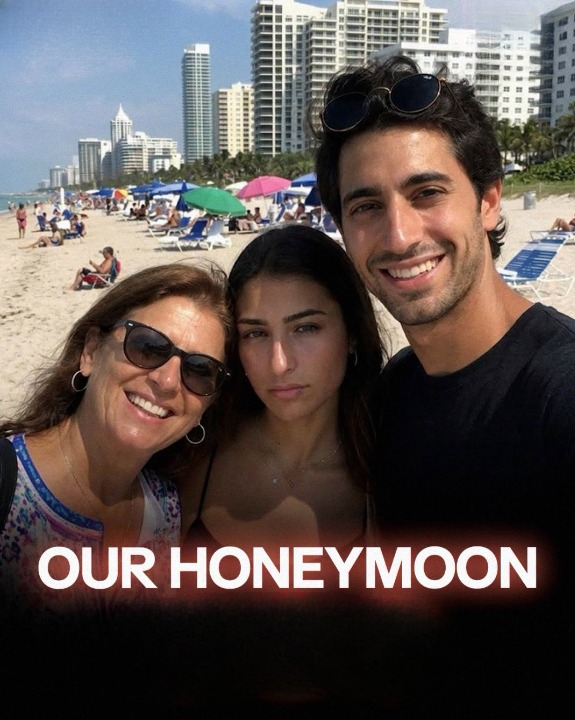
People often say your honeymoon is the beginning of a new chapter.
A chance to celebrate your marriage, create unforgettable memories, and enjoy uninterrupted time together before returning to everyday life.
That was exactly what I imagined.
Unfortunately, life had a very different lesson waiting for me.
Looking back, I realize the warning signs had appeared long before our wedding day.
I simply chose to believe everything would naturally improve once we were married.
My husband, Daniel, had always been extremely close to his mother.
There is nothing unusual about a strong family bond. In fact, I admired how much he cared about his parents.
He called his mother every day.
He asked her opinion before making almost every important decision.
She knew our dinner plans, our weekend schedules, and sometimes even details about conversations that I thought had remained private between the two of us.
Whenever I gently mentioned that perhaps we needed more independence as a couple, Daniel always smiled.
“That’s just how we’ve always been.”
I convinced myself things would gradually change.
Marriage, after all, creates a new family unit.
Or so I believed.
After months of planning, our wedding day finally arrived.
It was beautiful.
Friends and relatives celebrated with us.
The ceremony was filled with laughter, music, and heartfelt speeches.
By the time we packed our luggage for our honeymoon the following morning, I felt excited about spending our first uninterrupted week together as husband and wife.
The destination was a beautiful beachfront resort overlooking crystal-clear water.
Exactly the peaceful getaway we both wanted.
Or at least I thought we wanted.
The first surprise came before we even checked our bags.
As Daniel and I entered the airport terminal, I noticed a familiar figure standing near the departure board.
His mother.
She waved enthusiastically.
Even more surprising, she was carrying luggage nearly identical to ours.
“Oh good!” she said cheerfully.
“I was hoping I’d find you before security.”
I smiled politely, assuming she had come to wish us a wonderful trip.
Instead, she adjusted her sunglasses and laughed.
“Ready for our vacation together?”
I looked toward Daniel, waiting for him to explain the joke.
He smiled naturally.
“I meant to tell you.”
“You meant to tell me… what?”
“Mom’s joining us.”
“For the honeymoon?”
“It’s a large resort.”
“You’ll hardly notice.”
I stood there speechless.
His mother seemed genuinely excited.
Daniel appeared completely comfortable.
Meanwhile, I struggled to understand how something so significant had never been mentioned.
Boarding announcements interrupted the conversation before I could gather my thoughts.
During the flight I hoped there had simply been some misunderstanding.
Perhaps she was staying nearby.
Maybe she had booked different activities.
Surely we would still have plenty of private time together.
Unfortunately, reality proved very different.
From the moment we arrived at the resort, every plan became a group activity.
Breakfast together.
Beach walks together.
Shopping together.
Poolside relaxation together.
Even our first candlelit dinner as newlyweds unexpectedly became dinner for three.
Whenever I suggested spending an evening alone, Daniel responded kindly but firmly.
“It would be rude not to invite Mom.”
His mother wasn’t intentionally unkind.
In fact, she often believed she was helping.
She offered decorating advice for our future home.
Recommended recipes.
Commented on household routines she thought newlyweds should develop.
Unfortunately, nearly every suggestion arrived as criticism.
“The towels should be folded differently.”
“You’ll want to organize your closet better.”
“I’ve always believed married couples should…”
Every sentence somehow became another lesson.
Daniel rarely noticed.
Whenever I looked toward him hoping for support, he smiled reassuringly.
“She’s only trying to help.”
I appreciated that he loved his mother.
What hurt was realizing he rarely noticed how uncomfortable I had become.
By the second day, I no longer felt like someone enjoying a honeymoon.
Instead, I felt as though I had accidentally joined someone else’s family vacation.
One afternoon we returned to our suite after spending several hours by the beach.
I walked into the bedroom and immediately noticed something different.
My suitcase had been completely reorganized.
Clothes folded differently.
Shoes arranged by color.
Travel toiletries relocated to different drawers.
For a moment I wondered whether housekeeping had entered.
Then Daniel’s mother smiled proudly.
“I hope you don’t mind.”
“I thought everything would be easier to find.”
I thanked her politely.
Inside, however, I felt increasingly unsettled.
Personal belongings represent personal space.
Without asking, someone else had completely rearranged mine.
I quietly excused myself and walked toward the beach.
The ocean breeze helped calm my thoughts.
For nearly two hours I sat watching waves roll gently onto the sand.
Children built sandcastles nearby.
Couples walked hand in hand along the shoreline.
The peaceful surroundings gave me time to think.
The issue wasn’t really the suitcase.
Or dinner reservations.
Or vacation schedules.
The real issue was communication.
Important decisions affecting our marriage had been made without including me.
Whenever concerns arose, my feelings were minimized rather than discussed.
Marriage required partnership.
At that moment, ours didn’t feel like one.
Eventually I remembered leaving my phone inside the suite.
Wanting to call my sister for advice, I headed back.
As I approached our room, I heard laughter coming from inside.
Daniel and his mother were looking through old family photo albums she had brought along for the trip.
They weren’t doing anything inappropriate.
They were simply enjoying memories together.
Yet one detail suddenly became impossible to ignore.
This vacation wasn’t designed around beginning our marriage.
It had quietly become an extension of family traditions that existed long before I entered Daniel’s life.
He wasn’t intentionally choosing between his wife and his mother.
He simply hadn’t learned that marriage required creating healthy boundaries where both relationships could coexist respectfully.
I stepped into the room.
Both looked up.
“There you are,” Daniel smiled.
“We’ve been waiting.”
I took a deep breath.
“I think we need to talk.”
His smile faded slightly.
“About what?”
“About us.”
For the first time since arriving, I calmly explained everything.
How surprised I felt discovering his mother’s participation only at the airport.
How lonely I’d become despite being surrounded by people.
How every important decision seemed to happen without my involvement.
Neither interrupted.
When I finished, the room remained quiet.
Finally Daniel’s mother spoke.
“I honestly believed I was helping.”
“I never wanted to make you feel excluded.”
I appreciated her sincerity.
Then Daniel looked down at the floor.
“I should have talked with you before making any arrangements.”
“You deserved to be part of that decision.”
It was the first time he had acknowledged my perspective without immediately defending someone else.
The conversation lasted nearly two hours.
It wasn’t comfortable.
Important conversations rarely are.
Together we agreed on something simple.
Healthy families require healthy boundaries.
Parents remain important.
Marriage also deserves protected space where two people learn to build their own traditions.
The following morning Daniel arranged separate activities.
His mother joined a sightseeing excursion while we spent the day exploring the island together.
For the first time since arriving, we laughed without interruptions.
Talked about our future.
Watched the sunset from the beach.
It finally felt like the honeymoon we had imagined.
When we returned home, the experience continued shaping our relationship.
We attended marriage counseling together—not because our marriage had failed, but because we wanted to strengthen communication before small misunderstandings became larger problems.
Daniel gradually became more comfortable making decisions with me first.
His mother respected our privacy more intentionally.
Our family relationships improved because expectations became clearer for everyone involved.
Looking back now, people often ask what I learned from that unforgettable honeymoon.
My answer surprises them.
The vacation wasn’t ruined because someone else came along.
It became difficult because important conversations never happened beforehand.
Assumptions replaced communication.
Silence replaced honesty.
And boundaries remained undefined.
Fortunately, those things can be changed when people are willing to listen.
Marriage isn’t about choosing one relationship over another.
It’s about creating balance where love, respect, and communication allow every important relationship to flourish.
The most valuable souvenir we brought home wasn’t something purchased from a gift shop.
It was the understanding that lasting partnerships aren’t built through perfect vacations.
They’re built through honest conversations, mutual respect, and the willingness to grow together—even when those conversations begin later than they should.
Sometimes the strongest marriages aren’t the ones that never face challenges.
They’re the ones where both people decide that understanding each other is more important than winning an argument.
That lesson became the true beginning of our marriage.