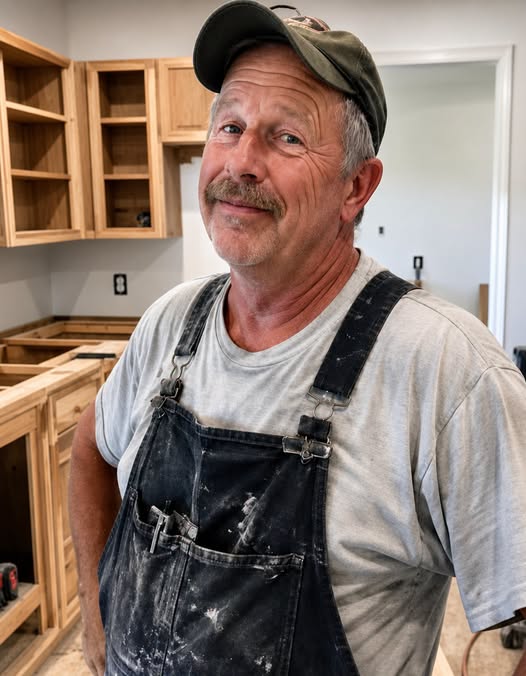
They Refused to Pay My Grandpa $6,200 for His Renovation Work — He Simply Smiled and Said, “Okay.”
My grandpa, Frank, had been working as a finish carpenter for almost fifty years.
Nearly half a century of measuring, cutting, sanding, installing, repairing, and perfecting other people’s homes had taught him a lesson that most people never learned:
Good work speaks for itself.
He never had a flashy office.
He never ran expensive advertisements.
He didn’t have a large crew or a fancy company vehicle with his name printed across the side.
For most of his career, Frank had worked with a small collection of tools, a reliable pickup truck, and a reputation he had spent decades building.
That reputation was everything to him.
When someone needed custom cabinets, built-in shelves, trim work, or detailed woodwork, his name usually came up.
One satisfied customer would recommend him to a neighbor.
That neighbor would recommend him to a friend.
Eventually, another homeowner would call.
And the cycle continued.
Grandpa used to say that a carpenter could spend forty years building a reputation and lose it in a single careless afternoon.
That’s why he took every project seriously.
Even small imperfections bothered him.
If a cabinet door sat slightly uneven, he noticed.
If a shelf was just a fraction lower than the others, he noticed.
If two pieces of trim didn’t line up exactly the way he wanted, he would stand there staring at them until he figured out how to make them better.
It wasn’t because his customers demanded perfection.
It was because he demanded it from himself.
By the time he reached his seventies, he didn’t take nearly as many projects as he once had.
But every project he accepted still received the same attention.
A few months ago, he agreed to work on a large renovation for a wealthy couple.
At first, Grandpa thought it would be a straightforward job.
The homeowners had recently renovated the lower level of their house and wanted several custom pieces built specifically for the space.
The project included a series of custom cabinets, built-in shelving, and a large window seat.
It wasn’t a small job.
There were several rooms involved, dozens of measurements to verify, and plenty of details that needed to be coordinated before construction could even begin.
The homeowners had specific ideas about how they wanted everything to look.
Grandpa didn’t mind.
Custom work meant listening to the customer.
Before starting, he carefully reviewed the measurements, materials, finishes, and overall design with them.
They discussed the price.
They discussed the schedule.
They discussed what would happen if the homeowners requested changes after work had already begun.
Everything was documented.
Everyone knew what had been agreed upon.
At least, that’s what Grandpa believed.
The first few weeks went reasonably well.
Then the changes began.
The homeowners decided they didn’t like the cabinet hardware.
So Grandpa changed it.
A little later, they decided the new hardware wasn’t quite right either.
So they changed it again.
Then came the shelving.
One of the built-in shelves had already been constructed according to the approved measurements.
The homeowners looked at it and decided they wanted it positioned three inches higher.
Grandpa explained what that would involve.
They approved the change.
He rebuilt it.
Then came the finish.
The couple had originally selected one stain.
Grandpa purchased the necessary materials and prepared everything according to their instructions.
Afterward, they changed their minds.
They wanted a different color.
Again, Grandpa adjusted.
He wasn’t thrilled about the additional work, but he understood that custom projects sometimes evolved.
Whenever he came home, he occasionally mentioned the couple during dinner.
He would shake his head and tell us about another change they had requested.
Sometimes he’d laugh about it.
Sometimes he’d sigh.
But whenever I asked why he didn’t simply refuse to make another modification, he gave me the same answer.
“They’re paying for custom work,” he would say. “I’ll give them custom work.”
That was Grandpa.
He wasn’t interested in arguing.
He wasn’t interested in making a scene.
He wanted to finish the job properly.
And eventually, after weeks of work, the project was almost complete.
By the final week, the downstairs area looked completely different.
The cabinets fit perfectly.
The built-in shelves transformed the empty walls into functional storage.
The window seat became the centerpiece of the room.
Everything had been carefully measured, finished, installed, and inspected.
Grandpa was proud of the result.
He had spent countless hours on that project.
He had purchased materials.
He had made adjustments.
He had accommodated the homeowners’ requests.
Most importantly, he had delivered the work they had asked for.
The homeowners seemed pleased, too.
They walked through the finished room and complimented the craftsmanship.
They took photographs.
They talked about how much better the space looked.
For a moment, Grandpa thought the difficult part was finally over.
There was only one thing left.
The final payment.
Then, one afternoon, my phone rang.
It was Grandpa.
His voice sounded unusually calm.
“You’re not going to believe what these people just tried.”
I asked him what happened.
There was a short pause.
Then he explained.
The homeowners had finished inspecting the completed renovation.
They had complimented the work.
They had taken pictures.
Everything seemed normal.
Then the husband pulled Grandpa aside.
According to Grandpa, the man explained that they had exceeded their renovation budget.
That alone wasn’t particularly unusual.
Renovation projects sometimes cost more than people expect.
But what he said next was very different.
He told Grandpa they weren’t going to pay the remaining $6,200.
Grandpa initially thought there had been some misunderstanding.
He reminded the man of their agreement.
The price had been documented.
The requested modifications had been discussed.
Additional materials and changes had been recorded.
There was a clear outstanding balance.
But the homeowner simply shrugged.
Then he made a comment that Grandpa would remember.
He pointed out that Grandpa was an older carpenter working largely on his own and questioned what he could realistically do about the unpaid balance.
Grandpa didn’t respond immediately.
He simply looked at him.
The homeowner apparently expected an argument.
Maybe he expected Grandpa to raise his voice.
Maybe he expected him to become frustrated.
But Grandpa didn’t do any of those things.
He remained quiet.
The man’s wife was nearby.
She seemed equally unconcerned about the situation.
According to Grandpa, she acted as though the matter had already been settled.
Then she made another comment.
Everything was already installed, she said.
The implication was obvious.
They believed Grandpa had no practical way to recover the value of his work.
That was the moment Grandpa’s attitude changed.
Not dramatically.
He didn’t shout.
He didn’t threaten them.
He didn’t insult anyone.
Instead, he became extremely calm.
That was something I had learned about him over the years.
When Grandpa was genuinely upset, he rarely became louder.
He became quieter.
He looked around the room.
First at the cabinets.
Then at the shelves.
Then at the window seat.
He took in the entire project he had spent weeks creating.
Then he smiled.
“Okay,” he said.
The homeowner seemed surprised.
Perhaps he had expected resistance.
Instead, Grandpa simply accepted the statement for the moment.
He began gathering his tools.
He packed everything carefully.
He cleaned the work area.
He made sure there was nothing belonging to him left behind.
Before leaving, however, he told the homeowners there was one final document he needed them to sign.
The document confirmed the status of the outstanding balance and recorded that the homeowners were declining to pay the remaining amount.
They apparently agreed.
The husband signed.
His wife signed as well.
According to Grandpa, neither seemed particularly concerned about what they were signing.
They appeared to believe that they had simply found a convenient way to end an uncomfortable conversation.
The wife even made a comment suggesting that it was better to settle things quickly rather than turn the situation into something more complicated.
Grandpa didn’t argue.
He thanked them and left.
When he arrived home that evening, I expected him to be furious.
Instead, he seemed strangely relaxed.
He walked into the kitchen, put his keys on the counter, opened the refrigerator, and reached for a drink.
I looked at him.
“You’re not angry?”
He shook his head.
“Of course I’m disappointed.”
“Then why do you look so calm?”
He leaned against the counter.
“Because they just gave me something very important.”
I didn’t understand.
“What?”
He took a sip of his drink.
“Their signatures.”
I stared at him.
“What are you talking about?”
He smiled.
“Tomorrow morning, you’ll understand.”
That was all he said.
I tried asking more questions, but Grandpa wasn’t interested in explaining.
He had spent almost fifty years working with people.
He understood contracts.
He understood documentation.
And more importantly, he understood that disagreements were much easier to resolve when everything was recorded clearly.
Still, I couldn’t figure out what he meant.
Why were their signatures so important?
The following morning, I found out.
At exactly 7:46 a.m., my phone rang.
It was Grandpa again.
“Where are you?”
“At home.”
“Get your keys.”
I sat up.
“Why?”
“I’m at the house.”
I immediately knew which house he meant.
“The renovation?”
“Yep.”
“Why are you there?”
There was another short pause.
Then Grandpa said something that made me sit up even straighter.
“I’m not alone.”
I asked who was with him.
He told me.
And that’s when I grabbed my keys.
I drove over as quickly as I could without doing anything reckless.
When I arrived, Grandpa was standing in the driveway.
He looked completely calm.
The homeowners were there, too.
But they didn’t look nearly as confident as they had the previous afternoon.
Something had changed.
The situation had moved beyond a simple disagreement between a homeowner and a contractor.
There were now documents on the table.
There were records of the approved changes.
There were invoices.
There were receipts.
There were messages discussing modifications.
And, most importantly, there was the document the homeowners had signed the day before.
Grandpa hadn’t spent fifty years in the construction business without learning the importance of paperwork.
He knew that conversations could be forgotten.
People could remember things differently.
But written agreements were much harder to dismiss.
He had kept copies of everything.
Every approved change.
Every additional material.
Every adjustment to the original design.
Every invoice.
Every payment.
And every message concerning the project.
The homeowners had apparently assumed that because the work was already installed, Grandpa had no options.
They were wrong about one thing.
He didn’t need to remove the cabinets.
He didn’t need to make a dramatic scene.
He didn’t need to damage anything.
He didn’t need to threaten anyone.
He simply needed to document what had happened and use the proper channels available to him.
Grandpa’s approach was remarkably simple.
He wanted the homeowners to understand that refusing to pay an agreed balance didn’t erase the agreement.
The couple initially tried to explain that the renovation had become more expensive than they expected.
Grandpa listened.
He didn’t interrupt.
He didn’t accuse them of anything.
When they finished speaking, he calmly pointed to the documentation.
“These were the changes you approved.”
He showed them the records.
“These were the additional materials.”
Then the invoices.
“And this is the amount we agreed remained outstanding.”
Finally, he showed them the document they had signed the previous afternoon.
The room became quiet.
The homeowners looked at one another.
Their confidence seemed to disappear.
They had apparently thought the matter would end when Grandpa walked out of the house.
Instead, his careful record-keeping had given him a clear way to explain his position.
The husband argued that they had believed the final amount was different.
Grandpa didn’t argue back.
He simply pointed to the records.
The wife questioned some of the additional charges.
Again, Grandpa had documentation.
He had notes.
He had dates.
He had receipts.
He had messages showing when the changes were requested and approved.
One by one, he explained everything.
There was no yelling.
No dramatic confrontation.
No insults.
Just paperwork.
And the more the homeowners reviewed it, the harder it became to argue that the additional costs had appeared out of nowhere.
The work had been requested.
The changes had been approved.
The materials had been purchased.
The labor had been completed.
And the remaining balance had been clearly documented.
Grandpa wasn’t asking for anything beyond what had been agreed upon.
That was the part that mattered most.
He wasn’t trying to punish anyone.
He wasn’t trying to embarrass them.
He wanted to be paid fairly for work he had completed.
Eventually, the conversation changed.
The homeowners stopped insisting that the balance simply didn’t exist.
Instead, they began asking how they could resolve the situation.
Grandpa gave them the same answer he had given from the beginning.
“Let’s follow the agreement.”
That’s all he wanted.
The irony wasn’t lost on me.
The couple had apparently believed Grandpa was powerless because he was an older man working independently.
They had mistaken patience for weakness.
They had mistaken politeness for a lack of options.
And they had mistaken quietness for surrender.
Grandpa hadn’t needed to threaten them.
He hadn’t needed to make a dramatic statement.
He had simply kept his records, completed the work, and allowed the facts to speak for themselves.
Later that morning, I asked him why he had stayed so calm through everything.
He looked at me and shrugged.
“I’ve been doing this for almost fifty years.”
“What does that have to do with it?”
“Everything.”
He put his tools back into his truck.
“When you’ve worked this long, you learn something.”
“What?”
“People can say whatever they want. That’s why you keep records.”
He closed the truck door.
“Your memory can be questioned. A conversation can be disputed. But if you have the agreement, the receipts, the approvals, and the work in front of you, you don’t need to shout.”
I thought about that.
Grandpa had spent decades working with homeowners, contractors, designers, suppliers, and other tradespeople.
He knew that misunderstandings happened.
He also knew that sometimes people changed their minds.
But he had learned to protect himself by documenting everything.
The $6,200 dispute had reminded him why.
The homeowners eventually understood that too.
What had started as a casual attempt to avoid the remaining payment had turned into a much more serious discussion about responsibility and agreements.
And Grandpa never once raised his voice.
That was perhaps the most surprising part.
I had expected him to be furious.
Instead, he had remained patient from beginning to end.
He had let the homeowners explain themselves.
He had answered their questions.
He had shown them the documentation.
And he had given them an opportunity to resolve the situation properly.
There was no need for revenge.
There was no need for destruction.
There was no need to make anyone look foolish.
The facts were enough.
A few days later, I asked Grandpa whether the whole experience had changed the way he looked at customers.
He shook his head.
“No.”
“Not at all?”
“No. Most people are good people.”
He paused.
“But I learned something.”
“What?”
“Even when people seem trustworthy, you still put everything in writing.”
He laughed.
“Especially when the project is expensive.”
That became one of the biggest lessons I took away from the entire situation.
The story wasn’t really about $6,200.
It wasn’t even about a wealthy couple and an older carpenter.
It was about something much simpler.
Trust is important, but documentation protects everyone.
A renovation project can change quickly.
A homeowner can request a different finish.
A cabinet design can change.
Measurements can be adjusted.
Materials can become more expensive.
A project can take longer than expected.
None of those things necessarily create a problem.
Problems arise when people stop communicating clearly.
Grandpa’s experience showed why every significant change should be written down and approved before the work continues.
That way, everyone knows what is being requested.
Everyone knows what it will cost.
And everyone has a record of the agreement.
Looking back, Grandpa said the homeowners’ biggest mistake wasn’t refusing to pay immediately.
Their biggest mistake was assuming that because the work was already installed, they no longer had to honor the agreement.
They had focused on what they believed they could get away with.
Grandpa had focused on what he could prove.
There was a huge difference.
And perhaps that was why he smiled when they told him they wouldn’t pay.
He wasn’t smiling because he thought the situation was funny.
He was smiling because he already knew that the conversation wasn’t over.
He had spent weeks building their cabinets.
He had spent days modifying shelves.
He had purchased materials based on their requests.
He had documented the changes.
He had completed the work.
And when they made their decision, they had signed a document confirming their position.
Grandpa didn’t have to make threats.
He didn’t have to take matters into his own hands.
He simply kept the paperwork and followed the appropriate process.
That’s something he has told me ever since.
“Never let anger make decisions for you.”
According to Grandpa, anger makes people careless.
Carelessness creates mistakes.
And mistakes make difficult situations even harder.
“Stay calm,” he always says.
“Write things down.”
“Keep your receipts.”
“Keep your agreements.”
“And if something goes wrong, deal with it properly.”
Those words sounded ordinary when he said them.
After everything that happened, they didn’t sound ordinary anymore.
They sounded like the advice of someone who had spent nearly fifty years learning how to work with people.
Grandpa’s career had taught him how to measure twice and cut once.
But life had taught him something else:
Sometimes the most important thing you can build isn’t made of wood.
It’s trust.
It’s reputation.
It’s credibility.
And it’s a record of doing what you said you would do.
The cabinets in that house might eventually be replaced.
The shelves might someday be remodeled.
The window seat might eventually belong to another family.
But Grandpa’s reputation would remain.
For nearly fifty years, he had built it one project at a time.
And no single difficult customer was going to change that.
As for the $6,200 balance, Grandpa handled it the same way he handled everything else.
Calmly.
Professionally.
With the facts in front of him.
He didn’t need a dramatic confrontation.
He didn’t need to make anyone afraid.
He simply needed to stand behind the work he had completed and the agreement everyone had made.
And that was why, when they initially told him they weren’t going to pay, he had looked around the beautifully renovated room, smiled, and quietly said:
“Okay.”
Because sometimes “okay” doesn’t mean you’ve given up.
Sometimes it simply means:
“I’ve heard what you said. Now let’s look at the facts.”