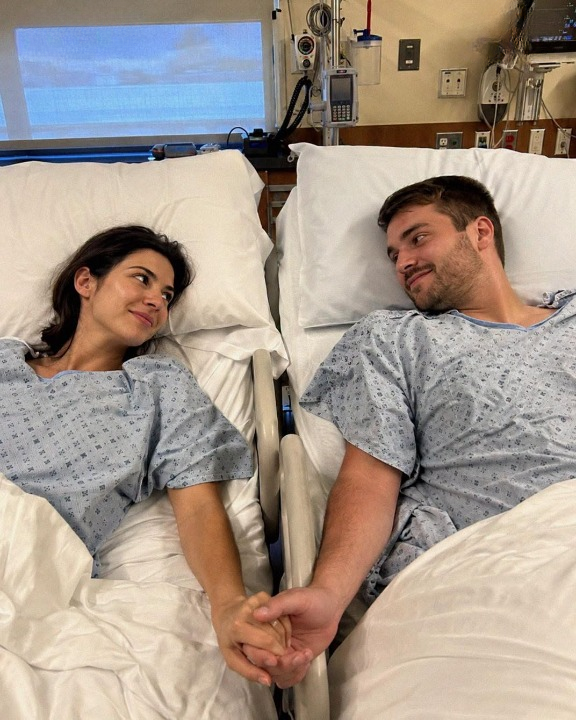
One year ago, my life became a cycle of medical appointments, treatments, and waiting for a telephone call that might never come.
My kidneys were failing, and my doctors explained that a transplant offered my best chance at returning to a more independent life. My parents, siblings, and several close friends were tested as potential living donors.
None of them was a suitable match.
I tried to remain optimistic, but waiting was difficult. Every day felt uncertain, and I hated watching my family search my face for signs that I was giving up.
Then my transplant coordinator called with unexpected news.
A volunteer had completed the initial evaluation and appeared to be compatible.
His name was Nathan.
I had never met him.
At first, I assumed he was connected to one of my relatives. Perhaps he was a friend of my brother or someone who worked with my mother.
Instead, Nathan explained that he had learned about my situation through a mutual acquaintance named Rachel. She had shared information about a community fundraiser organized to help with my medical expenses.
Nathan said he couldn’t stop thinking about my story. When he learned that living donation might be possible, he privately contacted the transplant program.
“You didn’t even know me,” I said when we were finally introduced.
“I knew someone needed help,” he replied. “I knew there was a chance I could provide it.”
His answer overwhelmed me.
Nathan never acted as though his decision made him a hero. He completed the required evaluations and spoke carefully about the process. The medical team reminded both of us that donation had to remain voluntary and that neither person owed the other a relationship.
The transplant was successful.
My recovery wasn’t immediate, but each week brought progress. Nathan recovered as well, and after the medical team confirmed that we were both comfortable communicating, he began visiting.
At first, our conversations centered on the surgery.
Then we started talking about ordinary things.
Nathan loved old movies, badly written mystery novels, and cooking meals that required far too many dishes. He had a quiet sense of humor and a habit of remembering small details.
If I mentioned a favorite tea, he brought it during his next visit. If I said I missed walking beside the lake near my apartment, he waited until my doctor approved gentle exercise and accompanied me there.
My gratitude gradually turned into friendship.
Then the friendship became something more complicated.
I began looking forward to his messages. I found myself checking the clock before his visits and smiling whenever he entered the room.
Nathan had given me a second chance at life, but I didn’t fall for him simply because of the donation. I fell for the person I believed he was—kind, patient, generous, and honest.
At least, I thought he was honest.
One month after the transplant, Nathan arrived at my apartment looking unusually serious.
He sat across from me without removing his coat.
“What happened?” I asked.
He stared at his hands.
“The doctors found something during a follow-up examination.”
My stomach tightened.
“What did they find?”
He told me he had a terminal illness. He didn’t provide many details, only that the condition had been discovered after the donation and that treatment was unlikely to provide much time.
I was shocked.
“Are you certain?”
He nodded.
“Why didn’t you call me immediately?”
“I needed time to understand it.”
I moved closer and took his hand.
“We’ll speak with specialists. We’ll find the best possible care.”
Nathan looked into my eyes.
“I don’t know how much time I have, Anna. But I know I don’t want to spend it alone.”
Then he reached into his pocket and removed a small ring.
For several seconds, I couldn’t speak.
We had known each other only a short time. Under ordinary circumstances, I would never have considered marrying someone so quickly.
But our circumstances didn’t feel ordinary.
Nathan had undergone surgery to help me. We had supported each other through recovery, and I cared about him deeply.
The idea of allowing him to face his final months without someone beside him felt unbearable.
Still, part of me hesitated.
“This is very fast,” I said.
“I know.”
“Marriage is an enormous decision.”
“I’m not asking for a perfect future,” he replied. “I’m asking for whatever future I have left.”
I asked for several days to think.
My older sister, Julia, was immediately concerned.
“You’re still recovering,” she said. “You’re overwhelmed, grateful, and frightened. Those emotions can make it difficult to know what you truly want.”
“I love him.”
“Then why does marriage need to happen immediately?”
“Because he may not have much time.”
Julia asked whether I had seen medical documentation or attended an appointment with him.
I hadn’t.
Nathan told me the diagnosis was too painful to discuss in detail. Whenever I suggested meeting his doctor, he said he wasn’t ready.
Those should have been warning signs.
Instead, I interpreted his secrecy as fear.
When I accepted his proposal, he cried and held me for a long time.
We organized a small ceremony. Only our closest relatives and friends attended. Nathan said he didn’t have the strength for an elaborate celebration, so we reserved a private room at a small garden venue.
The ceremony took place three weeks later.
I wore a simple ivory dress. Nathan wore a dark blue suit and looked healthier than I expected, but I convinced myself he was hiding his discomfort for my sake.
During the vows, my voice shook.
I promised to remain beside him through whatever came next.
When the officiant pronounced us husband and wife, our guests applauded.
I turned toward Nathan, expecting to see relief or sadness.
Instead, his entire expression changed.
The frightened, serious look disappeared. For the first time in weeks, he appeared almost excited.
He took my hand and leaned close.
“Now I can finally tell you the truth,” he whispered.
My smile faded.
“What truth?”
He guided me away from the guests and toward a quiet corner of the garden.
Then he said the words that made the celebration around us feel suddenly distant.
“I’m not terminally ill.”
At first, I thought I had misunderstood him.
“What did you say?”
“I’m not dying.”
I stared at him.
“Did the doctors make a mistake?”
“No.”
“Then why did you tell me they had found an illness?”
Nathan looked almost relieved.
“Because I needed to know that you truly wanted me.”
The meaning of his confession slowly became clear.
There had been no diagnosis.
No devastating appointment.
No uncertain final months.
Nathan had invented everything.
“You lied to me.”
“I was afraid you only spent time with me because you felt grateful for the kidney.”
“So you created a terminal illness?”
“I thought if you believed our time was limited, you would stop being afraid and admit how you felt.”
I pulled my hand away.
“You didn’t give me a chance to understand how I felt. You created an emergency and pressured me into making a permanent decision.”
“I didn’t pressure you. You said yes.”
“I said yes because I believed you were dying.”
“But you also said you loved me.”
“Love and marriage are not the same decision.”
Nathan’s expression hardened.
“After everything I did for you, I thought you would understand.”
That sentence changed something inside me.
After everything I did for you.
Until that moment, Nathan had always described the donation as a gift freely given. Now it sounded like a debt he expected me to repay.
“Did you donate your kidney because you wanted to help me,” I asked, “or because you expected me to belong to you afterward?”
“That isn’t fair.”
“Neither was inventing an illness so I would marry you.”
Our families noticed that something was wrong. Julia approached and asked whether I needed help.
I told her the truth.
Nathan tried to interrupt.
“It was only a test,” he said. “I needed to know she wasn’t using me.”
Julia stared at him.
“So you tested her by lying about dying?”
Nathan insisted that the deception didn’t change his feelings. He said we loved each other and could still have a real marriage.
But the person I had married no longer felt real.
I had promised my future to a man facing a serious illness. That man had never existed.
I left the venue with Julia before the reception began.
Nathan called repeatedly that night. His messages shifted between apologies and accusations. One moment, he admitted that fear had caused him to make a terrible decision. The next, he reminded me that I was alive because of him.
I was grateful for his donation.
I would always be grateful.
But gratitude did not give him ownership of my life.
The following week, I met with an attorney and explained the circumstances. Because laws and procedures depend on location and individual facts, the process was not instant or simple. However, with legal guidance, I pursued the appropriate action to end the marriage.
Nathan initially resisted.
He sent flowers, letters, and long messages promising that he would never lie again.
I didn’t respond.
Eventually, he agreed to cooperate, and the marriage was legally ended.
The emotional recovery took much longer.
For months, I struggled to separate two versions of Nathan in my mind.
One was the stranger who had voluntarily undergone a medical procedure to help me.
The other was the man who had used my gratitude, fear, and vulnerability to rush me into marriage.
Both versions were real.
A generous act does not make every later action acceptable. Someone can do something extraordinary and still make a deeply harmful choice.
Through counseling, I learned that I didn’t have to deny the importance of Nathan’s donation in order to acknowledge his deception.
The kidney was a gift.
It was not a contract requiring love, marriage, or lifelong loyalty.
I also learned to forgive myself.
I had ignored warning signs because I believed someone facing a terminal illness deserved patience and privacy. My compassion wasn’t a weakness. Nathan’s decision to misuse that compassion belonged to him, not me.
Months later, I received one final letter from him.
This time, he didn’t ask me to return.
He admitted that he had been terrified I would eventually leave once my recovery was complete. Instead of discussing that fear honestly, he created a crisis that made him feel secure.
“I wanted certainty,” he wrote, “and I tried to obtain it by taking away your ability to choose freely. I understand now that love gained through fear was never certainty at all.”
I never resumed contact, but I appreciated that he had finally accepted responsibility.
Today, my health is stable, and I continue to follow my medical team’s guidance. I volunteer with a patient-support organization and speak with people navigating the emotional side of transplantation.
I never share Nathan’s identity.
The purpose of my story isn’t to make people suspicious of living donors. Most donors act with extraordinary generosity and expect nothing personal in return.
My experience taught me something broader about relationships.
No act of kindness, regardless of its size, creates a right to another person’s affection. Love cannot be collected as payment, and marriage should never be secured through fear, urgency, or deception.
When Nathan leaned toward me after our vows and said, “Now I can finally tell you the truth,” he expected relief.
Perhaps he believed I would be delighted that he wasn’t dying.
Part of me was relieved.
But relief couldn’t erase the lie that had brought me to the altar.
Nathan gave me a second chance at life.
Ending our marriage was how I chose to live it.