After losing my wife and daughter to cancer, I stopped knowing what to do with my life.
My wife, Emma, had been forty-two. Our daughter, Lily, was only seventeen. Their illnesses came within two years of each other, leaving me with medical bills, an empty home, and a silence I could barely tolerate.
For months, I moved through each day without direction.
Eventually, I began volunteering at a local hospice. I told people I wanted to help, which was true, but volunteering also gave me somewhere to go. At the hospice, silence never required an explanation. Everyone there understood grief in one form or another.
That was where I met Margaret Hartwell.
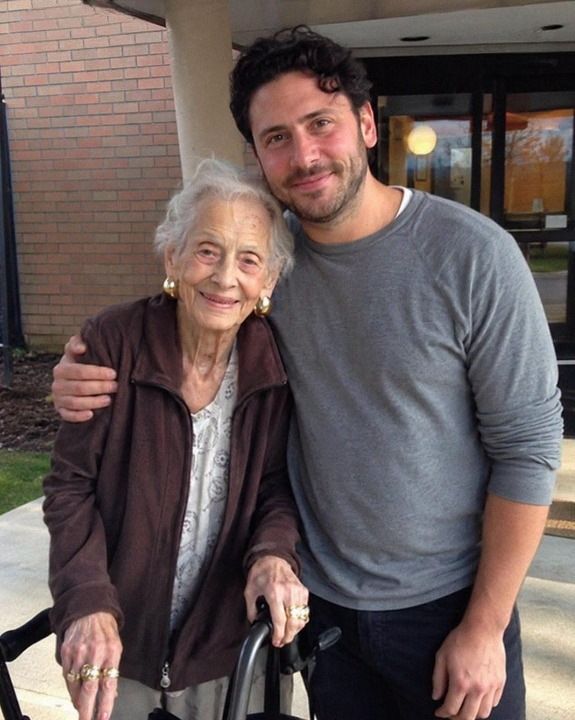
She was eighty-one, sharply intelligent, and more interested in asking questions than answering them. Even as her health declined, she dressed carefully and wore jewelry that looked more valuable than my car.
One afternoon, Margaret saw me counting the money in my hand near the vending machine. I was trying to determine whether I could afford a cup of coffee and still have enough gas to get home.
She watched me for a moment.
“Son,” she said, “I have more money than I could spend in three lifetimes.”
I laughed awkwardly.
“That must be a nice problem to have.”
“Take good care of me,” she continued, “and when I’m gone, everything I have will be yours.”
I assumed she was joking.
Margaret had only known me for a few weeks. No sensible person promised an enormous inheritance to a hospice volunteer over vending-machine coffee.
But she repeated the offer the following day.
I asked one of the hospice administrators about her. He couldn’t discuss her private affairs, but he confirmed that she had once been a prominent businesswoman.
A public search revealed that Margaret was the founder of Hartwell Construction, one of the largest construction companies in the region. Articles described her as a self-made millionaire who had started the business from a rented office nearly fifty years earlier.
She had no children. Her husband had died decades ago, and I could find no mention of close relatives.
I’m not proud of what I thought next.
If Margaret was serious, caring for her could solve every financial problem I had. I could pay my debts, keep the home Emma and I had purchased, and stop choosing between groceries and utility bills.
Some people might call that selfish.
Perhaps it was.
But grief had already taken nearly everything from me, and Margaret’s offer seemed like a lifeline.
I met with her privately and asked whether she truly meant what she had said.
“Every word,” she replied. “Move into my house and take care of me. When my time comes, you’ll receive everything I have.”
“Shouldn’t we put that agreement in writing?”
Margaret smiled.
“If you need a contract before you can show kindness, then you’re not the person I’m looking for.”
I should have walked away.
Instead, I agreed.
Margaret lived in an enormous estate surrounded by gardens and tall iron gates. The interior looked like something from a magazine. There were crystal chandeliers, antique furniture, valuable paintings, and more rooms than one person could reasonably use.
I moved into a guest room and completed basic caregiving courses. I learned how to assist safely, recognize signs of discomfort, organize medication schedules, and respond during emergencies.
Strangely, Margaret still managed many daily tasks on her own.
She could dress herself, walk slowly through the gardens, and prepare tea whenever she felt strong enough. A visiting nurse handled her medical needs.
My most important responsibility was simply to keep her company.
“Tell me about your life,” she would say each afternoon.
At first, I avoided discussing Emma and Lily. Their names still felt too painful to speak aloud.
Margaret never pressured me.
Instead, she talked about her own life.
She told me how she had started her company after being told that construction was no place for a woman. She described borrowing money to purchase her first truck and working from sunrise until long after dark.
She also told me about the choices she regretted.
Margaret had sacrificed friendships for business. She postponed vacations, missed family celebrations, and spent years convincing herself that success would eventually make her feel less lonely.
It never did.
“What is the point of building hundreds of houses,” she once asked, “if you reach the end of your life without anyone who considers you home?”
Over time, I began telling her about my family.
I told her about meeting Emma at a library, proposing in the rain, and discovering that she had already selected names for three imaginary children.
I told her about Lily’s first day of school, her love of astronomy, and her habit of singing while she washed dishes.
Margaret listened to every story.
Sometimes she asked questions. Other times, she simply held my hand.
Weeks became months.
Without realizing it, I stopped thinking about the inheritance every time I prepared Margaret’s breakfast or helped her into the garden. I began caring for her because I genuinely wanted her final months to be comfortable.
When she had difficult nights, I sat beside her until morning.
When she lost her appetite, I prepared the soup her husband used to make.
On better days, we played cards, listened to old records, and argued about movies. Margaret cheated shamelessly at card games and denied it even when I caught her hiding cards beneath a cushion.
She seemed so alive during those moments that I sometimes forgot why I was there.
Part of me began hoping her doctors were wrong.
One evening, Margaret asked a surprising question.
“If you received enough money to do anything you wanted, what would you do?”
Months earlier, I would have said I wanted to pay my debts and live comfortably.
Instead, I thought about the families I had met at the hospice.
“I’d create a place for people who don’t have anyone,” I said. “Not a hospital—something warmer. A place where patients and their families could eat together, sit in a garden, or talk to someone who understands.”
Margaret studied me.
“What would you call it?”
I smiled sadly.
“Emma and Lily House.”
She nodded.
“That sounds like a worthy name.”
I didn’t think about the conversation again.
Seven months after I moved into Margaret’s estate, she died peacefully in her sleep.
I found her the following morning. On the nightstand beside her was a photograph of Emma and Lily that I had shown her weeks earlier.
Grief returned with unexpected force.
I had begun caring for Margaret because of her money. Yet as I sat beside her bed, the inheritance was the last thing on my mind.
I had lost another person I loved.
Several days later, Margaret’s lawyer gathered representatives from her company and the hospice to explain her affairs.
That was when I learned the truth.
Margaret no longer owned Hartwell Construction.
During the final year of her life, she had transferred her remaining shares into an employee ownership trust. The company would now belong to the people who had helped build it.
The magnificent estate wasn’t hers either.
She had been renting it through a corporate arrangement.
The paintings belonged to the property owner. Most of the jewelry had been sold or pawned. Her personal accounts contained far less than anyone expected, and the money that remained was donated to the hospice.
My name did not appear in her will.
I received nothing.
Not the company.
Not the estate.
Not even one piece of jewelry.
I felt ashamed that disappointment surfaced alongside my grief, but it did.
Margaret had made a clear promise. I had reduced my working hours, completed caregiving courses, and spent seven months looking after her. I had trusted her.
Now I was returning to the same debt and uncertainty I had faced before meeting her.
Perhaps she had been testing me.
Perhaps I had failed.
After the memorial service, I walked through the columbarium alone. I had nearly reached the exit when I heard footsteps behind me.
“Wait!”
Margaret’s lawyer hurried toward me, carrying a leather folder.
His expression was difficult to read.
“I was hoping to catch you before you left,” he said.
“I think everything has already been explained.”
“Not everything.”
He lowered his voice.
“Margaret left special instructions concerning you. She made absolutely certain that you received exactly what you deserved.”
The phrase sounded almost threatening.
“What does that mean?”
He handed me a sealed envelope.
Inside was a letter written in Margaret’s familiar handwriting.
“Dear Thomas,” it began, “you are probably angry with me. You have every right to be. I promised you everything I had, and during our time together, I made certain that I had almost nothing left.”
I stopped reading.
The lawyer nodded toward the folder.
“Keep going.”
Margaret’s letter explained that she had known why I initially accepted her offer.
She knew about my medical debt, the overdue mortgage payments, and the hours I spent working before volunteering at the hospice.
“I never believed you were greedy,” she wrote. “I believed you were desperate. There is an important difference.”
She had also known that my reason for staying eventually changed.
She remembered the nights I sat beside her when I could have hired someone else. She knew I had canceled a job interview because she had been frightened after receiving difficult news from her doctor.
Most importantly, she knew that during her final weeks, I had refused to leave even after discovering that her financial situation was not as secure as it appeared.
“I offered you a fortune to learn whether money could bring one honest person into my life,” she wrote. “You stayed long enough to teach me that companionship cannot be purchased. It can only be recognized and appreciated.”
The lawyer opened the folder.
The first document was a check.
It wasn’t a fortune, but it was enough to compensate me fairly for every hour I had spent caring for Margaret. She had calculated a professional caregiver’s wage, added the cost of my training, and included additional money for the income I had lost.
“She didn’t want your work to go unpaid,” the lawyer explained.
The second document confirmed that a trust had paid the remaining mortgage on my modest home. Margaret had quietly arranged the payment before her death.
My knees nearly gave way.
But there was still more.
During the final months of her life, Margaret had sold her jewelry and a portion of her remaining investments. She used the money to purchase and renovate an abandoned inn near the hospice.
The property did not belong to me. It had been placed in a charitable trust and could never be sold for personal profit.
It had a new name:
Emma and Lily House.
I stared at the document until the words blurred.
Margaret had remembered our conversation.
The building would provide temporary accommodations for families of hospice patients who lived far away. It would also offer grief-support meetings, shared meals, a library, and a garden.
The trust included enough money to operate the program for several years. Margaret had asked the hospice board to offer me a paid position as its resident family-support coordinator, provided I completed additional training.
There was also a small apartment inside the building where I could live if I chose.
“She didn’t leave you a company,” the lawyer said. “She left the company to the employees who earned it. She didn’t leave you a mansion because the mansion was never hers.”
He placed the final document in my hands.
“But she believed you earned fair compensation, a secure home, and the opportunity to build the place you described.”
I returned to Margaret’s letter.
“You came to me because you needed money,” she had written. “You stayed because we needed each other. A fortune might allow you to avoid life. I wanted to give you a reason to return to it.”
I sat on a nearby bench and cried.
Margaret had kept her promise, although not in the way I expected.
Everything she truly possessed at the end—her remaining money, her final business decisions, and the last months of her attention—had been directed toward people who needed help.
I accepted the position.
Completing the additional training took nearly a year. Emma and Lily House opened the following spring.
On the first day, a family arrived from three states away to be near an elderly relative receiving hospice care. They had been sleeping in their car because they couldn’t afford a hotel.
I showed them to a clean room overlooking the garden.
The mother hugged me and whispered, “You have no idea what this means to us.”
But I did.
I understood exactly what it meant to need somewhere safe when life had become unbearable.
A framed photograph of Margaret now hangs in the entrance. Beneath it is a small plaque containing one of her favorite sayings:
“A meaningful life is not measured by what remains in your name, but by what continues because you were here.”
I once believed Margaret had deceived me by leaving me nothing.
In reality, she gave me fair payment for my work, rescued my home, honored my wife and daughter, and placed a future in front of me when I thought mine had ended.
She did not give me everything I wanted.
She gave me exactly what I deserved—and, more importantly, exactly what I needed.