The Wedding They Boycotted—and the Truth That Arrived Three Years Later
The empty chairs were impossible to ignore.
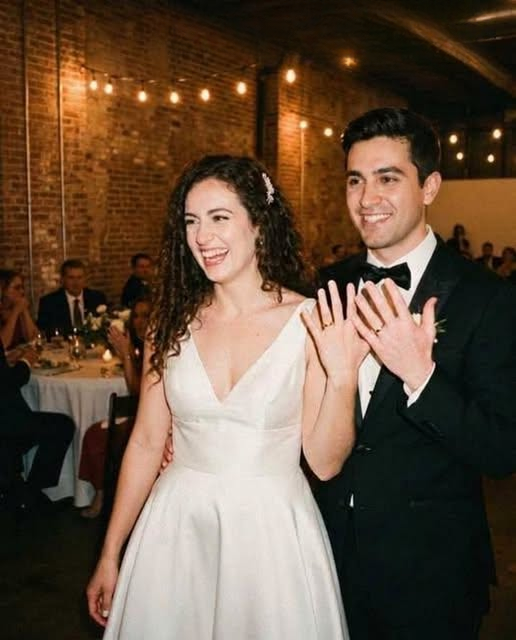
I had spent months planning every detail of our wedding, carefully arranging flowers, choosing music, and imagining the smiles that would fill the room. Yet one entire section remained untouched from the moment the ceremony began until the last guest left.
Those seats had been reserved for my husband’s family.
Not one of them came.
At the time, I told myself it didn’t matter.
What mattered was that Daniel and I loved each other enough to build a future together, even if some people refused to support our decision.
Looking back now, I realize those empty chairs were only the beginning of a story neither of us could have imagined.
A Different Beginning
I was raised by my grandmother after my parents died in a car accident when I was eight years old.
She wasn’t wealthy.
She cleaned offices during the evenings and spent weekends sewing clothes for neighbors to earn extra income.
What she lacked in money, she made up for in determination.
She taught me that kindness was something no one could take away from you.
When I earned a scholarship to college, she cried harder than I did.
“Never think you’re less than anyone else,” she told me.
“Character matters more than a family name.”
I carried those words with me throughout my life.
Meeting Daniel
Daniel and I met during our first year at work.
He was thoughtful, funny, and never seemed impressed by expensive things.
We spent months as friends before our relationship became something more.
For nearly three years, everything felt easy.
Until I met his parents.
His family owned several successful businesses and had lived comfortably for generations.
Their home was larger than the apartment where my grandmother and I had spent my childhood.
His mother asked polite questions at first.
Then came the ones that mattered.
“What does your family do?”
“Where did your parents go to school?”
“Do you own property?”
Each answer seemed to disappoint her a little more.
When dinner ended, she spoke privately with Daniel.
He later admitted she had asked him to reconsider the relationship.
She believed we came from “completely different worlds.”
The Wedding
Despite the objections, Daniel proposed.
We planned a modest ceremony surrounded by close friends and the people who had supported us from the beginning.
Invitations were mailed to his relatives.
None accepted.
My grandmother squeezed my hand before I walked down the aisle.
“You already have the family you need,” she whispered.
Her words carried me through the day.
Building Our Own Life
Marriage wasn’t always easy, but it was honest.
We bought a small house.
Painted every room ourselves.
Learned how to repair leaky faucets through online videos.
Celebrated promotions with homemade dinners instead of expensive vacations.
Two years later, our son was born.
Watching Daniel become a father convinced me I had married exactly the right person.
His family’s absence slowly became part of our history rather than our daily life.
An Unexpected Visitor
Three years after our wedding, someone knocked on our front door.
Standing there was Daniel’s mother.
She looked older.
Tired.
The confidence she had once carried seemed replaced by hesitation.
“I know this is unexpected,” she said.
“I’d like to speak with you alone.”
Daniel was traveling for work that afternoon.
Against my better judgment, I invited her inside.
She carried a weathered folder tied with a faded ribbon.
“I’ve rehearsed this conversation a hundred times,” she admitted.
“I never imagined I’d actually have the courage.”
A Different Truth
I expected an apology.
Instead, she surprised me.
“I wasn’t honest about why I opposed your marriage.”
The room became very quiet.
“I told everyone it was about money.”
She looked down.
“It wasn’t.”
She opened the folder.
Inside were old letters, photographs, and newspaper clippings.
One photograph immediately caught my attention.
It showed my grandmother standing beside a much younger version of Daniel’s grandfather.
Both were wearing volunteer badges from a community rebuilding project decades earlier.
“You knew my grandmother?”
“No.”
She paused.
“But our families did.”
A Forgotten History
She explained that many years earlier, both families had worked together after severe flooding damaged dozens of homes.
During that time, Daniel’s grandfather and my grandmother became close friends.
When business opportunities later emerged, disagreements separated the families.
Rumors replaced conversations.
Pride replaced understanding.
Neither side ever attempted to repair the relationship.
Over time, the true story disappeared, leaving only resentment.
“I inherited those assumptions,” she admitted.
“I judged you before I ever knew you.”
The Letters
She handed me several handwritten letters.
My grandmother had written them but never mailed them.
They described her hope that one day both families might forgive one another.
She believed future generations deserved better than old arguments.
Reading her words brought tears to my eyes.
She had never told me any of this.
Perhaps she believed the past should stay buried.
An Honest Apology
Daniel’s mother looked around our modest kitchen.
Family photographs covered the refrigerator.
Our son’s drawings decorated one wall.
She smiled sadly.
“I spent years convincing myself I was protecting my son.”
She shook her head.
“In reality, I was protecting my own pride.”
Then she said something I never expected.
“I missed my grandson’s first steps.”
“I missed birthdays.”
“I missed ordinary Sundays.”
“No amount of pride was worth that.”
Daniel Comes Home
When Daniel returned, I told him his mother had visited.
He looked surprised.
“I left the decision to you,” I said.
“If you want to keep your distance, I’ll understand.”
Instead, he asked only one question.
“Did she come to blame someone?”
“No.”
“Did she come to listen?”
“Yes.”
He nodded slowly.
“Then maybe it’s time.”
Starting Again
Forgiveness didn’t happen overnight.
Trust rarely does.
It began with short visits.
Then birthday parties.
Then shared dinners.
No one pretended the past hadn’t happened.
Instead, everyone acknowledged it honestly.
Over time, the conversations became easier.
What I Learned
For years, I believed rejection had been caused by differences in income and social status.
In reality, it was sustained by assumptions passed from one generation to another.
People sometimes inherit fears they never question.
Breaking that cycle requires someone willing to choose understanding over pride.
My grandmother had hoped for that long before I ever met Daniel.
She never lived to see it.
But in many ways, her quiet wish finally came true.
A New Family Tradition
Every anniversary now, we set one extra place at the table.
Not because someone is missing.
But as a reminder.
It reminds us that empty chairs don’t always have to stay empty forever.
Sometimes all it takes to fill them is one sincere conversation, one honest apology, and the courage to let go of yesterday in order to make room for tomorrow.