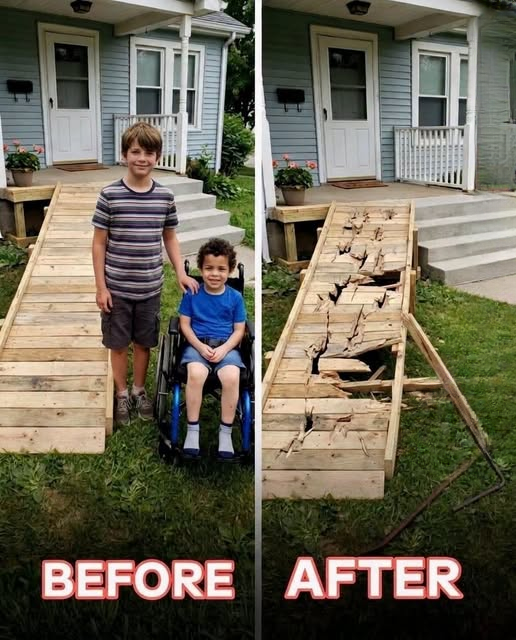
Some of the biggest lessons in life don’t come from classrooms.
They come from watching children notice problems that adults have learned to overlook.
My twelve-year-old son, Ethan, taught me that.
He also reminded our entire neighborhood that one thoughtful act can inspire far more people than we ever expect.
A Boy Who Always Wanted to Help
Ever since he was little, Ethan had been the kind of child who couldn’t ignore someone in need.
If another student forgot lunch, he shared his.
If an elderly neighbor needed groceries carried inside, he volunteered before anyone asked.
His father often said,
“Real strength isn’t measured by muscles. It’s measured by what you choose to do for other people.”
Those words stayed with Ethan.
Even after we lost his dad unexpectedly earlier that year.
Woodworking had been one of their favorite hobbies together.
Weekends often meant building birdhouses, shelves, or small projects in the garage.
Those memories would soon become more important than either of us realized.
Watching From the Porch
Across the street lived a family with a nine-year-old son named Caleb.
Caleb used a wheelchair.
Every afternoon after school, he sat on his front porch watching neighborhood children ride bicycles, play tag, and laugh together.
He always smiled politely.
But he rarely joined them.
One afternoon Ethan stood beside the living-room window.
“Mom,” he asked quietly.
“Why doesn’t Caleb ever come down to play?”
I realized I didn’t actually know.
So we walked over and introduced ourselves.
The Problem
Caleb’s mother welcomed us warmly.
When Ethan asked his question, she hesitated before looking toward the front steps.
There were four steep concrete steps leading from the porch to the sidewalk.
No ramp.
No accessible path.
She explained they hoped to install one someday, but the project had been delayed because of financial challenges.
In the meantime, Caleb needed assistance every time he wanted to leave the porch.
As a result, he often chose simply to stay there.
Watching.
Waiting.
A Quiet Decision
That evening Ethan barely spoke during dinner.
Instead, he carried graph paper into his room.
Hours later I found him sketching measurements.
“I think I know how we can help,” he said.
The following morning he counted the money he had saved for months.
He had been planning to buy a new bicycle.
Instead, he visited the local hardware store with me.
He purchased lumber, screws, brackets, sandpaper, and basic supplies.
Every dollar went toward one goal.
Building a ramp.
Learning From His Father
Although Ethan was still young, he remembered many of the techniques his father had patiently taught him.
Measure carefully.
Take your time.
Check your work twice.
Think about safety first.
Whenever he became frustrated, he’d pause and quietly say,
“Dad would’ve fixed it this way.”
Little by little, the project came together.
Building Together
Several neighbors noticed what Ethan was doing.
One offered extra screws.
Another lent tools.
Someone else donated exterior paint.
What started as one boy’s project slowly became something larger.
People who had barely spoken to one another before were suddenly working side by side.
After school each afternoon, the driveway filled with volunteers.
By the end of the week, the ramp was complete.
It wasn’t elaborate.
But it was sturdy, carefully built, and ready to use.
A Moment Nobody Forgot
The day we installed the ramp remains one of my favorite memories.
Caleb rolled forward cautiously.
Then slowly made his way down to the sidewalk.
For the first time, he reached the street independently.
The neighborhood children immediately invited him to join their game.
Within minutes they were laughing together.
No one seemed to notice the wheelchair anymore.
They simply saw another friend ready to play.
Sometimes inclusion begins with something as simple as removing one obstacle.
An Unexpected Disagreement
Not everyone viewed the project the same way.
The following morning, one nearby resident expressed concerns about the appearance of the new structure.
She believed it changed the look of the front yard and worried about neighborhood aesthetics.
The conversation quickly became emotional.
Fortunately, before the disagreement escalated further, several neighbors stepped in and encouraged everyone to remain calm while discussing possible solutions.
Although the temporary ramp suffered some damage during the confusion, nobody was injured.
The situation reminded everyone how easily misunderstandings can grow when people stop listening to one another.
A Community Responds
News of the damaged ramp spread surprisingly quickly.
Local residents wanted to help.
Within twenty-four hours, volunteers began arriving.
Professional carpenters.
Contractors.
Retired builders.
Local businesses donated supplies.
Hardware stores contributed materials.
What had originally been a small wooden ramp soon became something much more substantial.
Engineers even offered advice to ensure the new structure met accessibility recommendations.
Building Something Better
Over the next several days, dozens of people worked together.
The replacement ramp included:
- Stronger framing
- Improved handrails
- Better weather protection
- Smooth transitions
- Durable materials designed to last for years
Watching everyone contribute their skills reminded me how generous communities can become when given an opportunity.
Caleb’s Smile Returned
When the new ramp was finished, Caleb rolled down it with complete confidence.
His mother cried quietly.
So did several neighbors.
Ethan stood beside me without saying much.
Finally I asked,
“Are you happy?”
He nodded.
“It isn’t really about the ramp anymore.”
“What do you mean?”
“It’s about making sure everyone gets included.”
Recognition Ethan Never Expected
A few weeks later, the elementary school invited Ethan to speak during a community service assembly.
He felt embarrassed by the attention.
“I didn’t do anything special,” he insisted.
The principal smiled.
“You reminded adults what kindness looks like.”
The audience applauded.
But Ethan simply shrugged.
“I just wanted Caleb to play.”
What We Learned
Looking back, I sometimes think the ramp changed far more than one family’s daily routine.
It changed our neighborhood.
People introduced themselves more often.
Children played together more frequently.
Neighbors organized additional volunteer projects for older residents.
One act of compassion inspired another.
Then another.
Then another.
Accessibility Matters
Many people never notice barriers until someone they care about encounters them.
A single step.
A narrow doorway.
An uneven sidewalk.
For some individuals, these obstacles are minor inconveniences.
For others, they determine whether participation is even possible.
Removing barriers creates opportunities.
Not only physically.
But socially as well.
Ethan’s Father’s Legacy
Months later, I found Ethan standing alone beside the finished ramp.
“What are you thinking about?” I asked.
He smiled.
“Dad would’ve liked this project.”
“I think so too.”
“He always said building something useful matters more than building something impressive.”
I realized then that his father had been right.
The most meaningful things we build aren’t always houses or furniture.
Sometimes we build belonging.
Sometimes we build opportunity.
Sometimes we simply build a way for someone else to participate.
A Lasting Lesson
The ramp still stands today.
Children continue gathering outside after school.
Caleb rolls down independently, joins neighborhood games, and returns home whenever he’s ready.
Most people walking past probably see only a well-built accessibility ramp.
I see something different.
I see a twelve-year-old boy who looked at a problem and asked one simple question:
“What can I do to help?”
In a world that often celebrates the loudest voices, Ethan reminded all of us that quiet acts of kindness can leave the greatest impact.
Sometimes changing someone’s life doesn’t require extraordinary resources.
Sometimes it begins with compassion, determination, a few pieces of lumber, and the willingness to build a path where none existed before.