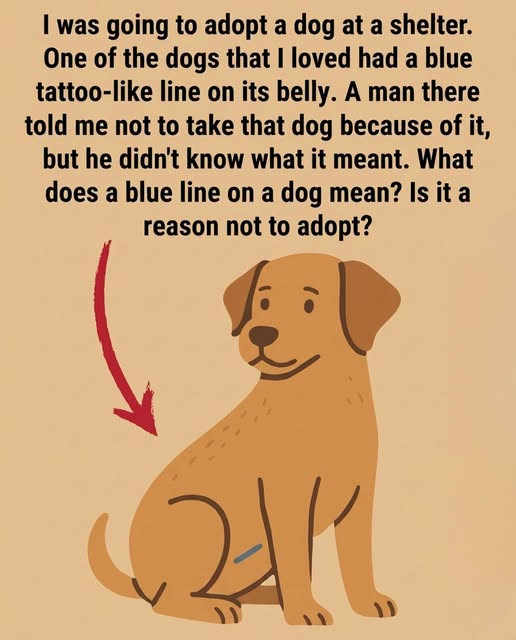
If you’ve ever been petting a dog and noticed a thin blue line or a small blue tattoo on its lower abdomen, you may have wondered what it was.
At first glance, it can look unusual.
Some people assume it’s an accidental ink mark, while others wonder whether it identifies the dog in some special way.
The good news is that, in many cases, this small marking has a very practical purpose and is nothing to worry about.
Veterinarians and animal shelters have used identification tattoos for many years as a simple way to indicate that a dog has already undergone a spay or neuter procedure. While practices vary depending on the veterinary clinic, rescue organization, or country, these tattoos can help prevent unnecessary surgeries and provide useful information if a dog’s medical history is unknown.
Here’s what every pet owner should know about this small but meaningful veterinary mark.
What Is the Blue Line?
The blue line is typically a small tattoo placed on a dog’s lower abdomen during or shortly after a sterilization procedure.
Although the appearance varies, it may look like:
- A short blue or green line
- A tiny straight mark
- A small symbol
- A simple colored tattoo near the surgical site
It is generally placed where veterinary professionals can easily find it during future examinations.
Because fur often grows back over the area, the mark may become difficult to notice unless you’re looking closely.
Why Do Veterinarians Use It?
One of the biggest reasons is to provide a permanent visual indication that the dog has already been sterilized.
Imagine a dog arrives at an animal shelter without medical records.
Perhaps the owner has surrendered the pet.
Maybe the dog was found wandering and has no identification.
Without documentation, determining whether the animal has already been spayed or neutered can sometimes be difficult.
The tattoo provides an important clue.
Instead of performing exploratory surgery simply to check whether reproductive organs have already been removed, veterinary staff may recognize the tattoo and avoid an unnecessary procedure.
Helping Shelters and Rescue Organizations
Animal shelters care for thousands of dogs every year.
Many arrive with little or no medical history.
A permanent tattoo can save valuable time by helping shelter staff identify animals that have already received sterilization surgery.
This allows veterinarians to focus resources where they are truly needed.
It also reduces unnecessary stress for the animal.
Does Every Dog Receive One?
No.
Tattoo practices differ widely.
Some veterinary clinics routinely place a tattoo after every spay or neuter procedure.
Others do not.
Policies often depend on:
- The veterinarian
- The clinic
- Local veterinary standards
- Rescue organizations
- Regional practices
As a result, many sterilized dogs never receive a tattoo at all.
The absence of a blue line does not necessarily mean a dog has not been spayed or neutered.
Is the Tattoo Painful?
Generally, the tattoo is applied while the dog is already under anesthesia for the surgical procedure.
Because it is performed during the operation or immediately afterward, the animal does not experience additional awareness of the tattooing process itself.
After recovery, the tattoo heals along with the surgical incision.
Why Blue or Green?
Blue and green pigments are commonly used because they remain visible beneath light-colored skin.
These colors are also easy for veterinary professionals to recognize during physical examinations.
The exact color depends on the tattoo ink selected by the clinic.
What Does the Tattoo Look Like?
There is no universal design.
Different clinics use different markings.
Examples include:
- A short blue line
- A small green line
- A tiny dash
- A simple symbol
- A small letter
The appearance varies significantly.
The important feature is not the design itself but its purpose.
Can It Fade?
Yes.
Over time, tattoos may become less noticeable.
Several factors influence visibility, including:
- Fur growth
- Skin pigmentation
- Tattoo size
- Ink color
- Age
Even if the mark becomes faint, experienced veterinary professionals may still recognize it during an examination.
Is It the Same as a Microchip?
No.
These are two completely different forms of identification.
A tattoo is visible on the skin.
A microchip is a tiny electronic device placed beneath the skin, usually between the shoulder blades.
Microchips require a scanner to read.
They contain identification numbers linked to owner information in registration databases.
Many dogs have both a tattoo and a microchip.
Each serves a different purpose.
Tattoos and Microchips Work Together
Microchips help reunite lost pets with their families.
Tattoos often communicate medical information.
Together, they provide valuable assistance for veterinarians, shelters, and animal welfare organizations.
What If You Adopt a Dog With One?
If your newly adopted dog has a blue line or small tattoo, there is usually no reason for concern.
It may simply indicate that the dog has already undergone sterilization.
If you’re uncertain about your pet’s medical history, schedule a wellness examination with your veterinarian.
They can explain the marking and confirm your dog’s health records.
Can Other Tattoos Be Used?
Yes.
Some organizations use tattoos for identification purposes unrelated to sterilization.
Working dogs, registered breeding programs, and certain service animals may receive tattoos under different identification systems.
For that reason, it’s always best to let a veterinarian interpret any unfamiliar markings.
Why Permanent Identification Matters
Medical records don’t always stay with an animal throughout its life.
Owners move.
Paperwork gets misplaced.
Rescue organizations transfer animals.
A permanent marking can provide useful information years after surgery.
That small tattoo may prevent confusion during future veterinary visits.
A Common Question From Pet Owners
Many owners discover the tattoo years after adopting their dog.
The mark may have been hidden beneath thick fur or simply overlooked.
Finding it later often leads to unnecessary worry.
Fortunately, in most cases, the explanation is quite simple.
The tattoo is a routine part of veterinary care in many locations.
Should You Be Concerned?
In most situations, no.
If the tattoo appears healed and your dog is otherwise healthy, it is usually nothing unusual.
However, if you notice:
- Swelling
- Redness
- Discharge
- Skin irritation
- Any new unexplained marks
it’s always a good idea to consult your veterinarian for an examination.
Supporting Responsible Pet Care
Spaying and neutering play an important role in responsible pet ownership and animal welfare.
These procedures can help reduce unwanted litters while contributing to long-term population management in many communities.
Veterinarians can discuss whether sterilization is appropriate for your individual pet based on age, health, breed, and other factors.
Final Thoughts
A tiny blue line on a dog’s belly may seem mysterious at first, but in many cases it serves a simple and practical purpose.
For countless veterinarians and animal shelters, this small tattoo acts as a permanent visual reminder that a dog has already undergone a spay or neuter procedure, helping prevent unnecessary surgery and making medical evaluations more efficient.
Not every sterilized dog will have one, and tattoo styles vary from clinic to clinic.
Still, if you notice this subtle mark on your own pet, it’s often just another example of how veterinary medicine uses small details to improve animal care.
Sometimes the tiniest marks tell the biggest stories—and in this case, that little blue line can represent thoughtful planning, responsible care, and a lifetime of better medical records for a beloved companion.