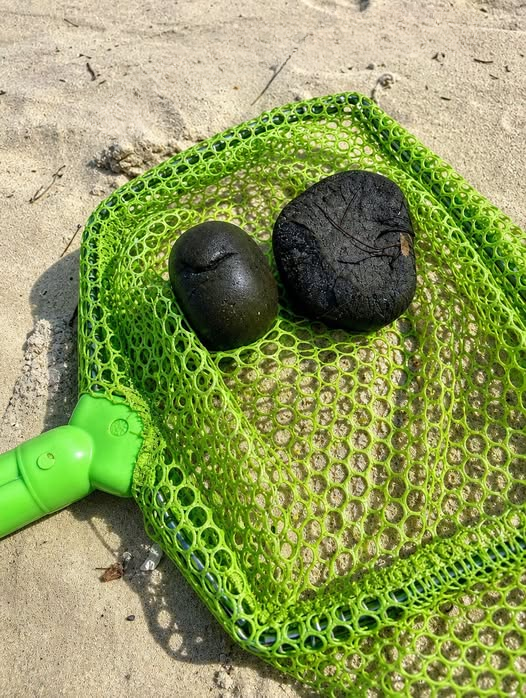
The Discovery on the Sand
Every beachgoer knows that a walk along the sun-drenched shores of Pensacola will yield a collection of usual treasures. You might find delicate coquina shells painted in pastel shades of pink and purple, twisted whelks left behind by the receding tide, or bright bits of weathered sea glass polished by decades of rolling waves.
Yet, every so often, a beach walk delivers a far stranger discovery. Scattered across the sand or half-buried in the surf line, beachcombers occasionally stumble upon clusters of mysterious, dark, spongy spheres or dense clumps often colloquially referred to as “mudballs” or tar-like deposits.
When you poke one with a stick, it yields like wet clay or sponge, leading to endless speculation. Are they remnants of offshore industrial spills, strange natural geological formations, or biological phenomena? Uncovering the true nature of these coastal anomalies reveals a fascinating look at how land, sea, and human history interact along the Gulf Coast.
Myth vs. Reality: What Are These Mysterious Formations?
When strange blobs or dark, cohesive sediment clumps wash ashore, local curiosity instantly spikes. Over the years, several common theories have surfaced regarding their origin:
1. The Fear of Industrial Residue and Oil Spills
Given the heavy maritime traffic and historical energy extraction infrastructure in the Gulf of Mexico, the immediate assumption for many people is that dark, sticky beach blobs are petroleum-based tar balls. Weathered crude oil mixed with sand and seaweed can indeed form rubbery, dark masses that occasionally drift onto regional beaches during heavy storm surges or shifting currents.
2. Natural Organic Aggregates and Algae
Not everything dark and gooey on the shoreline is industrial. Marine biologists and county resource managers frequently point out that many of these suspicious clumps are entirely natural. Stretches of filamentous or single-celled algae, combined with organic detritus and wave action, can roll together in the shallow surf, creating dense, spongy masses that wash ashore during seasonal shifts and warm-water blooms.
3. Compacted Estuarine Mud and Peat
Sometimes, true mudballs form further out in the bays and marshes. Strong tidal currents or severe weather events can scour estuarine riverbeds, ripping up ancient layers of compacted organic peat, clay, and decaying marsh grass. As these chunks tumble along the seafloor and through the pass, wave action smooths them into rounded, spherical shapes before depositing them onto the sugar-white Gulf sands.
The Ecological Dynamics of Pensacola’s Coastline
To understand why foreign or unusual objects regularly appear on Pensacola’s beaches, we have to look at the unique geography of the Florida Panhandle.
Pensacola Beach and Santa Rosa Island form a dynamic barrier island system. Barrier islands act as shifting buffers between the high-energy waves of the Gulf of Mexico and the quiet, nutrient-rich waters of Pensacola Bay and the sound. This constant interface creates high-energy transport zones:
-
Currents and Passes: Water rushing through the Pensacola Pass carries sediment, organic matter, and marine life back and forth between the bay and the open ocean.
-
Storm Activity: Tropical systems, heavy winds, and seasonal cold fronts churn up the benthic layers (the bottom of the sea and bay floors), bringing long-buried materials up to the surface and pushing them onto the shoreline.
How to Handle Unidentified Beach Debris Safely
While most natural organic matter washed ashore by the tides is completely harmless, encountering unusual substances on the beach warrants a sensible, cautious approach. If you come across strange mudballs, tar spots, or unknown debris during your coastal walks, keep these guidelines in mind:
-
Avoid Direct Skin Contact: If a dark blob looks, feels, or smells like petroleum or industrial tar, avoid touching it with your bare hands. Petroleum residues can irritate the skin and are notoriously difficult to wash off.
-
Report Significant Findings: If you notice a heavy concentration of unusual or potentially hazardous material on public beaches, notify local authorities such as the Escambia County Marine Resources Division or local park rangers so they can properly test and clean the area.
-
Leave Nature to the Tides: Even harmless organic algae clumps are best left alone to decompose naturally, serving as nutrients for coastal ecosystems and shorebirds.
Conclusion: The Ever-Changing Canvas of the Gulf
Pensacola’s shoreline is never static. Every tide brings a fresh rotation of shells, driftwood, sand, and the occasional marine mystery. Whether a mysterious dark clump turns out to be a harmless roll of natural organic algae, an ancient piece of displaced marsh peat, or a weathered remnant of maritime activity, it serves as a reminder of the powerful, complex ecosystem operating just beyond our beach towels.
The next time you stroll down the white quartz sands of the Gulf Coast, keep your eyes open. You are walking along a living, shifting frontier where the secrets of the deep sea are constantly being washed ashore.