I grew up next door to Carter. For over a decade, he was the absolute bane of my existence, turning my childhood into an endless series of small cruelties and anxieties.
While my working-class parents labored long hours to keep our modest home afloat, Carter belonged to one of the wealthiest, most prominent families in our town. He never let me forget the difference in our backgrounds. Throughout middle and high school, he mocked my hand-me-down clothes, purposefully ruined my school projects, and spread petty, vicious rumors that made making friends nearly impossible. I despised him with every fiber of my being.
When he packed up his sports car and left for an out-of-state university after graduation, I took a deep breath of relief, assuming I would never have to cross paths with him again.
Five years passed. I finished college, began building a quiet career, and focused on putting the insecurities of my youth behind me.
Then, two years ago, Carter returned to our hometown.
We bumped into each other unexpectedly at a mutual friend’s engagement party. The second I caught sight of him across the crowded room, my stomach tightened, and my immediate instinct was to grab my purse and walk out the door. But before I could make a discrete exit, Carter intercepted me near the patio.
I braced myself for the arrogant snickers and condescending remarks I had endured for years. Instead, Carter looked down at me with an expression of quiet, heavy solemnity.
“I don’t expect you to forgive me,” he said softly, his voice trembling slightly. “I was a cruel, insecure teenager who treated you horribly. I’ve carried that guilt around for years, and I am deeply, truly sorry for everything I put you through.”
His apology felt completely authentic, stripped of any arrogance or bravado. Against my better judgment and despite years of bitter memories, I accepted his apology and agreed to stay for a drink.
After that evening, Carter began reaching out with careful, respectful persistence.
At first, it was just an occasional text message checking in on my day or a low-pressure invitation to grab a quick coffee near my workplace. Whenever I hesitated or pulled back, he never pushed. He seemed utterly determined to prove that he had evolved into a mature, empathetic adult.
Slowly, over months of shared dinners and long conversations, the walls I had built around my heart began to crumble. He remembered tiny details about my favorite books, showed up unprompted to help my parents repair their garage roof after a storm, and treated me with an unwavering, protective gentleness.
He transformed into the ideal partner—attentive, generous, and fiercely devoted. When he proposed on a sunlit beach a year later, I happily said yes.
What surprised me even more was the reaction of his wealthy, notoriously elitist family. His mother, a woman who had spent my entire childhood looking down her nose at my parents’ humble lifestyle, suddenly embraced me with open arms. She insisted on personally financing an extravagant, multi-thousand-dollar wedding at a luxury estate, treating my family with unprecedented warmth.
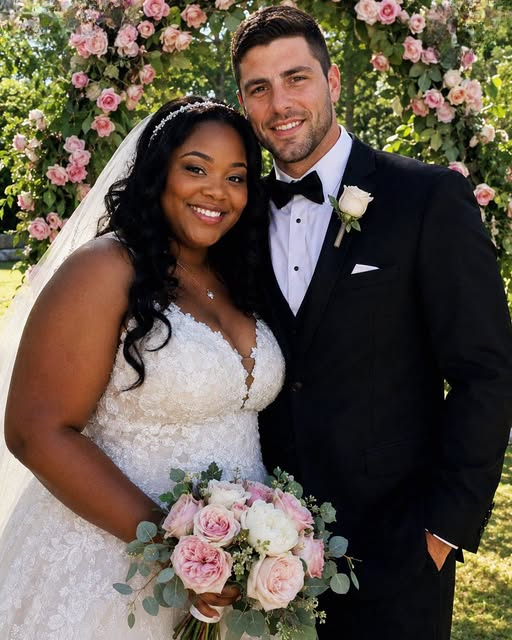
Walking down the aisle in a custom lace gown, looking at Carter waiting for me at the altar with tears in his eyes, I truly believed that my childhood tormentor had completed an unbelievable transformation into my lifelong soulmate.
Immediately following our grand evening reception, we boarded a private charter flight for our honeymoon suite at an overwater bungalow in the Maldives.
The retreat was breathtaking. Stepping onto the wooden balcony overlooking the dark, crystal-clear ocean waters, the gentle sound of the waves lapping against the stilts filled the night air. I wrapped my silk robe around myself and smiled, feeling like the luckiest woman on earth. I had left behind the pain of my past and landed straight into a fairytale.
I turned around to face the bedroom, fully expecting to see my new husband stepping out to share a romantic embrace to mark the beginning of our life together.
Instead, Carter was standing rigidly near the foot of the king-sized bed.
The warm, loving smile he had worn throughout our two-year courtship and earlier at the altar had completely vanished. His posture was stiff, his jaw was set like marble, and his dark eyes held an unreadable, icy intensity that made a sudden wave of nausea hit my chest.
“Carter?” I asked, taking a hesitant step forward, my voice trembling slightly. “Is everything okay? You look exhausted.”
He didn’t answer right away. He simply stood there, staring at me as if inspecting a total stranger.
Slowly, Carter reached his right hand into the inner pocket of his tailored jacket, pulled out a thick, sealed Manila envelope, and held it out toward me. His voice was completely devoid of the warmth I had come to rely on over the past two years, sounding unnaturally flat and cold.
“You deserve to know the real reason why I married you,” he said quietly.
The quiet tone of his voice sent a shiver down my spine. The air in the room felt suddenly suffocating.
My hands shook violently as I stepped across the hardwood floor and took the envelope from his fingers. The heavy paper felt cool against my skin.
“What is this, Carter?” I whispered, tears welling in my eyes as the terrifying realization hit me that the man standing before me might have been playing a long, calculated role all along. “Is this a joke?”
“Just open it,” he instructed, taking a step back and folding his arms across his chest. “Read what’s inside. Then you’ll understand why my family paid for the wedding, why I came back to town, and why things between us had to happen exactly the way they did.”
With my heart hammering against my ribs like a trapped bird, I broke the paper seal and pulled out a stack of legal deeds, financial records, and a yellowed land survey bearing my late grandfather’s name, as the reality of my marriage began to unravel in the quiet tropical night.