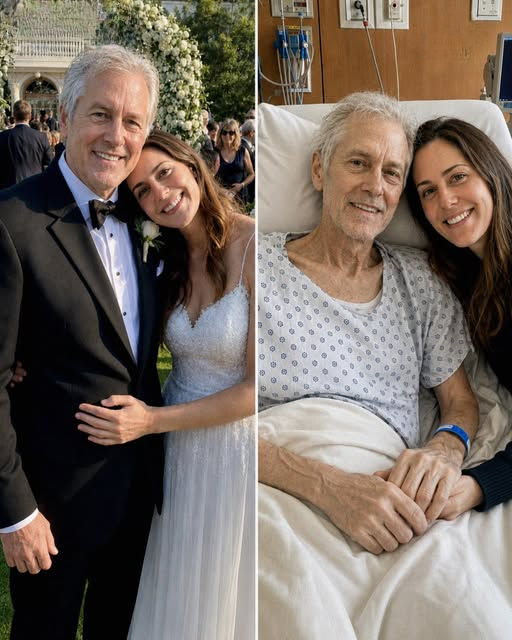
From the very moment Russell proposed to me, everyone in our circle assumed they knew precisely why I said yes.
Honestly, if I were being completely truthful with myself back then, they weren’t entirely wrong.
I was thirty-two years old, completely drowning in mountain-high medical bills and consumer debt, working two grueling jobs just to survive. Every single morning began with an overwhelming wave of anxiety, terrified that one missed paycheck or one unexpected car repair would push me over the edge and cost me my small apartment.
Russell was sixty-two.
He was a wealthy, retired real estate developer—widowed for nearly a decade and painfully lonely despite his grand suburban estate, fine art collection, luxury automobiles, and everything else money could buy.
We met on a rainy Thursday evening at a high-end charity gala where I was working extra hours serving champagne to wealthy donors. By nine o’clock, after standing on my feet for six straight hours in cheap heels, I was discreetly leaning against a tray table in the corner, trying to catch my breath.
Russell walked over, holding an untouched glass of sparkling water. He didn’t ask for a refill. He looked at my name tag, smiled gently, and asked my name. Then, looking down at my worn shoes, he quietly asked, “Do your feet hurt, young lady?”
It was such a simple, unpretentious question. But no one had shown that kind of genuine concern or basic empathy toward me in years. We ended up talking in that quiet corner for twenty minutes about life, hard work, and loss.
Three months later, after dozens of dinner dates and long late-night conversations, Russell asked me to marry him.
My friends warned me that I was making a massive mistake, claiming the age gap was too wide. Russell’s two adult children, on the other hand, immediately viewed me with cold suspicion, convinced I was a shameless gold digger who had orchestrated a scheme to steal their inheritance.
“Do you really think you’re getting this house?” his adult daughter, Victoria, hissed at me in the hallway immediately following our small wedding reception. “You won’t get a single penny from our family! Mark my words, you’ll end up with nothing!”
Russell happened to overhear every sharp word from around the corner. Instead of raising his voice or engaging in a heated argument, he simply stepped into the hallway, put a protective arm around my waist, and offered his daughter a quiet, knowing smile.
“Don’t worry, Victoria,” Russell said calmly. “When the time comes, she will get exactly what she deserves.”
In the beginning, I tried to act as though their hurtful opinions didn’t bother me. But the truth was, I deeply appreciated the financial stability his world provided. I loved finally feeling secure. I loved waking up in a warm, comfortable house without fear of eviction notices. I loved going to the grocery store and filling a cart without having to calculate every single cent on my phone before reaching the register. I loved no longer living in constant, paralyzing fear of the next bill.
What surprised me most of all, however, was Russell himself.
He wasn’t demanding or transactional. He was remarkably gentle, patient, and kind in ways I had never experienced in my past relationships. He encouraged me to go back to college, cheered for me during late-night study sessions, and listened to my dreams with genuine enthusiasm.
Somewhere along the line, over four years of shared morning coffees, quiet evening walks, and mutual respect, I stopped pretending this marriage was ever about mere financial survival. The pragmatic arrangement had transformed into deep, authentic love. I truly came to cherish him.
Then, our peaceful world shattered without warning.
Russell fell ill, and the progression of his sickness was devastatingly fast. Only six short weeks passed between his sudden medical diagnosis and his afternoon funeral.
On the day of the service, his children barely acknowledged my presence. They sat on the opposite side of the chapel, throwing cold, accusatory glances toward me as though they believed I had somehow accelerated their father’s passing.
I ignored their coldness, weeping openly at the alter for the loss of the kindest man I had ever known.
After the funeral service concluded, Russell’s long-time estate attorney, Mr. Vance, quietly approached me and requested that I stop by his downtown office at four o’clock.
When I arrived at the high-rise office building, Russell’s son and daughter were already sitting in the leather chairs across from the attorney’s desk, looking confident and triumphant. They assumed the meeting was a formality to read a traditional will that would leave the entirety of the estate in their hands.
I looked around the room for heavy legal folders, deeds, or official stacks of paperwork. But there was nothing on the desk except a small, hand-carved mahogany box sitting right in the center.
Mr. Vance cleared his throat, adjusting his glasses as he looked at all three of us.
“Russell left very explicit instructions for this meeting,” the attorney declared smoothly.
Victoria let out a quiet, sarcastic laugh, crossing her arms. “Let’s just get this over with, Mr. Vance. We all know why she married our father.”
Ignoring her interruption, Mr. Vance reached across the wooden desk and slowly pushed the hand-carved box across the polished surface, placing it directly in front of me.
“Before he passed,” Mr. Vance said softly, looking straight into my eyes, “Russell told me to hand this to you personally. He said he wanted to make sure you got exactly what you deserved.”
My hands trembled violently as I reached out to unlatch the small brass clasp on the front of the box. His children leaned forward, expecting to see a token parting gift or an empty gesture.
I lifted the wooden lid.
Inside the box rested two distinct items. The first was a thick, handwritten leather journal. The second was a heavy set of legal documents tied with a velvet ribbon.
I picked up the handwritten letter sitting on top of the journal and read Russell’s familiar, elegant script:
“My dearest Sarah, when we first met, you were carrying the heavy burden of a hard life, yet your heart remained kind and honest. My children assumed you married me for my fortune. But over the last four years, you gave me something money could never buy—true companionship, warmth, unselfish care, and unconditional love during the final chapter of my life. You proved every single day that you loved me for who I was, not for what I owned.”
Tears spilled over my eyelashes, dripping onto the paper as I continued reading.
“Prior to our marriage, I established massive, independent trust funds for my children that fully secured their financial futures years ago. But this house, my primary investment portfolios, and the entirety of my personal estate belong to you. I have transferred everything into your name. You gave me back my happiness, Sarah. Now, live your life with the peace, security, and joy you have always deserved.”
A heavy, stunned silence descended upon the law office.
Victoria stood up so fast her chair scraped loudly against the floorboards, her face pale with absolute disbelief. “What? This is impossible! You can’t leave everything to her!”
Mr. Vance calmly picked up the notarized estate papers from the box. “The documents are entirely legally binding, Victoria. Your father updated his estate plan two years ago, fully aware of his decisions. Your own trusts remain untouched, but the primary estate belongs entirely to Sarah.”
His children stormed out of the office in silent rage, slamming the heavy wooden door behind them.
I sat alone in the quiet office for a long time, clutching Russell’s journal against my chest. I didn’t care about the grandeur of the house or the size of the bank accounts; what brought me to tears was the profound realization that the man I loved had seen my heart clearly from the very beginning.
He hadn’t left me a fortune out of spite toward others—he had given me a future out of love, ensuring that the quiet woman who had once served champagne in uncomfortable shoes would never have to live in fear again.