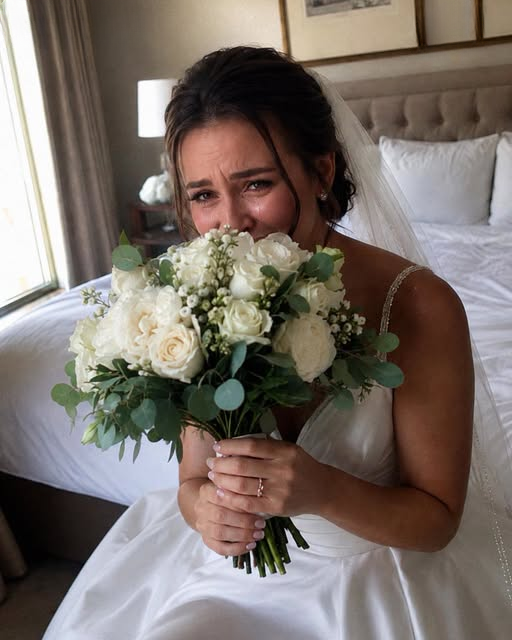
Twenty minutes before my wedding ceremony, my future mother-in-law pulled me aside and said she needed to discuss one final change.
I assumed Diane wanted to give me a piece of family jewelry or share a few emotional words before I married her son. Despite occasional disagreements during the planning process, we had managed to remain civil.
Instead, she smiled calmly and said, “When the doors open, Lauren will walk down the aisle before you.”
Lauren was Kevin’s older sister.
I waited for Diane to explain, but she simply adjusted the bracelet on her wrist as though she had asked to change the dinner napkins.
“What do you mean?” I asked.
“She’ll make the main entrance before you.”
“You mean with the bridesmaids?”
“No. After everyone else is seated. The music will change, the guests will stand, and Lauren will walk down the aisle alone. Then you can enter.”
For a moment, I genuinely believed she was joking.
“Lauren isn’t the bride,” I said.
“I’m aware of that.”
“Then why would she receive the bridal entrance?”
Diane’s smile disappeared.
“It’s important to our family.”
That phrase had been used throughout the wedding preparations whenever Diane wanted something but did not want to explain herself. It was “important to the family” that we invite distant relatives Kevin had never met. It was “important to the family” that we hold the reception at the country club she preferred. It was also “important to the family” that Kevin’s parents receive recognition on the invitations, even though my parents and I were paying most of the expenses.
I had compromised many times because I wanted to begin my marriage without unnecessary conflict.
This request, however, was different.
“The ceremony begins in twenty minutes,” I reminded her.
“I know.”
“I haven’t approved this.”
“The wedding coordinator already has the revised processional order.”
My stomach tightened.
“You changed the ceremony without speaking to me?”
“I handled it because you’ve had enough to manage today.”
Before I could respond, Kevin entered the room. He looked from his mother to me and immediately sensed the tension.
“Kevin,” I said, “your mother has decided Lauren will make a bridal entrance before me. Please tell me you didn’t agree to this.”
He rubbed the back of his neck and avoided my eyes.
That small gesture told me everything.
“She mentioned it earlier,” he admitted.
“And what did you say?”
“I said we should discuss it.”
“Did you discuss it with me?”
“No, but we’re about to get married. Can we please avoid an argument right now?”
I stared at him.
“Your mother secretly changed our wedding ceremony, and you’re worried that my objection will create an argument?”
“I’m not saying she handled it correctly,” he replied. “I just don’t want today to become a bigger scene.”
My maid of honor, Rachel, stepped closer.
“She didn’t create the scene,” Rachel said. “Your mother did.”
My own mother had noticed the gathering and was already walking toward us. Several relatives were quietly watching from across the room, while the wedding coordinator stood nearby holding a clipboard and looking deeply uncomfortable.
At the entrance to the ceremony space, Lauren waited with a large bouquet in her hands.
She wore a pale blue formal dress rather than white, but the bouquet looked almost identical to mine. Her face was tense, and she kept glancing toward her mother.
It appeared that the plan had been made long before Diane approached me.
I took a slow breath.
“Fine,” I said.
Diane’s expression softened into a satisfied smile.
“Thank you for being reasonable.”
“I’ll agree under one condition.”
The smile faded again.
“When Lauren reaches the front, she must take the microphone and tell every guest why she was given a bridal entrance at someone else’s wedding.”
Lauren’s face lost its color.
Kevin looked at me in surprise, but I continued.
“If this is a meaningful family tradition, everyone should hear about it. If there is another explanation, the guests should hear that too.”
Diane turned toward her daughter.
“Go ahead,” she said sharply. “Tell them.”
Lauren did not move.
“Mom,” she whispered.
“Not here,” Diane replied. “You can explain after you walk down the aisle.”
Lauren looked at Kevin and then at me. Her hands began trembling around the bouquet.
“I don’t want to do this,” she finally said.
The room became silent.
Diane’s voice hardened.
“We’ve already discussed it.”
“No,” Lauren replied. “You discussed it. You told me what I was going to do.”
Diane glanced at the relatives watching us.
“This is neither the time nor the place.”
“You made it the time and place,” I said. “You changed my ceremony.”
Lauren lowered the bouquet.
“I’m sorry,” she told me. “I tried to tell her this was a terrible idea.”
Diane stepped toward her.
“Lauren, stop.”
But Lauren had spent enough time remaining silent.
“My wedding was canceled last year,” she said.
I knew that Lauren had been engaged, but Kevin’s family rarely discussed what happened. I had been told only that the ceremony was postponed because of scheduling problems.
Lauren explained that there had never been a postponement. She and her former fiancé had ended their relationship six months before their wedding because they realized they wanted very different futures.
The breakup had been painful, but it was a mutual and responsible decision. Lauren had begun rebuilding her life and did not regret refusing to enter a marriage that felt wrong.
Diane, however, viewed the canceled wedding as a public embarrassment.
She continued telling extended relatives that the ceremony had merely been delayed. When Kevin and I announced our engagement, Diane became increasingly upset that her younger child would marry before her older daughter.
“She said people would think I had failed,” Lauren continued. “She said I deserved to have my moment before Kevin got his.”
I looked at the bouquet in her hands.
“So this entrance was supposed to replace your wedding?”
Lauren nodded, tears filling her eyes.
“Mom said I should walk down the aisle first as a symbol of the oldest child giving her blessing. But that isn’t a family tradition. She invented it.”
Diane folded her arms.
“I was trying to protect my daughter’s dignity.”
“My dignity doesn’t depend on whether I get married before my brother,” Lauren replied.
“You don’t understand how people talk.”
“I’m thirty-four years old. I’m not going to pretend to be a bride at someone else’s wedding because you’re worried about gossip.”
Diane turned to me.
“This has nothing to do with you.”
“It became my concern when you changed my wedding without permission.”
Kevin remained silent, and that troubled me more than anything his mother had said.
I took his hand and led him a few steps away.
“We need to decide something before we walk into that ceremony,” I said quietly.
“I know Mom was wrong.”
“Then say it to her.”
“You know how she gets when she feels challenged.”
“And you know how I feel when my future husband allows someone else to make decisions about our wedding.”
Kevin looked toward his mother.
“I was trying to keep the peace.”
“Peace is not the absence of an argument when one person is being ignored. Sometimes peace requires a boundary.”
He lowered his eyes.
I had never expected our first major test as a married couple to happen before the marriage officially began. Yet standing there in my wedding dress, I understood that the processional was not the real issue.
The question was whether Kevin and I would make decisions together or whether his mother’s wishes would always take priority because challenging her was uncomfortable.
“I love you,” I told him. “But I will not begin our marriage by pretending this is acceptable. We can delay the ceremony and resolve it, or we can stop everything. I’m not walking down the aisle until I know you are prepared to stand beside me.”
Kevin was quiet for several seconds.
Then he walked toward his mother.
“Lauren is not making a bridal entrance,” he said.
Diane stared at him.
“After everything I’ve done for this wedding?”
“This is our wedding,” Kevin replied. “You cannot change the ceremony without our agreement.”
“I paid the deposit for the band.”
“We will repay you.”
Her expression changed.
“You would embarrass me in front of the entire family?”
“No one is trying to embarrass you. We’re asking you to respect our decision.”
Diane threatened to leave. Kevin told her that he hoped she would stay, but the choice belonged to her.
For the first time that afternoon, he was not asking me or Lauren to surrender simply because setting a boundary upset his mother.
The wedding coordinator restored the original processional order. Lauren handed the oversized bouquet to an assistant and asked if she could walk with the other family members instead.
I surprised her by inviting her into the bridal room.
“You don’t have to apologize for your mother’s decision,” I said.
“I should have warned you sooner.”
“You were under pressure too.”
My mother found a smaller bouquet left over from the floral arrangements and gave it to Lauren. This time, it looked like a simple family accessory rather than an imitation bridal bouquet.
The ceremony began thirty-five minutes late.
Diane remained in her seat. She was visibly unhappy, but she did not interrupt. Lauren entered with her grandmother and then took her place in the front row.
When the doors opened for my entrance, the guests stood.
The moment did not belong to me because I had defeated another woman or humiliated my future mother-in-law. It belonged to Kevin and me because we had finally made a decision together.
At the altar, Kevin held my hands and quietly whispered, “I’m sorry I didn’t speak sooner.”
“We’ll talk about it later,” I whispered back.
And we did.
After the wedding, Kevin and I had several honest conversations about boundaries. He admitted that he had spent most of his life managing his mother’s emotions by giving in to her requests. Avoiding conflict had become automatic.
We decided that major choices about our home, finances, holidays, and future children would be made privately between us. Advice from family members could be considered, but nobody else would receive decision-making power.
We also repaid Diane for the band deposit. It took several months, but removing that financial obligation prevented it from being used in future disagreements.
My relationship with Diane remained distant for a while. Eventually, she apologized—not only to me but also to Lauren. Her apology did not erase what happened, but it was an important beginning.
The most unexpected result was that Lauren and I became close friends.
She told the extended family the truth about her canceled engagement. Instead of judging her, most people respected her honesty. A few relatives admitted that ending an unhealthy engagement required more courage than proceeding with a wedding simply to avoid embarrassment.
Two years later, Lauren met someone new. When they eventually became engaged, she planned a small outdoor ceremony according to her own preferences.
Before the wedding, she handed me her bouquet and smiled.
“Don’t worry,” she said. “I’m not changing your place in the processional.”
We both laughed.
Looking back, I do not regret agreeing to Diane’s demand under one condition. The condition was never intended to punish Lauren or force her into public humiliation. It exposed the fact that the plan could survive only while nobody spoke honestly about it.
Once the truth was stated clearly, the demand lost its power.
That day taught me that a wedding is more than flowers, music, photographs, and carefully arranged entrances. It is the first public expression of how two people intend to make decisions together.
Kevin and I nearly began our marriage by allowing fear of conflict to overrule mutual respect. Instead, we paused, confronted the issue, and established a boundary we should have discussed much earlier.
The ceremony did not begin exactly on schedule, but the delay gave us something more valuable than perfect timing.
It gave us the opportunity to start our marriage as a team.