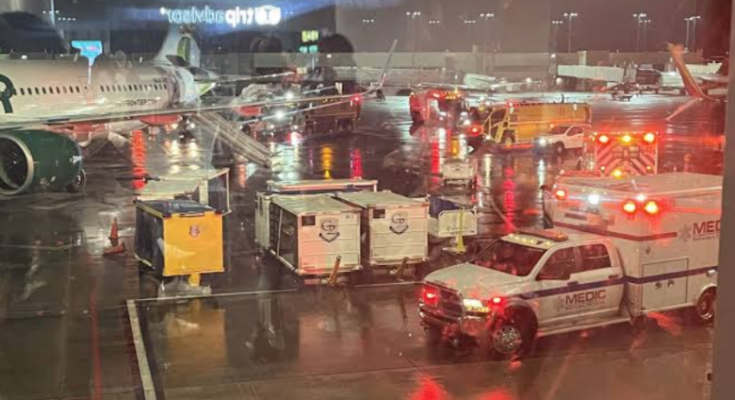
Ground Service Incident at Charlotte Airport Leads to Temporary Flight Delays Involving Frontier Airlines
Passengers traveling through Charlotte Douglas International Airport experienced temporary flight disruptions following a ground service incident involving a Frontier Airlines aircraft.
The incident required airport personnel and airline staff to carry out additional safety checks before the aircraft could resume normal operations.
According to the initial information provided, the situation involved ground servicing equipment and prompted a precautionary inspection. Airport and airline personnel responded by following established operational and safety procedures.
No injuries were reported among passengers, flight crew members, or ground personnel in the information available for this report.
Although the disruption was described as temporary, the incident highlights the importance of ground operations in maintaining safe and efficient airport activity.
Charlotte Douglas International Airport is one of the busiest aviation facilities in the United States, handling a significant volume of domestic and international passenger traffic. Even relatively minor operational interruptions can require coordination between airlines, airport teams, and ground service providers.
What Happened at Charlotte Douglas International Airport?
The incident involved a Frontier Airlines aircraft during ground servicing operations at Charlotte Douglas International Airport in North Carolina.
Ground servicing is an essential part of airline operations. Before an aircraft can depart, several activities must be completed, including passenger boarding, baggage handling, equipment removal, aircraft inspections, and other preparations.
These activities involve coordination between different teams working around the aircraft.
In this case, an incident involving ground equipment resulted in the need for an additional aircraft inspection.
Rather than immediately returning the aircraft to service, the relevant personnel followed precautionary procedures to assess the situation.
Such inspections are an important part of aviation safety because they help identify potential damage or technical concerns before an aircraft continues its journey.
The available information does not establish the exact nature of the equipment involved or the precise circumstances that led to the incident.
Frontier Airlines Aircraft Undergoes a Safety Inspection
Following the ground service incident, the Frontier Airlines aircraft required an inspection before normal operations could resume.
Aircraft inspections are a routine part of commercial aviation.
Airlines and maintenance personnel must ensure that aircraft meet applicable safety and operational requirements before departure.
Ground equipment can include a wide variety of machinery used to support aircraft while they are parked at an airport.
Examples include:
- Baggage-loading equipment.
- Passenger boarding stairs.
- Ground power units.
- Aircraft towing vehicles.
- Catering trucks.
- Service vehicles.
- Equipment used to transport cargo and luggage.
Because these vehicles and machines operate close to aircraft, ground crews must follow established procedures when positioning, operating, and removing them.
Even a relatively small equipment-related incident may require additional checks.
The purpose of an inspection is to establish whether the aircraft remains suitable for operation and whether any maintenance action is necessary.
In the Charlotte incident, the aircraft was subject to further assessment before returning to normal operations.
No Injuries Reported Following the Incident
One important detail in the initial account is that no injuries were reported.
Passengers, crew members, and ground personnel were not reported injured.
This is an important distinction because incidents involving aircraft and ground equipment can vary considerably in severity.
Some situations involve minor operational interruptions, while others may require more extensive investigations and repairs.
The absence of reported injuries is reassuring, although it does not remove the need for appropriate inspections and documentation.
Aviation safety procedures are designed to address potential hazards before they develop into more serious problems.
For passengers, the main concern during such incidents is usually whether their flight will be delayed, whether they will need to change aircraft, or whether their travel arrangements will be affected.
How Ground Equipment Supports Airport Operations
Modern airports depend on a complex network of ground support equipment.
Although passengers primarily see aircraft, boarding gates, and terminal buildings, many important activities take place around parked aircraft.
Ground crews work continuously to prepare planes for their next journeys.
Their responsibilities may include unloading baggage, loading cargo, connecting service equipment, cleaning cabins, assisting passengers, and coordinating aircraft movement.
Every task must be completed in the correct sequence.
Ground support equipment is designed to make these operations more efficient.
However, operating machinery near large aircraft requires training, communication, and careful attention.
Even small mistakes can interrupt airport operations.
For this reason, airports and airlines establish procedures governing equipment movement, vehicle access, safety zones, and communication between ground personnel.
Why Aircraft Inspections Are Necessary After Ground Incidents
Commercial aircraft are designed to operate under demanding conditions.
Nevertheless, aircraft must undergo inspections whenever circumstances suggest that their safety or airworthiness may need to be reassessed.
A ground equipment incident may raise questions about possible contact with an aircraft, damage to external surfaces, or the condition of specific components.
The appropriate inspection depends on the circumstances.
Maintenance personnel may need to examine particular areas, consult technical documentation, and determine whether additional work is necessary.
Aircraft should not return to service until the required safety checks have been completed.
This process may take time, but it is an essential part of maintaining passenger confidence and operational reliability.
A delay caused by an inspection should therefore be understood in the context of aviation safety rather than simply as an inconvenience.
How Airport Incidents Can Affect Flight Schedules
Even when an incident does not result in injuries, it can affect the schedules of passengers and airlines.
Aircraft operate according to carefully coordinated schedules.
A delay involving one aircraft may affect subsequent departures, arrival times, crew assignments, and aircraft availability.
For example, an aircraft scheduled to operate several flights during a day may need to be inspected before continuing its planned route.
If the inspection takes longer than expected, the airline may need to adjust its schedule.
Passengers could experience:
- Delayed departures.
- Changes to boarding times.
- Aircraft substitutions.
- Adjustments to connecting travel arrangements.
- Revised arrival estimates.
The extent of any disruption depends on the aircraft’s condition, the availability of replacement equipment, and the airline’s operational resources.
The information available for this incident describes temporary disruption but does not establish the total number of affected passengers or flights.
Charlotte Douglas International Airport and Its Importance to Air Travel
<escape>Charlotte Douglas International Airport (CLT)</escape> is a major transportation hub located in Charlotte, North Carolina.
The airport serves passengers traveling throughout the United States and to international destinations.
Its role in regional and national air transportation means that daily operations involve extensive coordination between airlines, airport management, air traffic services, maintenance teams, and ground handling providers.
A busy airport must manage aircraft arrivals and departures, passenger movements, baggage systems, and ground service activities simultaneously.
These interconnected operations require careful planning.
When an unexpected incident occurs, airport personnel must assess the situation and determine whether any changes are needed to maintain safe operations.
Even temporary interruptions can require cooperation between multiple organizations.
Frontier Airlines and Its Ground Operations
Frontier Airlines is a United States-based airline known for operating a low-cost business model.
Like other commercial carriers, the airline depends on ground operations to prepare aircraft for scheduled departures.
These activities are particularly important because airlines must balance efficient turnaround times with safety requirements.
An aircraft cannot depart simply because passengers have boarded and baggage has been loaded.
Ground crews must also complete required checks and ensure that equipment has been removed or disconnected appropriately.
If a potential problem is identified, the departure may need to be delayed.
The situation involving the Frontier Airlines aircraft at Charlotte illustrates how an issue on the ground can influence the wider passenger journey.
The Importance of Communication Between Ground Crews
Ground operations involve several teams working in close proximity.
Clear communication is essential.
Aircraft pilots, ground handlers, maintenance staff, baggage personnel, and other service providers must understand when equipment can safely approach or move away from an aircraft.
Standardized procedures help reduce misunderstandings.
Training also plays an important role in ensuring that employees recognize hazards and respond appropriately.
When an unusual event occurs, reporting and documentation help determine what happened and whether additional safety measures are necessary.
These processes are important not only for resolving individual incidents but also for improving airport operations over time.
What Passengers Should Do When Their Flight Is Delayed
Unexpected airport disruptions can be frustrating, particularly for travelers with connecting flights, hotel reservations, or important appointments.
However, passengers can take several practical steps when an operational incident affects their journey.
1. Check the Latest Flight Information
Passengers should monitor their airline’s official website, mobile application, and airport departure displays.
Flight information can change as inspections and operational decisions progress.
2. Contact the Airline
If a delay becomes significant, passengers should contact the airline for information about revised departure times and available alternatives.
3. Review Connecting Travel Arrangements
Travelers with connecting flights should pay attention to minimum connection times and contact their airline if they believe they may miss a scheduled connection.
4. Keep Important Travel Documents Available
Boarding passes, identification documents, and booking information can make it easier to obtain assistance.
5. Follow Official Airport Instructions
Passengers should follow announcements and instructions provided by airport and airline personnel.
If a flight is delayed because of an inspection, travelers should allow the relevant teams to complete their work before expecting the aircraft to depart.
Why Aviation Safety Procedures Take Priority Over Departure Times
Airline schedules are important, but passenger safety remains the priority.
Commercial aviation relies on multiple layers of inspection, maintenance, training, and operational oversight.
These systems are designed to identify problems and ensure that aircraft are suitable for service.
A delay can be inconvenient, but allowing an aircraft to depart before necessary inspections have been completed would be an unacceptable approach to safety management.
This is why airlines and airports have procedures for responding to unusual events.
The time required to complete an inspection depends on the specific circumstances.
Some issues can be resolved relatively quickly, while others require additional technical assessment.
The priority is to establish that the aircraft meets the necessary requirements before it returns to service.
What Is Known About the Charlotte Airport Incident?
Based on the information available for this report, several details can be summarized:
- A ground servicing incident involved a Frontier Airlines aircraft at Charlotte Douglas International Airport.
- The incident resulted in temporary operational disruption.
- An additional aircraft inspection was required.
- Airport and airline personnel responded by following safety procedures.
- No injuries were reported among passengers, crew members, or ground personnel in the initial account.
- The precise cause, equipment involved, and total operational impact have not been established in the information provided.
These distinctions are important because early reports about aviation incidents may not contain every relevant detail.
Additional information from the airline, airport authorities, or other responsible organizations would be needed to establish a complete account.
Final Thoughts: Safety Remains the Priority at Charlotte Airport
The ground equipment incident involving a Frontier Airlines aircraft at Charlotte Douglas International Airport highlights the important role of ground operations in commercial aviation.
Although the situation caused temporary disruption, the aircraft inspection demonstrates why precautionary procedures are essential.
Airports are complex environments where aircraft, vehicles, equipment, passengers, and employees must operate together safely.
A problem involving even one piece of ground equipment can require additional coordination and affect scheduled operations.
For passengers, delays can create inconvenience and uncertainty.
However, careful inspections and responsible decision-making are fundamental to maintaining aviation safety.
The incident also serves as a reminder that safe air travel depends on more than the aircraft itself.