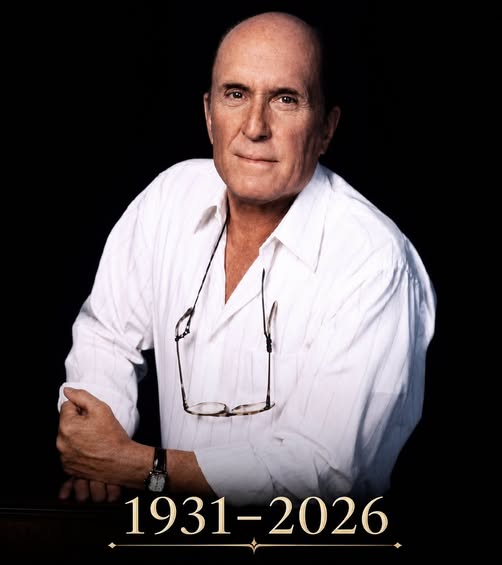
Remembering Robert Duvall: The Extraordinary Career and Lasting Legacy of an Oscar-Winning Actor
Hollywood has lost one of its most respected performers. Robert Duvall, the Academy Award-winning actor whose career spanned more than six decades, died on February 15, 2026, at his home in Virginia. He was 95 years old. News of his passing was shared by his wife, Luciana Duvall, who remembered him not only as an acclaimed actor and storyteller but also as a deeply important part of her life. Source: Associated Press
For generations of moviegoers, Duvall was a familiar presence on screen. He played complicated characters with a distinctive combination of restraint, intensity, and emotional depth. Whether portraying a trusted adviser in a powerful crime family, a military officer during wartime, or a struggling country singer searching for a new beginning, he brought a sense of individuality to his performances.
His work reached audiences through some of American cinema’s most recognizable films, including The Godfather, Apocalypse Now, and Tender Mercies. Yet his career extended far beyond these celebrated productions. He also appeared in television dramas, Westerns, independent films, and stories that allowed him to explore the lives of people far removed from the glamour commonly associated with Hollywood.
Duvall’s legacy is not defined by a single performance or award. It rests on the remarkable range of characters he portrayed, the consistency of his work, and the influence of an acting style that often communicated more through a quiet expression or carefully delivered line than through dramatic gestures.
As audiences revisit his films, his career offers a reminder of what makes a lasting screen performance: a believable character, a strong understanding of human behavior, and an actor willing to serve the story rather than simply command attention.
Early Life and the Road Toward Acting
Robert Selden Duvall was born on January 5, 1931, in San Diego, California. His father served as a career officer in the United States Navy, and Duvall spent much of his youth in Annapolis, Maryland.
His early life did not immediately point toward a future as one of America’s most recognizable actors. He attended Principia College in Illinois before completing military service in the United States Army during the Korean War era.
After leaving the military, Duvall moved to New York in 1955 to pursue acting. He studied at the Neighborhood Playhouse School of the Theatre, where he trained under Sanford Meisner, an influential acting teacher whose approach emphasized truthful behavior and emotional authenticity.
The training helped establish a foundation for the naturalistic style that would later become one of Duvall’s defining strengths.
Rather than relying exclusively on grand gestures or theatrical delivery, he learned to build characters through observation, listening, and attention to small details. His performances often seemed grounded in the ordinary rhythms of conversation. Even when portraying powerful or intimidating people, he could make them feel recognizable.
The early years were not without challenges. Like many aspiring performers, Duvall had to find work while developing his craft. He took jobs to support himself and continued pursuing opportunities in theater and film.
His eventual success was not the result of an overnight breakthrough. It came through years of preparation, steady work, and a willingness to accept roles that allowed him to grow as a performer.
Those early experiences helped shape an actor who remained interested in the work itself throughout his long career.
His First Major Screen Appearance
One of Duvall’s earliest important film roles came in the 1962 adaptation of To Kill a Mockingbird, based on Harper Lee’s celebrated novel.
He portrayed Arthur “Boo” Radley, a mysterious neighbor whose presence influences the story even though he remains largely out of view. The character has very little dialogue, making the performance a striking example of how an actor can create a memorable impression without speaking much at all.
Duvall’s work demonstrated an ability to communicate character through posture, expression, and physical presence. The role also introduced him to a wider film audience and helped establish his reputation as a performer capable of making a strong impact in supporting parts.
During the following years, he appeared in a variety of productions, including The Chase, Bullitt, and True Grit. These projects offered opportunities to work across different genres and alongside established performers.
His early career also reflected an important characteristic of Hollywood during that period: memorable actors did not always need to begin as leading men. Many built their reputations by creating distinctive supporting characters who added depth to a film’s central story.
Duvall became particularly skilled at this kind of work.
He could make a character feel important without demanding that every scene revolve around him. His performances often strengthened the world surrounding the main characters, giving the audience a clearer sense of the people, pressures, and conflicts shaping the narrative.
This ability would become especially important when he joined the cast of one of the most influential crime films ever made.
Becoming Tom Hagen in The Godfather
<text></text>
Francis Ford Coppola’s The Godfather, released in 1972, transformed the careers of several performers and became a major landmark in American cinema.
Duvall played Tom Hagen, the adopted member of the Corleone family who serves as its lawyer and trusted adviser. Unlike some of the other characters, Hagen is not defined primarily by physical intimidation. His influence comes from his ability to assess situations, communicate carefully, and navigate the family’s complicated relationships.
Duvall approached the role with a controlled performance that suited the character’s position. Hagen frequently serves as a bridge between the family and the outside world, balancing professional responsibilities with personal loyalty.
His calm demeanor also creates an interesting contrast with the more openly forceful personalities around him.
In a film filled with memorable performances, Duvall made Tom Hagen stand out through understatement. He rarely needed to raise his voice to communicate that a situation was serious. Instead, his measured delivery suggested a character who understood the consequences of words and knew when to remain silent.
The role earned Duvall his first Academy Award nomination, in the supporting actor category. He returned as Hagen in The Godfather Part II, released in 1974, further developing the character’s place within the Corleone story.
The films remain influential because of their detailed characters, complex family relationships, and exploration of power, loyalty, and moral compromise.
Duvall’s contribution was an essential part of that ensemble. His performance gave the audience a view of how the family’s decisions were translated into practical action, while also revealing the personal tensions that came with serving such a demanding organization.
Decades later, Tom Hagen remains one of the roles most closely associated with his name.
A Different Kind of Intensity in Apocalypse Now
In 1979, Duvall appeared in Coppola’s Apocalypse Now, a war film inspired in part by Joseph Conrad’s novella Heart of Darkness.
Duvall played Lieutenant Colonel Bill Kilgore, a military officer whose personality combines confidence, eccentricity, and an unsettling familiarity with the violence surrounding him.
The character differs considerably from Tom Hagen. Where Hagen often exercises influence through careful judgment, Kilgore is larger than life, commanding attention through his behavior and forceful presence.
Duvall’s performance helped make Kilgore one of the film’s most recognizable figures. He gave the officer a mixture of charm and unpredictability that made the character memorable without simplifying the film’s wider exploration of war.
The role earned Duvall another Academy Award nomination, this time for supporting actor.
Apocalypse Now was ambitious in its production and challenging in its themes. Its depiction of the psychological and moral consequences of war helped establish it as a major work of American filmmaking.
Duvall’s character occupies a relatively limited portion of the film, yet his appearance leaves a lasting impression. This ability to create a memorable character within a larger ensemble was one of the actor’s most valuable strengths.
He could enter a story, establish a complete personality, and contribute to the film’s atmosphere without requiring extensive screen time.
The contrast between Kilgore and Hagen also illustrates the range of his talent. Duvall could portray controlled authority in one production and a far more volatile personality in another, while maintaining a sense of authenticity in both.
The Performance That Earned Him an Academy Award
Although Duvall became widely known for supporting roles, one of his most celebrated achievements came when he took the lead in Tender Mercies, released in 1983.
He portrayed Mac Sledge, a country singer whose life has been damaged by alcohol and personal difficulties. The story follows Sledge as he attempts to rebuild his life and develop healthier relationships.
The role demanded a different kind of performance from the ones audiences had seen in The Godfather and Apocalypse Now.
Instead of playing a powerful adviser or commanding military officer, Duvall portrayed a man whose future depended on his ability to acknowledge his mistakes and make gradual changes.
The performance was restrained, allowing the character’s uncertainty and emotional struggles to emerge through small moments rather than exaggerated displays.
Sledge is not presented as a perfect person who suddenly discovers an easy solution to his problems. His progress is complicated, and his past continues to influence his relationships.
Duvall’s portrayal gave the character dignity without overlooking his flaws.
His work earned him the Academy Award for Best Actor at the 56th Academy Awards in 1984. The recognition represented a major milestone in a career that had already included several acclaimed performances. The Academy’s official records provide the historical record of his award and nominations. Academy Awards database
The film also demonstrated Duvall’s commitment to the details of a role. He performed the songs associated with his character, bringing together acting and music to make Mac Sledge’s professional background feel credible.
The result was a performance that many viewers remember for its quiet emotional force.
Tender Mercies remains an important part of his legacy because it shows that a compelling screen character does not need to be powerful, famous, or unusually dramatic. Sometimes the most affecting stories concern people attempting to repair their lives one decision at a time.
A Career That Extended Beyond the Biggest Film Roles
Duvall’s reputation was built on much more than a handful of celebrated movies.
Across his career, he appeared in crime dramas, Westerns, historical productions, family stories, and independent films. He was comfortable portraying military officers, lawmen, criminals, religious figures, working people, and individuals dealing with personal setbacks.
This variety helped prevent his screen identity from becoming limited to one familiar character type.
His filmography included The Great Santini, in which he played a demanding military father whose rigid expectations affect his family. The performance earned him another Academy Award nomination and demonstrated his ability to portray a character whose authority is inseparable from his personal limitations.
Duvall also appeared in Network, the 1976 satire about television news and commercial pressures. The film examined the relationship between media, entertainment, and public attention, and it became known for its sharp dialogue and social commentary.
In later years, he continued accepting roles that explored complicated relationships and personal convictions.
He appeared in A Civil Action, Secondhand Lions, and The Judge, among many other productions. These projects brought him into stories with different tones and themes, allowing him to work alongside performers from several generations.
His long career was not defined by a single period of success. Instead, it developed through repeated performances that demonstrated his continued interest in character-driven storytelling.
For viewers discovering his work today, this range offers an opportunity to see the many sides of his talent.
Someone who knows him only as Tom Hagen may be surprised by the emotional vulnerability of Mac Sledge. A viewer familiar with Kilgore may find an entirely different personality in one of his quieter dramatic roles.
That ability to change with each character is part of what made Duvall such a respected performer.
His Memorable Work on Television
Although Duvall became particularly associated with major motion pictures, television also played an important role in his career.
One of his most celebrated television performances came in the 1989 miniseries Lonesome Dove, adapted from Larry McMurtry’s novel.
Duvall portrayed Augustus “Gus” McCrae, a former Texas Ranger whose humor, intelligence, and restless personality make him a central figure in the story.
The character allowed Duvall to explore the Western genre in a different way. Gus is experienced and capable, but he is also talkative, affectionate, mischievous, and deeply aware of the passage of time.
The performance demonstrated that a character could be tough without being emotionally closed off. Gus’s humor and warmth are central to his personality, giving the story a balance between adventure and reflection.
For many viewers, Duvall’s work in Lonesome Dove became one of the defining television performances of his career.
He later appeared in the Western television production Broken Trail, playing Prentice Ritter. The role earned him an Emmy Award, and the production also received recognition for its work as a miniseries.
These achievements showed that Duvall’s talent translated across formats. Whether performing in a two-hour film or a longer television story, he could sustain a character’s personality and development over time.
His television work also helped introduce him to viewers who may not have followed every stage of his film career.
The Academy of Television Arts and Sciences lists his awards and nominations, documenting his contributions to television as well as film. Television Academy biography
Robert Duvall as a Filmmaker
Duvall was not content to work only in front of the camera.
He also developed projects as a writer, director, and producer, seeking opportunities to shape the stories he wanted to tell.
One of his most personal projects was The Apostle, released in 1997. Duvall wrote, directed, and starred in the film, portraying a preacher whose personal failures force him to confront difficult questions about faith, responsibility, and redemption.
The film allowed him to explore a subject that required a more complicated approach than a simple story of right and wrong.
Its central character is deeply flawed, yet the story asks the audience to consider the relationship between belief, behavior, and the possibility of change.
Duvall’s work on the production earned him another Academy Award nomination for Best Actor. It also demonstrated his willingness to take creative risks rather than rely entirely on established Hollywood productions.
Making an independent film can require a different kind of commitment from appearing in a studio project. A filmmaker may have to balance creative ambitions with financial limitations, production challenges, and the difficulty of reaching an audience.
Duvall’s involvement in The Apostle reflected his desire to participate in more than the performance itself.
He continued exploring filmmaking through other projects, including Assassination Tango, which he wrote, directed, and starred in.
These efforts formed an important part of his legacy because they revealed his interest in storytelling from several perspectives.
He understood acting as one element of a larger creative process, and his directing work gave him greater control over the characters, themes, and atmosphere he wanted to bring to the screen.
A Style Built on Observation and Authenticity
One reason Duvall’s performances remain compelling is that he rarely seemed to approach a character as a collection of dramatic effects.
He often appeared to build each role from the inside out, paying attention to how a person might speak, move, react, or remain silent in a particular situation.
His characters could be forceful, but they did not always announce their authority. They could be vulnerable without becoming sentimental. They could be funny without losing credibility.
This balance gave his work a distinctive naturalism.
A scene might contain a long pause, a brief glance, or a small change in tone that revealed something important about the character. Rather than explaining every feeling, Duvall often allowed the audience to interpret what was happening.
Such an approach requires careful judgment. Too little expression can make a character difficult to understand, while too much can make the performance feel artificial.
Duvall’s strongest roles found a balance between clarity and restraint.
His work also demonstrated the importance of listening. In a scene with several performers, the reactions of one character can be as important as the words spoken by another.
Duvall frequently made those moments feel spontaneous. His characters appeared to be responding to the people around them rather than waiting for their next line.
This quality helped create believable relationships on screen and strengthened the performances of the actors sharing the scene with him.
His legacy offers a valuable lesson for aspiring performers: technical skill matters, but convincing acting also requires observation, patience, and a willingness to understand the person being portrayed.
Awards and Professional Recognition
Throughout his career, Duvall received recognition from major organizations in film and television.
He earned seven Academy Award nominations and won the Oscar for Best Actor for Tender Mercies. His nominations reflected performances across different genres, from the crime drama of The Godfather to the personal struggles portrayed in The Great Santini and The Apostle.
His television work brought additional honors, including an Emmy Award for Broken Trail.
In 2005, he received the National Medal of Arts, a major United States honor recognizing contributions to artistic achievement and cultural life. The National Endowment for the Arts documents his selection as a recipient. National Endowment for the Arts
Awards cannot fully measure an actor’s influence, and not every memorable performance receives formal recognition. Nevertheless, Duvall’s record illustrates the breadth of respect he earned across a career that extended through several eras of American entertainment.
He worked during a period when the film industry changed significantly, from the studio systems and established genres of the mid-20th century to the more varied production landscape of later decades.
His ability to remain relevant across those changes reflected both his versatility and his dedication to the craft.
Rather than depending on one period of popularity, he continued finding roles that allowed him to explore new characters and demonstrate different aspects of his talent.
Beyond the Screen: His Life in Virginia
Although Duvall spent much of his professional life working in the entertainment industry, he also maintained a connection to Virginia, where he lived with his wife, Luciana Duvall.
His death at home in Virginia was confirmed in February 2026. His wife shared the news publicly and spoke about the personal significance he held in her life. ABC News report
For people who knew him outside the film industry, his identity extended beyond the roles audiences recognized.
He had interests in horses and the countryside and was known locally as a resident who participated in community life. His connection to the area reflected a quieter dimension of a career often associated with movie sets, premieres, and international attention.
It is worth remembering that public recognition and private identity are not the same thing.
Audiences may associate an actor with a character who has become part of popular culture, but the person behind the performance has a life that extends beyond those images.
Duvall’s career made him a familiar face to millions of people. His family and close friends knew him through personal experiences that audiences could not fully see.
That distinction is especially important when remembering a public figure after death. His professional achievements can be documented and celebrated, while the more private dimensions of his life deserve the same respect and care.
The Family’s Announcement and Remembering His Life
When Duvall’s passing was announced, the message from his wife offered a personal perspective on a man whose public career had lasted for decades.
She remembered him as her husband and cherished friend, emphasizing the importance of their relationship beyond his achievements in film.
According to reporting by the Associated Press, the family announced that he died peacefully at home on February 15, 2026, at the age of 95. No cause of death was included in the public announcement. Associated Press
That distinction matters when discussing the death of a public figure. Unless a family or reliable source provides additional information, it is best not to speculate about private medical details.
The family also indicated that Duvall did not want a formal memorial service. Instead, people were encouraged to remember him in ways consistent with the life he lived, including watching a favorite film or sharing stories with friends.
Such a request offers a fitting connection between his professional life and the experiences that make storytelling meaningful.
Duvall spent decades helping audiences enter the lives of fictional characters. His performances invited viewers to consider unfamiliar circumstances, complicated decisions, and the ways people respond to hardship.
Watching one of his films or discussing a favorite scene can therefore be a personal way for audiences to reflect on the work he left behind.
Why His Performances Continue to Matter
The lasting value of Duvall’s work comes from its ability to remain engaging long after the original release of a film.
Some performances are closely tied to the period in which they were created. Others continue to attract new viewers because the characters address experiences that remain recognizable.
Duvall’s roles frequently explored loyalty, ambition, responsibility, regret, and the desire to find meaning after personal setbacks.
Tom Hagen’s story raises questions about professional duty and family loyalty. Mac Sledge’s journey in Tender Mercies explores whether a person can rebuild a life after serious mistakes. Gus McCrae in Lonesome Dove combines humor and affection with an awareness of aging and change.
These characters are different, but each has a recognizable human dimension.
Their experiences are shaped by specific circumstances, yet the emotions beneath those circumstances are not limited to one historical period.
This is one reason older films can continue to connect with audiences. Technology, fashion, and social expectations may change, but stories about trust, loss, family, and personal responsibility remain relevant.
Duvall’s performances also reward repeated viewing. A scene that initially appears straightforward may reveal more about a character when watched again. A brief expression or an apparently casual line can take on new significance after the audience understands the character’s choices.
That depth is part of the difference between a performance that is memorable for a moment and one that continues to invite discussion.
A Legacy Shared With Future Generations
Duvall’s body of work provides a broad introduction to the craft of screen acting.
Students studying performance can examine how he changed his voice, posture, and rhythm to suit different roles. Film enthusiasts can compare his work across genres and decades. Directors and writers can consider how a well-developed supporting character can strengthen an entire story.
His career also illustrates the value of persistence.
He did not begin as an internationally recognized star. He trained, worked in theater, accepted supporting roles, and continued developing his abilities. Over time, those efforts led to major performances and opportunities to create his own projects.
His experience does not suggest that success follows a predictable path for every performer. The entertainment industry is competitive, and careers depend on many factors beyond individual effort.
But his history demonstrates the importance of preparation and a willingness to keep learning.
He remained involved in film and television for many years, allowing audiences to see how his approach developed as he took on different roles.
For younger performers, that longevity offers a reminder that a creative career need not be built around one defining moment. It can grow through a series of thoughtful choices, collaborations, and opportunities to improve.
For audiences, his filmography offers a record of an actor who remained curious about people and the stories they tell.
Remembering Robert Duvall Through His Work
As tributes continue, there is no single correct way to remember Robert Duvall.
Some viewers will return to The Godfather, where Tom Hagen’s calm authority helped define the Corleone family’s inner workings. Others may choose Apocalypse Now, remembering the intensity and unpredictability of Lieutenant Colonel Kilgore.
Fans of quieter dramas may revisit Tender Mercies, while television audiences may choose Lonesome Dove or Broken Trail.
Each selection reveals a different part of his professional identity.
Taken together, his performances show an actor who resisted being limited to one image. He could play characters who commanded rooms, people who struggled to recover from mistakes, and individuals whose most important thoughts remained unspoken.
His career also reminds us that supporting performances can be as influential as leading roles. A film’s world becomes more convincing when its characters feel complete, even when their lives are not the main focus of the story.
Duvall understood how to contribute to that larger picture.
He left behind a substantial body of work that audiences can continue to discover, discuss, and study. His awards recognize important milestones, but the enduring value of his career lies in the characters that remain vivid long after the credits roll.
Robert Duvall died at the age of 95, bringing an extraordinary professional journey to a close. Yet his work remains available to new generations of viewers, offering examples of careful observation, disciplined performance, and a lasting commitment to storytelling.
His legacy is not simply a list of famous films or industry honors. It is the collection of characters he brought to life and the emotions those characters continue to inspire.
For anyone wishing to honor his memory, revisiting one of his performances may be a meaningful place to begin. A favorite scene, a remembered line, or a conversation about a film can keep his work part of the cultural landscape.
In the end, the most enduring tribute to an actor may be the continued life of the stories he helped tell.
Robert Duvall leaves behind a remarkable cinematic legacy—one built not on a single role, but on decades of performances that demonstrated the depth, complexity, and humanity of the people portrayed on screen.