A Grieving Father Confronts His Daughter’s Killer in Court: The Heartbreaking Story Behind the Outburst
The atmosphere inside the courtroom was heavy with emotion. Family members had gathered to hear the outcome of a case that had brought unimaginable pain into their lives. For one father, the proceedings represented more than a legal decision. They were a painful reminder of a daughter whose future had been taken away.
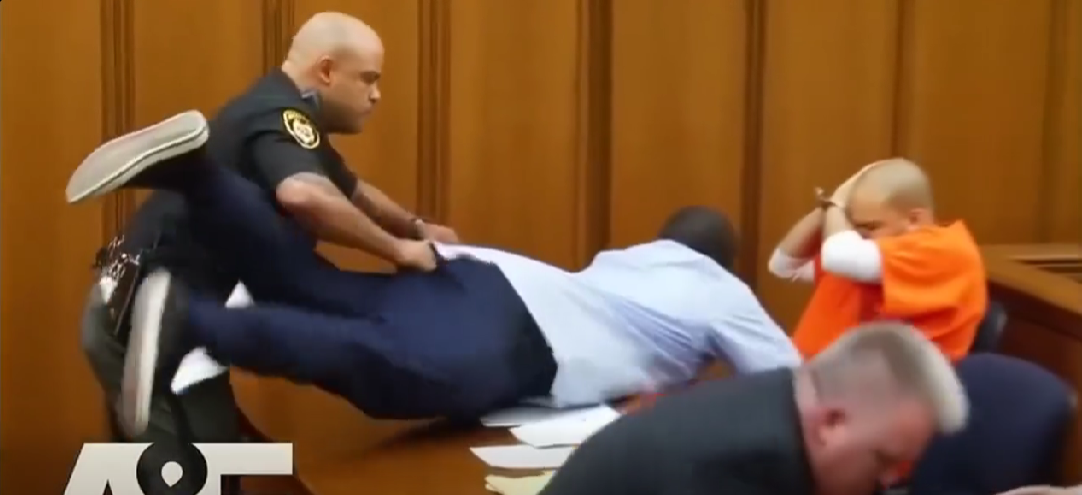
Van Terry, the father of 18-year-old Shirellda Terry, was facing the man convicted in connection with her death, Michael Madison. As the courtroom proceedings reached a critical moment, Terry was given an opportunity to speak about his daughter and the loss his family had endured.
What followed became one of the most emotionally charged moments associated with the case, drawing attention to the difficult balance between grief, justice, and courtroom security.
A Father Struggling With an Unimaginable Loss
Losing a child is a devastating experience that can change a family’s life forever. Parents naturally imagine watching their children grow, reach milestones, build relationships, and pursue their dreams. When a young life ends violently, those expectations are replaced by grief and unanswered questions.
For a parent addressing a courtroom after such a loss, speaking publicly can be especially difficult. The setting demands composure and respect for legal procedures, even when emotions are overwhelming.
Van Terry’s presence in court reflected the personal side of a criminal case that extends beyond legal documents and judicial decisions. Behind the proceedings were relatives who had lost someone they loved and were attempting to make sense of a tragedy that could never truly be undone.
His daughter, Shirellda, was only 18. At an age when many young people are beginning to explore adulthood, she still had years of possibilities ahead of her. Her absence represented not only the loss of a family member but also the future her loved ones had imagined for her.
The Courtroom Becomes a Place of Intense Emotion
Courtrooms are designed to provide an orderly environment where evidence is presented, legal arguments are considered, and judges or juries reach decisions under established rules.
Yet criminal proceedings involving violent deaths can bring intense emotions into that environment. Family members may spend months or years waiting for answers, attending hearings, and hearing difficult details about what happened to someone they loved.
When a verdict or sentence is announced, those emotions may become even more difficult to manage. Relief, anger, sadness, disbelief, and exhaustion can all emerge at once.
Victim impact statements offer relatives an opportunity to explain how a crime has affected their lives. These statements can help the court understand the human consequences of an offense beyond the evidence required to establish guilt.
For grieving families, however, speaking in court can also mean confronting the person responsible for their loss. That proximity can make an already painful experience feel almost unbearable.
The Importance of Remembering the Victim
In highly publicized criminal cases, attention often centers on the accused, the trial, and the sentence. But the people whose lives were lost should remain at the heart of the discussion.
Shirellda Terry was more than a name connected to a criminal case. She was a daughter whose life mattered to her family and whose absence left a lasting void.
Remembering victims means acknowledging their humanity rather than reducing their stories to headlines about violence or courtroom confrontations. It also means recognizing the families who continue to live with the consequences long after the cameras leave and the proceedings conclude.
For relatives, remembrance may involve preserving photographs, sharing stories, supporting one another, and finding ways to honor the person they lost. These acts cannot reverse what happened, but they can help keep a loved one’s memory connected to the life they lived rather than only the circumstances of their death.
Justice and the Limits of a Court’s Decision
A criminal verdict can establish legal responsibility and lead to a sentence under the applicable law. It cannot, however, restore a life or remove the pain experienced by surviving family members.
This is one of the hardest realities of the justice system. Even when a case reaches a conclusion, relatives may continue to struggle with grief, anger, and questions that have no satisfying answers.
Sentencing can provide a formal response to a crime, but emotional recovery is a separate and often much longer process. Families may need time, support, and access to counseling as they learn to live with their loss.
The justice system also has a responsibility to maintain courtroom safety. Emotional reactions are understandable, but physical confrontations can endanger people and disrupt legal proceedings. Court security procedures exist to protect everyone present and allow the process to continue lawfully.
Why Moments Like This Capture Public Attention
When a grieving relative reacts strongly during a criminal proceeding, the incident can quickly become a focus of public discussion. Some observers respond with sympathy, recognizing the pain behind the reaction. Others raise questions about courtroom conduct and the importance of maintaining order.
These reactions reflect a broader tension between human emotion and the rules that govern public institutions.
It is possible to understand a person’s anger without suggesting that physical retaliation is the answer. Compassion for grieving families and respect for legal procedures do not have to be opposing positions.
A thoughtful response acknowledges the depth of the loss while recognizing that courtrooms must remain safe places where legal decisions are made according to established procedures.
Supporting Families After Tragedy
Families affected by violent crime may face challenges long after a trial ends. Anniversaries, birthdays, family gatherings, and ordinary daily routines can all bring back painful memories.
Support from relatives, friends, community organizations, and trained professionals can help people navigate these difficult periods. Victim-support services may also assist families with practical concerns related to court proceedings, counseling, and other resources.
There is no single timetable for grief. Some people find comfort in speaking openly about their loss, while others need privacy and time. What matters is that bereaved families are treated with dignity and are not pressured to recover according to someone else’s expectations.
Communities can contribute by remembering victims respectfully, avoiding the spread of unverified claims, and recognizing that those most affected by a tragedy continue to carry its consequences long after public attention fades.
A Story That Goes Beyond a Courtroom Outburst
The story involving Van Terry and his daughter Shirellda highlights the profound emotions that can emerge when families confront the legal consequences of a loved one’s death.
Although dramatic courtroom moments often dominate headlines, the deeper story is one of loss, remembrance, and the difficult journey that follows a tragedy.
Justice proceedings can determine legal responsibility, but they cannot erase grief. A family may receive a verdict and still face years of learning how to live with an empty place at the table and a future that unfolded differently than expected.
Ultimately, the most meaningful way to approach stories like this is to remember the person whose life was lost, recognize the pain experienced by those left behind, and understand why compassion and courtroom safety both matter.
Behind every major criminal case are real people whose lives have been changed forever. Their experiences deserve to be discussed with care, accuracy, and respect.