My Daughter Hid Her Pain for Weeks—Then a Doctor Asked Me What Her Father Already Knew
My daughter was only fifteen when she finally looked me in the eyes and whispered words that broke my heart.
“I stopped telling Dad when it hurts. He says I’m just doing it for attention.”
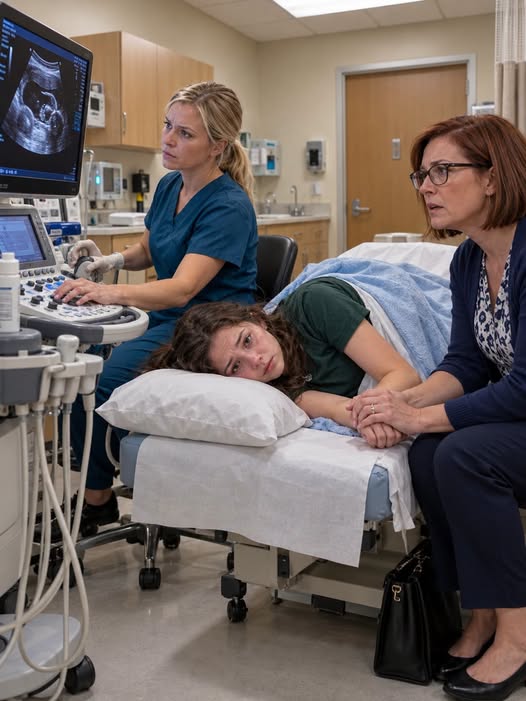
The following afternoon, I signed her out of school and took her straight to the hospital. I didn’t tell my husband where we were going because I needed to understand what was happening to our daughter first.
But halfway through the examination, the technician suddenly stopped talking.
A few minutes later, the doctor entered the room, closed the door, and asked me a question I never expected to hear.
“How long has her father known about this?”
For a moment, I couldn’t speak.
The room smelled of disinfectant, and the thin paper covering the examination bed crinkled every time my daughter moved. I looked from the doctor to the monitor, trying to understand what he meant.
“He doesn’t know,” I finally answered. “I didn’t tell him we were coming here today.”
The doctor studied my face before responding.
“I’m not asking about today’s visit.”
He turned toward the computer and opened an earlier entry in my daughter’s medical record.
Five weeks before our visit, she had been examined for the same persistent pain. Her father had brought her to the hospital himself. The notes indicated that further imaging was recommended because her symptoms required additional evaluation.
I had never heard about that appointment.
Not a word.
My daughter sat quietly on the edge of the bed, pulling the sleeves of her hoodie over her hands. She kept her eyes fixed on the floor, as though she wished she could disappear into it.
I turned toward her slowly.
“Did your dad bring you here before?”
She nodded.
The doctor explained that the findings from the current examination required prompt attention and further testing. He spoke carefully, making it clear that the medical team needed more information before reaching any conclusions.
He wasn’t trying to accuse anyone.
He simply wanted to know why the recommended follow-up had not happened.
Suddenly, I wanted to know the same thing.
“What did Dad tell you after your first appointment?” I asked my daughter.
She swallowed hard.
“He said they didn’t find anything important.”
I looked at the doctor, hoping he might offer some explanation that would make the situation easier to understand.
Instead, he turned the computer screen slightly toward me.
I read the earlier discharge notes for myself. The recommendation for follow-up was clearly documented as part of the medical plan. It wasn’t merely a casual suggestion that could easily be overlooked.
My stomach tightened.
For months, I had noticed small changes in my daughter.
She took longer to get ready in the mornings. Some evenings, she barely touched her dinner. Occasionally, I would see her carrying a heating pad into her bedroom, where she would close the door and remain quiet for hours.
Whenever I asked whether something was wrong, she gave me the same answer.
“I’m fine, Mom.”
I wanted to believe her.
I told myself she might be experiencing ordinary menstrual discomfort, stress from school, or the emotional ups and downs that sometimes accompany adolescence. I assumed she would tell me if something truly serious was happening.
Now, sitting in that examination room, I wondered how many times she had wanted to speak but had decided against it.
I moved my chair closer to the bed.
“Sweetheart, you’re not in trouble,” I told her gently. “You can tell me anything. Even if it’s something you think will make me angry, I need you to be honest with me.”
Her eyes began to fill with tears.
For several seconds, she said nothing.
Then she whispered, “He got mad after the appointment.”
I waited.
“He said you were already stressed about work and money. He said I was making everything harder for everyone.”
The words hurt more than I expected.
My husband had always struggled with situations he considered unnecessary complications. Unexpected expenses frustrated him. Problems that couldn’t be solved immediately made him impatient. If something disrupted his plans, he often insisted that everyone else was overreacting.
But this was our daughter.
She was fifteen years old. She was experiencing pain she couldn’t explain, and she had gone to a medical professional for help.
I tried to imagine what might have happened during that first appointment.
Perhaps my husband had misunderstood the doctor. Maybe he believed the symptoms would disappear on their own. Perhaps he thought the follow-up was less urgent than the notes suggested.
I searched for an explanation because accepting what I was beginning to suspect felt unbearable.
Then the doctor asked my daughter a question.
“Did your father ever tell you not to tell your mother about the follow-up appointment?”
My daughter immediately tightened her hands inside her sleeves.
She stared at the floor.
Then, very slowly, she nodded.
That small movement changed everything.
Until that moment, I had been trying to understand whether this was a misunderstanding or a mistake. I wanted to believe that everyone had simply missed something important.
But now I understood that my daughter had been carrying more than physical pain.
She had also been carrying a secret.
An adult had apparently made her feel responsible for keeping information about her health from her own mother.
I reached beneath the sleeve of her hoodie and gently took her hand.
“You don’t have to protect anyone from the truth,” I told her. “Not when it comes to your health.”
She squeezed my fingers, but she still looked frightened.
“What exactly did Dad tell you?” I asked.
She opened her mouth.
Before she could answer, my phone began vibrating inside my purse.
I reached for it and glanced at the screen.
DAD.
My husband’s name appeared across the display.
My daughter saw it, too.
The color seemed to drain from her face.
She pulled her hand away and stared at the phone as though the call itself had become something to fear.
I looked at her, then at the doctor.
Suddenly, I understood that whatever happened next would require more than another conversation at home. My daughter needed medical care, reassurance, and the freedom to speak honestly without being blamed for what she was experiencing.
The phone continued to vibrate.
I took a breath, placed my hand over my daughter’s, and made a decision.
Whatever explanation my husband offered, I would not allow it to delay her care again.
First, we would listen to the medical team. We would complete the recommended tests, ask every necessary question, and make sure my daughter understood that her pain deserved attention.
Then we would deal with everything else.
Because one thing had become painfully clear: a child should never have to convince the adults who love her that her suffering is real.
And as I watched the call continue to ring, I knew there were questions my husband would have to answer.
Why hadn’t he told me about the first appointment?
Why hadn’t the recommended follow-up happened?
And why had our daughter been made to feel that speaking up about her own health was somehow a burden?
I didn’t know what his answers would be.
But I knew I would no longer accept silence as an explanation.