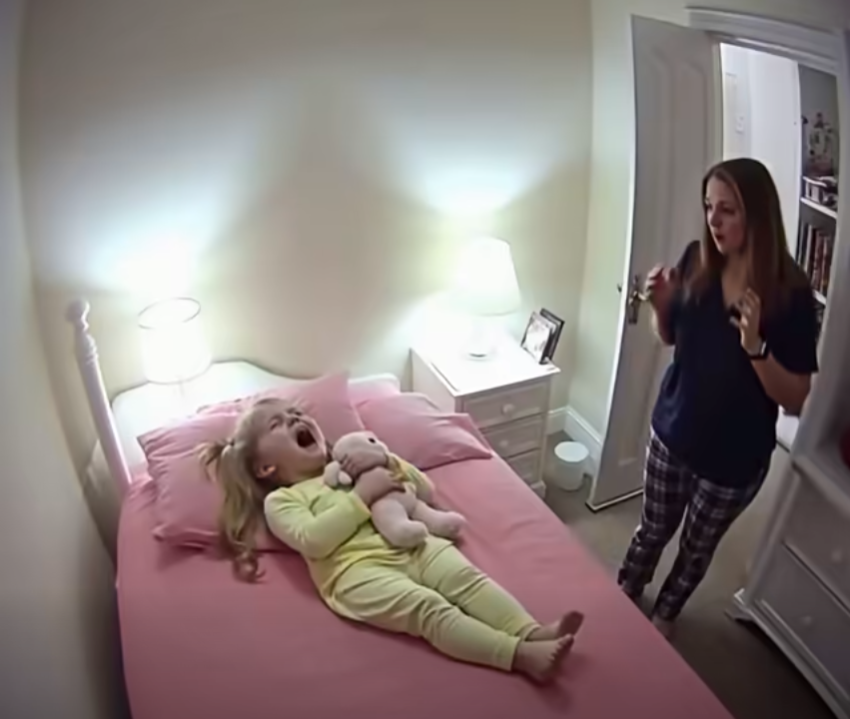
For three weeks, my eight-year-old daughter, Mia, repeated the same unusual sentence every night before going to sleep.
“Mom, my bed feels too tight.”
At first, I thought it was simply another one of those childhood expressions that adults struggle to understand. Mia had a wonderful imagination, and sometimes she used unusual words to describe feelings she couldn’t quite explain.
But this was different.
She wasn’t laughing when she said it. She wasn’t trying to tell a funny story or make an excuse to stay awake a little longer.
She looked genuinely uncomfortable.
Every evening, after brushing her teeth and choosing a bedtime story, she would climb into bed, pull her blanket toward her chin, and then look at me with the same worried expression.
“Mom, it’s happening again.”
I would sit beside her and ask what she meant.
She never gave me a clear answer.
“It feels like something is squeezing the bed,” she would whisper.
I checked her pillows, adjusted the sheets, and pressed my hands against the mattress. Everything seemed perfectly normal.
Still, the following night, she would say it again.
At first, I dismissed it as a minor childhood concern. By the end of the third week, however, I realized that ignoring her questions wasn’t helping.
I decided to find out what was making my daughter feel so uncomfortable.
I had no idea that one late-night notification would turn an ordinary parenting concern into a mystery I couldn’t stop thinking about.
The First Time Mia Told Me Something Was Wrong
The first complaint came on a Monday evening.
I was helping Mia get ready for bed when she suddenly sat up and pushed her blanket away.
“Mom, my bed feels too tight.”
I smiled gently.
“Too tight? What do you mean, sweetheart?”
She looked down at the mattress and moved her hands along the blanket.
“Like something is squeezing it.”
I pressed the mattress with my palm.
It felt firm but comfortable. The bed frame was stable, the sheets were properly fitted, and nothing appeared to be caught beneath the bedding.
“Maybe you’re getting taller,” I suggested. “Sometimes beds feel smaller when you’re growing.”
Mia didn’t argue, but she didn’t look reassured either.
I tucked her in, kissed her forehead, and promised to check everything again in the morning.
That night, I assumed she would forget about it.
Instead, shortly after midnight, I heard small footsteps in the hallway.
Mia appeared at my bedroom door, holding her favorite stuffed rabbit.
“Mom, I can’t get comfortable.”
I sat up immediately.
“Is something hurting?”
She shook her head.
“It’s my bed. It feels tight again.”
I followed her back to her room and checked everything once more.
The mattress looked normal. The bed frame wasn’t touching the wall. Nothing appeared to be trapped beneath the sheets.
I even moved the pillows and straightened the blanket.
When I asked whether she wanted to sleep beside me for the rest of the night, she hesitated before nodding.
I thought that perhaps she had simply been having trouble sleeping alone.
But the same complaint returned the following evening.
And the evening after that.
When a Simple Explanation Wasn’t Enough
After a week, I mentioned the situation to my husband, Eric.
He listened while I described Mia’s repeated complaints.
“She might just be looking for a reason to stay up later,” he suggested. “You know how children can be.”
I understood his point. Children sometimes have difficulty explaining discomfort, and bedtime can bring worries to the surface that they don’t mention during the day.
Still, I didn’t want to assume Mia was making excuses.
She wasn’t asking for extra television time or trying to avoid school in the morning. She was simply telling me that something about her bed felt wrong.
I decided to replace the mattress.
Perhaps it had developed an internal problem that wasn’t obvious from the outside. Maybe the surface had become uneven or uncomfortable.
A new mattress seemed like a reasonable place to start.
Two days later, the replacement arrived.
We removed the old mattress, checked the bed frame, and installed the new one. I made Mia’s bed with fresh sheets and let her choose which blanket she wanted.
She seemed delighted.
That evening, she climbed into bed, arranged her stuffed animals, and smiled at me.
“This one feels better, Mom.”
I felt relieved.
For the first time in days, I thought we had solved the problem.
Mia slept peacefully that night.
But the relief didn’t last.
The following evening, just as I was preparing to leave her room, she reached for my hand.
“Mom?”
I turned around.
“What’s wrong, sweetheart?”
She looked toward the mattress.
“It’s happening again.”
I stood there for a moment, unsure what to say.
We had replaced the mattress. We had checked the frame. We had changed the bedding.
What else could be causing the same complaint?
I knew I needed to take a closer look.
Why I Decided to Install a Camera
I spent the next day thinking about the problem.
I wondered whether Mia was moving around in her sleep and accidentally pushing against the bed frame. Perhaps the mattress was shifting slightly on its base, or a loose component was making an unfamiliar noise.
Another possibility was that she was experiencing ordinary nighttime discomfort but struggling to describe it.
Rather than choosing one explanation without evidence, I decided to gather more information.
I installed a small bedroom camera so I could observe the room if Mia woke up uncomfortable again.
Because it was a device inside my child’s private space, I took care to use it for a limited safety purpose and keep access to the footage restricted.
My intention wasn’t to watch her every move. I wanted to understand whether something in the room changed during the night.
I checked the camera’s position, made sure it showed the bed and surrounding area, and confirmed that the night-vision feature worked.
Then I went about our usual evening routine.
Mia brushed her teeth, chose a bedtime story, and climbed beneath her blanket.
I sat beside her for a few minutes.
“Let me know if you feel uncomfortable,” I told her.
She nodded.
“I will, Mom.”
I switched off the light and left the door slightly open.
For the first few nights, nothing unusual appeared on the camera.
Mia slept, occasionally turned onto her other side, and sometimes pulled her blanket closer.
The mattress remained still.
There were no obvious signs of anything wrong.
I began wondering whether the problem had resolved itself.
Then came the tenth night.
The Notification That Woke Me at 2:00 A.M.
I woke suddenly in the middle of the night.
For a moment, I couldn’t remember what had disturbed my sleep.
The house was quiet, and the room was dark except for the faint glow of the digital clock beside my bed.
It read 2:00 a.m.
Then my phone vibrated.
A notification appeared on the screen.
Motion detected — Mia’s room.
I sat up and opened the camera application.
The night-vision image appeared a few seconds later.
At first, everything looked ordinary.
Mia was sleeping on her side, her stuffed rabbit resting near her pillow. Her blanket covered most of her body, and the bedroom looked exactly as it had when I had checked it before going to sleep.
I watched for a few seconds.
Then the mattress appeared to shift.
It was a small movement, barely noticeable at first.
I leaned closer to the screen.
The mattress seemed to rise slightly near one edge before settling back into place.
I stared at the image, waiting to see whether it happened again.
A few seconds later, there was another subtle movement.
My stomach tightened.
I knew the mattress was new. I had watched the delivery workers bring it into the house, and I had checked the bed frame myself.
There were no storage drawers beneath the bed.
The space underneath was open, with the wooden floor visible around the frame.
So what had caused the movement?
I replayed the footage.
The image wasn’t perfectly clear, and the infrared lighting created shadows along the edges of the mattress. Mia also moved slightly beneath the blanket, which could have affected how the mattress looked on camera.
I reminded myself not to jump to conclusions.
A camera notification only meant that the system had detected movement. It didn’t establish what had caused it.
Still, I couldn’t ignore what I had seen.
I watched the recording again, this time paying attention to the bed frame and the surrounding floor.
Then I noticed something I hadn’t focused on during the first viewing.
The mattress appeared to move at a moment when Mia’s body seemed relatively still.
I paused the video.
My mind immediately began generating possibilities.
Was the frame unstable? Was the mattress resting unevenly on its base? Could a change in lighting be making a normal movement appear unusual?
I didn’t know.
And the uncertainty made it difficult to look away.
What I Did Next
I didn’t rush into Mia’s room in a panic.
Instead, I watched the footage once more and considered what would be safest and most practical.
If my daughter was uncomfortable, I needed to check on her. If the bed frame was unstable, it needed to be inspected. If there was another explanation, I wanted to find it without frightening her unnecessarily.
I put down my phone, got out of bed, and walked quietly toward her room.
The hallway was dark, and the house was silent.
When I reached the doorway, I could see Mia sleeping beneath her blanket.
I called her name softly.
She opened her eyes and looked at me sleepily.
“Mom? What’s wrong?”
“Nothing you need to worry about, sweetheart. I just wanted to check on you.”
I examined the bed from the doorway before approaching it.
The frame looked normal, and nothing obvious appeared to be caught beneath the mattress. I checked the visible edges and made sure the bed was standing evenly.
Mia watched me with tired eyes.
“Is my bed okay?” she asked.
“I’m checking it,” I replied. “We’ll make sure you’re comfortable.”
I didn’t tell her that the camera had frightened me. I didn’t want to turn an unexplained movement into something more alarming in her imagination.
Instead, I asked whether she had felt the same uncomfortable sensation that night.
She nodded slowly.
“It happened before I went to sleep.”
That detail made me pause.
If the sensation had begun before she fell asleep, then the movement I saw on the camera might not explain the entire problem.
Perhaps there were two separate issues. Perhaps the camera had captured an ordinary movement that happened to occur while I was worried about her complaint.
I realized that I needed to consider Mia’s description separately from what the footage appeared to show.
A recording could help me observe the room, but it couldn’t tell me how my daughter felt or establish the cause of her discomfort by itself.
The Questions I Couldn’t Ignore
The following morning, I checked the bed frame more carefully in daylight.
I looked for loose fasteners, uneven supports, and signs that the mattress might be shifting against the frame.
I also reviewed the camera footage in normal lighting, comparing the moments of movement with Mia’s position on the bed.
Some movements appeared consistent with ordinary changes in sleeping position. Other moments were difficult to interpret because the camera angle made the edge of the mattress hard to see.
I didn’t find evidence that anyone had entered the room.
I also couldn’t identify a clear explanation for Mia’s repeated description of feeling squeezed.
That was frustrating, but it reminded me of something important: not every confusing experience has an immediate answer.
I decided to speak with Mia calmly about what she meant when she said her bed felt tight.
Rather than suggesting that something was underneath it, I asked her to describe the sensation in her own words.
Did she feel pressure around her body? Was the mattress uncomfortable? Did the sheets feel restrictive? Did she experience the sensation only at night, or had she noticed it at other times?
Her answers could help us decide what to check next.
If she continued experiencing physical discomfort, I would speak with her pediatrician rather than assume that the bed itself was responsible.
I also planned to have the frame inspected if I couldn’t identify a mechanical explanation.
Most importantly, I wanted Mia to feel comfortable telling me about anything that worried her.
She didn’t need to prove that something was wrong before I took her concern seriously.
What This Experience Taught Me About Listening to Children
Looking back, the most important part of this experience wasn’t the camera notification.
It was the fact that Mia had been trying to explain something for weeks.
I initially interpreted her words through an adult perspective. I assumed she was describing a mattress problem, resisting bedtime, or using an unusual expression.
Those explanations were possible, but I had treated them as conclusions before understanding what she meant.
Replacing the mattress had seemed like a practical solution, yet it hadn’t resolved her concern.
Installing the camera gave me another source of information, but it didn’t automatically reveal the answer.
The experience reminded me that listening carefully is often more useful than guessing.
Children don’t always describe discomfort in the same way adults do. They may use imaginative language, repeat a phrase, or struggle to identify exactly what feels wrong.
The best response is to remain calm, ask clear questions, and investigate reasonable possibilities without making frightening assumptions.
It’s also important to remember that technology has limits.
A camera can record visible movement, but it cannot explain every sound, shadow, or change in the environment. Motion alerts can be triggered by ordinary activity, and night-vision footage can make familiar objects look different.
When a child’s comfort or safety is involved, recorded footage should be considered alongside direct observations and practical checks.
Final Thoughts: Sometimes the Most Important Clue Is the Concern a Child Repeats
Mia’s repeated statement had seemed small at first.
“My bed feels too tight.”
It was an unusual phrase, and I hadn’t immediately understood what she meant.
But when she continued saying it after we replaced the mattress, I realized that the concern deserved more attention.
The movement I noticed on the camera at 2:00 a.m. was unsettling, but it wasn’t proof of a hidden person or anything supernatural. I still needed reliable information to determine whether the bed, the room, or something else was contributing to her discomfort.
What mattered most was that I listened, checked the environment, and made sure Mia knew she could tell me when something didn’t feel right.
As parents, we don’t always have immediate answers. Sometimes we have to observe carefully, ask better questions, and seek professional help when necessary.
The goal isn’t to assume the worst.
It’s to take a child’s concerns seriously while finding an explanation based on facts.