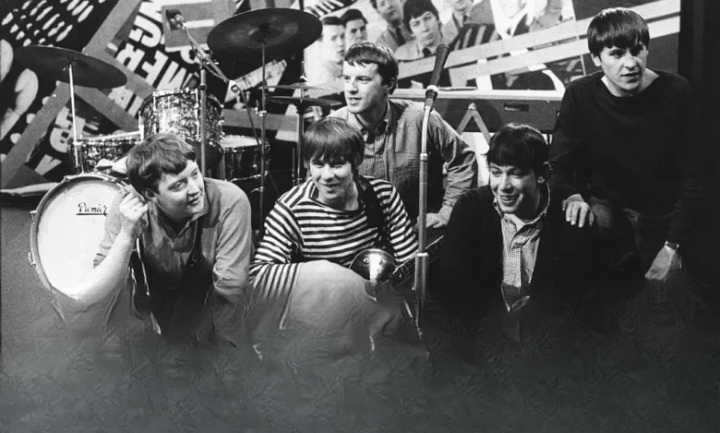
How The Animals Turned a Traditional Folk Song Into a Defining Rock Classic
Few songs have traveled through musical history as successfully as “The House of the Rising Sun.”
Long before British rock group The Animals recorded their famous version in 1964, the song had already existed as part of the traditional folk repertoire. Its precise origins remain uncertain, and different versions had circulated for decades before the recording that introduced the song to an enormous international audience.
What The Animals did was transform that older folk material into a powerful rock performance.
The result was striking.
A traditional song with a long and complicated history suddenly sounded modern, dramatic, and unmistakably connected to the changing musical culture of the 1960s.
The recording became one of the most recognizable songs associated with The Animals and helped demonstrate how traditional folk material could be reimagined through rock instrumentation and a distinctive vocal performance.
More than six decades later, the recording continues to attract listeners.
Its story is not simply about one successful single.
It is about how musical traditions travel across generations, how performers reinterpret older material, and how one arrangement can introduce a much older song to an entirely new audience.
A Song That Was Already Old
When The Animals recorded “The House of the Rising Sun,” they were not creating the song from scratch.
The composition belonged to a much older folk tradition.
Songs in the folk tradition frequently change over time.
Words can be altered.
Melodies can develop.
Different performers can introduce new verses.
Locations can change.
Stories can take on different meanings depending on the person performing them.
That makes it difficult to identify a single definitive beginning for some traditional songs.
“The House of the Rising Sun” is one of those examples.
Its history has been debated by researchers and music historians for many years. Different theories have been proposed about where the song originated and what the title originally referred to.
What is clear is that versions of the song existed well before The Animals brought it into the mainstream.
By the middle of the twentieth century, folk musicians had already been performing and recording versions of the song.
The Animals therefore inherited a piece of musical history rather than inventing an entirely new composition.
Their achievement was in the interpretation.
The Folk Music Connection
Before rock became a dominant force in popular music, folk music had its own strong traditions.
Folk songs were often passed from one performer to another.
Some were learned by listening rather than through formal written notation.
Because of that, songs could evolve naturally.
A singer might change a verse.
Another performer might alter the rhythm.
Someone else might introduce a new instrument.
Over time, a song could become associated with a particular performer while still remaining part of a broader tradition.
This flexibility made folk music an important source of inspiration for later musicians.
By the early 1960s, a new generation of artists was exploring traditional American and British folk music.
They were listening to older recordings and discovering songs that could be adapted for modern audiences.
“The House of the Rising Sun” was particularly well suited to reinterpretation because of its strong narrative character and emotionally charged melody.
The Animals recognized that potential.
Enter The Animals
The Animals emerged from Newcastle upon Tyne in England during a period when British musicians were becoming increasingly interested in American blues, rhythm and blues, and folk music.
The group developed a reputation for energetic performances and a powerful musical style.
At the center of their sound was vocalist Eric Burdon, whose deep and expressive voice gave the group a distinctive identity.
The band also featured musicians whose playing helped create the dynamic sound associated with their recordings.
When The Animals approached “The House of the Rising Sun,” they did not simply reproduce an earlier folk arrangement.
They reshaped it.
The performance emphasized atmosphere, tension, and emotional intensity.
The result sounded very different from the quieter acoustic interpretations that many listeners associated with folk music.
The Arrangement Changed Everything
One of the most important elements of The Animals’ recording was its arrangement.
Instead of presenting the song primarily as a simple acoustic folk performance, the group built it around electric instruments and a dramatic rhythmic structure.
The organ played a particularly important role.
Its distinctive sound immediately separated the recording from many earlier versions.
The guitar work added further texture.
The bass and drums provided a foundation that gave the performance a stronger sense of movement.
Together, these elements created a sound that was darker and more expansive than a straightforward folk arrangement.
The song still retained its narrative core.
But its musical presentation had changed.
This is one of the defining features of successful reinterpretation.
The performer does not necessarily need to change every element of a song.
Sometimes changing the arrangement is enough to reveal a completely different side of the material.
Eric Burdon’s Vocal Performance
The Animals’ recording also benefited from Eric Burdon’s distinctive voice.
His delivery was emotional and direct.
Rather than singing the song as though it were simply an old folk story, he gave the lyrics a sense of personal weight.
The vocal performance helped create the atmosphere that became one of the recording’s defining characteristics.
The contrast between the vocal and the instrumental arrangement was particularly effective.
The organ created a dramatic backdrop.
The rhythm section established momentum.
The guitar added another layer.
And Burdon’s voice remained at the center.
The combination made the recording immediately recognizable.
Even listeners who had never heard earlier versions of the song could recognize The Animals’ interpretation as something distinct.
A Song Becomes a Rock Performance
The transformation of “The House of the Rising Sun” illustrates something important about the development of rock music.
Rock did not emerge from a single musical tradition.
It developed through a mixture of influences, including blues, rhythm and blues, country, gospel, folk, and other styles.
Musicians regularly borrowed structures, melodies, rhythms, and ideas from earlier traditions.
They then changed them to suit new audiences and new technologies.
The Animals’ recording provides a clear example of this process.
The underlying song belonged to an older tradition.
The arrangement belonged to a modern electric band.
The performance connected the two.
That combination helped make the recording significant.
The British Invasion Era
The Animals recorded the song at an important moment in popular music.
British bands were gaining enormous attention in the United States and other countries.
Groups such as The Beatles, The Rolling Stones, The Kinks, The Who, and The Animals were helping British rock become a major international force.
This period is often associated with the British Invasion.
The movement changed the relationship between American and British popular music.
American blues and rhythm-and-blues traditions had strongly influenced British musicians.
British performers then brought their interpretations of those influences back to American audiences.
The process created a fascinating musical exchange.
“The House of the Rising Sun” fit naturally into this environment.
It was an old song with roots in American folk culture, reinterpreted by a British rock band and presented to a worldwide audience.
The Recording’s Impact
When The Animals released their version in 1964, it quickly attracted attention.
The recording reached the top of charts in multiple countries and became one of the group’s signature songs.
Its success demonstrated that a traditional folk song could become a major pop and rock recording.
That was important.
At the time, popular music was evolving rapidly.
Electric instruments were becoming increasingly important.
Young listeners were seeking music that felt more expressive and energetic.
Traditional material could still find a place in that changing environment if musicians were willing to reinterpret it.
The Animals showed exactly how powerful that approach could be.
Why the Song Felt Different
One reason the recording stood out was its mood.
Many popular songs of the era were energetic, romantic, playful, or focused on youthful relationships.
“The House of the Rising Sun” offered something different.
Its story carried a darker and more reflective tone.
The arrangement reinforced that atmosphere.
From the opening instrumental passage onward, the listener is drawn into a different emotional space.
Rather than relying on a fast tempo or a conventional pop structure, the recording builds its identity through tension and dynamics.
That gave it a distinctive character.
The song did not sound like a typical upbeat pop single.
Yet it still reached a huge audience.
The Importance of the Organ
The organ deserves special attention when discussing the Animals’ version.
Its sound is one of the first things many listeners notice.
The instrument provides a dramatic foundation for the song and helps establish its atmosphere.
In the hands of keyboardist Alan Price, the organ became a central part of the arrangement rather than a background element.
Its repeating patterns and changing intensity helped give the recording a sense of movement.
The instrument also demonstrated how rock musicians could use electric keyboards to reinterpret older musical forms.
The result was neither purely folk nor purely conventional pop.
It occupied its own space.
The Guitar’s Role
The guitar also contributed significantly to the recording’s character.
Rather than simply providing basic accompaniment, the guitar interacted with the other instruments to create a fuller sound.
This was part of the broader evolution of rock arrangements during the 1960s.
Electric guitars were becoming increasingly versatile.
Musicians were experimenting with amplification, effects, rhythm patterns, and different approaches to accompaniment.
The Animals’ version used these possibilities without overwhelming the song’s central narrative.
The instrumentation remained focused.
Every element contributed to the atmosphere.
The Power of a Strong Narrative
Another reason “The House of the Rising Sun” has endured is its storytelling quality.
Traditional folk music has long relied on songs that tell stories.
These stories can concern work, travel, relationships, hardship, family, or difficult choices.
A strong narrative can survive changes in musical style because the underlying human themes remain recognizable.
The Animals’ recording maintained that storytelling quality.
The arrangement changed dramatically, but the song still felt like a story being told.
That combination of narrative and modern sound helped make the recording accessible to listeners who might not otherwise have explored traditional folk music.
The Song’s Uncertain Origins
Part of the fascination surrounding “The House of the Rising Sun” comes from the uncertainty surrounding its earliest history.
Researchers have proposed different theories about the song’s origin.
Some interpretations connect it to traditional English ballad traditions.
Others focus on American versions that circulated during the early twentieth century.
The meaning of the “Rising Sun” itself has also been debated.
Over the years, listeners have interpreted the phrase in different ways.
This uncertainty is not unusual for traditional folk material.
Folk songs frequently exist in multiple versions.
Because they were passed between performers, it can be difficult to establish exactly when and where a particular version began.
Rather than weakening the song’s history, this uncertainty is part of what makes it interesting.
Earlier Recordings
Before The Animals recorded the song, several folk performers had already helped preserve and popularize versions of it.
Among the best-known figures associated with the song’s earlier history is folk singer and guitarist Dave Van Ronk.
Bob Dylan also recorded a version early in his career.
These performances demonstrate that the song was already circulating among folk musicians before The Animals gave it a rock treatment.
The transition from acoustic folk performance to electric rock arrangement illustrates how songs can move between musical communities.
One generation discovers a song.
Another interprets it.
A later generation changes it again.
That process keeps traditional music alive.
From Folk Clubs to International Charts
The journey of “The House of the Rising Sun” is a useful example of how music can travel.
A traditional song can begin in an oral tradition.
It can be collected or documented.
Folk musicians can perform it in clubs and concerts.
Recording artists can introduce different arrangements.
Eventually, another performer can transform it into a commercially successful recording.
The Animals’ version represents one stage in that long journey.
The song did not suddenly appear in 1964.
Instead, decades of musical transmission preceded the recording.
Understanding that history makes The Animals’ achievement even more interesting.
They were participating in an ongoing tradition while simultaneously creating something that sounded new.
The Relationship Between Tradition and Innovation
Music history is full of examples in which innovation grows out of tradition.
Artists rarely work in complete isolation.
They listen to older records.
They study other performers.
They borrow ideas.
They experiment.
They combine influences.
The Animals’ “House of the Rising Sun” is an excellent example.
The band did not need to abandon the song’s traditional identity to make it modern.
Instead, they emphasized different elements.
The electric instrumentation became more prominent.
The rhythm became more forceful.
The vocal performance became more dramatic.
The result was familiar and new at the same time.
Why the Recording Still Sounds Distinctive
More than sixty years after its release, The Animals’ recording remains recognizable.
Part of that is due to the arrangement.
The opening is memorable.
The vocal performance is distinctive.
The organ creates an unmistakable musical identity.
The dynamics give the song a strong sense of progression.
These qualities allow the recording to stand apart from other versions.
It is not simply an old folk song performed by a rock group.
It is a carefully constructed interpretation with its own personality.
The Influence on Later Musicians
The success of The Animals’ version also demonstrated that rock musicians could successfully explore material outside the traditional pop-song format.
This encouraged musicians to look more deeply into folk and blues traditions.
Throughout the 1960s and beyond, rock artists continued incorporating older musical forms into new arrangements.
The boundaries between folk, rock, blues, and other genres became increasingly flexible.
Musicians were no longer necessarily expected to remain inside a single stylistic category.
That freedom helped contribute to the remarkable variety of music that emerged during the decade.
A New Audience for an Old Song
Perhaps one of the most significant effects of The Animals’ recording was that it introduced the song to listeners who might never have encountered its folk versions.
A young person listening to the record on the radio in 1964 did not need to know the song’s history.
They could simply respond to the music.
Later, some listeners might become curious about the song’s origins.
They might discover earlier recordings.
They might explore folk music.
They might learn about other artists who had performed the song.
In this way, one successful recording could serve as an entry point into a much larger musical history.
The Changing Sound of the 1960s
The early 1960s were a period of rapid musical change.
Recording technology was developing.
Youth culture was becoming increasingly influential.
Radio and television gave musicians access to enormous audiences.
Record companies were looking for new sounds.
Bands were experimenting with electric instruments.
Listeners were becoming more interested in artists who had distinctive identities.
The Animals emerged during this period of transformation.
Their version of “The House of the Rising Sun” fit perfectly into the changing environment because it combined something familiar with something new.
The song had history.
The arrangement had modern energy.
The result appealed to audiences looking for music that felt different.
More Than a Cover Version
Calling The Animals’ recording a “cover” is technically reasonable, but it does not fully explain what the band accomplished.
The word can sometimes suggest a simple reproduction of another artist’s recording.
That was not what happened here.
The Animals created a distinct arrangement.
They changed the instrumentation.
They emphasized different emotional qualities.
They gave the song a new musical identity.
In that sense, the recording is better understood as a reinterpretation.
The underlying material remained recognizable, but the presentation changed dramatically.
The Lasting Legacy
“The House of the Rising Sun” has continued to appear in movies, television programs, radio playlists, compilations, and performances by later musicians.
Its continued presence demonstrates the durability of both the song itself and The Animals’ arrangement.
Every new generation can discover it differently.
Some listeners encounter the song through classic-rock radio.
Others hear it through a movie or television program.
Some discover it while exploring music from the 1960s.
Others hear a newer artist performing a version and then search for earlier recordings.
That continuing cycle is one of the most interesting aspects of popular music.
Why Reinterpretation Matters
The history of “The House of the Rising Sun” also teaches an important lesson about creativity.
Creating something new does not always mean inventing something that has never existed.
Sometimes creativity comes from seeing familiar material differently.
A melody that has existed for generations can receive a new arrangement.
An old story can be presented from another perspective.
A traditional instrument can be combined with modern technology.
A familiar song can become meaningful to a new generation.
The Animals demonstrated this beautifully in 1964.
They took something rooted in tradition and gave it a sound that belonged to their own era.
The Enduring Appeal of the Recording
There are countless songs from the 1960s that are remembered primarily as historical artifacts.
The Animals’ “House of the Rising Sun” is different.
It remains listenable and recognizable because the emotional qualities of the recording continue to work.
The arrangement still creates atmosphere.
The vocal remains distinctive.
The instrumental performance still feels purposeful.
And the story at the center of the song remains compelling.
That combination gives the recording a lasting quality.
A Bridge Between Musical Generations
Perhaps the best way to understand The Animals’ contribution is to see the recording as a bridge.
On one side was traditional folk music, with its oral history, acoustic performances, and evolving versions.
On the other was the emerging world of electric rock, with amplified instruments, powerful rhythms, and a rapidly expanding youth audience.
The Animals connected those two worlds.
They did not erase the song’s history.
They brought that history into a new musical environment.
That is why the recording remains an important example of musical transformation.
Final Thoughts
When The Animals released their version of “The House of the Rising Sun” in 1964, they helped demonstrate just how much possibility existed in older musical material.
The song itself had already traveled through generations of performers.
Its origins were uncertain, its lyrics had appeared in different forms, and folk musicians had preserved and reinterpreted it long before The Animals entered the picture.
What the British group brought was a new musical identity.
Eric Burdon’s powerful vocal performance, Alan Price’s memorable organ part, the electric instrumentation, and the band’s dramatic arrangement transformed the traditional material into a defining rock recording.
The success of the song also reflected the changing musical landscape of the 1960s.
Folk, blues, rhythm and blues, and rock were increasingly influencing one another.
Musicians were looking backward to discover material they could carry forward.
The Animals’ recording showed that an old song could feel completely new without losing its connection to tradition.
That may be the most enduring lesson of “The House of the Rising Sun.”
Music does not always move forward by leaving the past behind.
Sometimes it moves forward by rediscovering the past, reshaping it, and giving it a new voice.
More than six decades after The Animals’ recording first reached audiences, that idea remains as relevant as ever.
A song can travel from one generation to another, change along the way, and still retain something recognizable at its core.
And in 1964, The Animals gave one of folk music’s enduring songs a powerful new life in the world of rock.