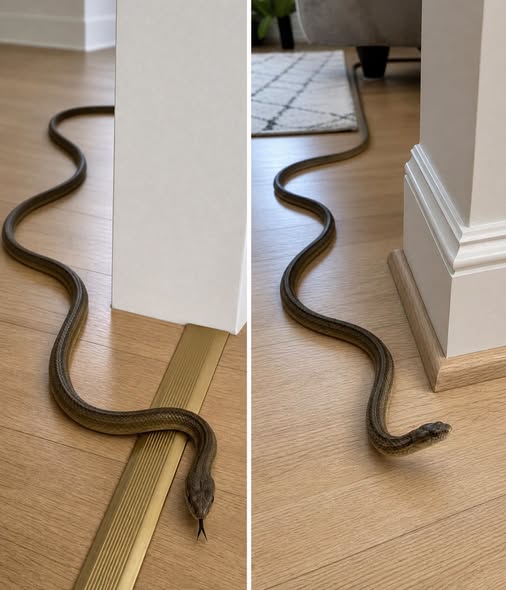
A Snake in the House? What It Could Mean and What to Do Safely
Finding a snake inside your home is one of those experiences that can turn an ordinary evening into an unforgettable story.
You might be walking into the kitchen to get a glass of water, heading downstairs, opening a garage door, or simply turning on a light when you notice something moving along the floor.
For a moment, your brain may need a second to understand what you’re seeing.
Then comes the natural reaction:
“There’s a snake in the house.”
For many people, that immediately raises questions.
How did it get inside?
Is it dangerous?
Where did it come from?
Could there be another one?
Should I try to move it?
Should I leave the room?
While discovering a snake indoors can certainly be unsettling, the most useful response is usually not panic. It is observation, distance, and a calm plan.
A snake inside a home does not automatically mean there is a serious problem with the property, nor does it necessarily mean there are more snakes nearby. In many situations, the animal simply found an accessible opening and entered while looking for shelter, food, water, or a place protected from weather.
Understanding why this happens can make the situation much easier to manage.
Why Would a Snake Enter a House?
Snakes generally do not enter buildings because they want to interact with people.
They are looking for conditions that help them survive.
Depending on the species and environment, those conditions may include shelter, suitable temperatures, moisture, or access to prey.
A house can occasionally provide one or more of these.
Garages, sheds, basements, crawl spaces, storage rooms, and other less frequently occupied areas can be particularly attractive because they tend to be quiet.
A snake may enter through a very small opening and then remain hidden for some time before anyone notices it.
This is one reason people sometimes feel as though a snake suddenly appeared out of nowhere.
It may have been inside longer than they realized.
Common Ways Snakes Get Indoors
A snake does not necessarily need a large opening to enter a building.
Depending on the species and its size, it may use gaps around doors, openings near pipes, spaces around foundations, damaged vents, or other pathways connecting the exterior to the interior.
Common possibilities include:
- Gaps beneath garage doors
- Open exterior doors
- Damaged screens
- Spaces around pipes
- Foundation cracks
- Openings around utility lines
- Crawl-space entrances
- Gaps around sheds or outbuildings
- Unsealed vents
- Areas where siding meets the foundation
Sometimes the entry point is obvious.
Other times, finding it can take some investigation.
That is why seeing one snake indoors doesn’t necessarily tell you exactly how it entered.
Why Garages Are Common Places to Find Snakes
Garages can be particularly attractive to wildlife.
They often contain boxes, tools, gardening supplies, wood, equipment, and other objects that create sheltered spaces.
A garage may also have direct access to the outdoors.
If the garage door doesn’t close tightly against the ground, an animal may find an opportunity to enter.
The garage may also contain something that indirectly attracts snakes: prey.
If a property has mice or other small animals around the garage, a snake may occasionally follow the food source.
This doesn’t mean every snake inside a garage indicates a rodent problem.
It simply means that food availability can influence where wildlife spends time.
A Snake May Be Looking for Shelter
Temperature can also influence snake behavior.
Snakes are ectothermic animals, meaning their body temperature is strongly influenced by their surroundings.
During periods of extreme heat or cold, sheltered locations can become attractive.
A building may offer protection from wind, rain, or temperature changes.
A cool basement may provide a different environment from a hot outdoor surface.
Likewise, a warm garage or protected storage area may be appealing during cooler conditions.
This is one reason snake sightings can vary throughout the year.
What Should You Do If You See One?
The first step is simple:
Give it space.
Do not approach it closely just to determine what species it is.
Do not attempt to pick it up.
Do not corner it.
Do not try to grab it with your hands.
Even snakes that are harmless can bite when they feel threatened.
If you aren’t certain what species you’re dealing with, treating it as potentially dangerous is the safest approach.
Move yourself and other people away from the area.
Keep children and pets away as well.
If possible, close an interior door between you and the snake without getting close enough to disturb it.
Don’t Try to Identify It by Getting Closer
Modern phones make it tempting to take a close-up photograph.
That isn’t necessary.
If you can safely take a photograph from a considerable distance without approaching the snake, the image may help a qualified local wildlife professional identify it.
But there is no reason to risk getting closer simply to get a better picture.
A snake’s appearance can also be difficult for an inexperienced observer to interpret accurately.
Color alone is not always enough to identify a species.
Lighting can change how patterns look.
Young snakes can look different from adults.
Different species can also share similar markings.
When identification matters, professional guidance is preferable to guessing.
What About Venomous Snakes?
The possibility of a venomous species makes caution particularly important in regions where venomous snakes are present.
If you cannot confidently identify the snake, don’t assume it is harmless.
Keep your distance and contact an appropriate local wildlife removal service, animal control agency, or other qualified professional.
Local authorities and wildlife organizations can provide region-specific guidance because snake species vary significantly by location.
A snake that is common and harmless in one part of a country may not be the same species found in another area.
Should You Try to Catch the Snake?
For most homeowners, the answer should be no.
Trying to catch or physically move a snake creates unnecessary risk.
People sometimes see online videos showing someone grabbing a snake or using a household object to move it.
That does not mean the same approach is appropriate for an untrained person.
The species may be unknown.
The animal may behave unpredictably.
The person may misjudge its distance.
And even a nonvenomous snake can cause an injury if it bites.
Professional wildlife handlers have the equipment and experience to deal with these situations more safely.
What If the Snake Is in a Room?
If the snake is inside a particular room and you can leave without approaching it, exit the room.
Close the door if doing so is safe.
Keep children and pets away.
Then contact an appropriate professional.
If the room has a direct exterior doo