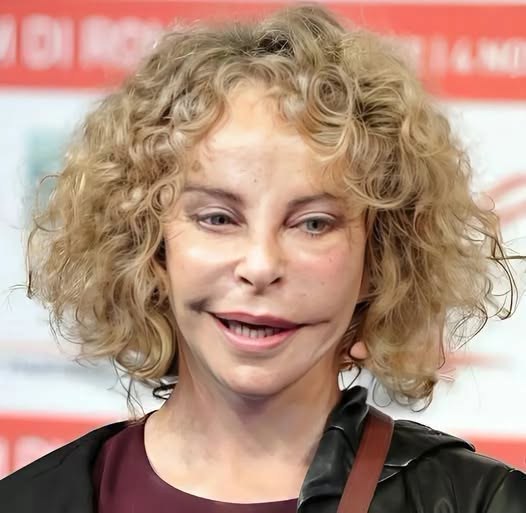
Hollywood, Beauty, and the Pressure to Stay Young: How One Icon Became Part of a Larger Conversation
There was a time when she seemed to represent a particular kind of Hollywood glamour that was difficult to ignore.
Her photographs appeared in magazines, on movie posters, television programs, and entertainment pages. She carried the kind of screen presence that could make audiences remember a performance long after the credits rolled. For many people, she became associated with an era when movie stars were expected to look polished, glamorous, and almost impossibly youthful.
Over the years, however, public attention shifted.
Instead of focusing only on films, performances, or professional accomplishments, conversations increasingly turned toward appearance, aging, cosmetic procedures, and the extraordinary expectations placed on women in entertainment.
That evolution raises a much bigger question than what any one celebrity may or may not have done.
Why does Hollywood place such importance on looking young?
Why are celebrities often judged differently as they age?
And why can a person’s appearance become almost as widely discussed as their actual career?
The story of a famous Hollywood figure whose changing appearance became a subject of public fascination is therefore not simply a story about beauty treatments.
It is also a story about celebrity culture, changing social expectations, media attention, personal identity, and the complicated relationship between aging and fame.
The Era of the Hollywood Image
For decades, Hollywood has been closely connected with glamour.
Film studios understood the importance of creating recognizable stars. Actors were photographed carefully, costumes were selected to create particular impressions, and makeup and lighting were used to establish an idealized image.
The public often saw only the finished product.
A celebrity’s appearance on screen could involve professional makeup, carefully selected clothing, studio lighting, photography techniques, hairstyling, and extensive preparation.
That image could become so powerful that audiences began associating the performer with a particular standard of beauty.
For actresses especially, appearance could become a major part of public identity.
A successful actress might be praised for her elegance, youthful appearance, fashion choices, and ability to maintain a polished image.
But there was an unavoidable contradiction.
A career could last for decades, while the entertainment industry often rewarded the appearance of youth.
As actors aged, the public’s expectations did not necessarily change at the same speed.
Aging in the Public Eye
Aging is a normal part of life.
For most people, it happens privately.
Family members and friends gradually notice changes, but there is no constant photographic record documenting every stage.
Celebrities experience something very different.
Their faces may be photographed thousands of times.
An actor who became famous at 25 may still have photographs from that age circulating decades later.
Old movie scenes remain available.
Magazine covers can be reposted.
Social media can bring photographs from different periods into the same feed.
As a result, celebrities can be compared with younger versions of themselves repeatedly.
That creates a unique form of pressure.
A person may naturally change over time, but the public archive does not change with them.
The younger version remains permanently visible.
The Rise of Cosmetic Procedures
Cosmetic procedures have existed in various forms for many years, but advances in medical technology and changing cultural attitudes have made them increasingly visible.
Today, people may encounter discussions about cosmetic surgery, injectables, skin treatments, dental procedures, hair restoration, and other appearance-related services almost everywhere.
Social media has accelerated this trend.
Before-and-after photographs can receive enormous attention.
Beauty influencers discuss treatments openly.
Celebrities may publicly share their experiences.
At the same time, some people choose to keep cosmetic procedures private.
That privacy is important to recognize.
Unless a person has publicly confirmed a particular procedure, outside observers generally cannot know with certainty what has or has not been done simply by looking at photographs.
Lighting, makeup, camera lenses, facial expressions, weight changes, styling, aging, and image editing can all affect appearance.
That makes claims about specific procedures especially difficult to establish from photographs alone.
Why Celebrity Appearances Become Public Discussion
A famous person’s face is often treated differently from that of an ordinary individual.
People may feel that they have watched the celebrity age because they have seen their movies and photographs for years.
That familiarity can create a sense of connection, even though the relationship is one-sided.
Audiences may remember a performer from childhood.
They may associate an actor with a favorite film.
They may remember a particular hairstyle or red-carpet appearance.
When the celebrity’s appearance changes, those memories can make the change seem more dramatic.
The public may compare photographs from different decades and wonder what happened.
But the underlying reality is simple: people change.
The more important question is why society feels entitled to analyze those changes so intensely.
The Pressure on Women in Entertainment
The conversation becomes particularly complicated for women.
For decades, actresses have faced expectations that they should remain youthful, attractive, stylish, and physically polished.
At the same time, older male actors have often been allowed to age without facing exactly the same level of scrutiny.
This difference has been discussed extensively by journalists, academics, performers, and cultural commentators.
An older male actor may be described as distinguished.
An older female actress can instead face questions about whether she has changed her appearance.
The language surrounding aging can therefore be very different depending on gender.
That creates a difficult situation.
If an actress embraces natural aging, some people criticize her appearance.
If she chooses cosmetic treatments, other people criticize those choices.
In either case, the conversation can become focused on appearance rather than professional achievements.
Beauty Standards Are Not Static
What society considers beautiful has changed repeatedly throughout history.
Different decades have emphasized different hairstyles, body shapes, makeup styles, clothing, and facial features.
The idealized beauty associated with one generation may seem completely different from the ideal associated with another.
Hollywood has played a major role in these changes.
Film stars have influenced hairstyles and fashion.
Television has created new beauty trends.
Advertising has introduced products designed to imitate celebrity looks.
Social media has now accelerated the process even further.
A beauty trend can spread internationally within hours.
That means today’s appearance standards can be unusually intense.
People are not simply comparing themselves with neighbors or people in their communities.
They may be comparing themselves with carefully photographed celebrities and influencers from around the world.
The Difference Between Appearance and Identity
One of the deeper issues surrounding celebrity beauty is the relationship between appearance and identity.
When an actor becomes famous, their appearance can become part of their public identity.
Fans may associate a particular face with a specific role.
They may remember a certain hairstyle from a famous movie.
They may associate a particular period with a particular character.
As time passes, the person naturally changes, but the public image remains.
That can create tension between personal identity and public expectations.
An actor may want to experiment with their appearance.
They may want to age privately.
They may simply want to look the way they personally prefer.
Yet the public may have a different expectation based on decades of photographs and performances.
Cosmetic Surgery Is a Personal Decision
Cosmetic procedures are deeply personal.
Some people pursue them because they want to change something about their appearance.
Others may choose procedures for reconstructive reasons.
Some people prefer minimal treatments.
Others choose more significant changes.
There is no single explanation that applies to everyone.
It is therefore important to avoid assuming that a particular celebrity pursued cosmetic procedures for one specific reason.
A public figure may discuss their choices openly, but unless they have done so, claims about motivation remain speculation.
The same applies to statements about whether someone is “addicted” to cosmetic procedures or is attempting to “stop aging.”
Those are conclusions that should not be made from appearance alone.
The Problem With Before-and-After Comparisons
Before-and-after photographs can look convincing, but they can also be misleading.
A photograph from one year may have completely different lighting from another.
One image may use professional makeup while the other does not.
The person’s facial expression may be different.
The camera angle may change.
Image quality can vary dramatically between older film photographs and modern digital photography.
Even small differences can affect how a face appears.
This is particularly important when discussing celebrities because photographs are rarely neutral records.
Publicity photographs are usually designed to present a particular image.
Red-carpet photographs are taken under strong lighting.
Magazine covers may involve editing.
Social media images can be filtered or altered.
Therefore, visual comparisons should be treated cautiously.
The Role of the Media
Celebrity media has always depended partly on curiosity.
A film announcement is interesting.
A new relationship is interesting.
A fashion choice can become a story.
But appearance stories can attract especially strong reactions because readers immediately understand the subject.
The problem is that repeated attention can turn ordinary aging into a spectacle.
A headline about a celebrity’s new movie focuses on their work.
A headline focused entirely on whether their face has changed encourages readers to judge a personal characteristic instead.
That shift says something about the priorities of entertainment culture.
Social Media Changed the Conversation
The internet has transformed celebrity coverage.
In earlier decades, a celebrity might appear in a magazine once a month.
Today, thousands of images can circulate in a single day.
Fans can compare photographs instantly.
Comment sections allow strangers to discuss a person’s appearance.
Old interviews can be rediscovered.
Photographs from decades ago can become viral content.
This creates a continuous feedback loop.
A celebrity’s appearance generates discussion.
The discussion generates more articles.
Those articles generate more social media posts.
The increased attention then creates additional discussion.
The cycle can make a relatively ordinary change seem much larger than it actually is.
The “Forever Young” Expectation
The phrase “forever young” captures one of the central contradictions of celebrity culture.
Audiences want stars to remain recognizable.
They want the actor from a beloved film to continue looking like the character they remember.
But real people cannot remain physically unchanged.
A celebrity who tries to maintain a youthful appearance may receive criticism for doing so.
A celebrity who chooses not to pursue cosmetic changes may also receive criticism for aging.
That leaves many public figures facing expectations that are difficult to satisfy.
The underlying issue is not necessarily cosmetic surgery itself.
It is the belief that aging somehow represents a failure.
Aging Does Not Erase a Career
A person’s appearance can change without diminishing their professional accomplishments.
A successful actor’s filmography does not disappear because they get older.
Awards remain.
Performances remain.
Cultural influence remains.
Memorable characters remain.
The work can continue to have meaning long after a particular period of physical appearance has passed.
This distinction is important because celebrity culture sometimes encourages people to judge an entire career through the lens of appearance.
A star who once represented a particular beauty ideal may eventually be discussed almost entirely in terms of how they look today.
That can overshadow decades of professional work.
When Public Fascination Becomes Unfair
There is a difference between discussing celebrity culture and making personal judgments about an individual’s appearance.
The broader cultural question is legitimate.
Why does Hollywood value youth?
How have beauty standards changed?
How does social media influence perceptions?
Why are women often judged more heavily for aging?
Those are useful questions.
But turning those questions into speculation about a particular person’s medical history or private decisions is much less reliable.
A respectful discussion can examine the culture without pretending to know the private details of an individual’s life.
The Economics Behind Beauty
There is also an enormous industry built around the desire to maintain or change appearance.
Cosmetics companies, skincare brands, clinics, salons, fitness businesses, fashion companies, and media organizations all participate in the broader beauty economy.
Celebrity culture can influence consumer behavior.
When a famous person is associated with a particular appearance, consumers may seek products or services that promise similar results.
This can be positive when people find products that help them feel confident.
But it can also create unrealistic expectations.
A celebrity’s appearance may depend on professional teams, expensive treatments, customized lighting, stylists, makeup artists, and photography.
Consumers may not realize how different those circumstances are from everyday life.
The Importance of Realistic Expectations
Beauty treatments and cosmetic procedures can produce different results for different people.
Individual anatomy, age, genetics, skin condition, lifestyle, medical history, and other factors can influence outcomes.
That is why responsible medical guidance matters when someone is considering a procedure.
Celebrity photographs should not be treated as guarantees.
A photograph cannot tell someone what a procedure will do for them.
It cannot replace professional consultation.
And it cannot reveal the complete circumstances behind another person’s appearance.
A Broader Cultural Shift
Interestingly, attitudes toward aging have also begun to change.
Some public figures now speak openly about getting older.
Others choose not to hide gray hair, wrinkles, or other natural changes.
There has been increasing discussion about “aging naturally,” although even that phrase can create unnecessary pressure because it suggests there is one correct way to age.
The more useful perspective may be that people should have room to make their own choices.
Some may use cosmetic procedures.
Some may avoid them.
Some may change their minds over time.
Personal preference can evolve.
Celebrity Culture and Personal Autonomy
Fame can make personal choices feel public.
But being famous does not eliminate a person’s right to privacy.
A celebrity may choose to discuss a cosmetic procedure.
If they do, their own statements can provide useful information.
If they do not, speculation should remain speculation.
This distinction matters because celebrity stories can easily turn assumptions into apparent facts.
Once a rumor is repeated often enough, readers may begin to believe it has been confirmed.
That is particularly common with claims about plastic surgery, relationships, health, and other private matters.
Looking Beyond the Mirror
The most interesting lesson from the long-running conversation about Hollywood beauty may have little to do with any specific celebrity.
It may instead be about how society defines value.
Why should a performer who has spent decades entertaining audiences be reduced to a discussion about facial features?
Why should aging be treated as something that needs to be defeated?
Why do people sometimes remember a celebrity’s appearance more strongly than their work?
These questions reveal how deeply visual culture influences modern life.
People encounter images constantly.
Advertising, social media, television, film, and digital platforms all reinforce ideas about how people are expected to look.
Celebrity culture simply magnifies those pressures.
The Next Generation of Stars
Younger actors are entering an entertainment environment that is very different from the one experienced by earlier generations.
They grow up with social media.
Photographs can circulate immediately.
Comments can be permanent.
A single appearance can be analyzed by thousands of people within minutes.
At the same time, younger audiences are increasingly aware of image manipulation.
They understand filters, editing, professional photography, and curated social-media feeds.
That awareness may eventually lead to more realistic expectations.
People may become less likely to assume that every public photograph represents ordinary reality.