Introduction: The Moment of Unexpected Discovery
Nature has a quiet way of surprising us when we least expect it. It might happen during a slow walk along a forest trail, while watering plants in a backyard garden, or just stepping outside after rainfall. Everything feels ordinary—until something unusual catches your eye: a sudden movement near the ground, a shape that doesn’t immediately make sense, or a color that seems too bright for its surroundings.
In that brief moment, curiosity and uncertainty arrive together. Most people instinctively pause or step back, shaped by how humans have learned to interpret unfamiliar things over time. However, what feels unfamiliar is not always something to fear. Instead, these small encounters hold an opportunity to understand the world a little better.
Why the Unfamiliar Feels Strange
Human beings are wired to recognize patterns. Familiar sights and sounds create comfort because they are predictable, and when something falls outside those patterns, the brain shifts into caution mode. This is a basic survival mechanism thousands of years old.
Yet, in everyday settings like gardens or parks, most unfamiliar creatures are entirely harmless. They simply appear unusual because we haven’t seen them before. Bright markings, unexpected textures, or strange movements often serve important biological purposes, such as protection, communication, or adaptation. Once understood, the initial unease quickly softens into curiosity.
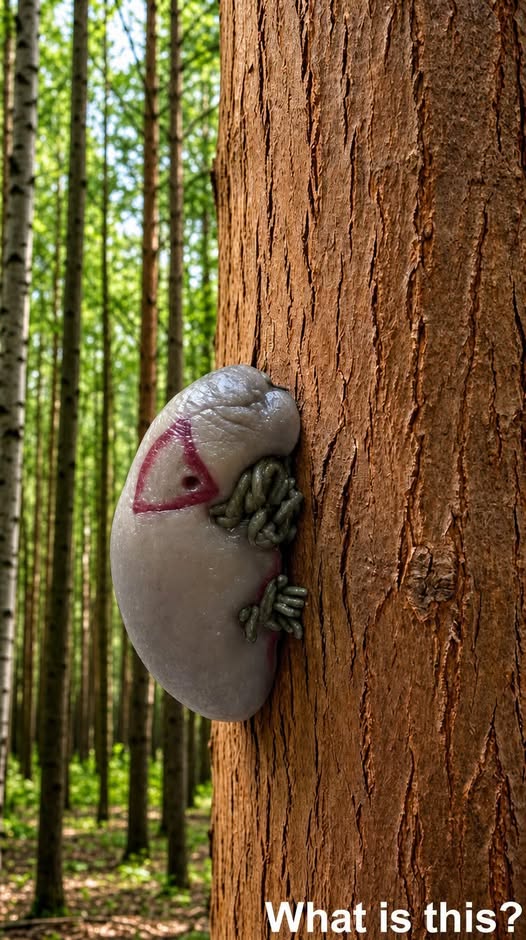
An Example: The Red Triangle Slug
A striking example is the Red Triangle Slug, typically found in damp, shaded areas after rainfall beneath fallen leaves or logs. Its smooth, slow movement is an efficient adaptation for survival, and despite its vivid coloration, it is completely non-aggressive and harmless to humans.
The Quiet Role of Small Creatures
It is easy to overlook small organisms, but they play essential roles in maintaining environmental balance:
-
Decomposition: Creatures like slugs feed on decaying plant matter, accelerating breakdown and returning critical nutrients to the soil.
-
Ecosystem Support: This process sustains healthy soil quality, allowing plant life to thrive.
-
Interconnected Systems: Even the smallest organisms form a vital part of larger environmental networks.
Transforming Perspective Through Observation
When encountering something unfamiliar outdoors, the most effective response is observation over reaction. Pausing to notice movement, size, color, and behavior provides valuable context.
-
Curiosity Over Assumption: Instead of asking, “What is this, and should I be worried?” curiosity asks, “What is this, and how does it live?”
-
Respecting Boundaries: Wild creatures should never be touched or disturbed. Observing from a safe distance ensures both the observer and the environment remain unharmed.
-
Everyday Discoveries: Meaningful encounters happen close to home—in yards and local parks—deepening our understanding without requiring distant travel.
Final Thoughts: Seeing the Unknown with Openness
Encounters with unfamiliar creatures remind us that nature is full of quiet diversity existing all around us. When we respond to the unknown with fear, we limit our understanding; when we respond with curiosity, we open the door to learning.
Understanding doesn’t begin with knowledge alone. It begins with a simple choice: to pause, to observe, and to remain open to what we do not yet know.