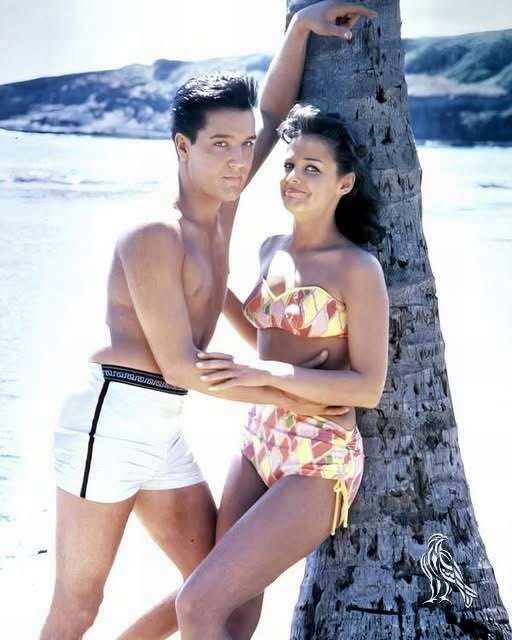
When audiences watched , they saw Elvis Presley surrounded by beautiful beaches, music, romance, and the relaxed atmosphere of Hawaii.
The movie presented an image of carefree island life and became one of the most recognizable films of Elvis’s Hollywood career. Yet behind the cheerful performances and colorful scenery was a very different side of the production.
Elvis was enjoying enormous popularity at the time, but he also had concerns about the direction of his acting career. While audiences loved seeing him in lighthearted musical films, he reportedly wanted opportunities that would allow him to demonstrate greater range as an actor.
A Major Success for Elvis
Released in 1961, Blue Hawaii became a significant commercial success.
Elvis played Chad Gates, a young man returning to Hawaii after completing his military service. Rather than following a serious dramatic storyline, the movie combined romance, comedy, music, and Hawaiian scenery.
The result was a film designed primarily to entertain.
Chad wasn’t presented as a professional musician, yet musical performances naturally became part of the story. This approach would become familiar in many of Elvis’s later movies.
For audiences, the formula worked.
Elvis’s personality, the tropical setting, and the collection of songs made the film an appealing piece of early-1960s entertainment.
Although critics were not universally impressed by the acting, moviegoers responded enthusiastically.
The Soundtrack Became Almost as Famous as the Film
One of the most enduring aspects of Blue Hawaii was its music.
The soundtrack featured several memorable songs, including “Can’t Help Falling in Love.”
The song eventually became one of Elvis’s most recognizable recordings and remained closely connected with his musical legacy long after the movie disappeared from theaters.
Its association with the film also helped strengthen the connection between Elvis’s music and the romantic Hawaiian atmosphere created by the production.
For many viewers, the soundtrack became one of the primary reasons the movie remained memorable.
Hawaii Provided the Perfect Setting
The film was shot at a number of locations in Hawaii, taking advantage of the islands’ beaches, landscapes, hotels, roads, and distinctive scenery.
These locations gave the movie a visual identity that separated it from many contemporary Hollywood productions.
The Hawaiian setting wasn’t simply background decoration.
It became part of the movie’s appeal.
Beautiful outdoor locations, colorful clothing, music, and Elvis’s relaxed screen presence created an idealized version of island life that audiences could enjoy from the theater.
The production also contributed to Elvis’s lifelong connection with Hawaii, a place that would remain important in his public image and career.
Some Scenes Contained Interesting Continuity Details
Like many movies, Blue Hawaii wasn’t completely free of production mistakes.
Viewers paying close attention can notice continuity differences between certain shots.
Characters may appear to change positions between camera angles, while some musical sequences don’t always perfectly match what Elvis appears to be playing.
These small inconsistencies aren’t unusual in older films.
Movie productions often involved multiple takes, camera positions, and editing decisions. A finished scene could combine footage recorded at different times, occasionally creating details that sharp-eyed viewers notice decades later.
Another interesting element involves the enthusiasm surrounding Elvis himself.
During filming, real fans gathered in areas where they could catch a glimpse of the star. Some of that excitement reportedly made its way into the finished production.
It is a reminder of just how enormous Elvis’s popularity had become.
Joan Blackman Joined the Production
Elvis’s leading lady was played by actress Joan Blackman.
She became an important part of the film’s romantic storyline and worked closely with Elvis during production.
Blackman later spoke about her experiences working with the singer and actor. While their professional relationship became an interesting part of the movie’s history, she also maintained her own ambitions as an actress.
Her participation followed changes in the casting process after earlier plans for the female lead did not work out.
The final pairing of Elvis and Blackman became one of the defining elements of the movie.
Elvis Wanted More From Hollywood
Perhaps the most interesting story behind Blue Hawaii concerns Elvis’s ambitions as an actor.
By this stage of his career, audiences already knew exactly what they expected from an Elvis Presley movie.
They wanted songs.
They wanted romance.
They wanted humor.
They wanted Elvis.
That formula was profitable, but it could also become limiting.
Elvis reportedly hoped to take on more serious roles and demonstrate that he could do more than perform songs in light romantic comedies.
Instead, many of his films continued to follow a familiar structure.
From a business perspective, the approach made sense. His movies attracted large audiences, and the soundtracks provided additional commercial opportunities.
Artistically, however, the situation could be more frustrating.
The success of the formula made it difficult for him to move away from it.
Elvis Still Enjoyed Himself on Set
Despite those professional frustrations, there were lighter moments behind the scenes.
Elvis was known for entertaining people around him and enjoying practical jokes.
His personality contributed to the relaxed atmosphere associated with many stories from his movie career.
He also became particularly associated with the bright red sports car featured in Blue Hawaii.
The vehicle, an MGA, became another memorable piece of the film’s visual identity and was eventually associated with Elvis’s collection at Graceland.
For fans, objects like the car provide a tangible connection to the era when Elvis was simultaneously dominating music and building his Hollywood career.
The Film’s Legacy
More than six decades after its release, Blue Hawaii remains one of Elvis Presley’s best-known movies.
Its lasting appeal isn’t necessarily based on dramatic complexity.
Instead, it comes from the combination of several elements that worked remarkably well together: Elvis at the height of his popularity, beautiful Hawaiian locations, an accessible romantic comedy story, and a soundtrack filled with memorable music.
The movie also captures an important period in Elvis’s career.
He was still an enormous cultural phenomenon, but his professional future was beginning to develop in a direction that would define much of the 1960s.
The contrast is fascinating.
On screen, Elvis appeared to be living an effortless tropical dream.
Behind the scenes, however, he was also navigating the challenges of being one of the world’s most recognizable entertainers while trying to determine what kind of actor he wanted to become.
A Movie That Preserved a Moment in Time
Ultimately, Blue Hawaii became more than another Elvis movie.
It preserved a particular moment in popular culture: Elvis at the peak of his fame, surrounded by tropical scenery and performing songs that would remain familiar for generations.
The film may not have delivered the serious acting opportunities Elvis wanted, but it gave audiences something they clearly enjoyed.
Today, it remains a nostalgic snapshot of the singer’s Hollywood years.
The beautiful locations, playful story, memorable performances, and enduring soundtrack continue to attract viewers interested in Elvis’s career.
And perhaps that is what makes the movie’s behind-the-scenes history so interesting.
What looked like a carefree paradise on screen existed alongside an entertainer who was quietly thinking about his future.
Blue Hawaii captured Elvis Presley as the public knew him—charismatic, musical, and larger than life—while also offering a glimpse into the complicated reality behind one of the most successful periods of his career.