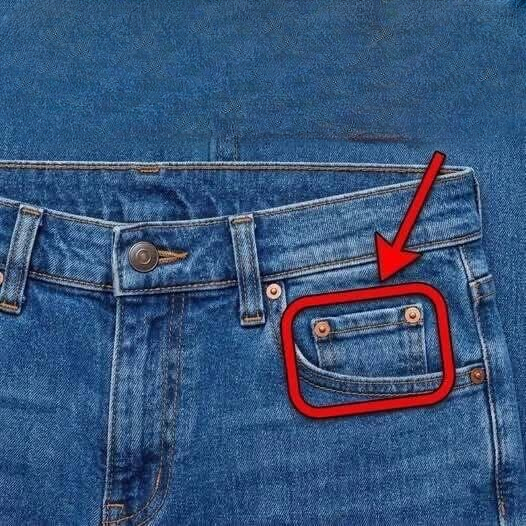
Have you ever pulled on a pair of jeans, slipped your hand into the front pocket, and noticed the tiny extra pocket sewn inside? It’s so small that it can’t hold a modern smartphone, a wallet, or even most sets of keys. For many people, it’s simply a mysterious detail that’s always been there.
At some point, you’ve probably wondered:
“What is this little pocket actually for?”
It’s one of those everyday features we rarely think about, even though millions of people use jeans every single day. While many assume it’s purely decorative, the tiny pocket actually has a fascinating history that dates back well over a century.
Let’s take a closer look at where this little pocket came from, why it was originally added to jeans, and how people use it today.
A Design That Has Survived for Generations
Jeans have changed dramatically over the years.
Modern versions come in countless styles, colors, fabrics, and fits.
Yet despite all these changes, one small detail has remained surprisingly consistent:
The tiny front pocket.
Even as fashion trends have evolved, manufacturers have continued including it because it has become part of the classic design.
Its survival isn’t an accident.
It has a practical history.
The Original Purpose
The tiny pocket first appeared during the late nineteenth century.
At that time, jeans were primarily workwear rather than fashion.
Laborers, miners, ranchers, railroad workers, and farmers needed durable clothing capable of withstanding demanding daily tasks.
One common accessory during that period was the pocket watch.
Unlike today’s wristwatches or smartphones, pocket watches were carried carefully to avoid damage.
The small pocket offered a secure place to store the watch while reducing the chance that it would swing around or become scratched during physical work.
Because of this purpose, many people still refer to it as the watch pocket.
Why Pocket Watches Needed Protection
Pocket watches were valuable possessions.
Many represented significant investments for their owners.
Workers often depended on them for keeping track of time throughout long workdays.
The small pocket helped keep the watch upright and protected from other items that might scratch its surface.
Its narrow design also reduced movement compared to larger pockets.
Why the Pocket Stayed
As technology changed, pocket watches gradually became less common.
Wristwatches eventually became the standard.
Later, mobile phones replaced many traditional watches altogether.
Yet manufacturers continued including the small pocket.
Why?
Because it had become part of the recognizable design of classic blue jeans.
Removing it would make many jeans look incomplete.
Sometimes traditions continue simply because people appreciate familiar design elements.
Modern Uses
Although few people carry pocket watches today, the tiny pocket still proves useful.
Different people use it for different purposes.
Some common examples include:
Coins
Loose change fits neatly inside without rolling around in larger pockets.
Keys
A single small key may fit securely while remaining easy to find.
Rings
Some people temporarily place jewelry there while exercising or working with their hands.
Guitar Picks
Musicians often appreciate having a dedicated place for guitar picks.
Earbuds
Wireless earbud charging cases may not fit, but individual earbuds or small accessories sometimes do.
USB Flash Drives
Small storage devices can fit conveniently inside.
Small Notes
Folded reminder notes or emergency contact information can be tucked safely into the pocket.
A Favorite Pocket for Many People
Some individuals actually consider this their most useful pocket.
Because it’s smaller than the main pocket, items placed inside tend to stay separated and easier to locate.
Instead of searching through larger pockets, small objects remain organized.
Fashion Meets Function
One interesting aspect of clothing design is how practical features often become iconic style elements.
Even when the original purpose disappears, the design remains recognizable.
The tiny pocket is one example.
Other familiar clothing details have similar histories.
Examples include:
- Rivets on jeans
- Belt loops
- Button-down collars
- Cuffs on shirts
Many began with practical purposes before becoming lasting fashion traditions.
Built for Durability
Traditional jeans were originally designed for physically demanding work.
Many familiar features served practical purposes.
Strong stitching.
Heavy denim.
Copper rivets.
Reinforced seams.
The watch pocket fit naturally into this philosophy by protecting valuable belongings.
Even today, quality jeans often continue using reinforced construction methods inspired by those early designs.
Why Don’t Clothing Companies Remove It?
Some people wonder why manufacturers don’t simply replace the tiny pocket with extra storage.
There are several reasons.
Tradition
Classic jeans have looked similar for generations.
Many buyers appreciate familiar designs.
Brand Identity
The pocket contributes to the instantly recognizable appearance of traditional denim.
Practicality
Although small, many people still find creative uses for it.
Customer Expectations
Removing well-known design features sometimes receives negative reactions from longtime customers.
Fun Facts About Jeans
The tiny pocket isn’t the only interesting detail hidden in denim design.
Here are a few more:
Rivets Have a Purpose
Those small metal rivets reinforce areas experiencing the greatest stress, helping improve durability.
Denim Was Designed for Work
Originally, denim gained popularity because it stood up well to physically demanding occupations.
Blue Became Traditional
The deep blue color became closely associated with denim after early dyeing methods proved durable and practical.
Jeans Continue Evolving
Although classic elements remain, manufacturers constantly experiment with:
- Stretch fabrics
- Sustainable materials
- Recycled fibers
- New fits
- Performance features
Can the Tiny Pocket Be Different Sizes?
Absolutely.
Different clothing brands produce slightly different versions.
Some make it deeper.
Others keep it very small.
Fashion-focused jeans sometimes include decorative versions that aren’t intended for practical use.
The overall appearance remains familiar even when dimensions vary.
Everyday Curiosity
The tiny pocket is one of those details many people notice but rarely investigate.
It demonstrates how everyday objects often carry surprising stories.
Once you learn its original purpose, it’s difficult to look at a pair of jeans the same way again.
What once seemed like a random design choice suddenly becomes a reminder of another era.
Appreciating Thoughtful Design
Many items we use daily contain features that originated decades—or even centuries—ago.
Sometimes these details remain because they continue serving practical purposes.
Other times they survive because they’ve become symbols of classic design.
The tiny pocket represents both.
Even if you never use it, it connects modern clothing with generations of history.
Small Features, Big Stories
It’s fascinating how one tiny piece of fabric can spark so much curiosity.
People have asked about this little pocket for decades.
Its continued presence reminds us that good design often blends usefulness with tradition.
Next time you pull on your favorite pair of jeans, take another look.
That little pocket isn’t just decoration.
It’s a small piece of clothing history that has quietly traveled through generations.
Final Thoughts
The tiny pocket inside most pairs of jeans may seem insignificant, but it has a rich history rooted in practicality. Originally designed to safely hold pocket watches during the late nineteenth century, it has remained part of classic denim design even as technology and fashion have evolved.
Today, people use it in many creative ways—from holding coins and keys to storing small accessories—while others simply appreciate it as an iconic detail that gives jeans their familiar appearance. Although its original purpose has largely faded, the pocket continues to connect modern clothing with the craftsmanship and thoughtful design of earlier generations.
Sometimes the smallest details tell the biggest stories. The next time someone asks, “What is that tiny little pocket actually for?” you’ll know that it’s much more than just an extra piece of fabric—it’s a lasting reminder of how practical design can become timeless tradition.