A Timeless Victorian Home Waiting for a New Chapter
Some older homes immediately capture attention because of their architecture, while others become especially interesting because of the potential they still hold.
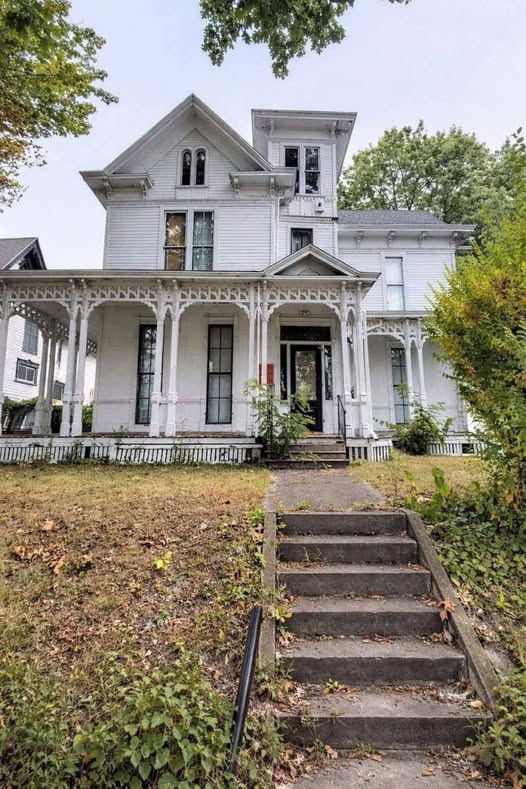
This grand Victorian residence is a striking example of historic 19th-century residential design. Although the property appears to have been neglected and may be awaiting restoration, many of its original architectural features remain visible, giving the home a distinctive character that is difficult to reproduce in newer construction.
A Classic Victorian Design
The home showcases several elements commonly associated with grand Victorian residences from the late 19th century.
One of its most noticeable features is the tower structure, which rises above the main portion of the house and gives the property a strong vertical presence.
Multiple gable roofs add further definition to the exterior, creating a layered silhouette that is characteristic of the period.
Rather than relying on a simple rectangular shape, the design incorporates different rooflines, projections, and architectural details that give the home considerable visual depth.
The Wrap-Around Porch
Perhaps the most eye-catching feature is the expansive wrap-around front porch.
The porch extends across the front of the home and appears to incorporate a variety of decorative woodworking details.
Intricate spandrel fretwork, slender spindles, and decorative brackets contribute to the elaborate appearance.
These details reflect the craftsmanship often associated with Victorian-era homes, when decorative woodwork was an important part of residential architecture.
A large porch such as this was not simply an architectural feature. Historically, porches also provided residents with a transitional space between the interior of the home and the street, creating an area where people could sit, socialize, and enjoy fresh air.
An Elevated Setting
The house sits above street level, with a set of concrete steps leading toward the front porch.
The gently sloping front yard creates a gradual transition from the sidewalk to the elevated entrance.
The arrangement gives the home an imposing appearance from the street while also emphasizing the height and proportions of the porch.
The front approach appears to have once been an important part of the home’s presentation, with the porch serving as the main visual focal point.
Signs of Neglect
Today, the property has a very different appearance.
Overgrown vegetation surrounds portions of the home, while the lawn appears to have received limited maintenance.
These details suggest that the property may currently be vacant or simply awaiting significant attention.
For an older house, however, neglect does not necessarily erase its architectural value.
In fact, the underlying structure and surviving decorative elements can make a property particularly interesting to restoration-minded buyers and historic-home enthusiasts.
The condition would naturally need to be evaluated carefully, including the roof, foundation, exterior woodwork, windows, electrical systems, plumbing, heating, and other major components.
The Appeal of Restoration
Restoring a Victorian home can be a substantial undertaking, but properties with distinctive original features can also offer something increasingly difficult to find: a strong architectural identity.
Modern houses can be built with large rooms, updated materials, and contemporary conveniences.
Reproducing the intricate craftsmanship found on an older Victorian property, however, can be considerably more difficult.
Features such as decorative brackets, detailed porch trim, ornate spindle work, and complex rooflines give historic houses a visual character that comes from their original period of construction.
Preserving those elements can therefore be an important part of any thoughtful renovation.
A Home With Potential
The contrast between the home’s current condition and its architectural details is what makes the property particularly interesting.
The overgrown yard and weathered exterior suggest a residence that has been overlooked for some time.
Yet beneath that neglected appearance is a house with a distinctive design and numerous details that could potentially be restored.
The tower remains a major focal point.
The gabled rooflines create an unmistakable Victorian profile.
And the large wrap-around porch provides the kind of architectural feature that immediately sets the home apart.
With the right restoration plan, these elements could once again become central to the property’s appearance.
Preserving Character While Updating the Home
A successful restoration would likely require a balance between preservation and modern living.
Older homes often need updated electrical systems, plumbing, insulation, heating and cooling, and other infrastructure.
At the same time, removing too many original details can diminish the character that makes the property special in the first place.
A thoughtful approach would focus on improving safety, comfort, and functionality while retaining as much of the original architectural character as practical.
For a home like this, the porch, tower, rooflines, decorative woodwork, and other visible details could become defining features of the finished property.
A Victorian Waiting for Revival
There is something appealing about an old house that still retains evidence of the craftsmanship that went into building it.
This Victorian residence may currently look tired, but its architecture tells a different story.
The tower, gabled roofs, elevated porch, decorative brackets, fretwork, and detailed spindle work all point to a period when residential architecture placed considerable emphasis on ornament and craftsmanship.
Rather than seeing only an overgrown lawn and weathered exterior, it is possible to see the foundation of what the property could become with careful restoration.
For someone interested in historic architecture, that potential may be the home’s most compelling feature.
The Beauty Beneath the Neglect
Historic properties often require patience.
They may need extensive repairs, careful research, and a realistic understanding of restoration costs before their full potential can be appreciated.
But when an older home retains distinctive architectural details, the result can be something genuinely unique.
This Victorian residence is a good example of how much character can remain even after years of limited maintenance.
Its current appearance may suggest that it has been waiting for attention, but the architectural features remain visible.
The home does not need to look perfect to be interesting.
Sometimes, the most intriguing historic properties are the ones that still show exactly what made them special in the first place.
This grand Victorian may simply be wait